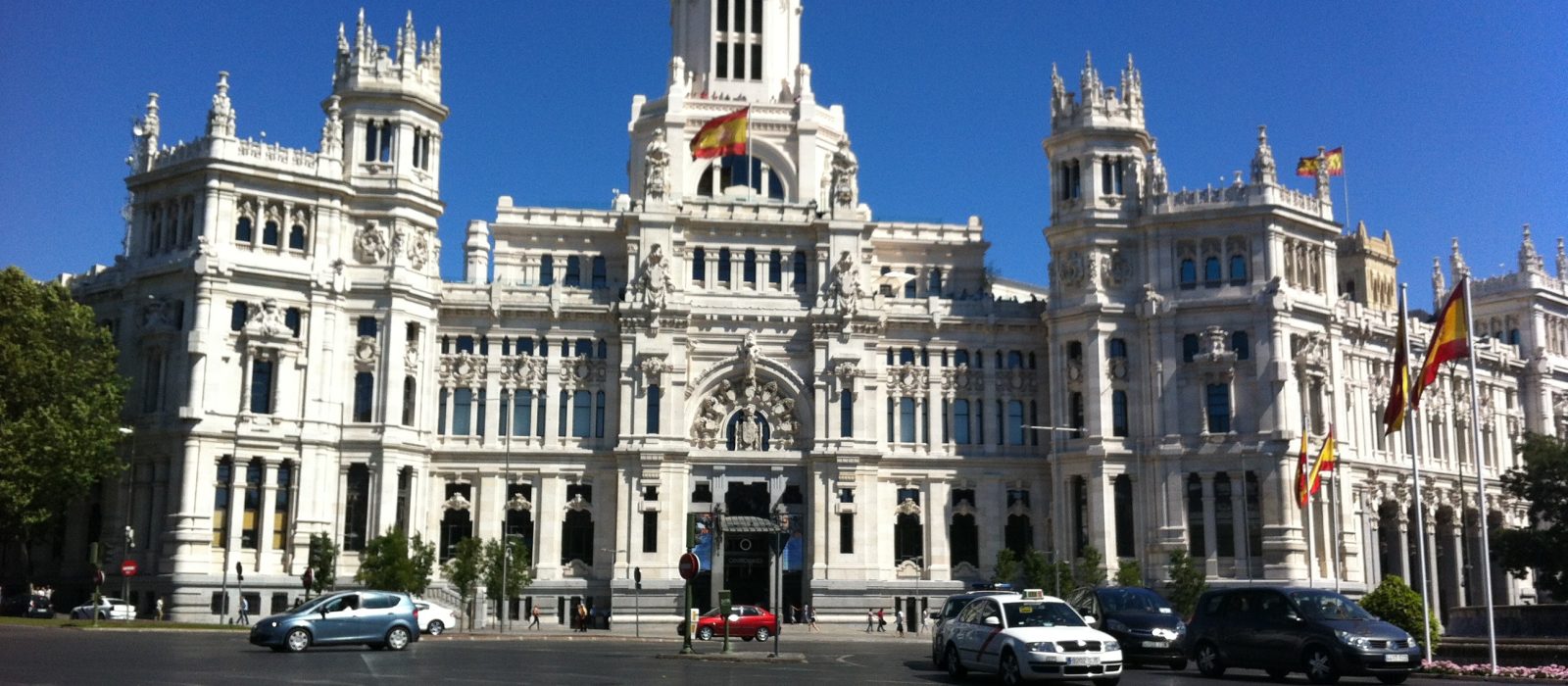
A Coruña → Madrid
604 kmImagine crossing northern Spain in a single morning, leaving behind the Atlantic breeze of Galicia to land amid the vibrant bustle of the capital just a few hours later. This journey is more than a 604-kilometer trip; it’s a bridge between two worlds, where the speed of the AVE competes with the freedom of the open road, and the landscape shifts from lush green to the golden plains of the Meseta under a wide, clear sky.
How to get from A Coruña to Madrid: a quick overview
The fastest and most comfortable way to travel from A Coruña to Madrid is undoubtedly the AVE train, which covers the distance in just over 3.5 hours—ideal for business travelers or tourists looking to maximize their time. However, if you’re after a budget-friendly option with flexible schedules, the direct bus service offers a very competitive alternative, while driving is the best choice for those who want the freedom of their own vehicle and the chance to make sightseeing stops along the way, taking full advantage of a completely toll-free highway network.
For the practical traveler, the choice comes down to your priority: if time is everything, the train is unbeatable; if budget comes first, the bus wins hands down; and if adventure and freedom of movement are your driving force, the open road awaits with a relaxed 6 hours and 15 minutes of driving.
Driving from A Coruña to Madrid
The driving route from A Coruña to Madrid covers a total distance of 604 km and takes approximately 6 hours and 15 minutes of actual driving time, using a network of modern highways that, best of all, are completely toll-free. The main artery for this journey is the A-6: Autovía del Noroeste (Northwest Highway), which acts as the backbone of the trip, connecting Galicia directly and smoothly with the center of the peninsula.
In addition to the A-6, Spain boasts an extensive network of free highways that may be relevant depending on your exact starting point or if you decide to take tourist detours. Among the options available on the national toll-free network are the A-52: Autovía de las Rías Baixas (Rías Baixas Highway) and the A-54: Autovía Lugo-Santiago de Compostela, which are essential for connecting the interior of Galicia. If your route takes you further south or you decide to explore alternatives, the network includes the A-50: Autovía Ávila-Salamanca and the A-66: Autovía Ruta de la Plata (Silver Route Highway), which, although not the central axis of this direct journey, form part of the north-south connection options.
It’s important to note that all the roads listed for this type of travel are high-capacity, toll-free highways, making the car journey very economical in terms of road infrastructure. Other routes such as the A-11: Autovía del Duero (Duero Highway), the A-62: Autovía de Castilla (Castile Highway), or even connections to the north like the A-8: Autovía del Cantábrico (Cantabrian Highway) and the A-1: Autovía del Norte (Northern Highway), are available on the general network, although for the A Coruña-Madrid route, the A-6 is the undisputed queen. There are also connections to the east and south, such as the A-2, A-3, and A-4, which, while not used on the direct route, are part of the mesh of free highways that facilitate movement across the entire country.
By train from A Coruña to Madrid
The train is the fastest option for getting from A Coruña to Madrid, with a journey time ranging between 214 and 260 minutes thanks to Renfe’s high-speed services. The operation is run by Renfe, which offers an excellent frequency with a total of 7 direct trains a day, allowing great flexibility when planning your schedule.
The service is mainly divided into two types of high-speed trains. On the one hand, you’ll find the AVE, with 4 daily departures that complete the journey in 214 minutes, offering maximum comfort and onboard services. On the other hand, there is the AVLO, the operator’s low-cost option, with 3 trains a day that take just one minute longer, 215 minutes, making it ideal for travelers looking for value without sacrificing AVE speed.
Departure times are well spread throughout the day. The first train leaves the origin station in A Coruña at 4:29 a.m., perfect for those who want to make the most of the day in the capital. The last train departs at 19:33, allowing for a relaxed dinner before the trip. All services arrive at the destination station Madrid-Chamartín-Clara Campoamor, an excellent transport hub that connects with the city’s metro and Cercanías (local trains).
By bus from A Coruña to Madrid
The bus is the most economical option for traveling from A Coruña to Madrid, with fares that can start from €25.40 and go up to €74.66 depending on how far in advance you book and demand. The company in charge of operating this direct service is Alsa, one of the most reliable road transport operators in Spain.
As for duration, the bus journey takes 420 minutes, that is, exactly 7 hours. Although it is an hour longer than the trip by private car, the comfort of Alsa’s modern buses, which usually come with WiFi and power sockets, makes the time fly by. It is the perfect alternative for students or budget-conscious travelers who don’t need the speed of the train but do want the convenience of a door-to-door service between the bus stations of both cities.
Recommended stops along the way
Although the direct route is fast, a slight detour or a more scenic route that touches northern Portugal before heading up to Madrid can turn the trip into an unforgettable experience. Here are the verified stops to enrich your journey:
- Viseu: Known as the garden city, Viseu is a must-stop for lovers of history and the good life. Located in central Portugal, it offers a charming old town where the cathedral and the Grão Vasco Museum stand out. It is the perfect place for a leisurely lunch away from the motorway rush.
- Braga: One of the oldest cities on the peninsula, Braga combines an impressive religious heritage, such as the Santuário do Bom Jesus do Monte, with a vibrant nightlife thanks to its large student population. It is an ideal stop if you are looking for culture and atmosphere.
- Vila Real: Located in the Trás-os-Montes region, Vila Real is the gateway to the Alvão Natural Park (Parque Natural do Alvão). It stands out for its stately architecture, especially the Casa de Mateus, and is a strategic point for enjoying nature and the region’s wines.
- Bragança: Further north, Bragança transports you to the border. Its imposing castle dominates the city and offers spectacular views. It is a perfect stop to feel the history of medieval fortifications and enjoy robust and tasty mountain cuisine.
- Lamego: Famous for its baroque staircase and its vineyards that produce Port wine, Lamego is a visual gem. The Sanctuary of Nossa Senhora dos Remédios is one of the most photographed monuments in Portugal and deserves a leisurely walk.
- Mangualde: This small town has a discreet but authentic charm. It is known for its connection to the writer Agustina Bessa-Luís and offers a quiet rural atmosphere, ideal for stretching your legs and enjoying the tranquility of the Portuguese interior.
- Tondela: Located in the district of Viseu, Tondela is a pleasant stopover with a rich tradition in knife manufacturing and a cuisine based on local products. It is a simple but authentic break to relieve the monotony of driving.
Where to stay in Madrid
Upon arriving in the capital, you have multiple accommodation options depending on your budget and what you want to do. The most recommended areas for tourists are usually the Centro district (Sol, Gran Vía, Ópera), where you will be within a few minutes’ walk of major attractions such as the Royal Palace and the Prado Museum. Another very popular area is Malasaña, known for its bohemian atmosphere, vintage shops, and nightlife, ideal for young travelers.
If you are looking for something quieter and more elegant, the Salamanca district is the premium option, with luxury hotels and pedestrian streets full of boutiques. For tighter budgets, the areas of Lavapiés or near Atocha station offer a wide variety of hostels and 2- and 3-star hotels. The price range in Madrid is very wide: you can find dormitory beds from €25 per night, mid-range hotels between €80 and €150, and luxury hotels that easily exceed €250 per night.
FAQs about the A Coruña–Madrid route
How long does it take from A Coruña to Madrid?
Travel time depends on the transport you choose: by car it takes 6 hours and 15 minutes covering 604 km; by train, the AVE takes between 214 and 260 minutes; and by bus the journey lasts 420 minutes.
Which is cheaper, the train or the bus?
Generally, the bus is the most economical option, with Alsa fares ranging from €25.40 to €74.66. The AVE train tends to be more expensive, although AVLO offers competitive fares, but the bus maintains the lowest base price range.
Is it worth renting a car?
Yes, it’s worth it if you plan to go sightseeing along the way, as recommended stops like Viseu, Braga, or Bragança require mobility. What’s more, the motorway network, such as the A-6, is toll-free, which makes the trip cheaper compared to countries with many toll roads.
When is the best time to travel?
The best time to travel is during spring or autumn to enjoy the mild weather in both Galicia and the central plateau. However, the 7 daily Renfe trains and the bus timetables make it easy to travel comfortably all year round.
📍 También te puede interesar
Qué ver en A Coruña →
Qué ver en Madrid →