Toledo
Castilla-La ManchaClimate
Daily budget
In the year 999, a small mosque was built that still stands today, a silent witness to more than a millennium of history in a city where three cultures coexist. With a population of 83,000 inhabitants, Toledo is not just an open-air museum, but a living stone labyrinth that welcomes more than 632,169 travelers annually (INE). If you seek to lose track of time among cobblestone streets and views that seem lifted from a canvas, this corner of Castile-La Mancha awaits you.
The must-seesWhat to see in Toledo: the essentials
Santa Iglesia Catedral Primada de Toledo (Primate Cathedral of Saint Mary)
This gem of Spanish Gothic architecture began construction in 1226 under the reign of Ferdinand III and became established as the primatial seat of Spain. Inside, you cannot miss the Main Chapel, the impressive Renaissance Choir, and the Baroque masterpiece known as El Transparente. Opening hours vary by season, generally running Monday to Saturday from 10:00 to 18:00 or 19:00, and Sundays from 12:30. The general admission fee ranges from 10 to 12 euros, a necessary investment to enter this site declared a World Heritage Site by UNESCO.
Alcázar de Toledo
This fortress of Roman origin and Arabic name was restored in the 16th century under Charles I and Philip II, adopting its characteristic square structure. After being rebuilt between 1939 and 1957 following the siege of the Spanish Civil War, it now houses the Army Museum (Museo del Ejército). From its four 60-meter towers, crowned with slate spires, visitors enjoy the best panoramic views of the city. Official guided tours last 1 hour and 30 minutes, with options available to combine entry with the Primate Cathedral.
Mezquita del Cristo de la Luz (Mosque of Christ of the Light)
Built in the year 999, it is one of the best-preserved mosques on the Iberian Peninsula from the Caliphate period and a unique example of Islamic architecture. Its interior features nine distinct ribbed vaults and preserves an original mihrab on the qibla wall, along with remnants of decorative Islamic painting. It is usually included in Toledo’s main tourist circuits via combined tickets or municipal passes, serving as a key point for understanding the Muslim heritage of the city.
Museo del Greco (El Greco Museum)
Located within the iconic Alcázar, this museum presents collections on the military history of Spain from the Catholic Monarchs onwards. The halls exhibit weaponry, uniforms, flags, and historical documents organized chronologically to offer a journey through the nation’s defense. Access is direct to the historic building, which serves as the museum’s sole headquarters and a visitable monument, integrating military culture into the heart of the fortress.
Museo de Arte Contemporáneo de Toledo (Toledo Museum of Contemporary Art)
Declared a World Heritage Site by UNESCO in 1986, this space preserves more than 100 monuments within its medieval layout and offers a unique vision of the city. The route allows visitors to observe the historical coexistence of Christian, Muslim, and Jewish cultures in its cobblestone streets, among Gothic and Mudéjar buildings. It is possible to purchase the Toledo Card to access various iconic sites with flexible visiting hours, facilitating exploration of this protected environment.
Iglesia de Santo Tomé (Church of Saint Thomas)
Founded in the 12th century and rebuilt in the 14th with a Mudéjar tower, it safeguards El Greco’s masterpiece titled El Entierro del Conde de Orgaz (The Burial of the Count of Orgaz). The painting presides over the Orgaz Chapel and is the primary reason for visiting the temple, attracting thousands of art lovers each year. Tourist access requires a general admission ticket to contemplate both the artwork and the building’s historic architecture.
Synagogue of El Tránsito
Founded in 1355 by Samuel ha-Leví, it currently houses the Sephardic Museum inside and stands as a vital testament to the Jewish community. The prayer hall preserves polychrome stuccowork featuring Hebrew inscriptions and coats of arms of Castile that decorate its walls in great detail. A visit here is often combined with exploring the Jewish Quarter and other historic synagogues to complete the Sephardic route.
Synagogue of Santa María la Blanca
Built around 1180 in the Mudéjar style, it is the oldest preserved medieval synagogue in Europe and a space of great serenity. The interior is organized into five naves separated by horseshoe arches supported on octagonal pillars whitewashed with plaster. Currently owned by the archbishopric following its conversion into a church in 1411, it requires an individual ticket for entry.
Puerta de Bisagra
Built in the 16th century under the direction of Alonso de Covarrubias, it serves as the main gateway to the walled city and marks the monumental entrance. Its outer façade displays the imperial coat of arms of Emperor Charles V in stone, while the inner side features the eagle of Saint John. Access allows both vehicles and pedestrians, although the structure is primarily admired from the outside for its Renaissance value.
Mirador del Valle
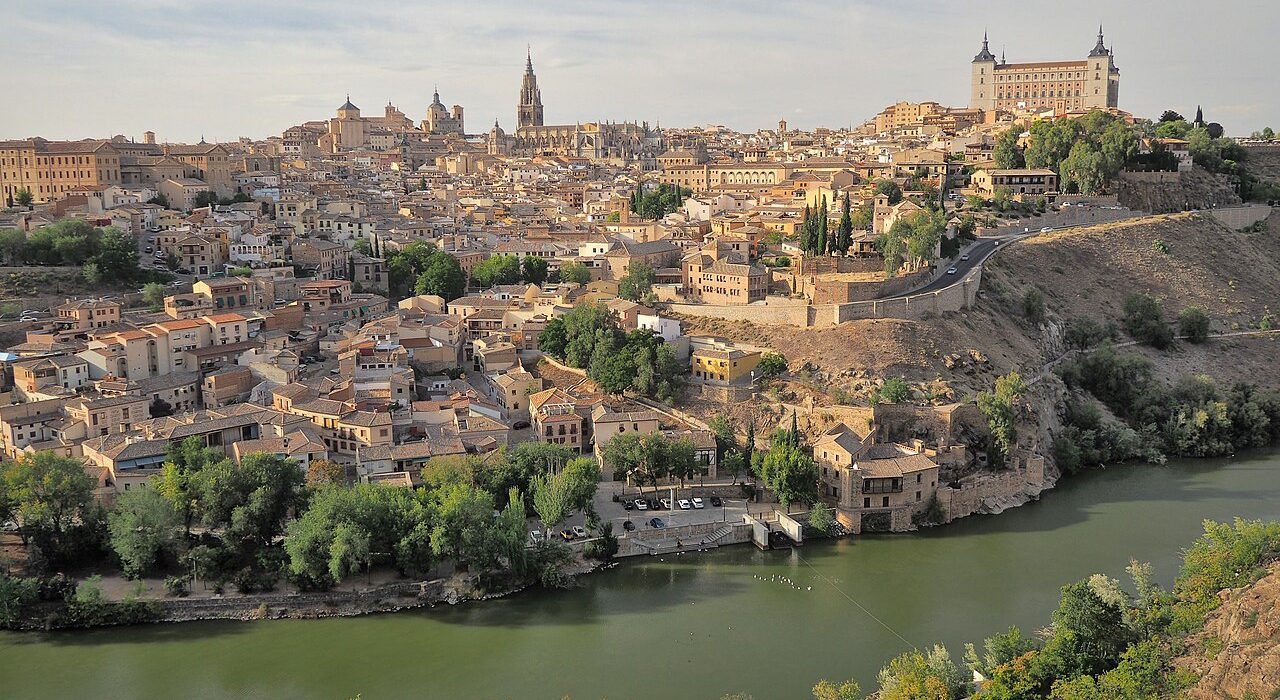
Located on the other side of the Tagus River and near the Hermitage of the Virgin of the Valley (Ermita de la Virgen del Valle), it offers the most complete panorama of the fortress-city’s skyline, highlighting the Alcázar and the Cathedral. It is a free-access viewpoint with parking available for private vehicles, making it ideal for reaching by car or taxi. Visiting at sunset is recommended to appreciate the monumental lighting and reflections on the river water.
Exhibition: Templars and Other Military Orders
The Monastery of San Clemente, occupied since the 13th century by cloistered nuns of the Cistercian Order, became one of the largest and wealthiest in the city. Legend says that the first marzipan of Toledo was made in this convent, a sweet that today is a symbol of the city. It is a place steeped in religious history and culinary tradition that deserves a stop.
🍂 Otoño
Si visitas Toledo en otoño, el clima se vuelve más fresco pero sigue siendo perfecto hasta octubre para el turismo. Tendrás menos multitudes que en verano y los atardeceres son espectaculares sobre el Tajo. Viste por capas para adaptarte a los cambios de temperatura.
What to Do in Toledo
Toledo offers specific activities such as attending the Corpus Christi procession, declared of International Tourist Interest, or exploring the Supply Market (Mercado de Abastos) in Plaza Mayor. You can immerse yourself in history by wandering through the Jewish Quarter (Judería), a charming neighborhood with a rich cultural legacy, perfect for those seeking ancient synagogues and picturesque streets. Additionally, if you visit in August, the Fair and Festivities in honor of the Virgin of the Sagrario fill the city with concerts and a vibrant medieval market.
Toledo in One Day: Express Itinerary
If you are short on time, this plan allows you to see the essentials without rushing too much, taking advantage of the compactness of the historic center.
- 10:00 – Primate Cathedral: Start the day with the supreme example of Spanish Gothic architecture to avoid afternoon crowds and view the Choir at a leisurely pace.
- 12:00 – Alcázar of Toledo: Head up to the fortress to visit the Army Museum and enjoy panoramic views from its towers before lunch.
- 14:30 – Lunch at Plaza de Zocodover: Take advantage of the main square’s setting to try local tapas like carcamusas in a lively atmosphere.
- 16:30 – Mosque of Cristo de la Luz: Visit this building dating from 999 to understand the Islamic heritage and see its nine distinct vaults.
- 18:00 – Mirador del Valle: End the day by crossing the river to see the city’s silhouette illuminated at sunset, the perfect photo opportunity to conclude your visit.
Where to eat in Toledo: local gastronomy
Where to stay in Toledo
Casco Histórico
El corazón de Toledo, ideal para explorar sus monumentos emblemáticos, calles medievales y rica historia.
Judería
Un barrio con encanto y un gran legado cultural, perfecto para quienes buscan historia, sinagogas antiguas y calles pintorescas.
Plaza de Zocodover y alrededores
La plaza principal de Toledo, un punto de encuentro con cafeterías y tiendas, ideal para iniciar la visita y disfrutar del ambiente.
How to get to Toledo
The main connection is by rail, although it is important to note the current limitations of the station.
| Medio | Duración | Precio aprox. | Frecuencia |
|---|---|---|---|
| Tren | Variable según origen | Variable | Regular |
| Bus Urbano | N/A (Local) | Económico | Continuo |
It is essential to know that the Toledo train station currently does not have AVE service, so travel times from Madrid or other cities may be longer than on high-speed lines. Once in the city, urban bus transport is the available option for getting around the different areas.
Getting around Toledo
Urban transport in Toledo relies on the city bus, which connects the various points of interest and neighborhoods. Since the historic center is largely pedestrianized and the streets are steep, walking is the best option for the main attractions, saving the bus for longer journeys or for the ascent from the station.
Weather in Toledo
Best time to visit Toledo
Day trips from Toledo
If you have more time, nearby towns offer perfect complements to your visit. Aranjuez is a classic destination, known for its royal palace and gardens, located a short distance away. Madrid, the capital of Spain, is very close and offers a massive modern and cultural contrast. Cuenca, with its famous hanging houses, is another excellent option for a day trip combining nature and unique architecture.
Who is Toledo for?
Toledo is an ideal destination for history lovers, given its UNESCO World Heritage status and the density of medieval, Mudéjar, and Renaissance monuments. It is also perfect for foodies wanting to try traditional, hearty gastronomy such as partridge or marzipan. With an average stay of 1.56 nights and 28% foreign travelers, it is a place that attracts both backpackers looking for budget hostels (€18–30) and couples enjoying charming hotels in the historic center.
Frequently Asked Questions about Toledo
How many days do I need to see Toledo?
With an average stay of 1.56 nights according to the INE, a weekend is enough to see the essentials. A full day allows you to visit the Cathedral, the Alcázar (fortress), and the Jewish Quarter, but two days will give you time for quieter museums and to enjoy the gastronomy without rushing.
Is Toledo expensive?
Not necessarily. You can eat for an average of €20-30 and find accommodation from €18-30 in hostels or €50-80 in 3-star hotels. It is an accessible destination compared to other European capitals, especially if you take advantage of combined tickets.
What is the best time to visit Toledo?
The best time is from May to October, with average summer temperatures of 25.9°C. Avoid winter if you prefer to steer clear of average temperatures of 7.5°C, although the city is beautiful in any season. Spring and autumn are usually the most balanced times.
How do I get to Toledo from Madrid?
The connection is mainly by train from Toledo Station. Please note that there is currently no direct AVE service at this station, so you should check the schedules for available conventional or regional trains.
What can’t I miss in Toledo?
In addition to the Cathedral and the Alcázar (fortress), don’t miss the Mosque of Cristo de la Luz from the year 999 and the Mirador del Valle (Valley Viewpoint) for the best panoramic photo. The Synagogue of Santa María la Blanca, the oldest in Europe, is also a must-visit to understand the city’s Jewish history.
🗺️ Rutas desde Toledo
- How to Get from Cuenca to Toledo: Distance, Train, Bus and Car
- How to Get from Toledo to Cuenca: Distance, Train, Bus and Car
- How to Get from Aranjuez to Toledo: Distance, Train, Bus and Car
- How to Get from Toledo to Aranjuez: Distance, Train, Bus and Car
- How to Get from Toledo to Madrid: Distance, Train, Bus & Car
- How to Get from Madrid to Toledo: Distance, Train, Bus & Car