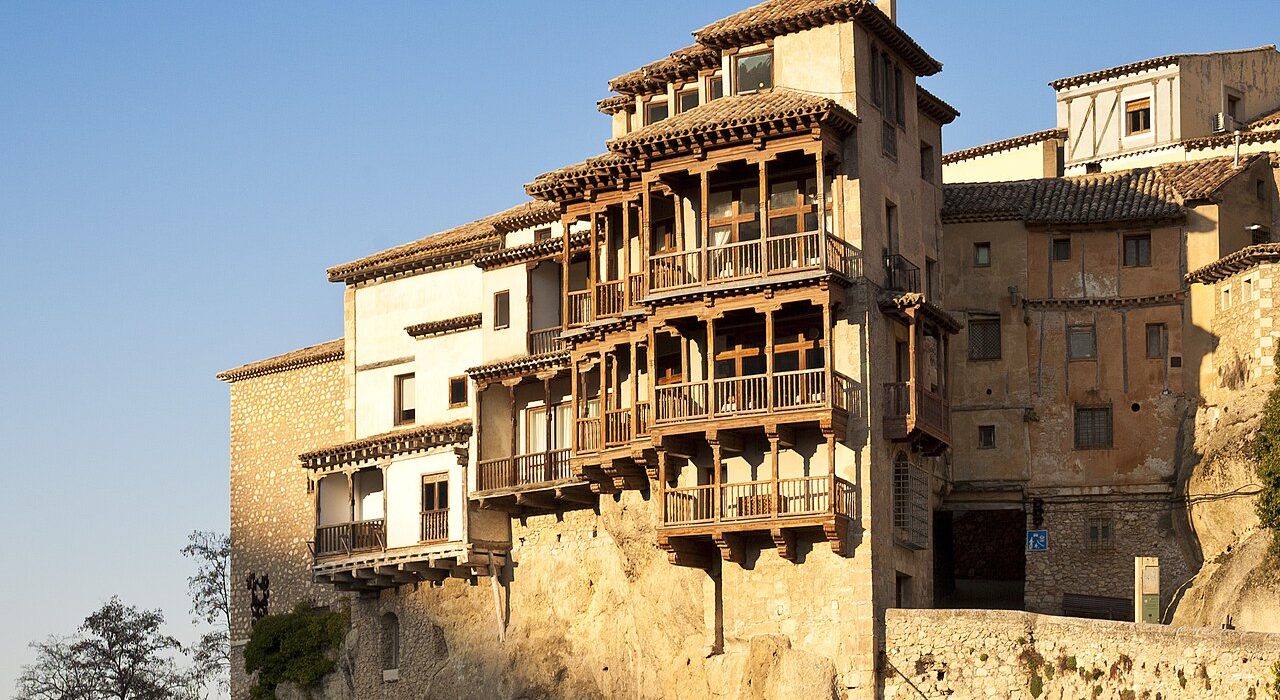
Toledo → Cuenca
180 kmCrossing the vastness of the southern Meseta on the way to the “hanging city” is an experience that combines the efficiency of modern highways with the calm of La Mancha’s landscapes, where the horizon opens up before you, promising an adventure barely two hours away. This journey is not just a transfer between two historic capitals, but a direct bridge to nature and heritage, ideal for those looking to escape the routine without spending too much time on the road.
How to get from Toledo to Cuenca: quick summary
The fastest way to travel from Toledo to Cuenca is by bus, taking only 120 minutes, although the most flexible option is driving so you can enjoy stops along the way. If your priority is comfort and you don’t mind a fixed schedule, the AVANT train is a solid alternative, but you should know there is only one departure per day. For travelers in a hurry with little luggage, the bus operated by Aisa offers the best time-to-price ratio, covering the 180 kilometers in a record time of 2 hours. On the other hand, if you plan to explore the region freely, driving your own vehicle will allow you to stop in charming towns such as Aranjuez or Tarancón, turning the journey into part of the destination.
By car from Toledo to Cuenca
The driving route from Toledo to Cuenca covers exactly 180 kilometers and takes an estimated 1 hour and 55 minutes of actual driving time. To make this journey, you will need to combine several main highways that cross the heart of Castilla-La Mancha, all of them toll-free, which makes this option very economical in terms of road infrastructure. The route begins by taking the A-42, known as the Toledo Highway, which will quickly take you out of the imperial city heading north. From there, the natural connection is made via the A-4, the famous Southern Highway, which acts as the backbone of transport in this area. Later, you will link up with the A-40, the Southern Meseta Highway, a key route that connects the region horizontally and will bring you closer to your final destination. Finally, to reach Cuenca, you will use sections of the A-3, the Eastern Highway. It is important to note that all these roads (A-3, A-4, A-40 and A-42) are toll-free highways, so the only variable cost will be your vehicle’s fuel. The asphalt is usually in good condition, allowing you to maintain a constant and safe speed for almost two hours of travel, enjoying the flat, wide views that characterize the meseta.
By train from Toledo to Cuenca
The train journey from Toledo to Cuenca is operated exclusively by Renfe and features a direct high-speed service that takes 134 minutes to complete the route. The type of train available for this route is the AVANT, a high-speed medium-distance service designed to connect nearby cities quickly and comfortably. However, it is crucial that you plan your trip in advance because the frequency is very limited: currently there is only 1 train per day. The departure time is fixed, with the first and only train leaving at 16:25 from Toledo station. This means that the last train of the day is also at 16:25, so there is no room for error if you decide to choose this option. Arrival is at Cuenca Fernando Zobel station, a modern terminal that will leave you very close to the city center. Although the travel time of 134 minutes is competitive, the rigidity of the schedule (a single daily departure) makes this option ideal only for travelers with very specific itineraries who can adapt to the mid-afternoon departure. There are no other types of trains available according to current data, so the AVANT is your only direct rail option.
By bus from Toledo to Cuenca
The bus option is currently the fastest way to travel from Toledo to Cuenca, with a journey time of just 120 minutes and an economical price ranging between 12 and 13 euros. The company responsible for operating this direct service is Aisa, a company with extensive experience in regional routes. Unlike the train, which has a single departure, the bus usually offers a more agile alternative in terms of pure travel time, even surpassing the car in average speed by avoiding potential urban congestion or strict speed limits on certain stretches. The price is very competitive, sitting in the 12-13€ range, making it the cheapest option if you are not traveling in a shared car. It is a direct service, meaning you will not have to make any transfers or change vehicles during the two-hour journey. This option is highly recommended for backpackers, students, or travelers looking to maximize their budget without sacrificing too much time on the road, arriving in Cuenca in record time.
Recommended stops along the way
If you decide to make the journey by car, the 180-kilometer route offers several excellent opportunities to stretch your legs and discover small treasures before reaching the hanging city. Below, we detail the strategic points for taking a break:
- Bargas: Located very close to the start of the route, Bargas is an ideal point for a first technical stop just after leaving Toledo. Its strategic location next to the main roads makes it a common place to pass through, perfect for getting into the rhythm of the road before heading into the meseta (central plateau).
- Yuncos: Continuing along the highway, Yuncos appears as another relevant population center in the early stretches of the journey. It is a useful stop if you need to refuel or find basic services before leaving behind the most densely populated area near the Toledo capital.
- Seseña: This municipality is in a key position within the province of Toledo. Stopping in Seseña allows you to observe the transition of the landscape and offers convenient rest areas for drivers traveling along the A-4 and its connections. It is an important reference point on the map of the route eastward.
- Aranjuez: Although a slight detour may involve a few extra minutes, Aranjuez is a stop of great historical and scenic value. Known for its Royal Site, it is a place where nature and architecture merge. If your schedule allows, it is one of the most visually rewarding stops of the entire journey, offering a green and monumental contrast to the surrounding plain.
- Ocaña: Situated in a privileged setting, Ocaña is a classic stop on routes crossing the region. Its main square and surroundings invite a longer rest, perhaps for a coffee or a light bite. It is a perfect midpoint to divide the journey into two equal parts and recharge your energy.
- Tarancón: Already on the final stretch toward Cuenca, Tarancón stands as the last major stop before arrival. It is an important communications hub and a place with plenty of life. Stopping here allows you to arrive in Cuenca with a full tank and your batteries recharged, having covered most of the 180 kilometers of the route.
Where to stay in Cuenca
On arriving in Cuenca, you’ll find a varied range of accommodation to suit different budgets, although booking in advance is advisable due to the city’s popularity with tourists. The most recommended areas to stay are the Casco Histórico (Old Town), for those who want to be steps away from the Casas Colgadas (Hanging Houses) and the Cathedral, and the area around the Train Station (Cuenca Fernando Zobel), which is more modern and tends to have better transport connections and parking. As for types of accommodation, the city offers a mix of traditional hotels, boutique guesthouses, and tourist apartments. Price ranges can vary significantly depending on the season; in low season you can find budget-friendly options, while on weekends and public holidays prices tend to rise. There is no single fixed price, but mid-range accommodation generally offers the best value for money for enjoying the local cuisine and the view of the Huécar gorge from your window. It is advisable to look for options that include breakfast to start the day with energy before exploring the city’s steep streets.
Frequently asked questions about the Toledo-Cuenca route
How long does it take to get from Toledo to Cuenca?
Travel time varies depending on the chosen means of transport. By bus, the journey is the fastest, taking exactly 120 minutes. If you travel by car, the estimated time is 1 hour and 55 minutes to cover the 180 km distance. Finally, the Renfe AVANT train takes 134 minutes to complete the direct journey between both stations.
Which is cheaper, the train or the bus?
Based on current data, the bus is generally the most economical and predictable option in terms of price, with fares ranging between 12 and 13 euros. The price of the AVANT train can vary depending on how far in advance you book and the specific Renfe fare, but the bus offers a very competitive and fixed price range for this 180 km journey.
Is it worth renting a car?
Yes, it is worth renting a car if your goal is not just to arrive, but to enjoy the journey. Given that there are verified recommended stops such as Aranjuez, Ocaña, and Tarancón, having your own vehicle gives you the freedom to explore these places that public transport (with its single daily train or fixed bus routes) does not allow you to visit at leisure. Additionally, the A-3, A-4, A-40, and A-42 roads are toll-free highways, which lowers the cost of the trip.
When is the best time to travel?
The best time to travel depends on your preferences, but given that the train only has one daily departure at 16:25, you must plan your day around that schedule if you choose that option. For traveling by car or bus, any time is fine, but it is recommended to avoid peak departure times from Toledo if you want to maintain the 1h 55min time without traffic. The route is viable all year round thanks to the quality of the highways.