Valencia → Cuenca
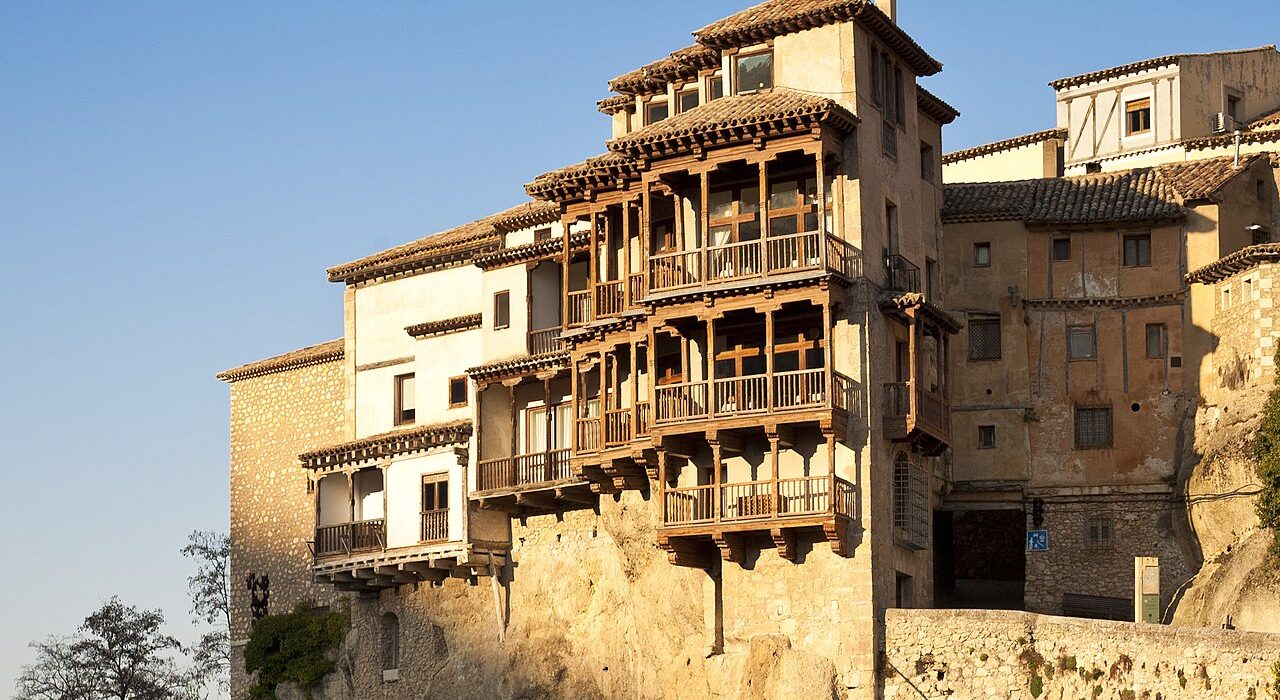
188 kmLeaving Valencia behind—with its orange blossom scent and the vastness of the Mediterranean—and heading into Spain’s interior is one of the most rewarding landscape changes you can experience in a weekend. In barely two hours, the road takes you from the vibrant market gardens to the Hoces del Júcar (Júcar River Gorges), where time seems to have stood still on the stone facades of the Ciudad Colgada (Hanging City), a geographic and visual contrast that makes this journey a far richer experience than a simple point-A-to-point-B transfer.
How to Get from Valencia to Cuenca: Quick Overview
The most efficient way to travel from Valencia to Cuenca depends entirely on whether you prioritize speed or flexibility for exploring along the way. For the traveler looking to arrive in a matter of minutes and enjoy absolute comfort, the AVE train is the undisputed choice, covering the distance in under an hour; however, if your intention is to do some road touring, enjoy food stops, and have freedom of movement once at your destination, a private car remains king of the route thanks to a network of free, well-maintained highways.
It’s worth noting that, unlike other nearby destinations, there is no direct bus option connecting the two cities, which eliminates that alternative for those seeking affordability without transfers. Therefore, the decision essentially comes down to two profiles: the fast traveler who chooses the high-speed rail service operated by Renfe, and the explorer who prefers to drive their own 188 kilometers. If you’re traveling in a group or with family, the car usually pays for itself, while for solo travelers or couples who don’t want to worry about parking in the historic center, the train is the definitive solution.
Driving from Valencia to Cuenca
Driving from Valencia to Cuenca is a straightforward and quick 188-kilometer journey that takes approximately 2 hours thanks to modern, completely free road infrastructure. The main route runs along the A-3, known as the Autovía del Este (Eastern Highway), which acts as the backbone of this trip, taking you out of the capital of the Turia and into the interior of the peninsula without any toll costs.
To make this journey smoothly, it’s essential to understand the connections offered by the available road network. Depending on your exact departure point in the Valencia metropolitan area, you might initially take the A-7 (Autovía del Mediterráneo) to quickly link up with the A-3. As you progress and approach the province of Cuenca, the route connects you with the A-23, the Autovía Mudéjar, and finally with the A-40, the Autovía de la Meseta Sur, which leaves you practically at the city’s doorstep. The highlight of this route is that all these roads—A-7, A-3, A-23, and A-40—are toll-free highways, meaning the only cost of your trip will be fuel and vehicle wear and tear, with no last-minute surprises at toll barriers. Driving is generally relaxed, with long straight stretches that allow you to maintain a constant speed, although caution is recommended when entering the mountain areas near the final destination.
By train from Valencia to Cuenca
The train is, without a doubt, the fastest option for traveling between Valencia and Cuenca, with a minimum journey time of just 54 minutes that turns a considerable distance into a short ride. Operated exclusively by Renfe, this high-speed service has revolutionized the connection between the coast and the meseta (central plateau), offering a very high frequency that makes it easy to plan single-day getaways or impromptu weekend trips.
Currently, there are 13 daily trains covering this route, providing enviable schedule flexibility. The first train leaves at 6:32 in the morning, ideal for those who want to make the most of their day in Cuenca, while the last service departs at 21:12, allowing for relaxed dinners in the city before returning. Within this offering, travelers can choose between two types of high-speed services: the classic AVE, with 8 daily departures and a journey time of 54 minutes, and the AVLO, Renfe’s low-cost train, with 5 daily departures and a slightly longer duration of 61 minutes. The journey begins at the modern Valencia Joaquín Sorolla station and ends at Cuenca Fernando Zobel station, strategically located to provide easy access to the city. The punctuality and comfort of these trains make the travel time almost imperceptible, allowing you to arrive rested and ready to visit the Casas Colgadas (Hanging Houses) as soon as you step off the platform.
Recommended stops along the way
If you decide to make the journey by car, the route offers several strategic points of interest where you can stop to stretch your legs, enjoy local cuisine, or visit historic monuments before arriving in Cuenca. Below, we detail the verified stops you can include in your itinerary to enrich the trip:
- Alboraia / Alboraya: Located very close to the start of the route, in the Valencia metropolitan area, it is the perfect stop for an energizing breakfast. Famous worldwide for its horchata (tiger nut milk), it is the ideal place to begin the journey with the traditional flavor of the Valencian huerta (market garden) before getting on the highway.
- Massamagrell: Another municipality near the Valencia exit that offers a quiet, residential atmosphere. It is a good reference point if you need to run a final errand or make a purchase before heading onto the A-3 road toward the interior.
- Vilamarxant: Located in the Camp de Túria region, Vilamarxant marks the transition between the more densely populated area and the beginning of more open landscapes. It is a brief but pleasant stop to observe the local architecture before picking up speed on the highway.
- Aldaia: Situated in the first metropolitan ring, Aldaia is quickly accessible from the connecting roads. Although it is mainly a pass-through area for many travelers, it has useful services if you need to refuel or grab a quick coffee at the start of the journey.
- Segorbe: As you move away from the coast, Segorbe presents itself as a first-rate cultural stop. Known for its medieval heritage and its walls, it is the ideal place for a longer break, to walk through its old town, and to enjoy the view before continuing toward the plateau.
- Requena: This is probably the most important gastronomic and wine stop on the route before reaching Cuenca. Famous for its wine production and its La Villa quarter, Requena offers numerous restaurants and wineries where it is highly recommended to stop for lunch or to taste local products.
- Motilla del Palancar: Already in the province of Cuenca and very close to the final destination, Motilla del Palancar is a strategic stop for the last few kilometers. It is a key point on the A-3 route and offers rest services so you can arrive with energy to the Hoces del Júcar (Júcar River gorges).
Where to stay in Cuenca
To choose the perfect accommodation in Cuenca, you need to decide whether you prefer the magic of sleeping within the historic heritage or the comfort and accessibility of the modern city. The offering is mainly divided into two distinct areas that define the visitor experience: the Historic Quarter and the New Town.
The Historic Quarter is the most sought-after option for tourists looking for total immersion. Sleeping here means staying in restored buildings, often with stone facades and wooden beams, just steps from the Cathedral and the famous Casas Colgadas (Hanging Houses). In this area you will find everything from charming upper-category hotels to boutique hostels and tourist apartments managed by private owners. Prices in this area tend to be higher, especially on weekends and public holidays, due to high demand and limited space, but the chance to wander through cobbled streets at night without traffic noise is priceless.
On the other hand, the New Town, or ensanche (urban expansion area), offers a more practical and affordable alternative. This area has a wider variety of standard hotel chains, family-run guesthouses, and more budget-friendly accommodation options. The main advantage of staying here is the ease of parking, a critical factor if you have traveled by car, since access to the old town can be restricted. Additionally, the new area concentrates most of the nightlife, modern restaurants, and supermarket services, making it ideal for travelers who prioritize logistical convenience over the historic atmosphere.
Frequently asked questions about the Valencia-Cuenca route
How long does it take to get from Valencia to Cuenca?
Travel time varies significantly depending on the mode of transport chosen. If you travel by private car, the 188-kilometer journey takes approximately 2 hours by highway. By contrast, if you opt for the high-speed train, the time is drastically reduced to between 54 and 65 minutes, depending on whether you take an AVE or AVLO service.
Which is cheaper, the train or the bus?
This comparison does not apply on the direct route, since according to verified data, there is no direct bus service between Valencia and Cuenca. Therefore, the train is the only viable public transport option. To find cheap train fares, it is recommended to look for seats on AVLO trains, which are Renfe’s low-cost option, or to book AVE services in advance.
Is it worth renting a car?
Renting a car is worth it if your goal is to explore intermediate stops such as Requena or Segorbe, or if you plan to visit the surroundings of Cuenca such as the Ciudad Encantada (Enchanted City), where public transport is limited. However, if your visit is strictly limited to the urban center of Cuenca and you prefer to avoid looking for parking, the train is a superior option in terms of speed and comfort.
When is the best time to travel?
The best time to travel depends on your preferences regarding weather and crowds. Spring and autumn are ideal for enjoying the scenery along the route by car and the mild temperatures in the city. If you travel by train, any time of year is good due to the speed of the journey, although it is recommended to avoid holiday weekends if you are looking for lower fares on AVE and AVLO tickets.
📍 También te puede interesar
Qué ver en Valencia →
Qué ver en Cuenca →