Alcalá de Henares
Comunidad de MadridClimate
Daily budget
What to see in Alcalá de Henares: the essentials
University and Historic Precinct
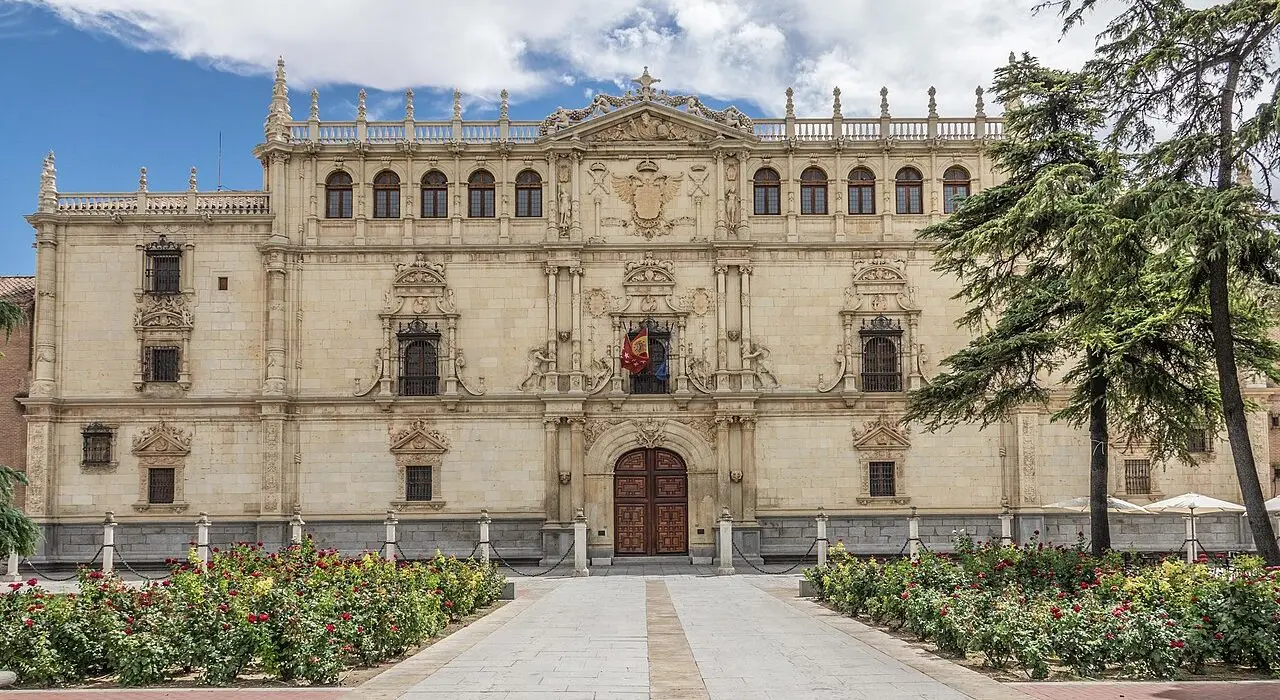
If you only have time for one thing in Alcalá, make it this. The University and its Historic Precinct have been a UNESCO World Heritage Site since 1998, and the city’s monumental heart beats around the Colegio Mayor de San Ildefonso, its most emblematic building. The Plateresque façade and the Patio de Trilingües (Trilingual Courtyard) deserve a long stop, and the feeling of walking the same floors as Cervantes, Lope de Vega, or Francisco de Quevedo is hard to match anywhere in Spain. It opens every day from 10:00 to 19:00 and requires an entrance ticket, so set aside some time for the visit and check updated prices on the official Alcalá de Henares tourism website. It is, without question, the number one essential.Convento de la Imagen (Convent of the Image)
Founded in 1563 by the blessed Sor María de Jesús under the patronage of Doña Leonor de Mascareñas, governess to Philip II, this monastery was a convent of Discalced Carmelite nuns until the confiscation of church properties. Its Renaissance façade, attributed to Alonso de Covarrubias, is decorated with grotesques, dragons, and fantastical figures, and its niche shelters an image of the Immaculate Conception above the Carmelite coat of arms. The interior, with its staircase and courtyard also by Covarrubias, is an architectural delight that now functions as a cultural space. The cloister visit is free in the morning, a perfect plan if you’re staying nearby.Plaza de Cervantes
The nerve center of Alcalá, surrounded by historic buildings and with the statue of Cervantes presiding over the ensemble. It’s the perfect spot to grab a drink, watch the bustle of white storks (a species classified as vulnerable and protected in Spain) nesting on the rooftops of the old town, and plan your next visit. Stop by at sunset: the light gives it a special grandeur.Plaza de los Santos Niños
Here stands the Catedral Magistral (Magistral Cathedral), and the square is almost an open-air museum. The main altarpiece and the choir are standout pieces of the complex, and if you’re up for climbing the tower of the Magistral Cathedral, you’ll get a panoramic view of the historic center, with its main monuments and the line of old-town buildings where white storks nest. It’s well worth it.Antiguo Hospital de Nuestra Señora de la Misericordia (Old Hospital of Our Lady of Mercy, Fundación Antezana)
This UNESCO monument retains a Plateresque façade and a Renaissance interior courtyard that will take your breath away. Beyond its heritage value, the building is still very much alive: today it’s a senior center run by the Fundación Antezana that continues to provide social services. Visiting hours for the courtyard and façade are limited, so it’s best to check in advance.Puerta de Madrid
Built in 1788, it is the only remaining gate from the old entrances to the walled city. Its semicircular arch is crowned by a sculptural group and marks the start of the road axis that connected Alcalá with Madrid, hence its name. It stands in the square of the same name, is freely accessible, and forms part of the World Heritage Site of the University and historic precinct. Pass through it on your way to the old town: the photo is worth it.Casa de los Grifos (Griffin House Palace)
The exterior visit is free and allows you to appreciate the heraldic iconography and coats of arms of the former owners. If you want to go inside, public visiting hours are Tuesdays from 10:00 to 14:00 and from 16:00 to 18:00, and Wednesdays from 10:00 to 14:00, remaining closed the rest of the days. For more information you can call 698 39 35 50. It is registered as a site of historical interest in Alcalá de Henares.Catedral Magistral de los Santos Justo y Pastor (Magistral Cathedral of Saints Justus and Pastor)
It is the only church in the world, together with the one in Leuven (Belgium), that holds the title of ‘Magistral’. A record worth remembering when you visit it: few temples can boast such a singular recognition.Yacimiento y Foro de Complutum (Complutum Archaeological Site and Forum)
The ancient Roman city of Complutum, origin of today’s Alcalá de Henares, has vestiges dating back to the 1st century BC and reached an extension of more than 50 hectares next to the road that linked Augusta Emérita (Mérida) with Caesaraugusta (Zaragoza). At the site, the remains of the monumental forum, the monumental facade, the civil Basilica, the market, the thermal baths and the famous Paredón del Milagro (Miracle Wall) stand out. If you like archaeology, it is a must-see.Calle Mayor (Main Street)
Considered the longest arcaded street in Spain, with 396 meters in length and 242 vertical supports, it is full of shops, bars and restaurants. Walking it from end to end is almost a local rite in Alcalá, ideal for going out for tapas or buying something typical.Museo Casa Natal de Cervantes (Cervantes Birthplace Museum)
A recreation of the house where Miguel de Cervantes, the author of Don Quixote, was born. An essential stop for lovers of Spanish literature, and a perfect place to understand the environment that saw the most universal writer in the Spanish language grow up.Corral de Comedias (Comedy Playhouse)
Built in 1601, it is considered the oldest in Europe still in operation, one of the oldest preserved public theaters on the continent. If you coincide with a performance, do not miss it.Plaza de los Santos Niños (Square of the Holy Children, second mention)
In addition to the Cathedral, the square itself is one of the liveliest spots in the historic center, with terraces and a very pleasant atmosphere for resting between visits.Other gems worth a stop
The Torre de Santa María (Tower of Saint Mary), a Bien de Interés Cultural (Asset of Cultural Interest) under the protection of Law 16/1985, can be visited inside on weekends in the morning. The Palacio Laredo (Laredo Palace), a Renaissance palace from the 16th century, is the seat of the Archbishopric, with limited access. The Muralla de Alcalá de Henares (Walls of Alcalá de Henares) and its Gardens, the Palacio Arzobispal (Archbishop’s Palace) and the Roman City of Complutum itself complete a monumental repertoire that has nothing to envy to much more crowded cities.🍂 Otoño
Si visitas Alcalá de Henares en otoño, disfrutarás de otra de las mejores épocas, con temperaturas agradables y menos turistas que en primavera. Es el momento ideal para callejear por el casco histórico, visitar el Antiguo Hospital de Nuestra Señora de la Misericordia (Fundación Antezana) o sentarte en la Plaza de los Santos Niños a tomar algo al aire libre. Lleva alguna chaqueta ligera porque por la tarde refresca, sobre todo al caer el sol sobre la Muralla.
What to do in Alcalá de Henares
Alcalá de Henares offers two unmissable events for market lovers: the Mercado Cervantino (Cervantes Market) in October, considered the largest medieval market in Europe, and the Mercadillo de los Lunes (Monday Flea Market), a large open-air market at the fairgrounds with all kinds of products. If you prefer a nighttime plan, head to the La Garena neighborhood, the modern area with a wide range of restaurants and nightlife. To soak up history, the best option is to get lost in the historic center among monuments, arcades and tapas bars. And if you are traveling with family, do not forget that more than 200,000 inhabitants live in a city that can still be explored on foot with absolute ease.Alcalá de Henares in one day: express itinerary
- 10:00 — University and Historic Precinct (Patio de Trilingües and the façade of the Colegio Mayor de San Ildefonso). Arrive early to avoid queues and make the most of the morning light.
- 11:30 — Plaza de Cervantes. Quick coffee and the writer’s statue to start your tour of the old town on the right foot.
- 12:00 — Museo Casa Natal de Cervantes (Cervantes Birthplace Museum). Small but essential for understanding the author’s life.
- 13:00 — Catedral Magistral de los Santos Justo y Pastor and climb the tower for panoramic views of the old town.
- 14:30 — Tapas crawl along Calle Mayor: costrada, duelos y quebrantos, and some almendras garrapiñadas to refuel.
- 16:30 — Complutum archaeological site and forum. Time to switch eras and visit the Roman city from the 1st century BC.
- 18:00 — Convento de la Imagen and Casa de los Grifos to round off the day with Renaissance heritage.
Where to eat in Alcalá de Henares: local gastronomy
Where to stay in Alcalá de Henares
Casco Histórico
Ideal para sumergirse en la historia, visitar monumentos y disfrutar de la gastronomía.
La Garena
Zona moderna con una amplia oferta de restaurantes y ambiente nocturno.
How to get to Alcalá de Henares
From Madrid, the fastest option is the bus: 25 min (ALSA, Samar), 310 a day.
| From | Direct train | Direct bus | Car |
|---|---|---|---|
| Madrid | 29 min · 125/day Regional | 25 min · 310/day ALSA, Samar | 35 min 34 km |
| Torrejón de Ardoz | 11 min · 114/day Cercanías C2 | 10 min · 77/day ALSA | 15 min 13 km |
| Coslada | 22 min · 110/day Regional | — | 24 min 22 km |
| Guadalajara | 22 min · 65/day Cercanías C2 | 15 min · 63/day ALSA | 24 min 25 km |
| Las Rozas de Madrid | 1 h 18 min · 33/day Cercanías C7 | — | 48 min 50 km |
| Pozuelo de Alarcón | 1 h 28 min · 33/day Cercanías C7 | — | 45 min 43 km |
| Majadahonda | 1 h 21 min · 33/day Cercanías C7 | — | 49 min 48 km |
| Arganda del Rey | — | 31 min · 5/day ALSA | 31 min 27 km |
| Soria | 4 h 10 min · 4/day Regional | 2 h 54 min · 1/day ALSA | 2 h 14 min 195 km |
| Zaragoza | 5 h 19 min · 1/day Regional | 3 h 30 min · 3/day ALSA | 3 h 12 min 279 km |
Direct trains and buses from the official timetables published by the operators on Spain's National Transport Access Point (a reference Wednesday); driving times from OpenStreetMap. Operators that do not publish their timetables may run more services. Check the timetable before you travel.
How to get around Alcalá de Henares
The center of Alcalá is pedestrian-friendly and easily walkable, which is the best way to soak up the atmosphere. For longer trips, there’s an urban bus network connecting neighborhoods like La Garena with the center. If you’re driving, keep in mind that the historic center has pedestrian streets and restricted traffic zones, so your best bet is to park in the designated parking lots and forget about the wheel.Weather in Alcalá de Henares
Best time to visit Alcalá de Henares
Day trips from Alcalá de Henares
- Madrid, just 31 km away: the capital is a train ride away and a full day gives you time for much more than a quick overview. If you’re staying in Alcalá, a morning visit to the Museo del Prado or the Reina Sofía and a return at sunset to go tapas-hopping along Calle Mayor is a perfect plan.
Things you didn’t know about Alcalá de Henares
Calle Mayor in Alcalá de Henares, at 396 metres long and with 242 vertical supports, is considered the longest porticoed street in the world built from residential housing. A record that doesn’t always appear in guidebooks and one you appreciate best when you walk it from end to end. The Corral de Comedias (courtyard theatre) of Alcalá, built in 1601, is considered the oldest still-operating theatre in Europe. That means if you happen to catch a performance, you’re watching theatre on the same stage where actors of the Spanish Golden Age once performed. The name Alcalá comes from the Arabic “al-qal’a,” meaning “the citadel,” giving rise to “Qal’at Abd al-Salam” (Alcalá la Vieja) after the Muslim arrival in the 8th century. Every time you say “Alcalá” you’re, without knowing it, pronouncing an echo of the Andalusian past. Miguel de Cervantes was baptised on 9 October 1547 in the parish church of Santa María la Mayor in Alcalá de Henares, son of Rodrigo de Cervantes and Leonor de Cortinas. That’s why Alcalá rightly prides itself on being the city of the author of Don Quixote, and why it organises the Mercado Cervantino (Cervantes Market) every year in his honour. From the printing presses of the University of Alcalá came the Complutensian Polyglot Bible between 1514 and 1517, the first printed polyglot Bible, in Hebrew, Aramaic, Greek and Latin. A publishing milestone that changed the history of printing and is still remembered as one of the greatest sources of pride for the people of Alcalá.Who Alcalá de Henares is for
Alcalá is a city especially recommended for lovers of history and literature, thanks to its Historic Precinct declared a UNESCO World Heritage Site and its direct link to Miguel de Cervantes. Families will find a compact old town, with parks and monuments close by, while foodies will enjoy Cervantine dishes and convent sweets at reasonable prices. Backpackers have accommodation options from €20-35 per night in hostels, and couples looking for a cultural weekend without the crowds of more overrun cities have it easy: 33% of the travellers the city receives are foreign, a sign that Alcalá captivates international visitors.💡 ¿Sabías que...?
- ● La Calle Mayor de Alcalá de Henares, con 396 metros de longitud y 242 soportes verticales, está considerada la calle porticada más larga del mundo construida a partir de viviendas residenciales. (https://viajes.nationalgeographic.com.es/a/pueblo-madrid-calle-porticos-mas-larga-mundo_23009)
- ● Alcalá alberga el Corral de Comedias construido en 1601, considerado el más antiguo de Europa que sigue en funcionamiento. (https://www.mycityhunt.es/explorer-blog/10-datos-sobre-alcala-de-henares-que-te-dejaran-boquiabierto-1449)
- ● El nombre de Alcalá proviene del árabe «al-qal'a» (la ciudadela), dando lugar a «Qal'at Abd al-Salam» (Alcalá la Vieja) tras la llegada musulmana en el siglo VIII. (https://alcala365.com/historia)
- ● Miguel de Cervantes fue bautizado el 9 de octubre de 1547 en la iglesia parroquial de Santa María la Mayor de Alcalá de Henares, hijo de Rodrigo de Cervantes y Leonor de Cortinas. (https://cvc.cervantes.es/artes/ciudades_patrimonio/alcala_henares/personalidades/cervantes.htm)
- ● De las imprentas de la Universidad de Alcalá salió la Biblia Políglota Complutense (1514-1517), la primera Biblia políglota impresa, en hebreo, arameo, griego y latín. (https://alcala365.com/historia)
Frequently asked questions about Alcalá de Henares
How many days do I need to see Alcalá de Henares?
With one well-planned full day you have time to see the must-sees (the University, Plaza de Cervantes, Cervantes’ Birthplace Museum, the Cathedral, the Convento de la Imagen and Calle Mayor), but if you want to include the Complutum archaeological site and climb the tower of the Cathedral-Magistral, the ideal is to spend one night and make the most of the evening. The average stay according to INE data is 1.79 nights, which is exactly how long most visitors tend to stay.
Is Alcalá de Henares expensive?
Not at all. An average meal ranges between 12 and 25 euros per person, and accommodation starts at 20-35€ per night in hostels, with 3-star hotels between 60-100€ and 4-5-star hotels between 85-200€ per night. It is one of the best value-for-money destinations in the Community of Madrid.
What is the best time of year to visit Alcalá de Henares?
Spring and autumn are the best seasons, according to AEMET data: the average temperature in summer is around 24°C but hot days can be very oppressive, and in winter it drops to an average of about 6°C. If you can, travel in October: it coincides with the Mercado Cervantino (Cervantes Market), the largest medieval market in Europe.
How do I get to Alcalá de Henares from Madrid?
By train from Alcalá de Henares station (no AVE), with direct destinations to Madrid, Guadalajara, Ávila and Segovia according to Renfe. By car, via the A-2 or the R-2, in about 30 minutes. And by bus, from the Bus Station with companies such as Alsa, Avanza or Monbus. Madrid-Barajas Airport is just 25 km away.
Which monuments in Alcalá de Henares are World Heritage Sites?
The University and the Historic Precinct of Alcalá de Henares were declared a UNESCO World Heritage Site in 1998. The ensemble includes the Puerta de Madrid (Madrid Gate), the Antiguo Hospital de Nuestra Señora de la Misericordia (Old Hospital of Our Lady of Mercy), the Casa de los Grifos (House of the Griffins) and the Convento de la Imagen (Convent of the Image), among other buildings.