Altea
Comunidad ValencianaClimate
The afternoon sun bathes the facades of the Old Town in white, while the blue and white dome of the Parish Church of Nuestra Señora del Consuelo (Our Lady of Solace) shines over the Mediterranean. From the cobblestone streets winding uphill, the scent of salt mingles with that of lemon trees and terrace coffee, creating a unique atmosphere in this town of 23,000 inhabitants. You don’t need a map to get lost here; simply follow the sound of the sea or the ringing of bells to discover the corners that have inspired artists for decades.
The must-seesWhat to see in Altea: the essentials
Parish Church of Nuestra Señora del Consuelo
Located at the highest point of the Old Town, this church has served as a fundamental focal point since the urban core was consolidated in the 17th century. It offers the most emblematic viewpoint for photographing the iconic blue and white dome against the backdrop of the Mediterranean Sea, serving as a visual reference from any vantage point in the old quarter. It is a public space open 24 hours a day, although the surrounding terraces operate on commercial hours, maintaining its essence as a historic main square. Its dominant position makes it the spiritual and visual heart of the city.
Sierra de Bernia
This coastal mountain range flanks one end of the Bay of Altea, offering a striking geological contrast with the sea. It constitutes an essential natural framework for understanding the area’s topography and defines the landscape to the north. It is an ideal spot for nature lovers seeking to understand the physical structure that protects the bay.
Serra Gelada Natural Park
This protected natural area, designated in 2005, is located in the province of Alicante and features cliffs rising more than 300 meters high. It harbors exceptional vegetation, including a hanging fossil dune and botanical endemics, offering routes with sea views and rugged terrain of natural value. Its conservation is vital for local biodiversity and provides a unique hiking environment along the coast.
Morro de Toix
This rocky promontory forms the seaward termination of the Sierra de Bernia, delimiting the Bay of Altea at its northern extremity towards Calpe. The upper parts of its cliffs, which rise over 200 meters, are home to distinctive species alongside Mediterranean scrubland, serving as a visual landmark from any viewpoint in the old town. Its silhouette cut against the sky is one of the most recognizable images of the Costa Blanca.
Remains of the Roman aqueduct of Altea
According to verified data, this area features characteristic beaches with rounded stones instead of sand, typical of the Altean coastline such as La Roda or El Bol. The calm waters of the Mediterranean and the mild tempered coastal climate make this free-access site perfect for inclusive enjoyment. Facilities include adapted areas, walkways to the shoreline, amphibious chairs, and accessible restrooms to ensure bathing for all visitors.
Torre de Bellaguarda
Formerly a rehabilitated hydraulic mill also known as the Aljub, it is linked to the medieval farmstead of Bellaguarda and the ancestral culture of water. It currently functions as a cultural space managed by the Regidoria de Cultura (Culture Department), bearing witness to an active medieval past between the 14th and 16th centuries, supplied by the Séquia Blanca.
Fuentes del Algar
A natural attraction located near Callosa de Ensarriá, mentioned in excursion guides for its water formations and green surroundings conducive to natural swimming. The route follows the course of the Algar River via a 1.5 km circuit among waterfalls and natural reservoirs formed by karst modeling, requiring travel by car from the urban center.
Paseo Marítimo and Playa de la Roda
Extensive seaside promenade connecting the town center with the bathing areas, offering iconic views of the Old Town (Casco Antiguo) and its blue dome. Lined with palm trees and benches, it is perfect for enjoying the Mediterranean atmosphere year-round.
Old Town of Altea (Casco Antiguo de Altea)
Fully accessible coastal stretch extending from Plaza de Europa to the mouth of the Río Algar, ideal for cycling and seaside walks with views of the white village.
Traditional Historic Core of Altea
Traditional market selling local and artisanal products from the Alicante countryside, located in the modern area of town with access from the old quarter and open several days a week.
Ermita de San Antonio
Hermitage dedicated to Saint Anthony Abbot, traditionally invoked as the protector of animals, located within the municipality; a simple building featuring traditional Mediterranean architecture and a whitewashed façade.
Mundo Marino Altea
Pedestrian stretch running along the coastline from Plaza de Europa to the mouth of the Río Algar, featuring palm trees, benches, universal accessibility, and direct access to coves and seafood restaurants.
Portal Vell
One of the ancient stone gateways to the old town, reflecting its historic defensive structure; its archway leads into the labyrinth of beautiful vistas characteristic of this fishing village.
Francisco Pérez Devesa
Commemorative monument located in the city, forming part of the local sculptural heritage.
Iberian and Roman Settlements
Area with a past dating back to Iberian and Roman times, where Greek colonists established a market called Althaia prior to Visigothic and Muslim rule.
13th-Century Walls
Remains of fortifications integrated into the old town with soft profiles, built after the arrival of James I in the 13th century during the Reconquista, with the Parish Church standing out as an icon.
Memorial per la Gent de la Mar
Monument dedicated to the people of the sea, honoring the town’s fishing and seafaring traditions.
Remains of the Medieval Wall
Remnants of the old defenses of the historic quarter, originating from the Christian conquest of the 13th century and later reinforced; fragments of walls can be seen integrated into existing buildings.
Antigua Alquería del Morisco
Historic building preserving a complete Gothic farmhouse (alquería) dating from the 14th century, constituting one of the most significant in the region due to its unique features and two-story complex.
Former Walled Enclosure
Its defensive past is linked to the medieval and modern eras against coastal incursions, today preserving its cobblestone old town and traditional white architecture.
Baluard i Recinte Renaixentista d’Altea
The Old Town retains its historic defensive layout with remains of walls and the Torre de la Vila, dominating the landscape over the Mediterranean as a designated historic-artistic site.
Casa Racons
Historic monument forming part of the city’s protected civil heritage.
Antic arc d’accés al casc antic
Monument marking one of the historic accesses to the old part of the village.
Mirador de la Glorieta del Maño
Limestone rock formations up to 30 meters high alternating with coves in the southern section of the municipality, accessible via signposted coastal trails of the GR-92.
Plaza Tónico Ferrer
Urban square in the old town dedicated to the Altea musician Tónico Ferrer, set within an environment of soft contours and seafaring tradition, featuring terraces and dining establishments.
Paseo del Mediterráneo
Series of elevated viewpoints distributed across the upper streets of the village, offering varied photographic frames toward the marine horizon via routes through cobblestone streets.
Palm Tree Promenade
Part of the seafront promenade, it is distinguished by its row of palm trees providing shade along the path, designed as a space for relaxation and peaceful strolls by the sea.
Mirador Cronistes d’Espanya (Chronicles of Spain Viewpoint)
An urban viewpoint offering elevated perspectives over the city surroundings and the coastline.
Mirador Alfonso Yébenes Simón (Alfonso Yébenes Simón Viewpoint)
A dedicated observation point allowing visitors to contemplate the Altean landscape from a privileged height.
Olla de Altea Cultural Center
Remains of the defensive system that protected the town since the 16th century against pirate incursions, integrated into the Baluard i Recinte Renaixentista route with preserved sections of local stone.
Artisan Workshops and Art Galleries
Small establishments located in the old town where local crafts are made and sold, creating a unique atmosphere and allowing visitors to acquire traditional products directly from the creators.
Fish Market (Lonja de Pescado)
A historic building in Valencian Modernist style constructed between 1917 and 1921 in the city of Alicante, originally a fish market and currently a cultural exhibition hall managed by the City Council.
Cobbled Streets of Altea
Traditional stone streets structuring the labyrinth of the old town since medieval times; their sloping route requires comfortable footwear and allows appreciation of the whitewashed architecture.
Punta de Mascarat
A coastal promontory south of Altea Bay on the Costa Blanca offering panoramic views of the entire coast up to Benidorm and the Sierra Helada, accessible via a coastal trail.
Pebble Beach Area
Characterized by its surface of smooth stones instead of the fine sand typical of the area, it is a natural attraction frequently mentioned by visitors seeking tranquility.
Calle Mayor (Main Street)
The main thoroughfare crossing the old town, connecting the different levels of the village towards the Parish Church and hosting numerous traditional shops.
Cala Cap Negret
A virgin rocky cove located in the municipality of Teulada-Moraira, accessible from the road between Moraira and Calpe, forming part of the European Natura 2000 Network.
San Miguel Street
A small historic chapel within the old town enclosure, featuring traditional Mediterranean architecture with a whitewashed facade, occasionally open for guided visits.
Playa de la Olla
A stretch of coast characterized by pebbles and calm Mediterranean waters situated next to the urban center, including areas such as Playa de La Roda and Cap Blanc Norte with adapted services.
Marina Greenwich
A port and maritime leisure area on the Altea coast offering sports sailing services and water activities, connected to the main seafront promenade.
Albir Lighthouse Path
Small rocky coves located towards the municipal boundary with Benidorm, integrated into the Serra Gelada Natural Park, characterized by a preserved natural environment defined as a Natural Monument.
Catamaran Excursions
A nautical activity available from the coast to observe the town’s profile from the sea, offering a different perspective of the bay.
Church of the Holy Archangels (Orthodox Church)
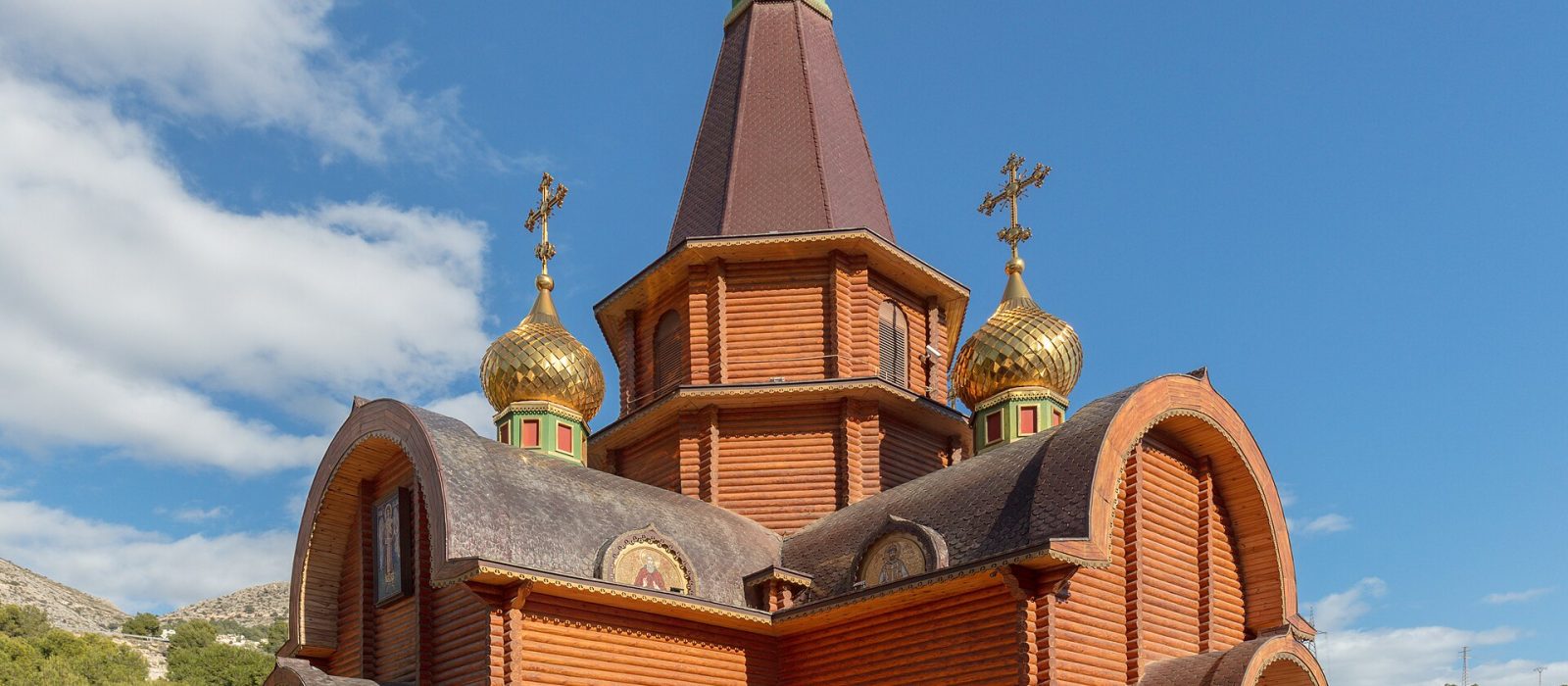
A temple of the Russian Orthodox Church noted for its golden dome visible from the coast, located in the Altea Hills development, constituting the first temple of this denomination built in Spain.
Garden of the Senses
A traditional seaside area where local fishing activity is maintained, featuring white Mediterranean-style houses and beached boats that create an authentic maritime atmosphere.
Fornet Neighborhood
An area preserving the village’s seafaring tradition, located in the lower part near the sea and its pebbles, maintaining a serene and tranquil atmosphere beneath the views of the old town.
🍂 Otoño
Si visitas Altea en otoño, el clima sigue siendo agradable aunque pueden aparecer algunas lluvias. Es un momento excelente para disfrutar de la gastronomía local con más tranquilidad. Consulta siempre la previsión meteorológica antes de planificar rutas al aire libre.
What to do in Altea
Altea offers cultural and leisure activities based on its rich history and natural surroundings, ranging from traditional markets to unique pyrotechnic shows. You can stroll through the Mercado Municipal de Altea (Altea Municipal Market) to buy fresh local products or visit the Mercadillo Semanal (Weekly Market), held outdoors every Tuesday. For history lovers, the Moros y Cristianos (Moors and Christians) celebration in September commemorates historical battles with parades and music, while in August the Castell de l’Olla lights up the sky with fireworks launched from the sea. Exploring recommended neighborhoods such as the Casco Antiguo (Old Town), the Paseo Marítimo (Seafront Promenade), or Bellaguarda will allow you to immerse yourself in local life, whether looking for craft shops or enjoying residential tranquility.
Altea in one day: express itinerary
If you are short on time, this plan allows you to see the essentials of the city in an intense but enjoyable day.
- 10:00 AM – Iglesia Parroquial de Nuestra Señora del Consuelo: Start by heading up to the Casco Antiguo to see the blue dome and enjoy panoramic sea views from the most emblematic viewpoint.
- 12:00 PM – Calles Empedradas and Portal Vell: Get lost in the labyrinth of cobblestone streets, crossing the ancient access arch to appreciate the white architecture and visit artisan workshops.
- 14:30 PM – Lunch on the Paseo Marítimo: Head down to the coast to eat in the La Roda area, enjoying local gastronomy by the sea.
- 17:00 PM – Mundo Marino Altea: Walk the pedestrian stretch from Plaza de Europa to the mouth of the Río Algar, taking advantage of the benches and accessibility for a relaxed stroll.
- 19:30 PM – Sunset at Mirador de la Glorieta del Maño: End the day contemplating the rock formations and the marine horizon from this elevated point in the southern section.
Where to eat in Altea: local gastronomy
Where to stay in Altea
Casco Antiguo
El pintoresco centro histórico de Altea, famoso por sus calles empedradas, casas blancas y vistas panorámicas al mar.
Paseo Marítimo
Un animado paseo junto al mar con playas de guijarros y una gran variedad de restaurantes especializados en arroces y mariscos.
Bellaguarda
Un barrio tradicional con un ambiente local más tranquilo, tiendas locales y fácil acceso al centro histórico y al paseo marítimo.
How to get to Altea
| Medio | Duración | Precio aprox. | Frecuencia |
|---|---|---|---|
| Tren (Olla Altea) | Variable según origen | Económico | Regular (Destinos directos: Benidorm) |
| Autobús (ALSA, Avanza Llorente) | Variable | Económico | Frecuente desde Estación de Autobuses de Altea |
| Avión (Aeròdrom Alcalà de la Jovada) | A 58 km | Variable | Según vuelos |
| Coche (N-332, AP-7) | Depende del tráfico | Combustible + Peaje AP-7 | 24 horas |
Getting around Altea
Urban transport in Altea is simple thanks to its city bus connecting various points of interest. Furthermore, much of the center, especially the Casco Antiguo, is a pedestrian zone, making walking the best option to enjoy the cobblestone streets and viewpoints without rushing.
Weather in Altea
Best time to visit Altea
Day trips from Altea
If you want to explore the surroundings, Alicante is a nearby city ideal for a day trip. You can combine the tranquility of Altea with the cultural and urban offerings of the provincial capital, taking advantage of good road and rail connections.
Altea Curiosities You Didn’t Know
Altea is home to the Temple of the Archangel Michael, the first Russian Orthodox church built in Spain, inaugurated in 2007 with wood and craftsmanship brought from the Urals following a 17th-century style.
Every August, the ‘Castell de l’Olla’ takes place, a unique pyrotechnic show declared a Festival of Tourist Interest where fireworks are launched from platforms at sea, attracting more than 50,000 people.
The Greenwich Meridian 0 crosses the municipality of Altea, and a monument in the Galera del Mar area marks the exact point where East and West divide.
In 2019, Altea was designated ‘Cultural Capital of the Valencian Community’, recognizing its tradition as a haven for artists and its role as the seat of the Faculty of Fine Arts of the Miguel Hernández University.
The name ‘Altea’ has a probable double etymology: it could derive from the Greek ‘Althaia’ (to heal, to cure) or from the Arabic ‘alttaya’, which evolved into ‘Talaia’ (watchtower or lookout tower).
Since the 60s, Altea has been known as a refuge for artists, painters, and writers such as Eberhard Schlotter or Benjamín Palencia, and today the old town is full of workshops and art galleries.
The mouth of the Algar River is classified as a Wetland of the Valencian Community, being a crucial point for the migration of more than 100 different bird species.
Altea was one of the locations for the movie ‘The Counselor’ (2013), a thriller by Ridley Scott starring Michael Fassbender, Penélope Cruz, and Brad Pitt.
Who Is Altea For?
Altea is ideal for couples seeking romance in its white streets, families who enjoy accessible beaches and culture, and history lovers who want to explore medieval walls. It is also a perfect destination for foodies interested in seafood cuisine and for artists or creative travelers inspired by its light and galleries.
💡 ¿Sabías que...?
- ● Altea alberga el Templo del Arcángel Miguel, la primera iglesia ortodoxa rusa construida en España. Inaugurada en 2007, fue levantada con madera y mano de obra traída de los Urales, siguiendo el estilo de la arquitectura rusa del siglo XVII. (National Geographic, Wikipedia)
- ● Cada agosto se celebra el 'Castell de l'Olla', un espectáculo pirotécnico único en el que los fuegos artificiales se lanzan desde plataformas en el mar. Declarado Fiesta de Interés Turístico, congrega a más de 50.000 personas. (Visitaltea.es, Comunitat Valenciana)
- ● El Meridiano 0 de Greenwich, la línea de longitud que divide el Este y el Oeste, atraviesa el término municipal de Altea. Un monumento en la zona de Galera del Mar marca el punto exacto, convirtiéndolo en una curiosidad geográfica. (Ayuntamiento de Altea, guías de viaje)
- ● En 2019, Altea fue designada 'Capital Cultural de la Comunidad Valenciana'. Este título reconoció su intensa agenda de eventos, su tradición como refugio de artistas y su papel como sede de la Facultad de Bellas Artes de la Universidad Miguel Hernández. (Generalitat Valenciana, Alicante Plaza)
- ● El nombre 'Altea' tiene una doble etimología probable. Podría derivar del griego 'Althaia' (curar, sanar) o del árabe 'alttaya', que en valenciano evolucionó a 'Talaia' (atalaya o torre de vigilancia). (Universidad de Alicante, trabajos de investigación etimológica)
- ● Desde los años 60, Altea es conocida como un refugio de artistas, pintores y escritores. El pintor alemán Eberhard Schlotter o el valenciano Benjamín Palencia fueron figuras clave, y hoy el casco antiguo está repleto de talleres y galerías de arte. (Fundación Eberhard Schlotter, Hola.com)
- ● La desembocadura del río Algar está catalogada como Zona Húmeda de la Comunidad Valenciana. Es un punto crucial para la migración de aves, donde se han observado más de 100 especies distintas, incluyendo garzas reales, martines pescadores y cormoranes. (Visitaltea.es, Catálogo de Zonas Húmedas de la CV)
- ● Altea fue una de las localizaciones de la provincia de Alicante para la película 'El Consejero' (The Counselor, 2013), un thriller dirigido por Ridley Scott y protagonizado por Michael Fassbender, Penélope Cruz, Cameron Diaz, Javier Bardem y Brad Pitt. (Spain.info, Film Office)
Frequently Asked Questions about Altea
How many days do I need to see Altea?
With an average stay of 2.74 nights according to the INE, you have enough time to explore the Old Town, enjoy the beaches, and visit the main viewpoints without rushing.
When is the best time to visit Altea?
The best time is from April to October, with average summer temperatures of 24.9°C, avoiding the coldest winter months where the average drops to 11.7°C.
How do I get to Altea from Madrid?
You can arrive by car using the N-332 or AP-7 highways, or fly to the Aeròdrom Alcalà de la Jovada, 58 km away, and continue by ground transport.
Is there public transport in Altea?
Yes, it has the Olla Altea train station (no AVE service) with direct destinations to Benidorm, and a Bus Station with companies like ALSA and Avanza Llorente, in addition to urban buses.