Santa Cruz de Tenerife
CanariasClimate
Daily budget
Forget the typical image of a holiday beach and get ready for a vibrant capital where architectural avant-garde coexists with colonial history. Santa Cruz de Tenerife is not just a stopover port; it is a city of over 206,000 inhabitants that beats with its own rhythm, sharing the status of autonomous capital and offering a unique blend of urban culture and island atmosphere.
The must-seesWhat to see in Santa Cruz de Tenerife: the essentials
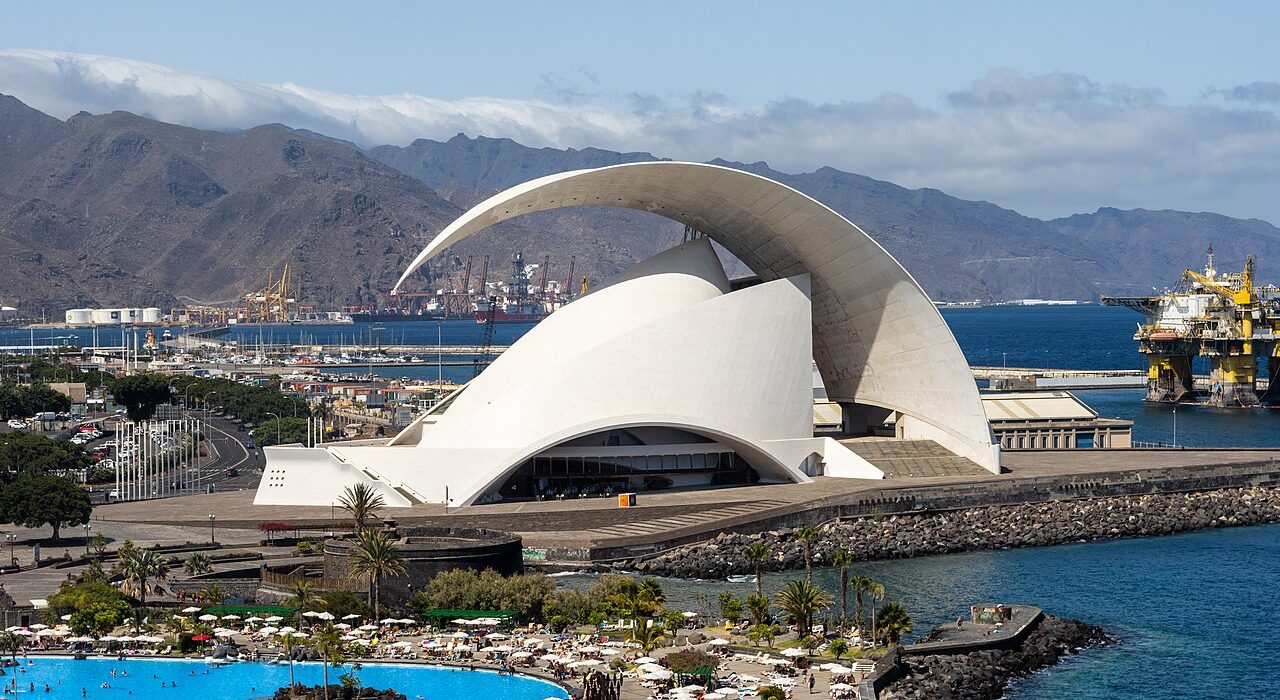
Auditorio de Tenerife Adán Martín (Tenerife Auditorium)
This iconic avant-garde building, designed by architect Santiago Calatrava, is home to the Tenerife Symphony Orchestra and the modern symbol of the city. It stands out for its organic design reminiscent of a breaking wave, making it the most photographed monument on the coast. To visit, you must check the official website for guided tour schedules, as access requires a ticket and is not free at all times.
Torres de Santa Cruz (Santa Cruz Towers)
These towers dominate one of the most important ports in the Atlantic Ocean, characterized by constant cruise and cargo traffic that defines the urban skyline. Their historical activity was key to transforming the old fishing village into the island’s current economic and commercial capital. The outdoor areas are fully accessible to visitors who wish to observe the dynamic maritime activity and large vessels.
Castillo de San Juan Bautista (Castle of St. John the Baptist)
This defensive fortification was built in the 17th century with the specific aim of protecting the port from pirate and privateer attacks. It is visually striking due to its structure featuring a circular volcanic stone turret and its strategic location by the sea, right behind the Auditorio de Tenerife. Declared a Site of Cultural Interest, the exterior is freely accessible while the interior has restricted access, typically reserved for cultural and exhibition purposes.
Iglesia Matriz de Nuestra Señora de la Concepción (Main Church of Our Lady of Conception)
As the oldest church in the city, its origins date back to 1498, just after the conquest of Tenerife, marking the beginning of local religious life. Inside, its Mudéjar ceilings and the silver altar guarding the Holy Cross of the Conquest, the relic that gives the capital its name, stand out. The temple is usually open for Masses and allows tourist visits during established religious hours.
Museo de la Naturaleza y el Hombre (Museum of Nature and Man)
Located on Calle Fuente Morales next to Plaza de España, this reference museum in the Canary Islands was founded in 1958 and is essential for understanding the aboriginal past. Housed in the former 18th-century Civil Hospital, it exhibits Guanche mummies and archaeological remains of the Canarian aborigines in its permanent halls. In addition to anthropology, the venue includes exhibitions dedicated to the geology and unique biodiversity of the islands.
Other Points of Interest
- Anaga Rural Park: Mountainous massif with laurel forests, remote villages, and wild beaches, declared a Biosphere Reserve.
- Las Teresitas Beach: The most famous beach in Santa Cruz, featuring golden sand brought from the Sahara and calm waters protected by a breakwater.
- Cabildo Insular de Tenerife: The institutional headquarters is located in the Palacio Insular, a historic building that forms a complex with the Antiguo Hospital Civil, which houses the Museum of Nature and Man (Museo de la Naturaleza y el Hombre).
- TEA Tenerife Espacio de las Artes: Contemporary art center featuring works by Canarian and international artists and a vibrant cultural agenda.
- Teide National Park: Home to the highest peak in Spain and a spectacular volcanic landscape of craters, volcanoes, and petrified lava rivers.
- Historic Center of San Cristóbal de La Laguna: An unwalled colonial city with an original 15th-century layout that inspired many American cities.
- International Fair and Congress Center: A multifunctional space used for congresses and major events in the port area, featuring expressionist architecture completed in 1996.
- La Granja Park: Urban park built between 1969 and 1976, noted as one of the largest in the Canary Islands with 64,310 m² of facilities.
- César Manrique Maritime Park: Extensive coastal promenade running through the city, offering panoramic views of the Atlantic Ocean and ideal for sunset walks.
- Palacio de Carta: Historic building declared a Site of Cultural Interest, constructed in the 18th century by order of Matías Carta with a neoclassical façade.
- Plaza del Príncipe: Located next to the Capitanía Palace building, this square dates back to 1893 and often hosts outdoor cultural events.
- Mercado de Nuestra Señora de África: Neocolonial-style market where you can find local products, flowers, and island gastronomy.
- Iglesia de San Francisco: Historic parish linked to the old Franciscan convent, considered the second most important church with Baroque architecture.
- Monumento a los Caídos: This contemporary sculpture pays homage to the felines inhabiting the city and has become an informal meeting point.
- Palmetum: A 12-hectare botanical garden on an artificial hill, specializing in the largest collection of palm trees in Europe.
- Calle del Castillo: One of the oldest and most commercial streets in the urban center, mentioned since the early 17th century.
- Modernist Architecture Route: A group of early 20th-century buildings distributed throughout the capital’s urban center, especially between 1900 and 1929.
- Plaza de la Candelaria: Traditional historic square that complements the commercial environment of the Plaza de España and houses the Obelisk of La Candelaria.
- Plaza de España: A commercial or entertainment establishment serving as the urban heart.
🍂 Otoño
Si visitas Santa Cruz de Tenerife en otoño, el clima sigue siendo cálido y el mar mantiene la temperatura del verano. Es una temporada excelente para caminar por el paseo marítimo con menos aglomeraciones que en julio. Aprovecha para reservar excursiones con antelación porque sigue siendo temporada alta para muchos.
What to Do in Santa Cruz de Tenerife
Santa Cruz de Tenerife offers cultural and leisure activities centered on its historic neighborhoods, traditional markets, and major festive events. You can explore the Modernist Architecture Route to observe the ornate façades of the Barrio de los Hoteles, or immerse yourself in the local atmosphere by buying fresh produce at the Mercado de Nuestra Señora de África. If you travel during key dates, experiencing the Carnival, considered one of the best in the world, or the May Festivities with their traditional Baile de Magos is essential.
Santa Cruz de Tenerife in one day: express itinerary
To make the most of a short visit, this route covers the main highlights with a walk through the city center and coastline:
- 09:00 – Plaza de España and Museo de la Naturaleza (Museum of Nature): Start in the heart of the city by visiting the museum to see the Guanche mummies before the crowds arrive.
- 11:00 – Iglesia Matriz and Calle del Castillo: Walk to the oldest church to view the Santa Cruz de la Conquista (Holy Cross of the Conquest) and stroll along the historic shopping street.
- 13:30 – Lunch in Centro-Ifara: Enjoy local gastronomy in this tourist-friendly neighborhood near the square.
- 16:00 – Auditorio de Tenerife and Castillo de San Juan: Head down to the sea to photograph Calatrava’s architecture and the 17th-century fortification.
- 18:30 – Parque Marítimo César Manrique: End the day with a sunset walk along the coastal promenade with views of the Atlantic.
Where to eat in Santa Cruz de Tenerife: local gastronomy
Where to stay in Santa Cruz de Tenerife
Centro-Ifara (Zona Plaza de España)
El corazón de la ciudad, ideal para ir de compras, disfrutar de la gastronomía local y visitar los principales museos y plazas.
Barrio de la Concepción
Un encantador barrio histórico con calles adoquinadas y arquitectura tradicional canaria, perfecto para un paseo tranquilo.
Zona Auditorio y Parque Marítimo
Área moderna junto al mar, dominada por la arquitectura icónica del Auditorio de Tenerife y las piscinas de agua salada.
Barrio de El Toscal
Antiguo barrio con una rica historia y carácter, que ofrece una visión más auténtica de la vida en la ciudad.
How to get to Santa Cruz de Tenerife
The city is well connected by air and land, with Tenerife North-Ciudad de La Laguna Airport (TFN) being the closest gateway, located just 14 km away.
| Medio | Origen/Destino | Detalles |
|---|---|---|
| Avión | Aeropuerto TFN | Ubicado a 14 km de la ciudad, es la opción más rápida para viajeros nacionales e interinsulares. |
| Autobús | Intercambiador de Transportes | Compañía TITSA conecta la ciudad con el resto de la isla y el aeropuerto. |
| Coche | Carreteras TF-1, TF-5, TF-2, TF-4 | Red de autopistas que une Santa Cruz con el sur, el norte y el área metropolitana. |
Getting around Santa Cruz de Tenerife
Urban transport is efficient and covers the main areas of interest. You can use the city bus and tram to get around comfortably, in addition to a large pedestrian center that makes it easy to explore the commercial and historic areas on foot.
Weather in Santa Cruz de Tenerife
Live webcam — San Cristóbal de La Laguna*
Santa Cruz de Tenerife* The nearest webcam to Santa Cruz de Tenerife is in San Cristóbal de La Laguna, 7.6 km away.
Source: Windy Webcams
Best time to visit Santa Cruz de Tenerife
Day trips from Santa Cruz de Tenerife
From the capital, you can easily access regional towns and outstanding natural sites. It is highly recommended to visit the Historic Center of San Cristóbal de La Laguna, an unfortified colonial city with an original 15th-century layout. You can also explore Anaga Rural Park to see laurel forests or head up to Teide National Park to contemplate Spain’s highest peak and its volcanic landscape.
Who is Santa Cruz de Tenerife for?
This city is ideal for travelers seeking a blend of urban culture and nature, appealing both to families enjoying the Parque Marítimo (Maritime Park) and history buffs interested in its churches and museums. With an average stay of 2.15 nights and 36% foreign visitors (INE data), it’s a perfect destination for backpackers looking for budget hostels and foodies eager to try authentic Canarian cuisine without the crowds of other tourist resorts.
Frequently Asked Questions about Santa Cruz de Tenerife
How many days do I need to see Santa Cruz de Tenerife?
With an average stay of 2.15 nights according to the INE, you can see the essentials in 2 or 3 days, visiting the Museum of Nature, the Auditorium, and the historic center.
Is Santa Cruz de Tenerife expensive?
Prices vary: you can eat for an average of €15-25 and find hostels from €20-35 per night, although 4-5 star hotels can cost between €100-250.
What is the best time to visit Santa Cruz de Tenerife?
Spring and autumn (April-June, September-October) are ideal with pleasant temperatures, avoiding late summer due to possible calima (dust haze).
How do I get to Santa Cruz de Tenerife from Madrid?
The most direct option is to fly to Tenerife North-Ciudad de La Laguna Airport (TFN), located 14 km away, or take a ferry if traveling with a vehicle from the mainland.