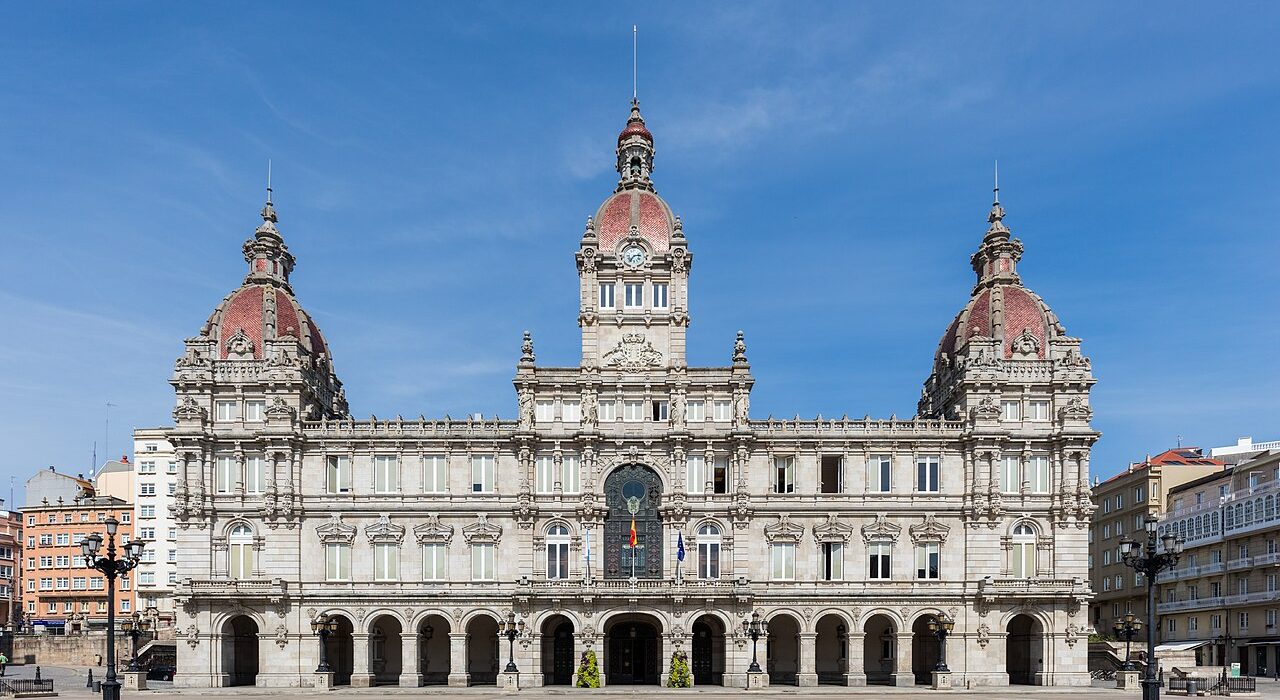
Madrid → A Coruña
604 kmHow to get from Madrid to A Coruña: quick overview
To travel from Madrid to A Coruña you have three main options that balance time, budget and comfort, with the train being the fastest option and the bus the most economical. If you prioritise speed and comfort without worrying about traffic, the high-speed train is the undisputed recommendation, reducing the journey to just over 3 and a half hours. On the other hand, if you are looking for total flexibility to explore the region or are travelling in a group, the car allows you to manage your own schedule, although you must be mindful of fatigue on a journey of over 600 kilometres. Finally, for travellers on a tighter budget who don’t mind sacrificing time, the bus offers a direct connection at a very competitive price.
By car from Madrid to A Coruña
Driving from Madrid to A Coruña involves covering a distance of 604 km, which takes approximately 6 hours and 15 minutes of effective driving. The backbone of this route is the A-6 motorway, known as the Autovía del Noroeste (Northwest Motorway), which is the direct, toll-free road connecting the capital with the northwest of the peninsula. Although Spain has a vast network of road infrastructures including the A-66 (Ruta de la Plata), the A-5 (Southwest Motorway) or the A-1 (Northern Motorway), to reach your final destination you will need to focus on the A-6 and its lateral connections.
The car journey gives you the freedom to stop whenever you wish, something crucial given that it is more than six hours behind the wheel. It is important to know that, in addition to the A-6, there are other arteries such as the A-50 (Ávila-Salamanca) or the A-52 (Rías Baixas Motorway) that form part of the network of toll-free motorways available in the area, facilitating regional mobility once you approach Galicia. However, the logical and most efficient route avoids diverting towards motorways such as the A-3 Eastern Motorway or the A-4 Southern Motorway, which lead in opposite directions. The driving experience is generally smooth, but requires attention on mountain sections and when approaching the metropolitan areas of Galician cities.
By train from Madrid to A Coruña
The train is the fastest way to travel between Madrid and A Coruña, with journeys ranging from 216 to 242 minutes depending on the service chosen. The operator Renfe manages this route with a frequency of 5 daily trains, offering punctuality and comfort superior to road transport. The departure station is always Madrid-Chamartín-Clara Campoamor, a modern and well-connected transport hub, while arrival is directly at A Coruña station, located in a privileged spot near the city centre.
Regarding the types of service, you can choose between AVLO and AVE. AVLO, which is the low-cost high-speed option, completes the journey in 216 minutes and has 2 daily departures. Meanwhile, AVE offers 3 frequencies per day with a very similar travel time of 217 minutes. The timetables are well distributed throughout the day, with the first train leaving at 8:25 in the morning and the last at 20:23, allowing you to plan the day for both business and leisure trips. This option eliminates the stress of traffic and allows you to work or rest during the journey.
By Bus from Madrid to A Coruña
The bus is the most affordable alternative for traveling from Madrid to A Coruña, with fares that can start at 25.40€ and go up to a maximum of 87.98€ depending on how far in advance you book and demand. The main companies operating this route are FlixBus and Alsa, both with extensive experience in long-distance national connections. The journey takes 420 minutes, which is exactly 7 hours, about one hour longer than driving your own car due to technical stops and driving regulations.
Despite the longer travel time, the bus is a very valid option for students or backpackers. The value for money is excellent, especially if you buy your ticket in advance to access the lowest fares in the 25€ range. Moreover, modern buses usually come with WiFi and power outlets, making the 7-hour journey more pleasant. It’s the ideal choice if you’re not in a hurry to arrive and want to save money to spend on experiences once you reach the city of A Coruña (known as the “Herculean city”).
Recommended Stops Along the Way
Although the direct route is fast, if you decide to take a more leisurely trip or make a slight detour to enjoy the heritage of northern Portugal and the border region, these are the verified stops that will enrich your experience. It’s important to note that these towns offer a unique historical charm, ideal for overnight stays or in-depth cultural visits.
- Viseu: Known as the museum city, Viseu is a must-stop for art and history lovers. Its cathedral and the Grão Vasco Museum are gems that deserve a leisurely visit far from the hustle and bustle of the main highways.
- Braga: One of the oldest cities in Portugal, Braga combines religious tradition with a vibrant university life. It’s perfect for enjoying local gastronomy and visiting the Santuário do Bom Jesus (Sanctuary of Bom Jesus).
- Vila Real: Located in a wine-growing area, Vila Real is the ideal starting point for exploring the Douro region. Its stately architecture and natural surroundings make it a haven of peace.
- Bragança: In the far northeast of Portugal, Bragança stands out for its imposing castle and medieval citadel. It’s a strategic stop if you’re looking for military history and border landscapes.
- Lamego: Famous for its baroque staircases and its wines, Lamego offers a stunning visual aesthetic. It’s a perfect spot for a photo stop and to sample local products.
- Mangualde: This town offers an authentic connection with rural Portuguese life. It’s an interesting point for those looking to get off the conventional tourist trail and see local life.
- Tondela: Located in the district of Viseu, Tondela is known for its heritage and natural environment. It’s a quiet stop ideal for stretching your legs and enjoying the tranquility of the interior.
Where to stay in A Coruña
To choose where to stay in A Coruña, the ideal approach is to look for accommodation in areas that allow you to walk to the main points of interest without relying on transport. The Ciudad Vieja (Old Town) is the most charming area, full of cobbled streets, arcaded squares and an unbeatable food scene, although prices can be somewhat higher in high season. If you prefer sea views and a more modern vibe, the Monte Alto area or near the Torre de Hércules (Tower of Hercules) offers hotels with panoramic views over the Atlantic Ocean.
For travellers seeking convenience and access to urban beaches, the Riazor and Matadero area is excellent, with a wide variety of apartments and hotels across different price ranges. In general, prices in A Coruña are competitive compared to other European capitals, but booking in advance is recommended during the summer months and local holidays. There is no need to stay in the absolute centre; well-connected residential neighbourhoods also offer quality options at better prices.
Frequently asked questions about the Madrid-A Coruña route
How long does it take from Madrid to A Coruña?
Travel time varies depending on the mode of transport: by car it takes 6 hours and 15 minutes, by high-speed train between 216 and 242 minutes, and by bus 420 minutes.
Which is cheaper, the train or the bus?
The bus is significantly cheaper, with prices starting from €25.40, while the train, although fast, usually has higher fares depending on how far in advance you book.
Is it worth renting a car?
Yes, it is worth it if you plan to visit the recommended stops such as Viseu or Braga and want flexibility, but if you are only going to the city, the train is more efficient given the 604 km distance.
When is the best time to travel?
The best time depends on your preferences, but travelling by train allows you to enjoy the scenery in any season, while by car it is advisable to avoid peak traffic periods in summer.
📍 También te puede interesar
Qué ver en Madrid →
Qué ver en A Coruña →