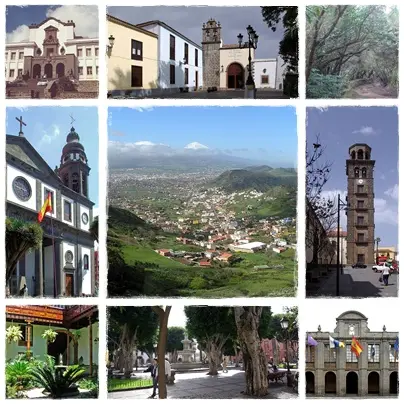
San Cristóbal de La Laguna
CanariasClimate
The first planned colonial city in the Canary Islands was not founded by the sea, but at an altitude of 545 metres, on the site of an old lagoon that now gives its name to its straight streets and grid layout. That 15th-century design, conceived without walls and with regular blocks, became a model for cities such as Havana and Cartagena de Indias, and it is still explored on foot among colourful mansions, wooden balconies and squares that smell of freshly brewed coffee. San Cristóbal de La Laguna is that place where World Heritage is not viewed from afar: you cross it every morning on your way to the market, you touch it on the stone façades and you savour it in the market gardens that supply its stews.
The must-seesWhat to see in San Cristóbal de La Laguna: the essentials
Catedral de San Cristóbal de La Laguna
The cathedral of San Cristóbal de La Laguna presides over the historic centre with a blend of styles that sums up centuries of island history. Its neoclassical façade contrasts with the interior, where Gothic and Renaissance elements coexist. It is the main temple of the Nivariense diocese and an unmissable reference point for understanding the city.
Monasterio de Santa Clara
Founded in 1547 by Alonso Fernández de Lugo, it is one of the oldest female convents in the Canary Islands and still maintains the cloister of the Poor Clares. Visits to the church and museum rooms are by restricted timetable and admission is by donation. Do not leave without trying the handmade sweets made by the nuns themselves and sold through the revolving door.
Palacio de Nava
One of the finest examples of Canarian civil architecture, with stone façades, noble coats of arms and carved wooden balconies. Construction began in 1585, but its current appearance dates from 1776, when Tomás Nava y Grimón y Porlier completely remodelled it. Today it houses judicial offices, so you can admire its exterior and occasionally access the courtyard during administrative hours.
Calle Obispo Rey Redondo (La Carrera)
Popularly known as La Carrera, it is one of the liveliest pedestrian streets in the historic centre and a perfect showcase of the grid layout that made the city famous. Along its route you will see stately mansions with carved doorways, lattice windows and Canarian balconies that combine Mudéjar, Renaissance and Baroque influences. The ground floors are full of shops, cafés and ice-cream parlours, making it a stroll that is as historic as it is everyday.
Plaza de la Catedral
Flanked by stately houses and traditional Canarian buildings, this square is a haven for sitting down to rest between visits. In the centre, a fountain accompanies the trees and street furniture, creating a meeting corner that invites you to slow down.
Iglesia y Ex-Convento de Santo Domingo de Guzmán
Founded in the 16th century, it is one of the first religious establishments on the island and its church preserves a valuable Mudéjar coffered ceiling in the main nave. Check updated opening hours before your visit, as worship and tourist visits are limited.
Ermita de San Juan Bautista, Bajamar
Hermitage located in the coastal area of Bajamar.
Plaza del Adelantado
Building and public space in San Cristóbal de La Laguna.
Iglesia de Nuestra Señora de las Nieves
Church in San Cristóbal de La Laguna.
Teatro Unión Tejina
Theatre in San Cristóbal de La Laguna.
Ermita de San Diego del Monte
Hermitage in San Cristóbal de La Laguna.
Museo de Antropología de Tenerife
Museum of the Canary Islands.
Plaza de la Concepción
Square in San Cristóbal de La Laguna.
Iglesia de San Mateo Apóstol
Church in Punta del Hidalgo.
Iglesia del Santísimo Redentor de Las Chumberas
Church in Tenerife.
Centro de Visitantes del Parque Rural de Anaga
Interpretation centre in Tenerife.
Ermita de la Cruz de Marca
Hermitage in Tenerife.
🍂 Otoño
Si visitas San Cristóbal de La Laguna en otoño, notarás un clima aún agradable y con menos visitantes. Septiembre es especial por las Fiestas en Honor al Santísimo Cristo de La Laguna, que llenan la Plaza del Cristo de La Laguna de vida. Reserva alojamiento con antelación si coincides con esas fechas y disfruta del ambiente local.
What to do in San Cristóbal de La Laguna
San Cristóbal de La Laguna offers heritage walks through pedestrian streets, food tours linked to market-garden produce and celebrations that fill the historic centre with music, processions and fireworks. In September, the Fiestas en Honor al Santísimo Cristo de La Laguna (Festivities in Honour of the Most Holy Christ of La Laguna) set the calendar with processions, concerts and the traditional Fuegos del Risco, with 14 September the main day featuring a civic-military procession. If you travel in February, the Carnaval Cultural de La Laguna turns the centre into an inclusive, family-friendly stage with the Apoteosis, the Entierro de la Sardina and the Gran Baile de Máscaras. For everyday life, the Mercado Municipal is an essential stop: a Neo-Canarian building from 1944 where you can buy fresh produce and feel the local pulse.
San Cristóbal de La Laguna in a day: express itinerary
- 09:00 – Plaza del Adelantado: start the day in this historic square, ideal for getting your bearings and admiring the architecture surrounding the city’s administrative heart.
- 10:00 – Calle Obispo Rey Redondo (La Carrera): stroll along this pedestrian street lined with stately mansions, shops and cafés; it is the best gauge of Lagunera life.
- 11:30 – Catedral de San Cristóbal de La Laguna: step into the diocese’s main temple and admire its mix of architectural styles.
- 12:30 – Palacio de Nava: behold one of the finest examples of Canarian civil architecture, with its stone façade and carved balconies.
- 13:30 – Plaza de la Catedral: end the morning sitting beside its fountain before heading off to eat.
- 15:00 – Monasterio de Santa Clara: visit this convent founded in 1547 and take the chance to buy handmade sweets from the Poor Clares through the revolving door.
- 17:00 – Mercado Municipal: wander among stalls selling vegetables from La Laguna’s market gardens and local farm produce.
Where to eat in San Cristóbal de La Laguna: local cuisine
Where to stay in San Cristóbal de La Laguna
Casco Histórico
El corazón de la ciudad y Patrimonio de la Humanidad por la UNESCO. Destaca por sus calles peatonales de estilo colonial, casas señoriales de vivos colores con tradicionales patios canarios y una vibrante oferta cultural y gastronómica.
Bajamar
Una pintoresca zona costera conocida por sus fantásticas piscinas naturales de agua salada y su ambiente vacacional relajado. Es ideal para disfrutar de espectaculares atardeceres frente al océano y de paseos marítimos con brisa atlántica.
Punta del Hidalgo
Un encantador pueblo de tradición pesquera situado al noreste de la isla, justo donde termina la carretera al pie del macizo de Anaga. Es sumamente popular entre surfistas, senderistas y amantes de la gastronomía marinera fresca.
Barrio Nuevo
Barrio residencial y universitario adyacente al campus central. Goza de un ambiente muy joven, dinámico y asequible, repleto de cafeterías locales y perfectamente comunicado con el casco histórico a través del tranvía.
Las Mercedes
Barrio rural situado a las faldas del Parque Rural de Anaga, famoso por su frondoso bosque de laurisilva y su aire fresco de montaña. Es el destino perfecto para quienes buscan desconectar en la naturaleza y degustar comida tradicional canaria.
How to get to San Cristóbal de La Laguna
The city is very well connected by road and public transport, with Tenerife North-Ciudad de La Laguna Airport (TFN) just a short distance away and several main access routes.
| Medio | Duración | Precio aprox. | Frecuencia |
|---|---|---|---|
| Avión (Aeropuerto TFN) | Según origen | Variable | Vuelos nacionales e internacionales |
| Bus interurbano (TITSA) | Según origen | Económico | Alta desde principales núcleos de Tenerife |
| Coche por TF-5 | Según origen | Combustible + posible peaje | Acceso principal desde Santa Cruz y norte de la isla |
| Coche por TF-2, TF-13 o TF-24 | Según ruta | Combustible | Alternativas según procedencia |
How to get around San Cristóbal de La Laguna
The historic centre is essentially pedestrian, so the best way to explore it is on foot without rushing. For trips between neighbourhoods, the urban bus covers the main residential areas and connects with La Laguna’s transport interchange, where TITSA operates. If you are staying in Barrio Nuevo or want to reach the old town from the outskirts, the tram is a comfortable and frequent option.
Weather in San Cristóbal de La Laguna
Best time to visit San Cristóbal de La Laguna
Day trips from San Cristóbal de La Laguna
La Laguna’s position within Tenerife makes it an excellent base for exploring the island. To the northeast, the TF-13 road leads to Punta del Hidalgo, a village with a fishing tradition at the foot of the Anaga massif, perfect for combining surfing, hiking and fresh fish. Bajamar, with its natural saltwater pools and Atlantic sunsets, is just a step away along the same coast. Inland, the TF-24 heads into the Anaga Rural Park, where the Visitor Centre helps you plan routes through laurel forests. And if you’re after a city, Santa Cruz de Tenerife is directly connected via the TF-5.
Curiosities about San Cristóbal de La Laguna you didn’t know
The street plan that travelled to America without leaving Tenerife. San Cristóbal de La Laguna was the prototype of the colonial city without walls, designed in the 15th century by the adelantado Alonso Fernández de Lugo with a grid layout that was later replicated in cities such as Havana and Cartagena de Indias. What you see as you stroll along La Carrera is, literally, an urban model exported to the New World.
A city born on a lake. Founded in 1497 by Alfonso Fernández de Lugo, its name comes from a shallow lake or marshy area that was drained in 1837. The city you walk through today stood, for centuries, literally on water.
An incorrupt body right in the centre. The incorrupt body of Sor María de Jesús, known as “La Siervita”, is preserved in the Convento de Santa Catalina de Siena in La Laguna. It’s one of those stories that blend devotion, mystery and local tradition.
Who San Cristóbal de La Laguna is for
San Cristóbal de La Laguna is a city for curious walkers: lovers of history and architecture who enjoy getting lost among pedestrian streets and palaces with centuries of life, foodies in search of garden produce and Canarian cuisine with roots, and families who want to combine heritage with trips to the coast at Bajamar or the Anaga forest. Backpackers find affordable options and a young vibe in Punta del Hidalgo and Barrio Nuevo, while couples appreciate the Atlantic sunsets and unhurried dinners in the historic centre.
💡 ¿Sabías que...?
- ● San Cristóbal de La Laguna fue el prototipo de ciudad colonial sin murallas, diseñada en el siglo XV por el adelantado Alonso Fernández de Lugo con un plano en cuadrícula que se replicó en ciudades como La Habana y Cartagena de Indias. (https://www.tenerifelicidad.net/tenerife/curiosidades-la-laguna-ciudad-patrimonio-de-la-humanidad-unesco)
- ● La Laguna fue fundada en 1497 por Alfonso Fernández de Lugo y su nombre proviene de un lago poco profundo o zona pantanosa que fue drenada en 1837. (https://patrimoniomundial.aytolalaguna.es/?page_id=22)
- ● El cuerpo incorrupto de Sor María de Jesús, conocida como 'La Siervita', se conserva en el Convento de Santa Catalina de Siena en La Laguna. (https://www.tenerifelicidad.net/tenerife/curiosidades-la-laguna-ciudad-patrimonio-de-la-humanidad-unesco)
Frequently asked questions about San Cristóbal de La Laguna
How many days do I need to see San Cristóbal de La Laguna?
With one full day you can cover the essentials of the historic centre: the cathedral, Palacio de Nava, La Carrera, Plaza de la Catedral and Monasterio de Santa Clara. If you want to add the market, museums, a trip to Bajamar or Punta del Hidalgo and a route through Anaga, the ideal is 2 or 3 days.
What is the best time of year to visit San Cristóbal de La Laguna?
From April to October, with an average temperature of 20.0 °C in summer and less rainfall. In September the fiestas patronales del Santísimo Cristo (patron saint festivities) take place, and in February the Carnaval Cultural, two especially lively times.
How do I get to San Cristóbal de La Laguna from Madrid?
The most direct option is to fly to Tenerife Norte-Ciudad de La Laguna Airport (TFN), located very close to the city. From there you can take a TITSA bus or a taxi to the historic centre. There are also road connections from Santa Cruz de Tenerife via the TF-5.
Is San Cristóbal de La Laguna a World Heritage Site?
Yes, its historic centre is declared a World Heritage Site by UNESCO. It stands out for its 15th-century grid layout, considered the first example of a planned colonial city in the Canary Islands, with 627 listed buildings, most of them from the 16th to 18th centuries.
Where can I find more practical information about opening hours and tickets?
You can check the official tourism website for San Cristóbal de La Laguna for updated monument opening hours, event calendar and official recommendations.