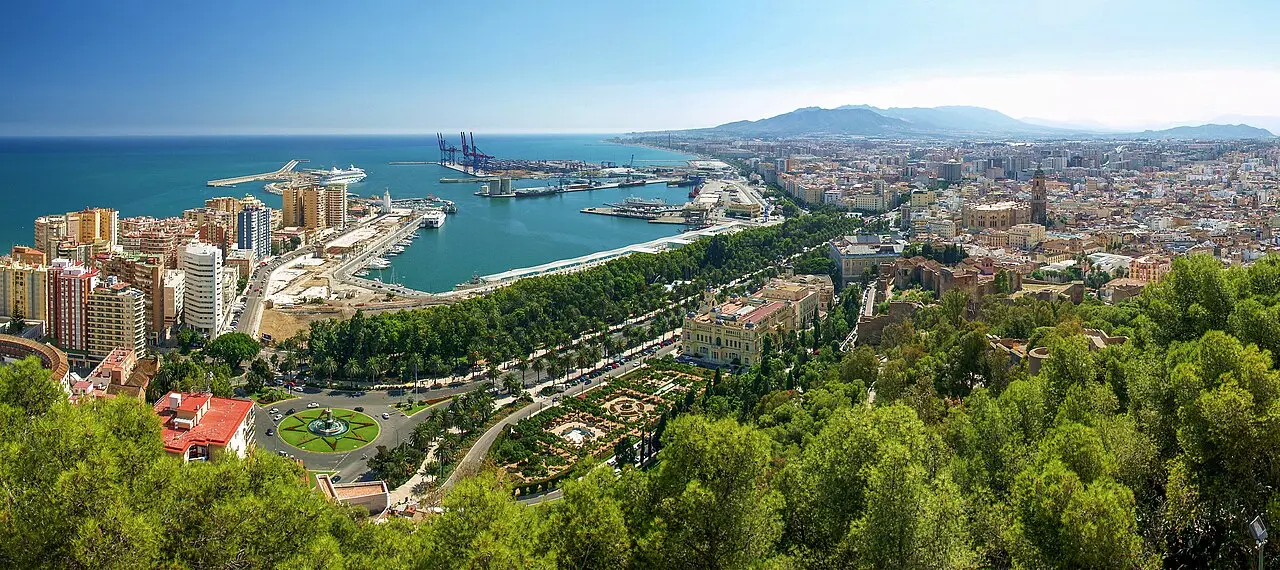
Málaga
AndalucíaClimate
Daily budget
What to see in Málaga: the essentials
Málaga packs some of the most interesting museums and monuments in southern Spain into its historic centre. With 1.8 million visitors a year (INE), the city has managed to combine its Andalusian heritage with a contemporary cultural offering that keeps on growing. Here are the stops you shouldn’t miss.
Málaga Cathedral
It’s known as “La Manquita” (the one-armed lady) because only one of its two towers was ever completed, leaving the other half-built since the 16th century. This imposing Renaissance cathedral surprises inside with the height of its vaults and the richness of its wood-carved choir. Entry is from 10:00 to 18:30h and you pay at the door; the interior is worth every minute, above all for the contrast between the sober exterior and the ornamental detail of its chapels. If you can, linger for a while in the square around it at sunset, when the stone takes on a lovely golden hue.
Museo Picasso Málaga
Pablo Ruiz Picasso was born in Málaga on 25 October 1881, in the Plaza de la Merced, and this museum honours him with more than 200 works spanning every stage of his creative life. It’s housed in the Palacio de Buenavista, a Renaissance building with Phoenician remains in its basement that you can also visit. It opens from 10:00 to 19:00h and admission is paid; it’s worth booking ahead in high season because the queues can be long. Don’t miss the rooms devoted to his formative years and to his reinterpretation of the classical masters who influenced him so much.
Gibralfaro Castle
This 14th-century castle stands on a hill that offers the best panoramic views of the whole city, the port and the bay. Walk up from the Alcazaba if you’re feeling energetic, or take a city bus if you’d rather save your strength for strolling along the battlements. The site opens from 09:00 to 18:00h and requires a ticket; wear comfortable shoes because the slopes and stairs are plentiful. The sunset from up here is one of those things that stays with you for a long time.
Centre Pompidou Málaga
It’s the first branch of the famous Paris museum outside France, and its colourful cube on Muelle Uno is already a contemporary icon of the city. It houses a collection of modern and contemporary art with works by international artists from the 20th and 21st centuries. It opens from 09:30 to 20:00h with paid admission, and its seafront location makes it a perfect way to combine culture and a seaside stroll. The temporary exhibitions are usually very strong, so check the schedule before you go.
Soho District
Known as the “Arts District”, Soho is a cultural and commercial quarter where façades have become large-scale urban art canvases. Wander its streets without a plan to discover murals, independent art galleries and fashion shops that have transformed this former port neighbourhood. It’s the most creative area of Málaga and a perfect contrast to the old town right next door.
Plaza de la Constitución
This is the heart of Málaga’s historic centre, the city’s quintessential meeting point and the setting for numerous events throughout the year.
🍂 Otoño
Si visitas Málaga en otoño, el clima sigue siendo templado y con menos aglomeraciones que en verano. Puedes recorrer el Teatro Romano de Málaga o la Catedral de la Encarnación de Málaga con calma. Lleva un paraguas plegable porque la precipitación anual es de 454.4mm y pueden caer chubascos.
What to do in Málaga
Málaga offers music and poetry festivals, food markets in historic buildings and neighbourhoods with a character all of their own to get lost in on foot. The Terral Festival fills the city’s stages with live music every year, while the Brisa Festival champions more alternative sounds and the Irreconciliables International Poetry Festival brings together literary voices from around the world. For everyday life, the Mercado Central de Atarazanas (Central Market of Atarazanas) is a spectacle in itself: a 19th-century iron building with a monumental Nasrid doorway where stalls selling fish, fruit and local produce plunge you straight into Málaga life.
The neighbourhoods also set the city’s rhythm. Soho concentrates the most bohemian nightlife, with galleries, bars and an artistic vibe. Pedregalejo and El Palo, former fishing neighbourhoods, are ideal for spending the day between beaches and chiringuitos (beach bars) with traditional flavour. And the Centro Histórico (Historic Centre) lets you alternate museums, shopping and tapas without needing to take transport.
Málaga in a day: express itinerary
If you only have one day, this route gives you a complete sample of the city without any stress. Start early and walk: the centre is pedestrianised and everything is relatively close together.
- 09:00 – Castillo de Gibralfaro: head up first thing to enjoy the panoramic views in the morning light and avoid the summer heat.
- 10:30 – Catedral de la Encarnación: walk down to “La Manquita” and visit its Renaissance interior before the aisles fill up.
- 12:00 – Plaza de la Constitución and historic centre: stroll through the pedestrian streets, pop into a traditional shop and feel the pulse of the city.
- 13:30 – Mercado Central de Atarazanas: grab a light bite among the stalls or sit down at one of its bars to try freshly made fritura malagueña (fried fish).
- 16:00 – Museo Picasso Málaga: spend the afternoon with the city’s most universal-born artist; with 200 works you’ll have more than enough for a couple of hours.
- 18:30 – Barrio del Soho: end the day strolling among murals and galleries, and stay for dinner or a drink in the area with the most alternative atmosphere.
Where to eat in Málaga: local cuisine
Where to stay in Málaga
Historic Center
Ideal for immersing yourself in the city's history, culture, and gastronomy.
Soho
Bohemian and artistic neighborhood filled with murals, art galleries, and trendy spots.
Pedregalejo and El Palo
Charming former fishing neighborhoods, famous for their beaches and beach bars.
How to get to Málaga
From Granada, the fastest option is the train: 1 h 29 min (AVANT), 3 a day.
Málaga María Zambrano (1,4 km from the centre)
| From | Direct train | Direct bus | Car |
|---|---|---|---|
| Granada | 1 h 29 min · 3/day AVANT | 1 h 30 min · 24/day ALSA | 1 h 43 min 124 km |
| Nerja | — | 55 min · 23/day ALSA | 51 min 58 km |
| Madrid | 2 h 44 min · 17/day AVE | — | 6 h 05 min 529 km |
| Sevilla | 2 h 04 min · 13/day AVANT | 2 h 30 min · 6/day ALSA | 2 h 31 min 205 km |
| Marbella | — | 55 min · 6/day ALSA | 46 min 60 km |
| Barcelona | 6 h 41 min · 1/day AVE | 15 h · 3/day ALSA | 10 h 47 min 960 km |
| Cádiz | — | — | 2 h 50 min 235 km |
| Ronda | — | 1 h 45 min Damas | 1 h 41 min 101 km |
| Vélez-Málaga | — | 50 min · 52/day Red de Consorcios de Transporte de Andalucía - Área de Málaga, ALSA | 36 min 37 km |
| Fuengirola | 46 min · 52/day Cercanías C1 | 25 min · 27/day Red de Consorcios de Transporte de Andalucía - Área de Málaga, ALSA | 30 min 34 km |
Direct trains and buses from the official timetables published by the operators on Spain's National Transport Access Point (a reference Wednesday); driving times from OpenStreetMap. Operators that do not publish their timetables may run more services. Check the timetable before you travel.
Getting around Málaga
Málaga’s centre is mostly pedestrianised, so the best way to get around the historic quarter is on foot. For longer journeys, the city has a network of urban buses connecting the centre with neighbourhoods such as Pedregalejo, El Palo and the area around Gibralfaro Castle. If you come by car, bear in mind that parking in the centre is tricky and expensive; the most practical approach is to leave it in a car park and get around on foot or by bus. To get in from the airport, the bus and taxi are the most comfortable options, with short journeys thanks to the 8 km separating AGP from the centre.
Weather in Málaga
Best time to visit Málaga
Day trips from Málaga
Málaga is an excellent base for exploring the Costa del Sol and the Andalusian interior. Nerja, a short drive or bus ride away, is famous for its beaches and its relaxed seaside town atmosphere. Marbella offers a charming old town and a lively promenade, with a more sophisticated profile. Ronda, deep in the mountains, impresses with its bridge over the Tajo gorge and its historic old town steeped in history. All three are accessible by public transport or car via the A-7 and A-45, and allow you to return to Málaga to sleep without any problem.
Fun facts about Málaga you didn’t know
Frank Sinatra was arrested in Málaga in 1964 for public scandal during the filming of the movie Von Ryan’s Express (1965), in which he shared the screen with Raffaella Carrà. The anecdote is part of the city’s cinematic legend.
Pablo Ruiz Picasso was born in Málaga on 25 October 1881, in the Plaza de la Merced, and was baptised in the church of Santiago. The most influential artist of the 20th century took his first steps in these streets before leaving for Barcelona and Paris.
Antonio Cánovas del Castillo was born in Málaga on 8 February 1828 and went on to become president of the Council of Ministers on six occasions, a key figure in 19th-century Spanish politics.
La Farola de Málaga, built in 1817, is the only lighthouse with a feminine name in the entire Iberian Peninsula. A linguistic detail that says a lot about the affection with which the city treats its symbols.
In Málaga you can order coffee in nine different ways, a tradition that began at the Café Central on the Plaza de la Constitución in 1954. From the “solo” to the “largo de Málaga”, each name indicates the exact proportion of coffee and milk.
Who is Málaga for
Málaga is a city for almost every type of traveller. Couples will find romance in the views from Gibralfaro and in strolls through the historic centre; families will enjoy the beaches of Pedregalejo and El Palo with their informal chiringuitos; backpackers will appreciate hostels at €20-35 and the ease of getting around on foot; history lovers have a cathedral, castle and Picasso museum within a very compact radius; and foodies can alternate beachside espetos with restaurants recognised by the Michelin guide. With 580,000 inhabitants and a manageable pedestrian centre, Málaga combines the scale of a large city with the warmth of a Mediterranean destination.
💡 ¿Sabías que...?
- ● En 1964, Frank Sinatra fue detenido por escándalo público durante el rodaje en Málaga de la película El coronel Von Ryan (1965), en la que compartía pantalla con Raffaella Carrà. (https://www.aumentur.app/6-curiosidades-de-malaga/)
- ● Pablo Ruiz Picasso nació en Málaga el 25 de octubre de 1881, en la Plaza de la Merced, y fue bautizado en la iglesia de Santiago. (https://es.wikipedia.org/wiki/Relaci%C3%B3n_entre_Picasso_y_M%C3%A1laga)
- ● Antonio Cánovas del Castillo nació en Málaga el 8 de febrero de 1828 y fue presidente del Consejo de Ministros en seis ocasiones. (https://es.wikipedia.org/wiki/Canovas)
- ● La Farola de Málaga, construida en 1817, es el único faro con nombre femenino de toda la Península Ibérica. (https://www.mycityhunt.es/explorer-blog/10-datos-sobre-malaga-que-te-dejaran-boquiabierto-1140)
- ● La Catedral de Málaga es conocida como 'La Manquita' porque solo se completó una de sus dos torres, quedando la otra sin terminar. (https://www.mycityhunt.es/explorer-blog/10-datos-sobre-malaga-que-te-dejaran-boquiabierto-1140)
- ● En Málaga se puede pedir el café de nueve maneras distintas, una tradición que nació en el Café Central de la Plaza de la Constitución en 1954. (https://arquitectomanuelnavarro.es/curiosidades-del-centro-de-malaga/)
Frequently asked questions about Málaga
How many days do I need to see Málaga?
With 2 or 3 days you can see the essentials: the Cathedral, the Picasso Museum, Gibralfaro Castle, the Centre Pompidou and Soho, as well as enjoying tapas at the Mercado de Atarazanas (Atarazanas Market) and taking a dip in Pedregalejo. If you want to take trips to Nerja, Marbella or Ronda, add at least 2 more days. The current average stay is 2.05 nights (INE), which confirms that most people visit as a short break.
Is Málaga expensive?
Not especially. An average meal costs between €15 and €25 per person, a hostel between €20 and €35 per night, and a 3-star hotel between €60 and €120. 4-5 star hotels range from €100 to €250. Compared with other Mediterranean coastal cities, Málaga offers good value for money, especially in gastronomy and mid-range accommodation.
What is the best time to visit Málaga?
From April to October, with average temperatures of 26.1 °C in summer and 13.7 °C in winter. July and August are the worst months due to intense heat and overcrowding. Annual rainfall is only 454.4 mm, so rain will rarely ruin your plans. April, May, September and October are the ideal months to combine good weather with fewer crowds.
How do I get to Málaga from Madrid?
You can fly to Málaga-Costa del Sol airport (AGP), located 8 km from the centre, with multiple daily flights. By bus, Alsa and Avanza operate routes from Madrid to Málaga Bus Station. By car, the A-45 connects Madrid with Málaga directly. Málaga Centro Alameda train station does not have AVE, so for high-speed rail you will need to check Renfe connections with Málaga’s main station.
Does Málaga have a beach?
Yes, and a very good one. The neighbourhoods of Pedregalejo and El Palo are old fishing districts with beaches and chiringuitos where the famous espetos de sardinas (grilled sardine skewers) are cooked on the sand. They are ideal for families and for those who want to combine city and sea without long journeys. The Costa del Sol stretches along 160 km, with Málaga at the centre of the conurbation.
For more practical information on opening hours, tickets and cultural events, check the official Málaga tourism website.
🗺️ Rutas desde Málaga
- How to Get from Ronda to Málaga: Distance, Train, Bus and Car
- How to Get from Malaga to Ronda: Distance, Train, Bus and Car
- How to Get from Cádiz to Málaga: Distance, Train, Bus and Car
- How to Get from Málaga to Cádiz: Distance, Train, Bus and Car
- How to Get from Malaga to Granada: Distance, Train, Bus and Car
- How to Get from Granada to Málaga: Distance, Train, Bus and Car
- How to Get from Málaga to Seville: Distance, Train, Bus and Car
- How to Get from Seville to Málaga: Distance, Train, Bus and Car