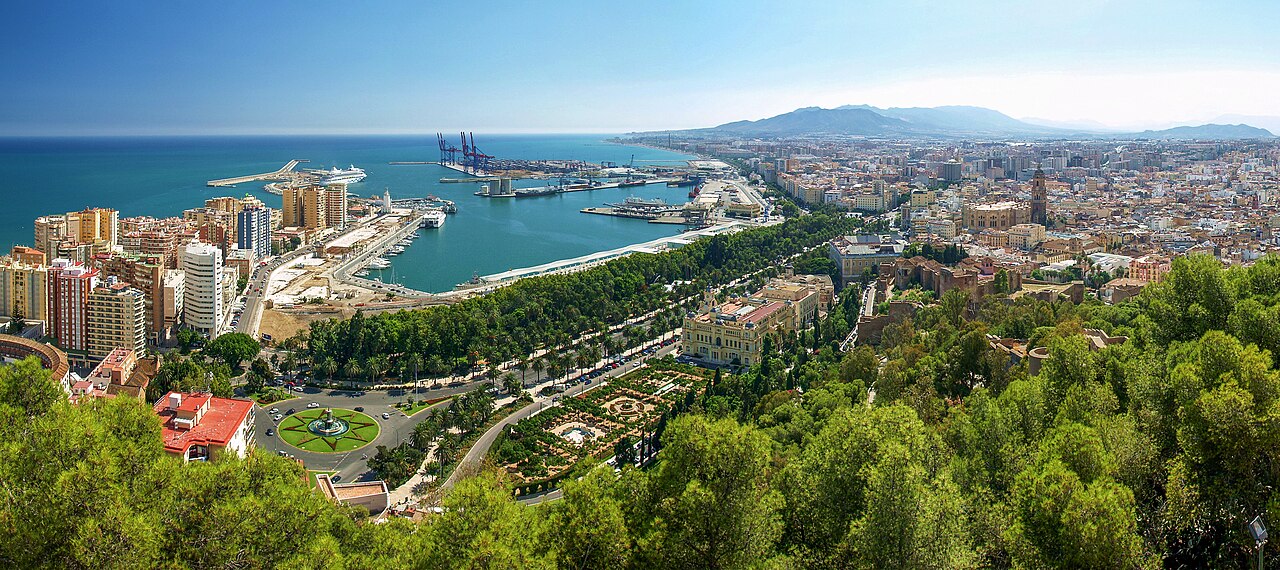
Madrid → Málaga
536 kmCrossing the peninsula from north to south to swap the grey asphalt of the capital for the sparkle of the Mediterranean is one of the most rewarding experiences you can have in Spain. Whether you’re chasing the dizzying speed of the high-speed train or the freedom to stop in whitewashed villages under the Andalusian sun, this journey of more than 500 kilometres is much more than a simple transfer: it’s the bridge between two worlds.
How to get from Madrid to Málaga: a quick overview
The fastest and most efficient way to travel from Madrid to Málaga is undoubtedly the AVE train, which covers the distance in under three hours, though driving your own vehicle offers unparalleled freedom to explore the landscapes of La Mancha and Andalusia at your own pace. For travellers on a tight budget, the bus is the most economical alternative, while the car is ideal for those planning a road trip or needing mobility once they arrive on the Costa del Sol.
Madrid to Málaga by car
Driving from Madrid to Málaga involves covering a total distance of 536 kilometres which, under normal traffic conditions, takes approximately 5 hours and 15 minutes. The main and most direct route follows the network of motorways heading south, with the A-4 (Autovía del Sur) serving as the backbone of this journey, connecting the capital with the heart of Andalusia without tolls until the final link.
As you approach the province of Málaga, the A-45 (Autovía de Málaga) takes over to lead you directly into the city. It is worth noting that all the main roads mentioned on this route, including the A-4 and the A-45, are toll-free, making the car journey highly competitive in terms of cost compared to other options if you are travelling in a group. Although the direct route is the most common, the Spanish road network offers multiple connections such as the A-5 (Autovía del Suroeste) or the A-43 (Autovía del Guadiana) that may be useful depending on your exact point of departure within the Madrid region or if you decide to take tourist detours.
Other motorways that form part of the connection network in this geographical area include the A-40 (Autovía de la Meseta Sur) and the A-42 (Autovía de Toledo), which serve as access roads or alternatives depending on your starting point. For those seeking alternative routes or connections with other regions, there are options such as the A-7 (Autovía del Mediterráneo) or the A-44 (Autovía de Sierra Nevada-Costa Tropical), although these usually involve longer journeys or significant detours from the main trunk route. In summary, driving is smooth and the infrastructure, such as the A-5R and the A-32, guarantees that the tarmac is in good condition for a safe journey with no toll interruptions on the main sections.
Madrid to Málaga by train
The train is the fastest means of transport between Madrid and Málaga, with Renfe’s AVE service covering the journey in just 159 minutes. The national operator Renfe offers an excellent frequency with a total of 15 daily trains connecting the departure station, Madrid Puerta de Atocha – Almudena Grandes, with the destination station, Málaga María Zambrano. The departure times cover a very broad window, with the first train leaving at 7:20 in the morning and the last at 21:20, allowing you to adapt the journey to almost any schedule.
Within Renfe’s offering, there are two main types of service differentiated by speed and price. The AVE service is the most predominant, with 13 daily departures that complete the journey in a record time of 159 minutes. On the other hand, there is the AVLO option, the operator’s low-cost train, which runs 2 daily services with a slightly longer duration of 189 minutes. This time difference is usually offset by more economical fares, making AVLO an attractive option for travellers who prioritise savings over extreme speed. Both options guarantee a comfortable and direct journey without the need for transfers.
By bus from Madrid to Málaga
The bus is the most economical option for traveling from Madrid to Málaga, with fares starting at 15 euros, although the exact journey time can vary depending on the company and road conditions. The main companies operating this route are Grupo Interbus, Alsa, and FlixBus, all of which offer direct services that eliminate the need for intermediate stops to change vehicles. Although the specific duration in minutes is not fixed to a single figure due to traffic variability and technical stops, the competitive price of €15+ makes it the favorite choice for backpackers and budget travelers.
By choosing the bus, you benefit from the comfort of these companies’ modern vehicles, which usually feature air conditioning and reclining seats to make the journey of over 500 kilometers more pleasant. It is advisable to book in advance, especially on weekends or during holiday periods, to secure your seat on Alsa, Interbus, or FlixBus services, as demand on this south-north route tends to be high.
Recommended stops along the way
If you decide to make the journey by car, the route is dotted with charming towns that are worth a pause to stretch your legs and enjoy the local culture. Below, we detail verified stops you can include in your itinerary:
- Boadilla del Monte: Located very close to the start of the route, this town is ideal for a quick first stop before heading onto the highway. Known for its historical heritage and extensive green areas, it offers a tranquil atmosphere perfect for a morning coffee away from the hustle and bustle of central Madrid.
- Pozuelo de Alarcón: Another stop near the departure point, Pozuelo stands out as one of the areas with the highest quality of life in the region. It is a strategic point to refuel or enjoy a comfortable service area before tackling the long stretch of the A-4 motorway.
- La Puebla de Montalbán: Already in the province of Toledo, this town offers a notable change of scenery. It is famous for its olive oil production and wines, making it an excellent place to buy local products and enjoy La Mancha cuisine in a historic setting.
- Ciudad Real: The capital of its province, Ciudad Real is a must-stop if you are looking for culture and full services. Here you can visit the Don Quixote Museum or simply enjoy a hearty meal in the Plaza Mayor, breaking up the monotony of the road at the halfway point.
- Miguelturra: Known as the “Villa del Frito” (Town of Fried Delights), this town adjacent to Ciudad Real is perfect for food lovers. It is the ideal place to try the famous “flores” and other typical sweets, while soaking up an authentic and welcoming Castilian atmosphere.
- Puertollano: Located in the Alcudia Valley, Puertollano is an industrial city with a rich mining heritage. It is a strategic stop to refuel and visit the Oil Museum if you are interested in the region’s industrial history before continuing south.
- Almagro: Although it requires a small detour, Almagro is a gem of the Spanish Golden Age. Its arcaded Plaza Mayor is considered one of the most beautiful in Spain and is home to the Classical Theatre Festival. The detour is worth it to walk through its cobbled streets.
- Jaén: This stop involves a more significant detour to the east, but it is rewarded with the view of the Santa Catalina Castle and the endless sea of olive trees. Jaén offers a pure Andalusian experience before reaching the coast, with a cuisine based on the world’s finest olive oil.
Where to sleep in Malaga
When you arrive in Malaga, you’ll find a wide variety of accommodation options spread across different areas of the city, catering to all budgets and travel styles. The historic centre is the most sought-after area, ideal for those who want to be just a few minutes from the Cathedral, the Alcazaba and the Picasso Museum (Museo Picasso), although prices here tend to be higher due to the high concentration of tourists. For travellers seeking tranquillity and proximity to the beach, the area of Malaga East or Pedregalejo offers hotels and apartments with sea views, perfect for enjoying the Mediterranean climate.
In terms of price ranges, Malaga offers everything from budget hostels for backpackers to luxury 5-star hotels. Mid-range accommodation generally offers good value for money, especially if booked in advance. It is also common to find tourist apartments that allow for greater independence, a very popular option among families or groups of friends travelling by car who need extra space. Regardless of the area you choose, the efficiency of public transport in Malaga makes it easy to get from residential neighbourhoods to the centre.
Frequently asked questions about the Madrid-Malaga route
How long does it take to get from Madrid to Malaga?
The travel time varies depending on the means of transport chosen: by car it takes approximately 5 hours and 15 minutes covering 536 km, while the AVE train journey is drastically reduced to just 159 minutes.
Which is cheaper, the train or the bus?
The bus is generally the most economical option, with prices starting from 15 euros, while the AVE train, although faster, usually has higher fares unless you find early-bird offers on the AVLO service.
Is it worth renting a car?
Yes, renting a car is worth it if you plan to make tourist stops on routes like Jaen or Almagro and want the freedom to move around Malaga, as the 536 km distance is manageable in a day and the motorways are toll-free.
When is the best time to travel?
The best time to travel depends on your preferences, but considering the availability of 15 daily trains and snow-free roads, any time of year is viable, although spring and autumn offer more pleasant temperatures for stops along the way.
📍 También te puede interesar
Qué ver en Madrid →
Qué ver en Málaga →