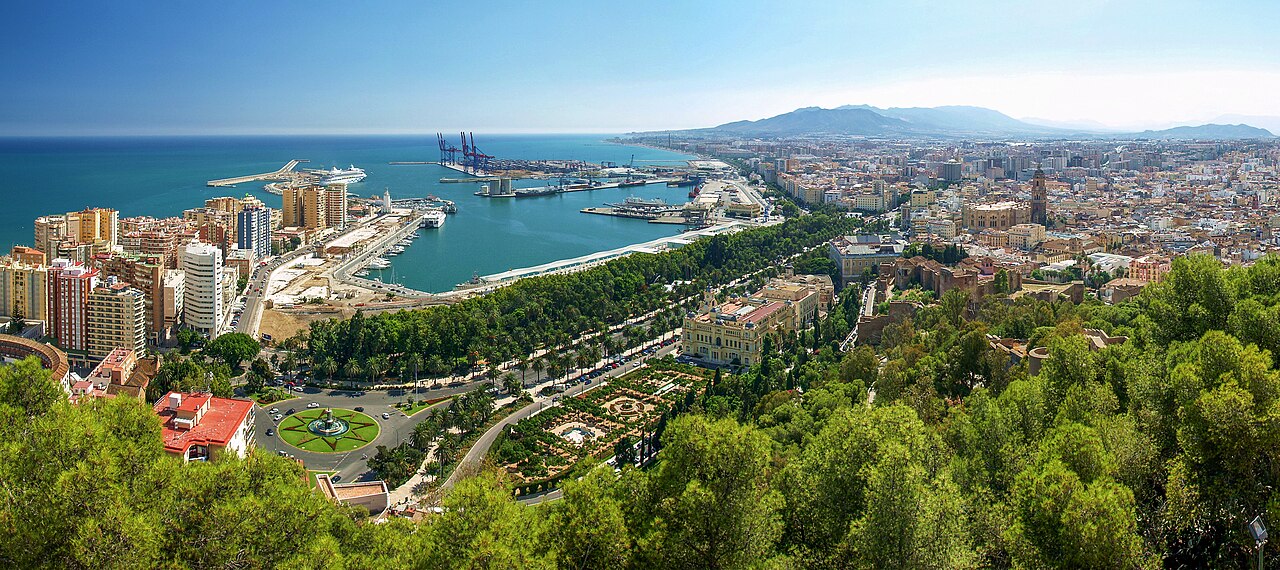
Cádiz → Málaga
244 kmDriving from Cádiz to Málaga is much more than a simple 244-kilometer journey; it is a trip that takes you through the soul of Andalusia, moving from the salty breeze of the Bay of Cádiz to the vibrant bustle of the Costa del Sol in just two and a half hours. This route offers a unique freedom, allowing you to stop time in white villages perched on cliffs or enjoy the elegance of Marbella before reaching your final destination, turning the road into an essential part of the adventure.
How to get from Cádiz to Málaga: quick overview
The most recommended option for traveling from Cádiz to Málaga is a private car, as it offers the greatest flexibility for exploring intermediate stops on a 2-hour, 35-minute journey. However, if you prefer not to drive, the direct bus operated by Transportes Generales Comes is the only viable public transport alternative, with a travel time of 285 minutes and a cost ranging between 38 and 39 euros. There is no direct rail connection between the two cities, so the train is ruled out as a practical option for this specific route.
By car from Cádiz to Málaga
The driving route from Cádiz to Málaga covers a distance of 244 km and runs entirely on toll-free highways, making it very economical in terms of road infrastructure. To complete this journey efficiently, you will need to combine the A-4 (Autovía del Sur), the A-7 (Autovía del Mediterráneo), and the A-45 (Autovía de Málaga). The A-4 will take you out of the Cádiz area, connecting northward, while the A-7 is the great artery that runs along the Mediterranean coast and will bring you closer to the province of Málaga. Finally, the A-45 is the direct access road that will leave you in the heart of Málaga city. Since all of these are toll-free highways, the only variable cost will be fuel, making the trip very attractive for groups or families looking to share expenses. The estimated driving time is 2 hours and 35 minutes, although this figure may vary slightly depending on traffic density, especially on approaches to coastal tourist areas during high season.
By bus from Cádiz to Málaga
The bus is the only direct public transport option available to connect Cádiz and Málaga, operated exclusively by the company Transportes Generales Comes. This service offers a regular connection between the two cities, with a total journey duration of 285 minutes, which is equivalent to 4 hours and 45 minutes of travel. The ticket price ranges from 38 to 39 euros, a competitive fare considering there are no direct rail alternatives. Although the travel time is almost double that of a private car, the bus allows travelers to rest, read, or work during the journey without the worry of driving or parking at the destination. It is essential to keep in mind that, with no direct train available, the bus becomes the preferred option for travelers who do not have their own vehicle and are looking for a “door-to-door” solution without complicated transfers.
Recommended stops along the way
The route between Cádiz and Málaga is dotted with charming towns that deserve a visit, turning the journey into a sightseeing route in its own right. Below, we detail the verified stops you can include in your itinerary:
- El Puerto de Santa María: Strategically located near the start of the route, this enclave is famous for its winemaking history and its impressive San Marcos Castle. It is the perfect place for a first stop to enjoy the local gastronomy before heading out on the road.
- Arcos de la Frontera: One of the most emblematic white villages (pueblos blancos) in Andalusia, Arcos rises atop a cliff offering spectacular panoramic views. Its old town, declared a Historic-Artistic Site (Conjunto Histórico-Artístico), is ideal for getting lost among cobbled streets and admiring the traditional architecture.
- Marbella: Synonymous with luxury and coastal living, Marbella is a must-stop if you are looking for atmosphere, well-kept beaches, and a vibrant leisure scene. Its old town contrasts beautifully with the modernity of its marina, offering a complete Mediterranean experience.
- San Pedro Alcántara: Located very close to Marbella, this town offers a quieter, more family-friendly atmosphere. It is known for its Roman archaeological remains, such as the Paleochristian Basilica, and for being an access point to less crowded beaches.
- Alhaurín el Grande: Situated inland, this white village in the Guadalhorce valley is famous for its craftsmanship and natural surroundings. It is an excellent stop to disconnect from the noise of the coast and enjoy the serenity of the Málaga highlands.
- Alhaurín de la Torre: Closer to the capital, this municipality combines the essence of a village with the convenience of being near the city. It is known for its historical heritage and for being a pleasant place to pass through before reaching the end of the journey.
- Coín: Known as the “City of the Three Cultures,” Coín stands out for its historical richness and its privileged location in the valley. Its churches and convents bear witness to a fascinating past that is worth exploring for a few minutes.
- Cártama: This town, crossed by the Guadalhorce River, is one of the oldest in the province. Its monumental heritage, including the Church of the Assumption, makes it a cultural stop of interest just before finishing the route in Málaga.
Where to stay in Málaga
Upon arriving in Málaga, the choice of accommodation area will depend entirely on the type of experience you are looking for, as the city offers very distinct districts. For travelers who want to be at the heart of the cultural and gastronomic action, the Historic Center is the undisputed choice; here you will find a mix of boutique hotels and tourist apartments just minutes from the Cathedral and the Picasso Museum. If you prefer a more modern and artistic atmosphere, the Soho area, known as the arts district, offers design-forward accommodations near the Pompidou Museum and the Contemporary Art Center. For those traveling by car who prioritize parking convenience and beach access, the neighborhoods of La Malagueta or El Limonar are ideal, located along the coastal strip with sea views. As for price ranges, Málaga is a versatile city: you can find budget hostels for tight budgets, mid-range hotels in residential areas, and luxury establishments along the seafront promenade. It is not necessary to book months in advance outside of high season, but in summer demand skyrockets, so it is recommended to secure accommodation ahead of time to get the best rates.
Frequently asked questions about the Cádiz–Málaga route
How long does it take to get from Cádiz to Málaga?
Travel time varies significantly depending on the mode of transport you choose. If you drive your own car along the A-4, A-7 and A-45 motorways, the 244 km journey takes approximately 2 hours and 35 minutes under normal traffic conditions. By contrast, if you opt for the bus operated by Transportes Generales Comes, the journey takes 285 minutes, that is, 4 hours and 45 minutes.
Which is cheaper, the train or the bus?
There is currently no direct train line between Cádiz and Málaga, so this option is not viable for a journey without complex transfers. The available public transport option is the bus, operated by Transportes Generales Comes, with a price ranging from 38 to 39 euros. With no direct rail competition on this specific route, the bus is the price benchmark for travellers not using their own vehicle.
Is it worth renting a car?
Yes, renting a car is well worth it if your goal is to make the most of the many recommended stops along the route, such as Marbella, Arcos de la Frontera or Alhaurín el Grande. Given that the car journey is almost twice as fast as the bus (2h 35min compared with nearly 5 hours) and all the main roads (A-4, A-7, A-45) are toll-free motorways, the freedom of movement and time savings justify the rental cost, especially if there are several of you travelling.
When is the best time to travel?
The best time to travel from Cádiz to Málaga depends on your preferences for weather and crowds. Spring and autumn are ideal for enjoying the drive with pleasant temperatures and less traffic on the A-7 and A-45 motorways. If you travel in summer, bear in mind that the driving time of 2 hours and 35 minutes may increase due to the high influx of tourists heading to the Costa del Sol, and accommodation prices in Málaga will be higher.
📍 También te puede interesar
Qué ver en Cádiz →
Qué ver en Málaga →