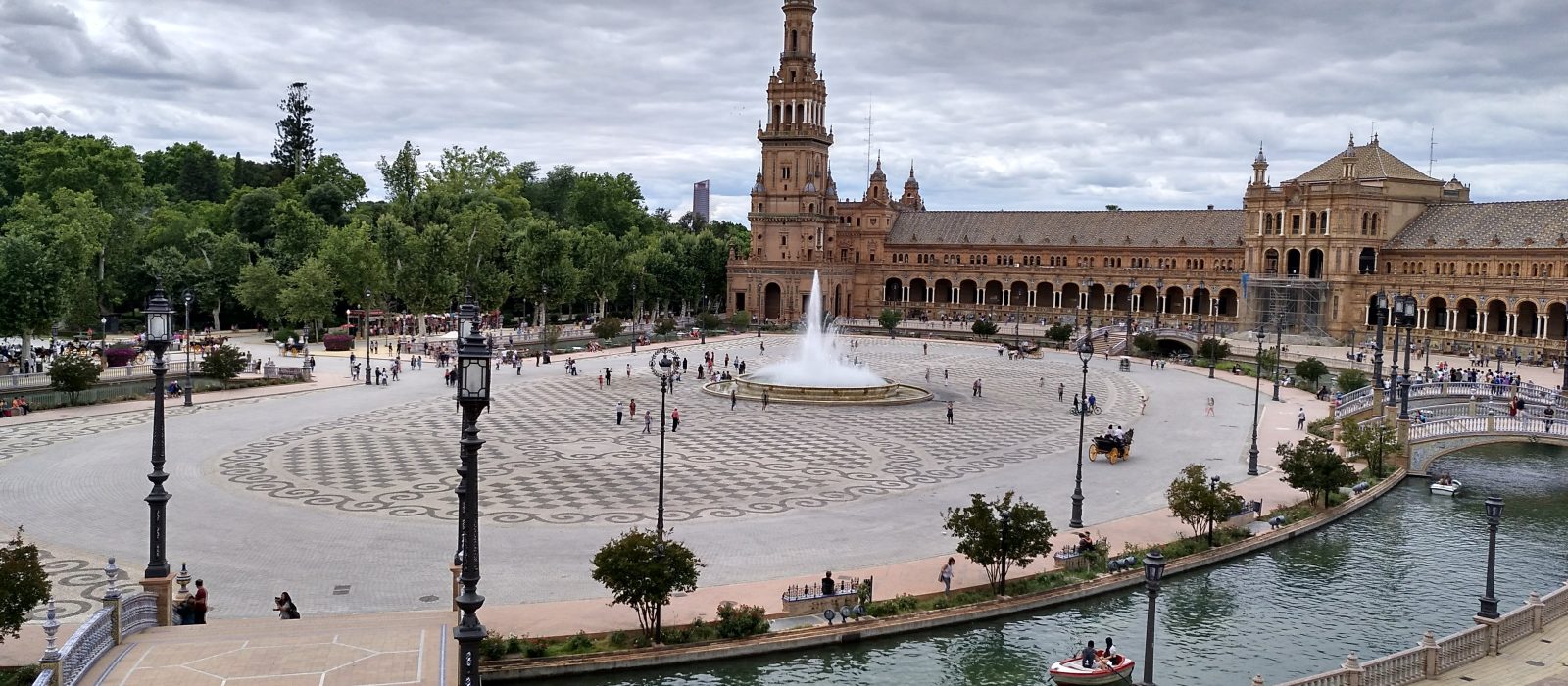
Cádiz → Sevilla
125 kmLeaving behind the salty sea breeze and the ancient walls of Cádiz to venture into the heart of Andalusia is an experience that unfolds in just an hour and a quarter of driving. This journey is not merely a transfer between two provinces; it is a visual voyage where the light shifts subtly from the coastal whiteness to the historic ochre of the capital, offering one of the most seamless and scenic connections in southern Spain.
How to get from Cádiz to Seville: quick overview
The fastest option for traveling from Cádiz to Seville is the Alvia train, which covers the distance in 84 minutes, although driving offers the greatest flexibility for exploring the towns along the way.
For the traveler who prioritizes comfort and speed, the railway operated by Renfe is the undisputed choice, eliminating the stress of traffic and parking in the capital. However, if your plan includes rural tourism or visiting several towns in the Aljarafe region before reaching the city, renting a car is the winning strategy. The bus, for its part, stands out as the ideal budget-friendly alternative for backpackers or travelers who don’t need schedules as frequent as those of the train, maintaining a decent balance between travel time and cost. Each mode has its own charm: the train drops you in the nerve center, the car hands you the keys to freedom on the road, and the bus lets you completely switch off during the journey.
Driving from Cádiz to Seville
Driving from Cádiz to Seville takes approximately 1 hour and 20 minutes, covering a distance of 125 kilometers on toll-free highways.
The road network connecting the capital of Cádiz province with the capital of Seville province is modern and efficient, making for a very relaxed drive. You won’t have to worry about tolls in your budget, as the main arteries we’ll use are free of charge. The primary route usually involves taking the A-4 (Autovía del Sur), a key highway that cuts through the Andalusian landscape from north to south. Depending on your exact departure point in Cádiz or traffic conditions, you might also use connections with the A-49 (Autovía del V Centenario), which is vital for accessing the western part of Seville’s metropolitan area. Additionally, the A-66 (Autovía Ruta de la Plata) appears as a strategic option on certain north-south connecting stretches, facilitating the flow of heavy and tourist vehicles without interruptions. Since all of these are toll-free highways, the only real cost of the car journey will be fuel and vehicle wear and tear, which makes it very competitive if you’re traveling in a group of three or four people.
By train from Cádiz to Seville
The train is the fastest means of transport, with the Alvia service completing the journey in just 84 minutes according to Renfe data.
The national operator Renfe dominates this route with a robust offering of 16 daily trains, ensuring you have options from early morning until well into the evening. The star service is the ALVIA, of which there are 3 daily departures that achieve the record time of 84 minutes. For the rest of the day, the most frequent option is the MD (Media Distancia) train, with 13 daily departures that take approximately 93 minutes to arrive. The schedules are very convenient for tourists: the first train leaves at 5:40 in the morning, ideal for those who want to make the most of the day, and the last train leaves at 20:40, allowing for relaxed dinners in Cádiz before returning. The journey begins at the origin station in Cádiz and has as its final destination the emblematic Sevilla-Santa Justa station, a magnificent transport hub from where you can take a taxi or the metro to reach your hotel in a matter of minutes.
By bus from Cadiz to Seville
The direct bus is the most economical option, with fares ranging from €14.50 to €18 depending on the company Transportes Generales Comes.
If you’re looking to save money without sacrificing the comfort of a reserved seat, the company Transportes Generales Comes is responsible for operating this direct service. The bus journey takes an estimated 105 minutes, which is about 20 minutes longer than the fastest train option, but at a significantly lower price. It’s a very popular choice among students and travelers on a tight budget. The buses are usually modern and have air conditioning, essential during the Andalusian summer months. Although the frequency is not as high as the train, the value for money is excellent, especially if you buy your ticket in advance. Arrival is usually at the Plaza de Armas bus station in Seville, which is very close to the historic center and the Guadalquivir River, making it easy to walk to many tourist areas.
Recommended stops along the way
The route between Cadiz and Seville is dotted with charming towns in the Aljarafe region that deserve a quick visit.
If you decide to make the trip by car, you have the opportunity to stop at several strategic points that break up the monotony of the highway and bring you closer to local life:
- Bollullos de la Mitación: A town with a rich agricultural and winemaking history, perfect for stretching your legs and trying the local gastronomy before entering the big city.
- Gines: Known for its proximity to Seville but maintaining a very distinct identity of its own, it’s an ideal stop to see the typical residential architecture of the area.
- Gelves: Strategically located near the river, this municipality offers privileged views and a tranquil atmosphere that contrasts with the bustle of the capital.
- San Juan de Aznalfarache: A densely populated town but with interesting historic corners, situated in an elevated position that overlooks part of the surrounding landscape.
- Pilas: Further west, it’s a key stopping point if you use the A-49, known for its traditions and local festivities.
- Bormujos: A rapidly growing municipality that serves as a bridge between the rural and the urban, with a dining scene that has grown notably in recent years.
- Camas: Famous for its cultural connection and proximity to the capital, it’s a place with a lot of life and history worth exploring if you have time.
- Castilleja de la Cuesta: Historically linked to the figure of Bécquer, this town offers a pleasant stroll and is one of the most common stops before crossing the bridge into the center of Seville.
Where to stay in Seville
To stay in Seville, the most recommended areas are the Casco Histórico (Historic Center), Triana, and the area around Santa Justa station, with prices varying according to the category of accommodation.
Choosing where to stay depends entirely on your budget and the type of experience you are looking for. If you want to be in the center of the action, the Casco Histórico is the premium area. Here you will find everything from luxury hotels in palatial buildings to charming hostels on narrow streets. Prices here are the highest, especially in high season, but you have the Cathedral and the Alcázar just a few steps away. On the other hand, the Triana neighborhood, on the other side of the river, offers a more traditional and authentic atmosphere, with a wide range of tapas restaurants and a vibrant nightlife. It is an area slightly cheaper than the absolute center but very well connected. Finally, if you arrive by train, the Santa Justa area is very practical; there are many chain hotels and modern tourist apartments at more competitive prices, and you are only 15 minutes walking or 5 by tram from the center. In general, price ranges for a double room can vary from budget options of 50-70€ to 4 and 5-star hotels that exceed 150€ per night.
Frequently asked questions about the Cádiz-Seville route
How long does it take to get from Cádiz to Seville?
Travel time varies depending on the mode of transport: by car it is 1 hour and 20 minutes, by Alvia train it is 84 minutes, and by bus it is 105 minutes.
Which is cheaper, the train or the bus?
The bus is generally cheaper, with prices between 14.50€ and 18€, while the Alvia train usually has higher fares due to its greater speed.
Is it worth renting a car?
Yes, it is worth it if you plan to visit the recommended stops such as Gines, Gelves, or Bollullos de la Mitación, since public transport does not cover all these points easily.
When is the best time to travel?
It is best to travel avoiding peak traffic hours if you are driving, or taking advantage of the 16 daily Renfe trains that operate from 5:40 to 20:40 for greater flexibility.
📍 También te puede interesar
Qué ver en Cádiz →
Qué ver en Sevilla →