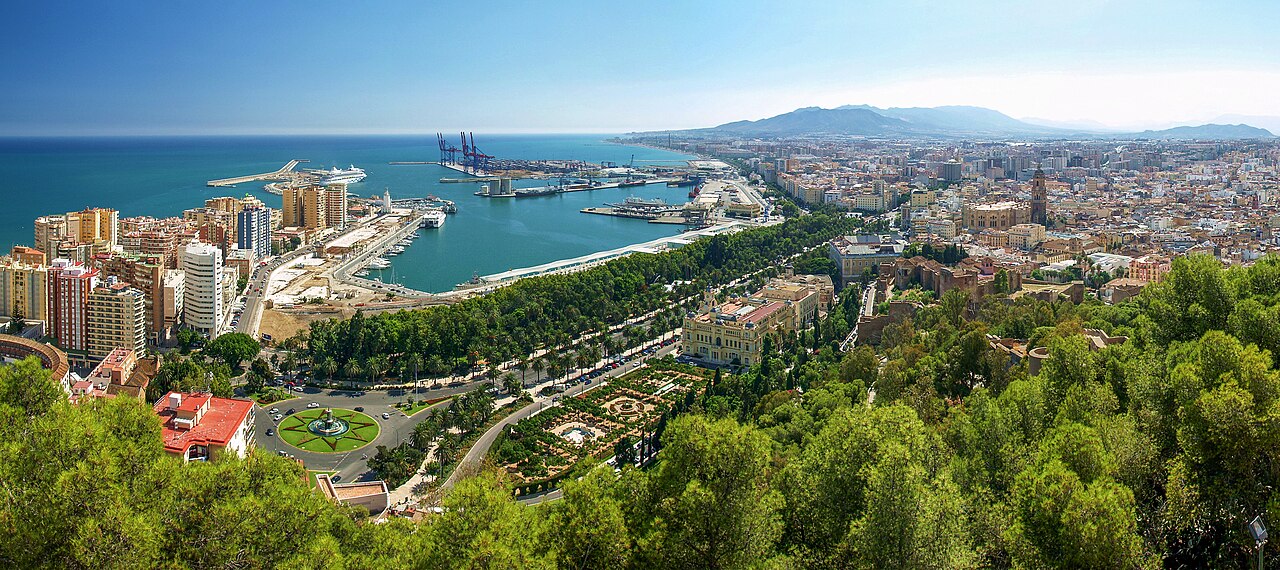
Nerja → Málaga
55 kmHow to get from Nerja to Málaga: quick overview
The journey between Nerja and Málaga is easily managed in just a few hours by road or public transport. Driving is the most flexible option, with 55 km along the A-7 motorway and an estimated travel time of 45 minutes under normal traffic conditions. The alternative without your own vehicle is the direct bus, operated by ALSA, with an approximate duration of 60 minutes and tickets from €4.84 to €6.81 depending on schedule and how far in advance you book. There is no rail connection between the two cities, as Nerja lacks a train station, and there are no direct flights covering such a short stretch. For a traveler in a hurry, driving or taking the bus are the clear options; for those who prefer to travel without worries, ALSA’s direct bus is highly competitive in both price and frequency.Driving from Nerja to Málaga
Covering the 55 km between Nerja and Málaga takes approximately 45 minutes via the regional motorway network, with no tolls along the way. The most common route is the A-7, known as the Autovía del Mediterráneo (Mediterranean Motorway), which runs along the Málaga coast and allows for smooth driving, with stretches offering views of the Mediterranean and others where the road heads inland, skirting the subtropical fields of the Axarquía region. This route has no tolls, making it the logical choice for those traveling on a tight budget. An equally free alternative is the A-45, the Autovía de Málaga (Málaga Motorway), which connects inland Andalusia with the city of Málaga and is useful if you arrive in Nerja from cities such as Granada or Córdoba and continue directly to Málaga without passing along the coastal strip. Both options belong to the regional road network, are well maintained, and have service areas where you can refuel or take a break midway.Taking the bus from Nerja to Málaga
The bus is the star alternative for those traveling without a car: ALSA operates a direct line between Nerja and Málaga with an approximate duration of 60 minutes, noticeably similar to driving under normal conditions. Ticket prices range from €4.84 to €6.81 depending on the schedule, how far in advance you purchase, and the fare chosen. It is recommended to book several days in advance, especially in high season and on weekends, to secure the lowest prices in the range and a comfortable seat on the most in-demand services. The departure station is located in Nerja, and arrival is at the Málaga Bus Station, from where you can easily connect to the historic center by urban transport or on foot.Recommended stops along the way
Before reaching Málaga, the A-7 offers three stops that are well worth a detour or, if you’re traveling by bus, an extra day. The first is Torrox, known as the “village of the climate,” where the sun shines more than 300 days a year and the beaches alternate with very inviting seafront promenades. Its old town retains the typical whitewashed alleyways of the Axarquía region and offers a delightful panoramic view of the Mediterranean. It’s the ideal place to stretch your legs, grab a coffee, and sample local products before continuing on. The second stop, a little further inland within the region, is Vélez-Málaga, the capital of the Axarquía. Here travelers will find a remarkable historical heritage: the town’s fortress, Renaissance churches, a vibrant food market, and a lively urban center. It’s worth dedicating at least one morning to this city, where some of the region’s finest gastronomic products are also made, such as raisins and sweet wine. Finally, the coast calls to travelers once again with Rincón de la Victoria, practically at the gates of Málaga. Its urban beaches, its chiringuitos (beach bars), and its seafront promenade are perfect for a meal facing the sea or one last swim before heading to the capital of Málaga province. It’s the perfect beachside farewell before swapping the scenery for the city of Málaga.Where to stay in Málaga
Málaga offers a broad and varied range of accommodation, capable of adapting to practically any budget. For those looking to be in the heart of the city and within walking distance of the main attractions, the historic center and the area around Calle Marqués de Larios are the best option: here you’ll find charming hotels, boutique accommodations, and tourist apartments in restored buildings. Prices in this area tend to fall in the mid-to-high range, especially in summer and during Semana Santa (Holy Week). A practical and more affordable alternative is the area near the Bus Station and Avenida de la Estación, well connected to Nerja and to the rest of the city by public transport. For those who prioritize the beach, the neighborhoods of La Malagueta and Pedregalejo offer hotels with sea views and chiringuitos just steps away, although prices on the beachfront skyrocket in high season. In general, Málaga has three- and four-star hotels with reasonable rates outside of July and August, budget hostales (guesthouses) and pensiones (boarding houses) on inner streets of the center, and a growing supply of vacation apartments. It’s advisable to book in advance during the summer months and on dates of high tourist demand.Where to eat along the route
Gastronomy is one of the great highlights of any trip through the Axarquía and the Costa del Sol. One of the most recognizable emblems is the espeto de sardinas (sardine skewer), a traditional way of grilling fresh sardines threaded onto canes and cooked over a wood fire right on the beach sand. It can be found anywhere along the Málaga coast, including Nerja and Málaga, and is usually accompanied by a glass of sweet wine or an ice-cold beer. Another essential recipe is ajoblanco (cold almond soup), a chilled soup typical of the Axarquía and the entire province of Málaga. It is made with ground almonds, bread, garlic, olive oil, and water, and is traditionally served with grapes or pieces of melon as an accompaniment. Smooth, refreshing, and very comforting on hot days, it is one of the region’s most pleasant gastronomic surprises. In the Axarquía, the cazuela de calabaza (pumpkin casserole) is a must, a stew that combines pumpkin with a sofrito, a pounded mixture of almonds, bread, and spices, to which clams and cod are added. The result is a dish with deep flavor, perfect for cool days or as a comforting meal at the end of a beach day. To drink, nothing beats a DOP Málaga wine, a historic designation that produces fortified or liqueur wines, made mainly from Moscatel and Pedro Ximénez grapes. The Axarquía region is one of the major producing areas, so they are easy to find in local bars and restaurants. To accompany dishes, or as a snack, DOP Málaga raisins are a classic: dried Moscatel grapes, very sweet and versatile, used both in desserts and in stews and meat dishes. Finally, the most deeply rooted sweet in the area is batatas con miel de caña (sweet potatoes with cane honey), typical of Frigiliana and the entire Axarquía. It consists of roasted or boiled sweet potatoes served with cane honey, a simple dessert but much loved by locals and by those visiting the region for the first time.Frequently asked questions about the Nerja-Málaga route
How long does it take to get from Nerja to Málaga?
The drive via the A-7 or A-45 motorway, both toll-free, takes approximately 45 minutes for the 55 km separating the two cities. The direct ALSA bus takes around 60 minutes, a time very similar to driving. There is no rail connection, as Nerja does not have a train station.
Which is cheaper, the train or the bus?
On this route, the comparison can only be made with the bus, as there is no direct train between Nerja and Málaga. ALSA tickets cost between €4.84 and €6.81, depending on the schedule and how far in advance you book, making the bus one of the most economical options for traveling between the two cities.
Is it worth renting a car?
A car is highly recommended if you want to visit stops along the route such as Torrox, Vélez-Málaga, or Rincón de la Victoria with complete freedom of schedule, since the direct bus only connects Nerja with Málaga. However, if the plan is to go directly to the capital of Málaga, the ALSA bus covers the journey comfortably, economically, and without worrying about parking.
When is the best time to travel?
The best time to cover this stretch is spring and early autumn, when temperatures are mild, traffic is light, and accommodation prices in Málaga are more moderate than in the height of summer. July and August work well for a beach getaway, although it is advisable to book the bus in advance and be patient with coastal traffic at peak times.
💡 ¿Sabías que...?
- ● El faro de Málaga se llama 'La Farola' y es uno de los pocos faros con nombre femenino en España. (https://www.checkin-malaga.com/blog/curiosidades-malaga/)
- ● La Catedral de Málaga, apodada 'La Manquita' por los malagueños, está inacabada y solo tiene una torre construida. (https://www.checkin-malaga.com/blog/curiosidades-malaga/)
- ● El Cementerio Inglés de Málaga, construido en 1831, es el cementerio protestante más antiguo de la península ibérica. (https://www.checkin-malaga.com/blog/curiosidades-malaga/)
- ● El Teatro Romano de Málaga, del siglo I a.C., permaneció oculto durante siglos hasta que fue descubierto en 1951 al pie de la Alcazaba. (https://www.checkin-malaga.com/blog/curiosidades-malaga/)
- ● Pablo Picasso nació en Málaga y el Museo Picasso de la ciudad reúne más de 200 obras del artista. (https://www.checkin-malaga.com/blog/curiosidades-malaga/)
- ● La biznaga, símbolo malagueño, no es una flor natural sino un ramo artesanal de jazmines frescos insertados en un tallo seco de cardo. (https://www.checkin-malaga.com/blog/curiosidades-malaga/)
- ● El nombre 'Malaka' podría derivar del término semítico MLK, relacionado con la sal, por la importancia de la industria fenicia de salazón de pescado. (https://malagaatodacosta.com/10-curiosidades-sobre-malaga-que-probablemente-no-conocias/)
- ● Málaga fue capital del reino independiente Hammudí entre los años 1026 y 1057, tras la disolución del Califato de Córdoba. (https://www.malagatop.com/es/historia-de-malaga/)
📍 También te puede interesar
Qué ver en Nerja →
Qué ver en Málaga →