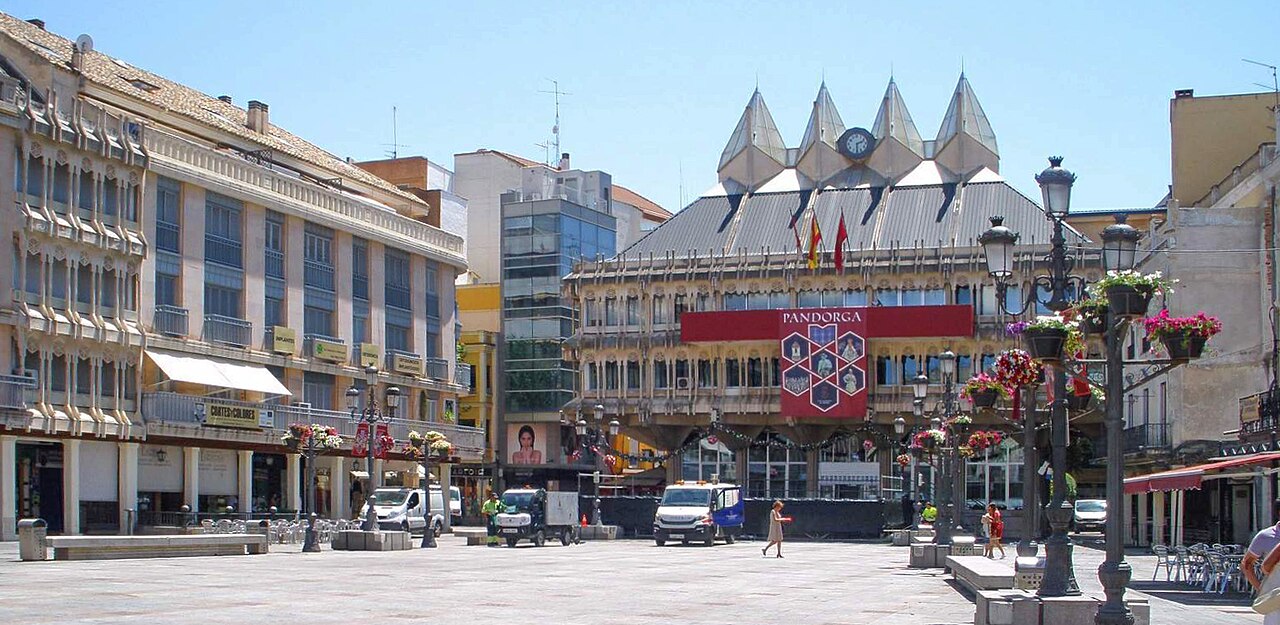
Ciudad Real
Castilla-La ManchaClimate
Some cities speak of kings and medieval battles, while others whisper secrets of cinema and modernity; Ciudad Real achieves the feat of being both at once. Founded in 1255 by Alfonso X the Wise as a royal counterweight to the Order of Calatrava, this city of 74,000 inhabitants has managed to transform its fortress past into a vibrant destination where stone coexists with the avant-garde. Here, you will not only walk the ground where Penélope Cruz was filmed, but also stroll through the same streets witnessed by Hernán Pérez del Pulgar before his famous incursion into Granada.
The must-seesWhat to see in Ciudad Real: the essentials
Geological Park of the Calatrava Volcanoes
This space is a unique gem recognized as a UNESCO Global Geopark encompassing the fascinating Campo de Calatrava Volcanic Region. Its highlight is the integration of spectacular geological heritage, featuring maars, magmatic volcanoes, and active carbonated springs known as ‘hervideros’ (boiling springs), alongside the historic fortress of Calatrava La Nueva, headquarters of the Order of Calatrava perched on a quartzite cliff. The setting facilitates geotourism and ecotourism routes through accredited companies, also linking up with the historic Almadén Mines, a World Heritage Site.
Santa Iglesia Prioral Basílica Catedral de las Órdenes Militares de Santa María del Prado (Royal Priory Basilica Cathedral of the Military Orders of Saint Mary of the Meadow)
This is the most recent of the city’s three Gothic churches, built upon 13th-century remains in the old Moorish quarter, with official construction beginning in the 15th century and concluding in the 16th in late Gothic style with Renaissance details. It was elevated to a Cathedral in 1875 and declared a Basilica in 1980, preserving inside a Gothic-Renaissance main altarpiece and a choir completed in 1514 by Antonio de Écija. For visits, note that opening hours are weekdays from 11:00 to 13:00 and from 18:00 to 20:00, while on holidays it opens from 11:00 to 11:45 and from 18:00 to 20:00.
Ciudad Real Museum – Convent of La Merced
Located in the former Convent of La Merced, founded in the early 17th century, this historic building was transformed in the 19th century into a secondary school before its rehabilitation as a cultural center. It primarily houses the Fine Arts Section of the Ciudad Real Museum, with this venue standing out for its collection of Manchegan painting from the 19th and 20th centuries. It is important to know that the province’s archaeology and ethnography collections are located at the museum’s other branch on Calle Prado.
Palace of the Provincial Council
This 19th-century institutional building was designed by architect Sebastián Rebollar between 1889 and 1893 and currently serves as the headquarters of the Provincial Council of Ciudad Real. Notable for its representative architecture, it offers free guided tours from Tuesday to Friday (excluding holidays) from 9:00 to 20:00, making it an accessible stop for understanding local administration.
Gate of the Former Convent of the Dominicans of Altagracia
This religious monument is a key testament to the city’s conventual history and forms part of the architectural heritage defining the old town. Its structure preserves the essence of religious architecture from the period and serves as a visual landmark in its urban surroundings.
Other points of interest
- López-Villaseñor Municipal Museum: Dedicated to the painter from Ciudad Real, Manuel López-Villaseñor (1863-1931), it preserves his original studio and paintings in a 19th-century manor house.
- Church of Santiago Apóstol (Church of St. James the Apostle): A 13th-century Gothic temple located in Plaza de Santiago, founded during the reign of Alfonso X, preserving its medieval structure and historical altarpieces.
- Hermitage of Nuestra Señora de los Remedios (Our Lady of Remedies): A temple dating from 1664 with a Greek cross floor plan and a half-orange dome, headquarters of the Brotherhood of the Descent.
- Puerta de Toledo (Toledo Gate): One of the original accesses to the medieval walled enclosure built between the 13th and 14th centuries, featuring an entrance arch characteristic of military architecture.
- Diocesan Museum: Collection of sacred art from the 15th to the 18th centuries located in the Diocesan Curia, with guided tours available by appointment.
- Former Gran Casino de Ciudad Real: A 19th-century building in Plaza del Ayuntamiento that houses the Municipal Archive, including the Carta Puebla charter of 1255.
- Various monuments: The city boasts numerous statues, including the Monument to Queen Isabel II, Juan II of Castile, Don Quijote de la Mancha, Quijote Azteca, Javier Segovia, La Pandorga, Arlequín de la Suerte, Pyramid Homage to Alarcos, Miguel de Cervantes, Alfonso X the Wise, Don Quijote with his Companions, Don Quijote at the Centenary Elm, Penitente, Dulcinea, Carillon Clock, and To the Victims of Terrorism.
🍂 Otoño
Si visitas Ciudad Real en otoño, el clima es suave y tranquilo, una época perfecta para disfrutar de la ciudad con calma y sin las aglomeraciones del verano. Podrás recorrer con mimo la Puerta del antiguo Convento de las Dominicas de Altagracia, el monumento A las Víctimas del Terrorismo y el Museo Municipal López-Villaseñor. Eso sí, llévate un paraguas porque es una estación con bastantes probabilidades de lluvia.
What to do in Ciudad Real
Ciudad Real offers specific activities ranging from immersion in centuries-old traditions to enjoying urban green spaces. You can dive into Holy Week (Semana Santa), with processions boasting over six centuries of history, or experience the explosion of color during Carnival on Piñata Sunday with its National Float Competition. If you visit the city in July, do not miss La Pandorga festival, featuring the flower offering and the distribution of ‘limoná’ (lemonade), or the August Fair with the traditional Vermouth Dance. For a more relaxed plan, Gasset Park acts as the city’s ‘lung’, ideal for outdoor leisure and family unwinding.
Ciudad Real in one day: express itinerary
If you are short on time, this route will allow you to see the essentials by walking through the historic center and connecting with the city’s medieval and religious history.
- 10:00 – Puerta de Toledo and Old Town: Start your day observing this original access point to the medieval walled enclosure, a significant testament to fortified heritage with elements of 13th and 14th-century military architecture.
- 11:00 – Cathedral of Santa María del Prado: Take advantage of weekday opening hours to visit the interior of this Gothic-Renaissance basilica, sanctuary of the Virgin of Prado, and admire its main altarpiece and the choir from 1514.
- 13:00 – Museo de Ciudad Real (Convento de la Merced): Dedicate the hour before lunch to exploring the collection of La Mancha painting from the 19th and 20th centuries in this rehabilitated former convent.
- 14:30 – Lunch at Mercado de Abastos: Head to Calle Postas to sample local gastronomy at the main municipal market, offering a variety of fresh products in an authentic atmosphere.
- 16:30 – Palacio de la Diputación Provincial: End the afternoon with a free guided tour (available Tuesday to Friday) of this 19th-century institutional building designed by Sebastián Rebollar.
Where to eat in Ciudad Real: local gastronomy
Where to sleep in Ciudad Real
Centro Histórico / Casco Antiguo
El corazón de Ciudad Real, donde se entrelazan su rica historia medieval con la vida moderna. Sus calles peatonales albergan los principales monumentos, comercios tradicionales y una vibrante oferta gastronómica.
Zona de la Estación (AVE)
Área moderna y funcional que sirve como puerta de entrada a la ciudad a través de la estación de tren de alta velocidad. Ofrece comodidad y fácil acceso para viajeros, con algunas opciones de alojamiento y servicios básicos.
Zona Universitaria (Campus UCLM)
Un área dinámica y juvenil, dominada por el Campus de la Universidad de Castilla-La Mancha. Caracterizada por su ambiente estudiantil, ofrece opciones de ocio y restauración asequibles, y se encuentra cerca de puntos históricos importantes.
Parque de Gasset y Ciudad Jardín
Considerado el 'pulmón de la ciudad', el Parque de Gasset es un oasis verde ideal para la relajación y el ocio al aire libre. El barrio de Ciudad Jardín, adyacente, es una zona residencial tranquila con un encanto particular.
Zona Comercial 'El Parque' (Avenida de Europa)
Área moderna centrada alrededor del Centro Comercial El Parque en la Avenida de Europa. Ofrece una variada oferta de tiendas, ocio y restauración contemporánea, ideal para quienes buscan experiencias de compras y entretenimiento actuales.
How to get to Ciudad Real
The city’s connectivity allows access mainly by conventional rail, being an important node within the region’s transport network.
| Medio | Duración | Precio aprox. | Frecuencia |
|---|---|---|---|
| Tren (Estación Ciudad Real) | Variable según origen | Variable según tarifa | Diaria (según Renfe) |
It is important to note that the Ciudad Real train station currently has no AVE service for passengers, contrary to what some might think given its infrastructure.
How to get around Ciudad Real
To get around inside the city, the main and most practical option is the urban bus. This public transport service covers the different zones, connecting the historic center with residential neighborhoods, the university area, and commercial areas like ‘El Parque’, facilitating movement without the need for a private vehicle.
Weather in Ciudad Real
Best time to visit Ciudad Real
Day trips from Ciudad Real
Ciudad Real’s location makes it a strategic starting point for exploring other cities in the Castile-La Mancha region. From here you can plan outings to discover the towns of the province and nearby natural environments, taking advantage of the capital’s geographical centrality to uncover the treasures of La Mancha.
Trivia about Ciudad Real you didn’t know
Did you know that this city was founded in 1255 by King Alfonso X ‘the Wise’ under the name ‘Villa Real’? His objective was to create a royal counterweight against the immense power held by the Order of Calatrava in the region.
Originally called ‘Villa Real’, King John II of Castile granted it the title of ‘City’ in 1420, becoming known as ‘Ciudad Real’ as a reward for its support during the Castilian civil war.
The Puerta de Toledo (Toledo Gate), built in the 14th century, is one of the best-preserved examples of Mudéjar military architecture in Castile, standing out for its horseshoe arches more typical of Islamic architecture.
Although Pedro Almodóvar is from Calzada de Calatrava, he has used the area in his films; the train station was a filming location for ‘Broken Embraces’ (2009), starring Penélope Cruz.
It is the birthplace of Hernán Pérez del Pulgar, famous for infiltrating Nasrid Granada to nail a sign reading ‘Ave Maria’ on the door of the main mosque during the Granada War.
The festival of ‘La Pandorga’, celebrated every July 31, is one of Spain’s most unique traditions, where a ‘Pandorgo’ is named to represent the people and a massive offering is made to the Virgin of Prado.
Who Is Ciudad Real For?
Ciudad Real is an ideal destination for history lovers eager to explore the legacy of the Military Orders and the medieval era, as well as for foodies interested in authentic La Mancha cuisine. It is also perfect for families seeking a relaxed pace at Gasset Park and for cultural travelers wishing to discover the context of Don Quixote and sacred art without the crowds of major capitals.
Frequently Asked Questions About Ciudad Real
How many days do I need to see Ciudad Real?
With an average stay of 1.68 nights according to the INE, a weekend is enough to see main attractions like the Cathedral and the Museum, though you might need more time to thoroughly explore the Geological Park and take regional excursions.
When is the best time to visit Ciudad Real?
The best time is from May to October, avoiding the winter cold when the average temperature is 7.2°C, and taking advantage of events like La Pandorga in July or the Fair in August.
How do I get to Ciudad Real from Madrid?
You can reach it by train from Ciudad Real station, although you should note that there is currently no direct AVE passenger service at this specific station, so you will need to check conventional train schedules via Renfe.
For more practical information on updated schedules, tickets, and the full events agenda, we recommend consulting the official tourism website of Ciudad Real.