Alicante
Comunidad ValencianaClimate
Daily budget
Nestled between the deep blue of the Mediterranean and the limestone of Mount Benacantil, Alicante presents itself as a destination where history coexists seamlessly with beach life. This port city, capital of its province in the Valencian Community, offers a unique contrast: you can go from the tranquility of a heritage park to the euphoria of the Hogueras de San Juan (Bonfires of Saint John) in a matter of hours. With a population of around 335,000 inhabitants and forming part of an urban area of more than half a million people, Alicante is not just a point on the map with coordinates 38.3452, -0.4815, but a vibrant hub that welcomes nearly 919,485 travelers annually, more than 60% of whom come from abroad seeking that perfect balance between culture and sun.
The must-seesWhat to see in Alicante: the essentials
To understand the essence of this Mediterranean city, one must explore its historical and natural landmarks, ranging from medieval fortresses to unique marine reserves.
Castillo de Santa Bárbara (Santa Barbara Castle)
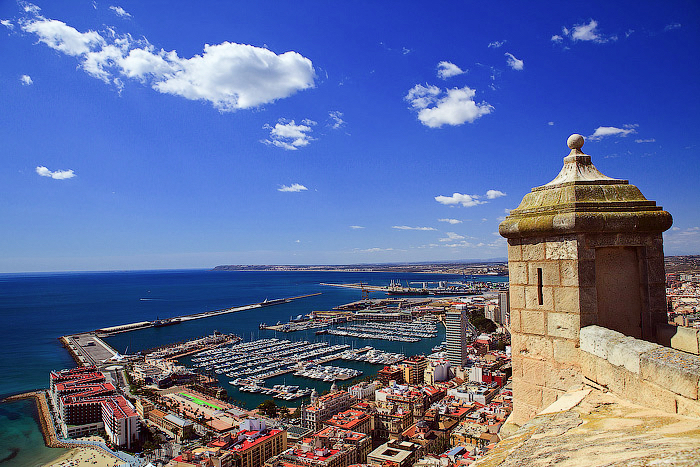
This impressive medieval fortress stands atop Mount Benacantil, offering the most complete panoramic views of the city and the coast. Its origins date back to the late 9th century during Muslim rule, although there are archaeological references to settlements since the Bronze Age. Visiting hours are from 10:00 to 20:00, though they vary by season, so it is advisable to check before heading up. Within the grounds, do not miss the Aljibe Renacentista (Renaissance Cistern), a hydraulic structure fundamental to the historical supply of the military garrison.
Isla de Tabarca (Tabarca Island)
This former pirate island is the only inhabited island in the Valencian Community and holds the status of a Mediterranean Marine Reserve. It is reached by boat from the port of Alicante and stands out for its tranquility and an incomparable setting for photography along the coast. Its architecture includes an 18th-century walled enclosure, and it is located opposite the city, near Cape Santa Pola. The recommended visiting hours are from 10:30 to 12:00 and from 18:30 to 20:00, making it a priority destination for those looking to disconnect.
Museo Arqueológico Provincial (MARQ)
The MARQ is a modern and interactive archaeological museum that exceptionally presents the history of the Alicante region from prehistory to the present day. Its innovative design allows visitors to understand the evolution of the area through dynamic exhibitions that require an entrance ticket. Opening hours are from 10:00 to 19:00, remaining closed on Mondays, so you must plan your cultural visit accordingly. It is a mandatory stop to understand the historical substrate upon which the city is built.
Palmeral de Elche (Elche Palm Grove)
Although located in the center of the neighboring city of Elche, this municipal public park is an essential part of the province’s heritage environment and is declared a UNESCO World Heritage Site. It features ponds, Mediterranean vegetation, and palm trees originally designed for citizen leisure and agriculture. The Huerto del Cura (Orchard of the Priest) stands out especially, a National Artistic Garden within the Palmeral where the Imperial Palm Tree is found, protected by the World Heritage declaration. This space showcases the organization of date palm orchards since the Islamic period.
Museo de la Ciudad de Alicante (Alicante City Museum)
This museum is situated in an area of picturesque streets and churches of artistic value that allows for unforgettable cultural walks. It stands out for being integrated into the heritage complex that includes historical landmarks such as the Castillo de Santa Bárbara and the Co-cathedral of Saint Nicholas. It is the ideal place to understand the urban and social evolution of the capital of Alicante through its permanent exhibitions.
Altamira Castle-Palace
This 15th-century palace-fortress is located in Elche and houses the City Museum within its walls, forming part of a heritage complex with over 2,500 years of history in the province. Its Gothic-Renaissance architecture stands as a key testament to the power and aesthetics of the era in the region.
Co-Cathedral of Saint Nicholas of Bari
This is the city’s main religious temple, built in Herrerian Renaissance style and famous for its striking blue dome that dominates the Old Town skyline. Its interior holds artistic and religious treasures that have witnessed Alicante’s spiritual history.
Alicante Museum of Contemporary Art (MACA)
The MACA houses an important collection of 20th-century art, featuring works by renowned artists such as Eusebio Sempere, Picasso, and Miró. It is a cultural reference point for lovers of modern art on the Costa Blanca.
Mount Benacantil
Called Banu-l-Qatil by the Muslim geographer Al-Idrisi in the 12th century, this mountain occupies a position of great strategic value as it overlooks Alicante, its plain, and the Bay. Santa Bárbara Castle rises atop it; although there are archaeological references to settlements dating back to the Bronze Age, the current fortress dates from the late 9th century.
Postiguet Beach
This is Alicante’s main urban beach, situated at the foot of Santa Bárbara Castle and next to the promenade, making it the most central and convenient access to the sea for visitors.
Basilica of Saint Mary
This is the oldest church in Alicante, built in Valencian Gothic style upon the remains of an ancient mosque, thus fusing the city’s two great cultural legacies.
Explanada de España
This promenade is notable for stretching from the beaches of El Campello to Cabo de la Huerta, offering extensive sandy areas for a dip and sports zones for beach volleyball and football. It includes the nearby Avenida de Niza with bars and restaurants alongside the Alicante Golf course, serving as the city’s social lung.
🍂 Otoño
Si visitas Alicante en otoño, el calor disminuye pero el clima sigue siendo muy agradable para explorar. Esta temporada es ideal para disfrutar de la gastronomía local sin las aglomeraciones turísticas. Aprovecha para subir al castillo de Santa Bárbara con una luz preciosa.
What to Do in Alicante
Alicante offers specific activities ranging from immersion in festivals declared of International Tourist Interest to enjoying historic markets and nightlife in charming neighborhoods. If you visit the city in June, do not miss the Hogueras de San Juan (Fogueres de Sant Joan), the main festival where cardboard monuments are burned. It is also possible to attend the Showcase of Contemporary Spanish Theatre Authors, which presents works by living Spanish writers, or enjoy the Moors and Christians parades commemorating the region’s historical battles. For a more local experience, the Central Market of Alicante, a Modernist building from the early 20th century, is the perfect place to buy fresh products and feel the city’s pulse.
Alicante in one day: express itinerary
If you are short on time, this itinerary allows you to see the city’s essentials in 24 hours, combining history, views, and gastronomy.
- 10:00 – Santa Bárbara Castle: Start the day by climbing the medieval fortress on Mount Benacantil to enjoy panoramic views of the city and coast in the morning light.
- 12:30 – Old Town and Co-cathedral: Head down to the historic heart to visit the Co-cathedral of Saint Nicholas of Bari and the Basilica of Santa María, the oldest church in the city.
- 14:30 – Lunch at the Central Market: Go to the modernist building of the Central Market (Mercado Central) to try local products or eat nearby in the El Barrio neighborhood.
- 17:00 – Archaeological Museum (MARQ): Dedicate the afternoon to understanding the region’s history from prehistory at this interactive museum (remember it is closed on Mondays).
- 20:00 – Explanada de España and Postiguet Beach: End the day strolling along the iconic Explanada promenade and enjoying the sunset at the urban beach at the foot of the castle.
Where to eat in Alicante: local gastronomy
Where to stay in Alicante
Casco Antiguo - El Barrio
Corazón histórico de la ciudad, lleno de restaurantes, bares de tapas y locales para salir por la noche.
Playa de San Juan
Zona residencial y turística con una extensa playa, ideal para vacaciones de sol y playa en familia.
How to get to Alicante
Alicante’s connectivity is excellent, with land and air options facilitating arrival from any point in Spain and Europe.
| Medio | Detalles y Conexiones | Ubicación / Acceso |
|---|---|---|
| Tren | Alicante Terminal (con AVE). Destinos directos: Madrid, Valencia, Barcelona, Sevilla (según Renfe). | Estación de tren en el centro. |
| Autobús | Compañías como Alsa, Subús y Vectalia operan desde la estación principal. | Estación de Autobuses de Alicante. |
| Avión | Vuelos nacionales e internacionales. | Aeropuerto de Alicante-Elche Miguel Hernández (ALC) a 12 km de la ciudad. |
| Coche | Acceso mediante carreteras A-70, A-31, N-332 y AP-7. | Red viaria conectada con la provincia. |
Getting around Alicante
Once in the city, urban transport is efficient and covers the main areas of interest. You can use the city bus to reach specific points, or the tram which connects the city with the north coast and metropolitan areas. Furthermore, the city center is mostly pedestrian, greatly facilitating walking between major attractions such as the Castle, the Co-cathedral, and the Explanada.
Weather in Alicante
Best time to visit Alicante
Day trips from Alicante
Alicante’s location allows for quick getaways to nearby towns of great interest. You can visit Torrevieja, known for its salt lakes and coastal atmosphere, or head north to Benidorm, famous for its skyscrapers and tourist life. Another charming option is Altea, with its whitewashed old town and sea views. Additionally, the proximity to Elche (just a few kilometers away) lets you visit the Palm Grove (Palmeral) and the City Museum at the Altamira Castle-Palace in a single day.
Who is Alicante for?
Alicante is a versatile destination suitable for almost any type of traveler. It is ideal for history lovers thanks to its castle and museums like the MARQ; for foodies eager to try rice dishes and nougats with protected designation of origin; and for families seeking safe beaches in San Juan or Postiguet. It is also perfect for backpackers, given the availability of budget accommodation (hostels from €20) and many free activities such as strolling along the Explanada or climbing up to the castle. With an average stay of 2.5 nights according to the INE, it is perfect for a long weekend.
Frequently asked questions about Alicante
How many days do I need to see Alicante?
With an average stay of 2.5 nights (INE data), you can see the essentials. An itinerary of 2 to 3 days allows you to visit Santa Bárbara Castle, the MARQ, Tabarca Island, and enjoy the local gastronomy without rushing.
Is Alicante expensive?
Not necessarily. You can eat for €15–25 and sleep in hostels from €20–35 per night. Mid-range hotels (3*) range between €60–100, making it affordable compared to other European destinations.
What is the best time to visit Alicante?
According to climate data, spring and autumn are the best times. Summer reaches an average of 26°C, but July and August can be very hot, while winter is mild with an average of 12°C.
How do I get to Alicante from Madrid?
The fastest option is the AVE train from Alicante Terminal station, with direct connections according to Renfe. You can also arrive by car via the A-31 motorway or by bus from the main station with companies like Alsa.
What festivals should I not miss?
If you visit in June, the Hogueras de San Juan (Bonfires of Saint John, declared of International Tourist Interest) are a must. Also noteworthy are the Moros y Cristianos (Moors and Christians) festivals, which vary in date (March/April) depending on the town, and the Muestra de Teatro Español (Spanish Theater Showcase).
🗺️ Rutas desde Alicante
- How to Get from Torrevieja to Alicante: Distance, Train, Bus and Car
- How to Get from Alicante to Torrevieja: Distance, Train, Bus and Car
- How to Get from Alicante to Valencia: Distance, Train, Bus & Car
- How to Get from Valencia to Alicante: Distance, Train, Bus & Car
- How to Get from Alicante to Madrid: Distance, Train, Bus & Car
- How to Get from Madrid to Alicante: Distance, Train, Bus & Car
- How to Get from Altea to Alicante: Distance, Train, Bus and Car
- How to Get from Alicante to Altea: Distance, Train, Bus & Car