Benidorm → Alicante
45 kmHow to Get from Benidorm to Alicante: Quick Overview
The connection between Benidorm and Alicante comes down to three clear options: a private car (35 minutes on the toll-free motorway), a direct bus (40 minutes, €5-12), or the TRAM L1 light rail (79 minutes). If you want speed and flexibility to explore the coves and towns in between, the car is unbeatable. If budget is your priority and you don’t mind spending a little more time, the ALSA or BlaBlaCar Bus is the most economical choice. The tram, though slower, offers a scenic ride hugging the coast and an authentic local experience.
Driving from Benidorm to Alicante
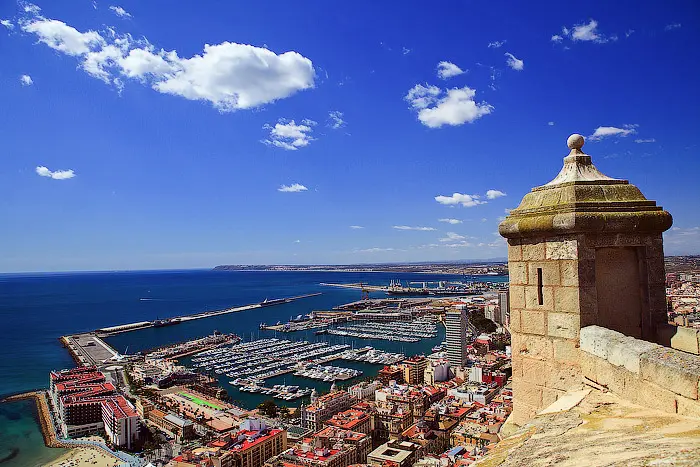
The road journey covers 45 km and takes about 35 minutes with no traffic, running entirely along high-capacity toll-free roads. The main route combines the AP-7 (Mediterranean Motorway), which accounts for some 26 km of the trip, with the A-70, which covers the remaining 11 km into the city. The AP-7 whisks you out of Benidorm with views of the mountainous interior and, on clear days, glimpses of the sea in the distance. The transition to the A-70 is smooth and well signposted, with no need to leave the main corridor. As you approach Alicante, the motorway slopes gently down toward the city, offering a sweeping panorama of the Alicante countryside and the urban skyline with Santa Bárbara Castle as a backdrop.
By Train from Benidorm to Alicante
The direct train between Benidorm and Alicante is operated by TRAM d’Alacant, and the fastest option is the TRAM L1 line, which completes the journey in 79 minutes. According to the operator’s schedules, 32 trains run daily with departures from 06:35 to 22:05, guaranteeing an average frequency of roughly one train every half hour. The route starts at Benidorm station and ends at Mercado station, right in the heart of Alicante. It’s a convenient alternative if your accommodation in Alicante is near the historic center or the El Carmen district, since it leaves you within walking distance of the main points of interest. The tram’s leisurely pace, with intermediate stops in coastal towns, turns the trip into a scenic ride rather than a mere transfer.
By Bus from Benidorm to Alicante
The direct bus is the fastest public transport option, taking just 40 minutes with fares ranging from €5 to €12. Several companies operate on this route: ALSA, Bilmanbus, Alsa, and BlaBlaCar Bus, which broadens the schedule and makes it easy to compare prices. Buses usually depart from Benidorm bus station and arrive at Alicante’s central station, located next to the port and a short walk from the center. Frequency is high throughout the day, especially in peak season, and the motorway journey is barely noticeable. For travelers with luggage, the bus scores points over the tram thanks to its greater baggage space and lack of transfers.
Recommended stops along the way
Between Benidorm and Alicante there is a string of towns that are well worth a stop, especially if you are travelling by car and can spare a few minutes off the AP-7. All of them are verified as accessible intermediate points from the main route.
- la Vila Joiosa / Villajoyosa: The first logical stop when leaving Benidorm. Its old town of hanging houses painted in vivid colours above the Amadorio river is a unique sight. The seafront promenade and El Centro beach are perfect for a quick coffee before carrying on. If chocolate interests you, it has been made here for centuries and there are traditional factories.
- el Campello: A fishing village with a long sandy beach and a working fishing port. The Torre de la Illeta, an archaeological site right by the sea, offers a short but interesting visit. It is a good spot to stretch your legs and try an esmorzaret (a hearty typical Alicante mid-morning meal) in one of its bars.
- Sant Joan d’Alacant: Just a few kilometres from the capital, this municipality combines a quiet historic centre with modern residential developments. Its proximity to San Juan beach makes it a residential alternative to Alicante. If you are looking for a break on the road without the crowds, its squares and cafés are ideal.
- Mutxamel: Inland and agricultural, Mutxamel retains the atmosphere of a village in the Alicante huerta. Its parish church and the manor houses in the centre are worth a short stroll. It is a less touristy stop, perfect for those who want to see rural Alicante before entering the capital.
- Sant Vicent del Raspeig / San Vicente del Raspeig: A university city attached to Alicante, with a young and lively atmosphere. Its campus attracts thousands of students, and that shows in the range of bars and terraces. If you travel during term time, it is buzzing with activity; in summer, it is much quieter.
Where to eat along the route
The cuisine of the province of Alicante turns this short journey into a perfect excuse to sit down at the table. These are the dishes and products you should look out for in the intermediate towns or once you reach the capital.
- Arroz a banda: Cooked in a concentrated stock of rockfish and shellfish, it is traditionally served with alioli. The main ingredients are rice, rockfish, prawns and squid. It is the quintessential seafood dish and you will find it in the rice restaurants of Villajoyosa, el Campello and Alicante city.
- Coca amb tonyina: A savoury pastry typical of the Hogueras de San Juan festival in Alicante. It is filled with salted tuna (tonyina de sorra), slow-cooked onion and pine nuts. If you travel in June, you will see it in every bakery and oven in the capital; out of season, some bakeries make it to order.
- Esgarrat: A traditional cold salad combining roasted red peppers, shredded salt cod, black olives and garlic, dressed with plenty of extra virgin olive oil. It is a light and refreshing starter, ideal for the warmer months.
- Fondillón de Alicante: A fortified wine, naturally sweet, made from very ripe Monastrell grapes and aged in soleras for at least 10 years. It has notes of dried fruit, raisins and wood. It is a dessert wine with a great deal of history, perfect with nougat or cured cheeses.
- Turrón de Jijona: A soft nougat made with toasted and ground Marcona almonds, pure orange blossom honey and egg white. With its smooth, creamy texture, it is an emblematic Christmas sweet, although in Alicante it is eaten all year round. Jijona, its birthplace, is less than an hour from Alicante, but you will find it in any pastry shop in the capital.
Where to stay in Alicante
Alicante offers accommodation for every budget, concentrated mainly in three areas. The historic centre, around the Rambla de Méndez Núñez and the El Carmen district, is ideal for those who want to visit the castle of Santa Bárbara (Castle of Saint Barbara), the co-cathedral of San Nicolás and the Town Hall on foot. Here 3- and 4-star hotels, guesthouses and tourist apartments abound, with prices that in high season can exceed €120 per night in central hotels.
The port area and the Explanada de España (Spanish Esplanade) concentrate chain hotels and seafront accommodation, somewhat more expensive but with an excellent location for strolling. The Benalúa district, south of the centre, offers more affordable, residential options, with good connections by tram or on foot. For long stays or family trips, tourist apartments in the ensanche or near Postiguet beach are a practical alternative. In low season (November to March, except Christmas and Easter), prices drop noticeably and it is possible to find double rooms for less than €70.
Frequently asked questions about the Benidorm-Alicante route
How long does it take to get from Benidorm to Alicante?
By car, the journey along the AP-7 and the A-70 covers 45 km and takes about 35 minutes with no traffic. By direct bus, the duration is 40 minutes. The TRAM L1 tram is the slowest option, with a journey time of 79 minutes.
Which is cheaper, the train or the bus?
The bus is cheaper, with prices between €5 and €12 depending on the company (ALSA, Bilmanbus, BlaBlaCar Bus) and how far in advance you book. The TRAM d’Alacant tram has its own metropolitan transport fares, generally lower than those of the intercity bus, but the journey time is twice as long. If pure economy is your priority, the bus is the best price-time ratio.
Is it worth renting a car?
Yes, especially if you want to stop in Villajoyosa, el Campello, Mutxamel or San Vicente del Raspeig without depending on timetables. A car lets you complete the journey in 35 minutes and detour to the coves or villages in between at your own pace. If you are only going to get around within Alicante city, public transport is enough and more economical.
When is the best time to travel?
The best time to do this route is from April to June and from September to October, when temperatures are mild and tourist numbers are lower than in July and August. In summer, the car journey can suffer hold-ups on the approaches to the beaches, and the tram is more crowded. If you travel in June, it coincides with the Hogueras de San Juan in Alicante, a spectacular festival but with more crowds.
📍 También te puede interesar
Qué ver en Benidorm →
Qué ver en Alicante →