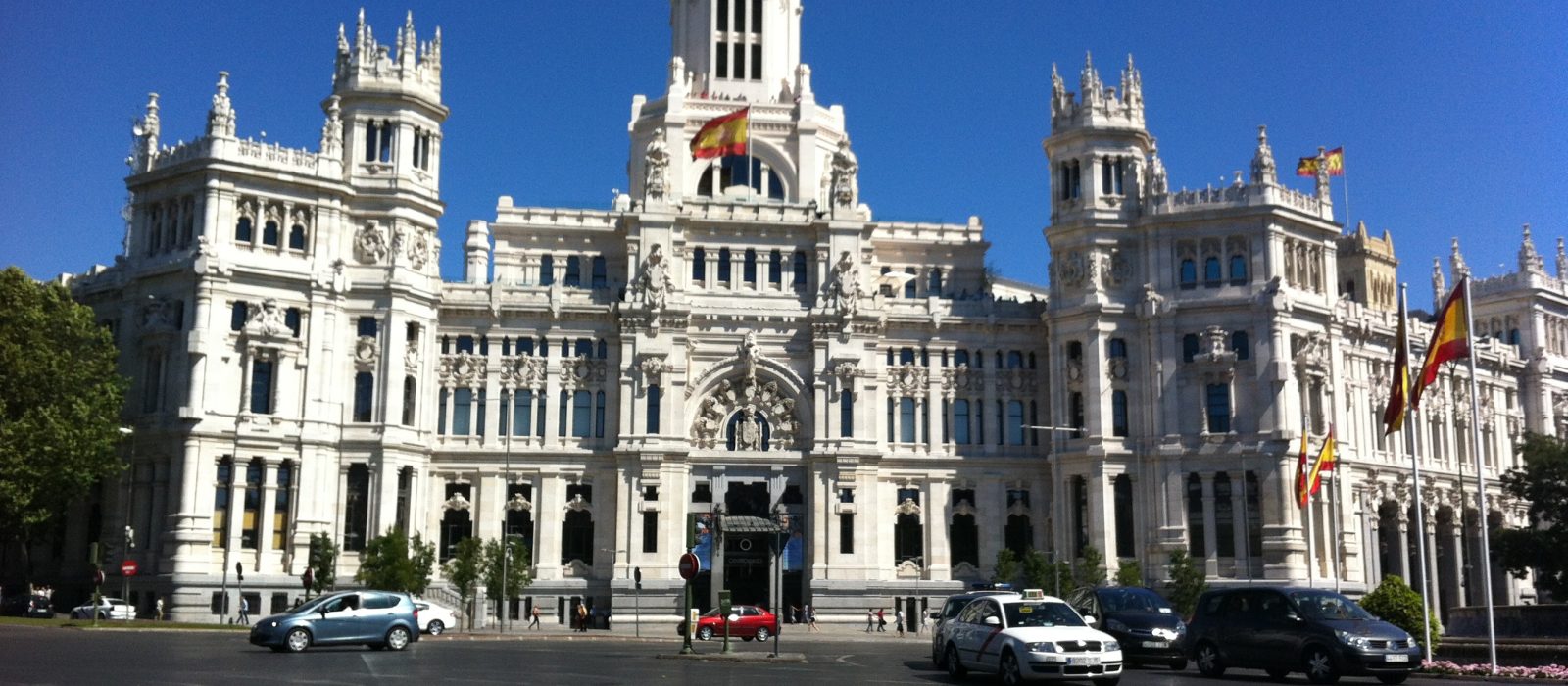
Alicante → Madrid
420 kmLeaving behind the shimmer of the Mediterranean to venture into the heart of the Meseta is one of the most fascinating landscape transitions in Spain, a journey you can complete in just over two hours aboard a high-speed train or enjoy driving along a network of free highways that cross the plains of La Mancha.
How to get from Alicante to Madrid: quick overview
The most balanced option between comfort and time is the AVE train, although driving offers total freedom to explore stops along the way with no toll costs. If your priority is a tight budget, the bus is the direct economic alternative, while for those who value every minute, the high-speed train is unbeatable for connecting the coast with the capital.
To decide which transport to choose, you should consider your traveler profile. If you are traveling with family or a lot of luggage and plan to move around Madrid, a car can be useful, though parking in the city center is expensive. For business travelers or tourists who want to arrive fresh, the train is the standard recommendation thanks to its frequency of 16 daily services. Finally, if time is not a limiting factor and you are looking to save as much as possible, the bus covers the basic transport need at a very competitive price.
Driving from Alicante to Madrid
Driving from Alicante to Madrid involves covering 420 kilometers in an estimated time of 4 hours and 15 minutes via a completely free highway network. The route benefits from Spain’s excellent road infrastructure, mainly using the A-31 (Autovía de Alicante) to leave the province and connect with the central corridor.
Once past the initial stage, the journey merges onto the A-3 (Autovía del Este), which is the backbone of this connection, allowing a constant flow without toll interruptions. Depending on the variants or detours you choose to avoid traffic or visit specific villages, you might travel on sections of the A-35 (Autovía Almansa-Játiva) or the A-33 (Autovía del Altiplano). As you approach the capital, the network connects with the A-40 (Autovía de la Meseta Sur) and finally the A-42 (Autovía de Toledo) or direct access roads to the M-30/M-40 ring roads.
It is important to highlight that all the main roads involved in this corridor, including the A-7, A-30, A-23, and other secondary connections like the A-32 or the A-43, are toll-free highways. This makes the car journey very economical in terms of road infrastructure costs, although you must add the cost of fuel and vehicle wear and tear. Driving is generally easy, with long straights in the La Mancha region that make the trip pleasant but require constant attention due to the monotony of the landscape in certain stretches.
By train from Alicante to Madrid
The train is the fastest means of transport, with the AVE covering the distance in just 138 minutes according to Renfe data. The rail offering is extensive and designed to cover all time slots, from very early in the morning until late at night, operating from Alicante/Alacant station to Madrid-Chamartín-Clara Campoamor.
Renfe offers three main options on this route with different frequencies. The star service is the AVE, with 12 daily trains completing the journey in 138 minutes, offering maximum speed and comfort. For tighter budgets, there is the AVLO, with 2 daily services taking 152 minutes, maintaining travel quality but with simplified onboard services. The ALVIA is also available, with 2 trains per day and a journey time of 175 minutes, ideal for those seeking flexibility at specific times.
The total frequency is 16 trains per day, guaranteeing that there is almost always an option close to the time you need. The first train departs at 5:50 in the morning, perfect for those with early meetings in the capital, and the last train leaves at 21:05, allowing you to enjoy a full day in Alicante before travelling. The arrival station, Chamartín, is well connected to the rest of Madrid by metro and Cercanías (local trains), making it easy to continue your journey to any point in the city.
By bus from Alicante to Madrid
The bus is the most economical option, with prices ranging from 10 to 43 euros depending on how far in advance you book and demand on the Alsa company. This means of transport is ideal for budget travellers who are not in a hurry to arrive, as the journey time is significantly longer than by train or car.
The company Alsa operates the direct service, eliminating the need for complicated transfers. The estimated journey time is 315 minutes, i.e. 5 hours and 15 minutes. Although it is slower than travelling by car (which takes 4h 15min) and much slower than the train, the bus allows passengers to rest, read or work during the journey without worrying about driving.
The variable prices between 10 and 43 euros reflect a dynamic pricing policy; booking weeks in advance usually secures tickets in the lower range of 10-20 euros, while buying a ticket on the same day can raise the cost to 43 euros. It is a very popular option among students and occasional travellers who prioritise saving over speed.
Recommended stops along the way
If you’re travelling by car, the route offers several strategic points to rest, stretch your legs or enjoy the local cuisine without straying too far from the main road. Below, we detail the verified stops on the route to the capital.
Requena
Located at the start of the journey, Requena is an excellent stop to break up the drive just after leaving the coastal area. It is known for its historical heritage and its connection to the world of wine, offering a peaceful atmosphere ideal for a quick coffee before heading into the plateau.
Albacete
Albacete functions as a major transport hub and is the most important city before reaching the deep plateau. It is the perfect place for a more substantial technical stop, with ample service areas, restaurants, and the possibility of visiting the city centre if you have more time.
Motilla del Palancar
This town is a classic midway point on the route. Its location makes it a popular spot to refuel or grab a snack. It offers a more rural setting than Albacete, providing a more authentic glimpse of the province of Cuenca.
La Solana
Already in the lands of Ciudad Real, La Solana marks the entrance to the famous La Mancha region. It is a recommended stop for those wanting to experience the landscape of windmills and vineyards, stopping at one of the area’s traditional establishments.
Manzanares
Manzanares is another quintessential La Mancha landmark. Historically, it has been an important crossroads. Stopping here allows you to enjoy the typical architecture of the area, and it is a very popular spot among truck drivers and long-distance travellers for its services.
Daimiel
Close to the Tablas de Daimiel wetlands, this stop offers a natural respite. Although the main route passes nearby, it is a point of interest for nature lovers. In the town itself, there are good options for eating typical regional dishes before resuming the journey north.
Tarancón
Tarancón is probably the last significant stop before the definitive entry into the Community of Madrid. Situated in the province of Cuenca but very close to the border, it is the ideal place for a final refuel or rest before facing the traffic upon arrival in the capital.
Where to sleep in Madrid
Madrid offers an immense variety of accommodation, but the choice of area depends entirely on your budget and objectives. For tourists who want to see everything on foot, the historic centre (Sol, Gran Vía, Huertas) is the logical choice, although prices tend to be higher and the noise is constant.
If you are looking for something quieter with better value for money, the Chamberí or Arganzuela neighbourhoods are recommended. These areas are well connected to the centre by metro but offer a more residential and local atmosphere. For business travellers or those arriving by train at Chamartín, the AZCA or Tetuán area can be convenient due to its proximity to the station and the financial districts.
In terms of price ranges, a central guesthouse can cost between 30 and 60 euros per night, while a three-star hotel in a mid-range area ranges from 80 to 150 euros. Luxury hotels in the “Golden Triangle” (Recoletos, Goya) easily exceed 250 euros. Booking in advance is crucial, especially in high season, to secure competitive rates in any of these areas.
Frequently asked questions about the Alicante-Madrid route
How long does it take to get from Alicante to Madrid?
The time varies depending on the mode of transport: by car it takes 4 hours and 15 minutes (420 km), by AVE train it takes 138 minutes, and by bus it takes 315 minutes.
Which is cheaper, the train or the bus?
Generally the bus is cheaper, with prices starting from 10 euros on Alsa, while the AVE train tends to have higher fares, although AVLO can offer competitive prices if booked in advance.
Is it worth renting a car?
Yes, it is worth it if you plan to visit intermediate stops such as La Solana or Daimiel and value freedom, as the A-3 and A-31 motorways are free and there are no tolls on the main route.
When is the best time to travel?
It is best to travel avoiding peak departure and arrival times; by train, the first services at 5:50 or the last ones at 21:05 tend to be less crowded than mid-morning trains.
📍 También te puede interesar
Qué ver en Alicante →
Qué ver en Madrid →