Cádiz
AndalucíaClimate
Daily budget
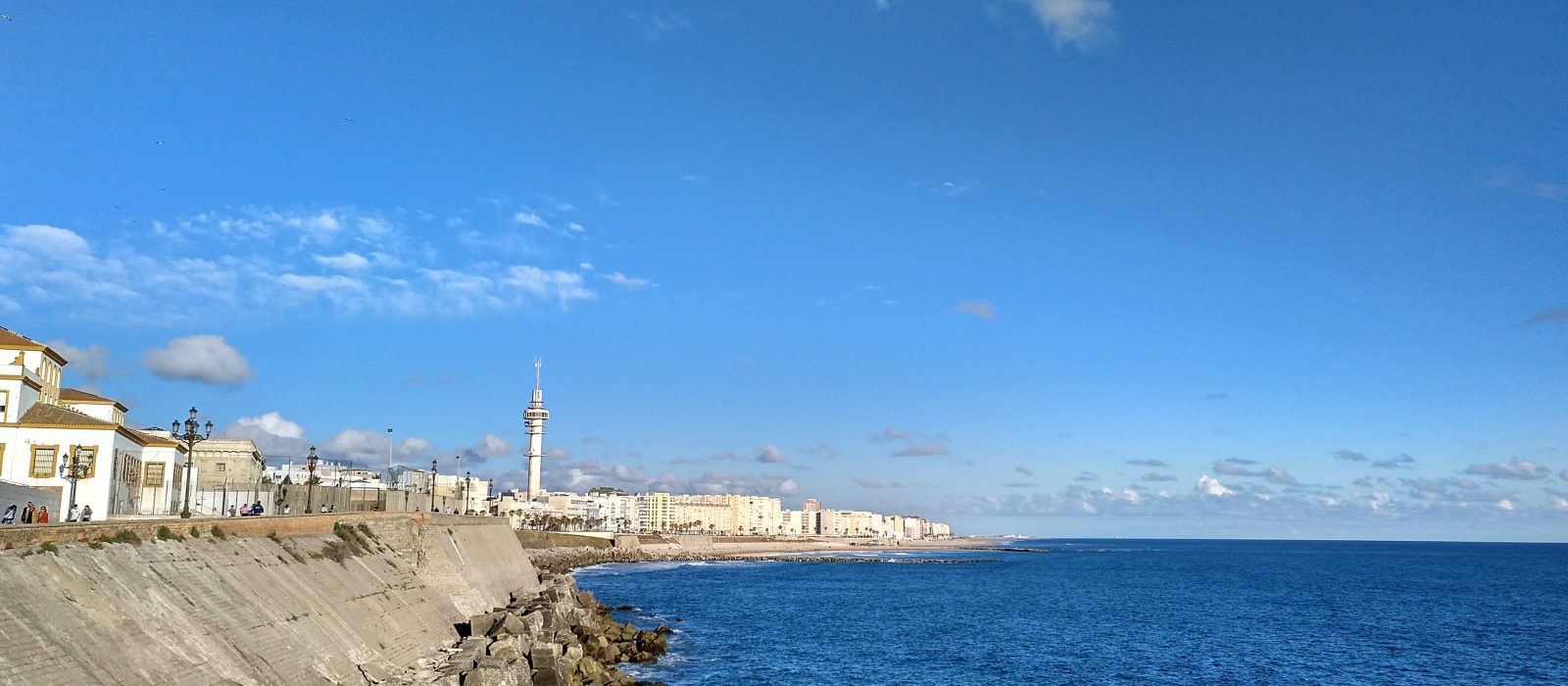
Imagine strolling through narrow streets where the scent of sea salt mingles with the aroma of freshly fried shrimp fritters (tortillitas de camarones), while the southern sun bathes white facades that seem to glow with their own light. Cádiz is not just a city; it is an island of light in the Atlantic where time seems to stand still between millennia-old walls and urban beaches that invite you to lose track of the hours. Here, history is not read in books but breathed in every corner of El Pópulo and savored in every tapa, creating a unique atmosphere that you can only experience by letting yourself be carried away by its relaxed and joyful rhythm.
The must-seesWhat to See in Cádiz: The Essentials
Cádiz offers an impressive historical density in a compact space, with monuments narrating centuries of trade, defense, and culture. To make the most of your visit, I have selected the key spots you cannot miss, ensuring you capture the essence of this Andalusian capital.
Cádiz Cathedral
This impressive Baroque and Neoclassical cathedral dominates the city skyline with its unmistakable dome of golden tiles, visible from almost any point in the old town. Its construction was a lengthy process reflecting the city’s wealth during the monopoly on trade with the Americas, and today it houses a majestic interior worth exploring at a leisurely pace. Visiting hours are from 10 to 19 and admission is required, but I assure you that the views from its towers and the crypt are well worth the investment. It is the most emblematic religious monument and the spiritual heart of the city.
Torre Tavira
If you are looking for the best possible perspective, the Torre Tavira is the highest watchtower in the city and the perfect place to understand the urban layout from above. In addition to offering unparalleled 360-degree panoramic views, it features a camera obscura that projects a real-time image of the city onto a concave table, a fascinating experience for orienting yourself. Opening hours are from 10 to 18 and admission is also required, making it a strategic spot for photographing the sea and the rooftops. It is the quintessential viewpoint for photography enthusiasts.
Parque Genovés
For a breath of nature, this tranquil botanical garden is located right next to the ocean, offering a vibrant green contrast against the blue of the sea. Inside, you will find a wide variety of plant species, an artificial waterfall, and several monuments that make it the ideal green lung for a relaxing walk. The park is open from 08 to 22 and has free access, so it is perfect for resting your legs after visiting the Cathedral. It is the locals’ favorite spot to enjoy the sunset.
Oratorio de la Santa Cueva
Next to the Parroquia del Rosario, you will find this architectural gem that belonged to the Congregation of Spiritual Retreat founded in Cádiz around 1730. The façade of the complex is very simple, articulated by Doric pilasters, but its interior hides a fascinating history linked to the Marqués de Valde-Iñigo, who used much of his fortune from trade with Mexico for its construction. Among its members were the most eminent figures of 18th-century Cádiz society, giving it incalculable historical value. It is a must-visit to understand the religious and economic influence of the era.
Old Cathedral (Santa Cruz)
This public space is fundamental because it houses not only the New Cathedral but also the Church of Santiago in the heart of the city. It is a pivotal meeting point where religious history and the daily life of the people of Cádiz converge. Being in the center, it serves as a perfect reference point to start exploring the surrounding streets without getting lost. It is a mandatory stop that connects various eras of local architecture.
Santa Catalina Castle
Built in 1596 by the engineer Cristóbal de Rojas following the Anglo-Dutch sack, this castle features a characteristic star-shaped layout and currently serves as an exhibition center.
Santiago Church
A Mannerist-style temple located in Plaza de la Catedral (Cathedral Square), formerly the seat of the College of the Society of Jesus, which replicates the model of Il Gesù in Rome with a Latin cross floor plan.
San Felipe Neri Church
A historic temple where the Cortes convened to proclaim the Constitution of 1812, known as La Pepa, standing as a political and architectural benchmark of the era.
Gadir Archaeological Site
It represents one of the oldest Phoenician settlements in the West, founded by colonists from Tyre in the first quarter of the first millennium BC, located beneath the Teatro del Títere (Puppet Theater).
Clock Tower
A distinctive exterior element of the Cathedral with an 18th-century Neoclassical-influenced structure, from whose towers a complete view of the city and the Atlantic Ocean can be appreciated.
San Sebastián Castle
A defensive fortress situated on an islet at the end of La Caleta beach, connected to the mainland by a breakwater, offering an iconic image of coastal defense.
Walled Historic Quarter
A fortified historic enclosure protecting the urban core traditionally settled on an island facing the Atlantic Ocean, preserving significant stretches of wall and the Puerta de Tierra (Land Gate).
La Caleta Beach
An emblematic urban beach located in the historic quarter, flanked by the castles of San Sebastián and Santa Catalina, serving as the setting for many films and songs.
Roman Theater of Gades
One of the largest and oldest Roman theaters in Spain, discovered in the 20th century, demonstrating the city’s importance in classical antiquity.
El Pópulo Neighborhood
The oldest neighborhood in Cádiz, a labyrinth of narrow streets with medieval arches and tapas bars that preserve the charm of the Middle Ages.
🍂 Otoño
Si visitas Cádiz en otoño, el clima sigue siendo suave y es otra de las mejores temporadas para venir. Podrás disfrutar de las playas con menos gente y un mar que aún conserva calor. Lleva siempre una chaqueta ligera por si refresca por la noche.
What to Do in Cádiz
Cádiz offers vibrant activities ranging from immersing yourself in Phoenician history to enjoying nightlife in its most traditional neighborhoods. Beyond the monuments, the city is a living stage where Carnival and gastronomy are absolute protagonists. You can spend hours exploring the Mercado Central de Abastos (Central Supply Market), a Neoclassical building housing a lively fresh produce market, especially fish and seafood, where interaction with vendors is part of the experience. If you visit in February, the Carnival of Cádiz, a Festival of International Tourist Interest, transforms the city with musical groups like chirigotas and comparsas singing satirical couplets. For a more solemn experience, Holy Week in March or April features processions by brotherhoods touring the old town with valuable religious sculptures. Don’t forget to explore the recommended neighborhoods: La Viña, a former fishing district and cradle of the Carnival, ideal for tapas and feeling the city’s essence, and El Pópulo, perfect for nightlife with its bar and restaurant atmosphere.
Cádiz in one day: express itinerary
If you’re short on time, this itinerary lets you see the essentials without rushing, taking advantage of how close the main sights are to each other.
- 10:00 – Cádiz Cathedral: Start your day with energy by visiting this Baroque and Neoclassical monument; its golden dome will welcome you, and the views from the top are the best way to get your bearings.
- 12:00 – Torre Tavira: Take advantage of its proximity to climb the highest watchtower and use its camera obscura, helping you understand the city’s layout before losing yourself in its streets.
- 14:00 – Mercado Central de Abastos (Central Market) and Lunch: Walk to the market to see the fresh produce and enjoy a typical lunch nearby, such as tortillitas de camarones (shrimp fritters) or pescaito frito (fried fish).
- 16:00 – Barrio del Pópulo: Dedicate the afternoon to wandering through the oldest neighborhood, a labyrinth of narrow streets with medieval arches, stopping along the way at the Church of Santiago.
- 19:00 – La Caleta Beach and Castillo de San Sebastián: End your day watching the sunset at this iconic beach, flanked by castles, while enjoying the Atlantic breeze.
Where to eat in Cádiz: local gastronomy
Where to stay in Cádiz
La Viña
Antiguo barrio de pescadores, cuna del carnaval, ideal para tapear y sentir la esencia de la ciudad.
El Pópulo
El barrio más antiguo, con arcos medievales, ambiente nocturno y numerosos bares y restaurantes.
How to get to Cádiz
Cádiz has good connectivity, especially from major Andalusian cities and the capital, although it’s important to note that the city doesn’t have a direct AVE station, but rather fast conventional trains.
| Medio | Detalles / Destinos | Notas |
|---|---|---|
| Tren | Estación de Cádiz (sin AVE). Destinos directos: Madrid, Sevilla, Jerez de la Frontera, Córdoba. | Conexión directa con la capital y otras ciudades clave. |
| Autobús | Estación de Autobuses de Cádiz. Compañías: Alsa, Comes, Damas. | Opción flexible para llegar desde pueblos cercanos o ciudades sin tren directo. |
| Avión | Aeropuerto de Jerez (XRY) a 45 km. | El aeropuerto más cercano, requiere traslado posterior en bus o coche. |
| Coche | Carreteras: AP-4, A-4, CA-33, CA-35. | Acceso rodado fluido desde Sevilla y otras provincias. |
Getting around Cádiz
Once in the city, you’ll be glad to know the center is very walkable. However, if you need to cover longer distances or reach peripheral areas, public transport is efficient. Cádiz offers metro, urban bus, and tram options, plus an extensive pedestrianized center inviting exploration on foot. Given the city’s compact size, walking is often the fastest and most pleasant way to move between main attractions like the Cathedral and Parque Genovés.
Weather in Cádiz
Best time to visit Cádiz
Day trips from Cádiz
If you have extra time or want to explore the province, Cádiz serves as a strategic starting point. Nearby cities for excursions include Jerez de la Frontera, famous for its wineries (bodegas) and horses, and Sanlúcar de Barrameda, known for its prawns (gambas) and the surroundings of Doñana National Park. Seville is also within reasonable train distance, allowing you to combine Cádiz’s maritime essence with the monumental grandeur of the Andalusian capital on a multi-day trip.
Who is Cádiz for?
Cádiz is a versatile destination suited to almost any type of traveler. It is ideal for couples seeking romantic sunsets at La Caleta beach, families who enjoy safe urban beaches and parks like Parque Genovés, and backpackers thanks to its range of budget hostels (€18–30). History lovers will find paradise in its Phoenician and Roman archaeological sites, while foodies won’t want to leave without tasting the wide variety of fried fish (pescaítos) and shrimp fritters (tortillitas). With an average stay of 2.28 nights according to INE data, it is perfect for a weekend getaway or a long holiday bridge.
Frequently asked questions about Cádiz
How many days do I need to see Cádiz?
With an average stay of 2.28 nights (INE data), you have enough time to see the essentials. A 2- to 3-day itinerary will allow you to visit the Cathedral, Tavira Tower, and the Gadir Archaeological Site, and enjoy the local gastronomy without rushing.
Is Cádiz expensive?
Not particularly. Indicative prices suggest you can eat for €12–18 and sleep in hostels from €18–30 per night. Three-star hotels range between €70–110, making it accessible for various budgets.
What is the best time to visit Cádiz?
The best time is Spring and Autumn, avoiding winter, which can be windy and rainy. Average summer temperatures reach 25°C, but spring offers milder weather ideal for walking.
How do I get to Cádiz from Madrid?
You can reach Cádiz by train from Cádiz Station, which has direct connections from Madrid. Alternatively, fly to Jerez Airport (XRY), located 45 km away, and take a bus or taxi, or drive via the A-4 and AP-4 highways.
What festivals are held in Cádiz?
The most famous event is the Carnival of Cádiz in February, declared a Festival of International Tourist Interest. Holy Week (Semana Santa) in March or April is also significant, featuring solemn processions through the old town.
🗺️ Rutas desde Cádiz
- How to Get from Sanlúcar de Barrameda to Cádiz: Distance, Train, Bus and Car
- How to Get from Cadiz to Sanlucar de Barrameda: Distance, Train, Bus and Car
- How to Get from Cadiz to Malaga: Distance, Train, Bus and Car
- How to Get from Malaga to Cadiz: Distance, Train, Bus and Car
- How to Get from Cadiz to Seville: Distance, Train, Bus and Car
- How to Get from Seville to Cadiz: Distance, Train, Bus and Car
- How to Get from Cadiz to Jerez de la Frontera: Distance, Train, Bus and Car
- How to Get from Jerez de la Frontera to Cádiz: Distance, Train, Bus & Car