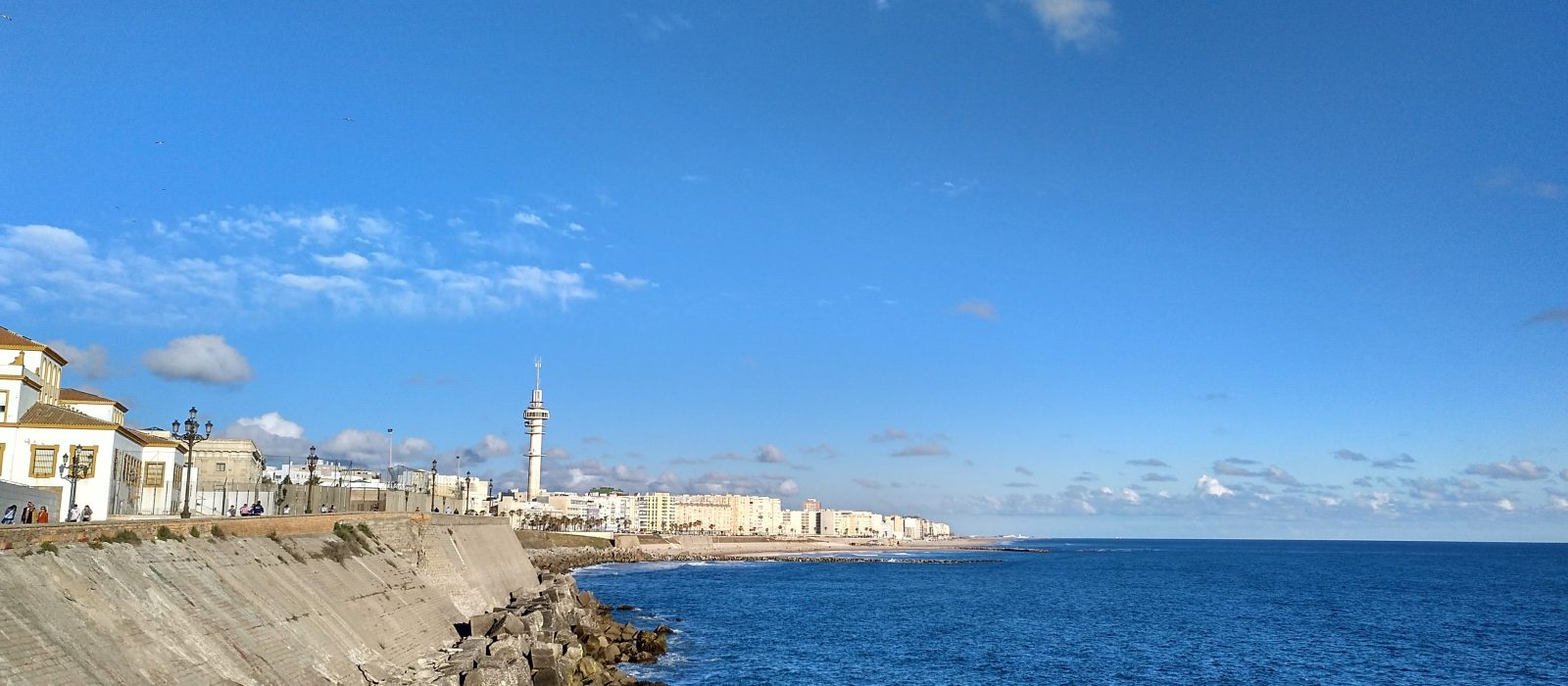
Sanlúcar de Barrameda → Cádiz
57 kmHow to get from Sanlúcar de Barrameda to Cádiz: quick summary
The road distance between Sanlúcar de Barrameda and Cádiz is 57 km, with an estimated driving time of 45 minutes via the A-480 and A-4 highways, plus the final stretch on the CA-35. The bus is the most convenient alternative without your own vehicle: several direct lines operated by DAMAS and the Consorcio de Transportes de Andalucía cover the journey in about 55 minutes for a price ranging from 4 to 7 euros. There is no direct rail connection from Sanlúcar, so a private car, vehicle rental, or the bus are the only real options. For travelers without a car who want the freedom to stop along the way, renting a car in Sanlúcar is the most versatile option; for those prioritizing price and convenience, the direct bus is unbeatable.
By car from Sanlúcar de Barrameda to Cádiz
The driving route between Sanlúcar de Barrameda and Cádiz covers 57 km in approximately 45 minutes, with no tolls, combining three main roads. From Sanlúcar you take the A-480, a regional highway that crosses the vineyard landscape of the Marco de Jerez (Sherry Triangle) heading toward Jerez de la Frontera. It is a fast stretch with good pavement, ideal for enjoying the views of manzanilla vines on both sides.
When you reach the outskirts of Jerez de la Frontera, you merge onto the A-4, the southern highway connecting Madrid with Cádiz. The drive along the A-4 is direct and comfortable, passing near El Puerto de Santa María without needing to enter its town center if the final destination is Cádiz city. This road carries heavy traffic at peak times, especially Friday afternoons and returning Sundays, so it is best to set off early.
The final stretch is on the CA-35, also known as the Cádiz access highway or the “puente de La Pepa” (La Pepa Bridge) in its most visible section. This road crosses the bay via a modern, high-clearance bridge and drops the driver directly into the city of Cádiz, with no need to cross the water by ferry. All three roads are entirely toll-free, making this itinerary one of the easiest on the Andalusian coast.
By bus from Sanlúcar de Barrameda to Cádiz
The direct bus is the most recommended option for traveling from Sanlúcar de Barrameda to Cádiz without your own car. The service is covered by several companies operating regular routes: DAMAS, Damas, and the Consorcio de Transportes de Andalucía guarantee daily connections between the two towns. The average journey time is 55 minutes, slightly longer than the 45 minutes by car due to intermediate stops and the urban route when entering Cádiz.
The ticket price ranges from 4 to 7 euros depending on the company and type of service, a very reasonable fare by intercity transport standards. Departures are frequent throughout the day, with services leaving from the Sanlúcar de Barrameda bus station and arriving at the central station in Cádiz. For travelers arriving from outside the province, the Consorcio de Transportes de Andalucía offers connections with other coastal municipalities, making the bus a very practical tool for getting around the Bay of Cádiz without relying on a private vehicle.
Recommended stops along the way
The route between Sanlúcar de Barrameda and Cádiz offers five stops of great interest, ordered from closest to farthest from the starting point. All are perfectly integrated into the main route and allow you to extend the trip by anywhere from one to several hours depending on each traveler’s pace.
Chipiona (km 10)
Just 10 km from Sanlúcar, Chipiona is the first logical stop and one of the most spectacular on the Cádiz coast. The town is famous for its Faro de Chipiona (Chipiona Lighthouse), the tallest in Spain, whose terrace offers privileged panoramic views of the ocean, the Guadalquivir estuary, and the coastline toward Rota. Access to the lighthouse allows you to combine history and scenery in a single visit. Very close by, the Santuario de Nuestra Señora de Regla (Sanctuary of Our Lady of Regla) is an impressive temple located next to the beach, with a venerated image of the local patron saint. The recommended time to enjoy Chipiona is around 60 minutes, enough to climb the lighthouse, tour the sanctuary, and take a stroll along the coast.
Rota (km 25)
At 25 km from the starting point, Rota invites a cultural and photographic stop. The Castillo de Luna (Castle of Luna) is a medieval fortress that watches over the port and the old town, a witness to the history of the Atlantic frontier. After visiting it, a walk through the streets of the center reveals white squares, sunlit facades, and a genuine seafaring atmosphere. A practical detail: the A-491 road skirts the town, so to reach the center you need to take a detour of between 2 and 3 km. It is well signposted and the small detour is worth it. The estimated time for the visit is 45 minutes.
Jerez de la Frontera
Jerez de la Frontera is the great intermediate city of the route and a must for lovers of flamenco, horses, and above all, wine. Its manzanilla and fino bodegas are Intangible Cultural Heritage of Humanity, and many offer visits with a tasting included. The Real Escuela Andaluza del Arte Ecuestre (Royal Andalusian School of Equestrian Art) and the Alcázar are two other points of interest. Although a complete visit to Jerez would require several hours, a brief stop allows you to at least enjoy an aperitif in a historic bodega.
El Puerto de Santa María
El Puerto de Santa María is another of the great classics of the Bay triangle, famous for its gastronomy and its bodegas. The city combines a historic center with a lively seafront, full of restaurants where you can try almadraba-caught bluefin tuna. The Castillos de San Marcos and Doña Blanca deserve a quick visit, and the views of the Bay of Cádiz from the seafront promenade are memorable.
Puerto Real
Puerto Real provides the most industrial and seafaring pause of the route. Its historic center preserves churches and convents from the early modern founding period, and its port reflects the naval tradition of Cádiz. It is a brief but interesting stop for those who want to understand the history of the bay before arriving in Cádiz.
Parque Natural Bahía de Cádiz (km 45)
Already at the gates of Cádiz, about 45 km from the starting point, lies the Parque Metropolitano Marisma de los Toruños y Pinar de la Algaida, part of the Parque Natural Bahía de Cádiz (Bay of Cádiz Natural Park). The recommendation is to take the signposted exit toward this natural area before crossing the bridge into Cádiz city. The wooden boardwalks that cross the marshes are perfect for a short walk and for observing waterfowl in a protected environment. The recommended time is 45 minutes, ideal for stretching your legs before arrival.
Where to stay in Cádiz
Cádiz offers accommodation for every budget, from youth hostels to boutique hotels with views over the Atlantic. The old town, known as the barrio de la Viña (Viña neighbourhood), is the most authentic and lively area, close to La Caleta beach and the Mercado de Abastos (central market). Staying here allows you to enjoy the flamenco and food scene without needing transport.
For those looking for the beach, the La Victoria area and the seafront promenade offer hotels with sea views and direct access to the sand. The price per night varies greatly depending on the season: in summer, a standard double room can cost between 90 and 180 euros, while in the low season it drops to 50-100 euros. In the historic centre there are well-equipped tourist apartments from 70 euros per night. For backpackers, hostels in the old town offer beds from 25-40 euros per night in a shared room. Booking in advance is essential during Semana Santa (Holy Week), in summer and during the main flamenco festivals.
Where to eat along the route
Food is one of the great attractions of this route, with five essential stops for the palate:
- Langostino de Sanlúcar (Sanlúcar prawn): A highly prized seafood, sweet and with a fine texture, caught in the Guadalquivir estuary. It is the gastronomic symbol of Sanlúcar de Barrameda and the best way to start the trip.
- Manzanilla: A dry, generous white wine aged under a layer of flor yeast in Sanlúcar. Its saline and slightly bitter notes make it the perfect companion to local seafood. A glass in a Sanlúcar bodega before setting off is almost a ritual.
- Tortillitas de camarones (shrimp fritters): Thin, crispy fried fritters made with shrimp, wheat and chickpea flour, onion and parsley. A classic of Cádiz cuisine found in any fried-fish shop in the area.
- Cazón en adobo (marinated dogfish): Fish marinated in vinegar, garlic, oregano and paprika, floured and fried. A bite full of flavour and tradition typical of the province of Cádiz.
- Atún rojo de almadraba (almadraba bluefin tuna): Tuna caught sustainably using the ancient almadraba trap-net technique, especially in Barbate, Conil and Tarifa. It is prepared in many recipes and stands out for its intense flavour, ideal for lovers of oily fish.
Frequently asked questions about the Sanlúcar de Barrameda-Cádiz route
How long does it take to get from Sanlúcar de Barrameda to Cádiz?
The estimated driving time is 45 minutes via the A-480, A-4 and CA-35 motorways, covering the 57 km distance. By direct bus, with companies such as DAMAS or the Consorcio de Transportes de Andalucía, the average journey time is 55 minutes.
Which is cheaper, the train or the bus?
There is no direct train between Sanlúcar de Barrameda and Cádiz, as Sanlúcar does not have an operational railway station for this line. The most economical option is the bus, with tickets between 4 and 7 euros depending on the company and service.
Is it worth renting a car?
Renting a car is worthwhile if you want the freedom to stop in Chipiona, Rota, El Puerto de Santa María or the Bahía de Cádiz Natural Park, as these stops are more convenient with your own vehicle. However, the direct bus also allows you to reach Cádiz economically, and for a visit focused only on the capital, public transport is sufficient.
When is the best time to travel?
The best time to travel from Sanlúcar de Barrameda to Cádiz is spring (April-June) and early autumn (September-October), when temperatures are mild and the mass summer tourism is avoided. Summer offers more leisure options on the beaches of Cádiz, although with higher temperatures and heavier traffic on the A-480 and A-4 motorways.
💡 ¿Sabías que...?
- ● Bajo el Teatro de Títeres de La Tía Norica, en el casco histórico de Cádiz, se descubrió el yacimiento fenicio de Gadir, donde apareció el esqueleto de Mattan, el primer resto humano de época fenicia hallado en la ciudad. (https://www.cope.es/trecetv/objetos-historicos/noticias/descubrimiento-teatro-cambio-historia-cadiz-ciudad-antigua-occidente-tenia-secreto-20250621_3173646.html)
- ● En las cercanías de la antigua Gades se alzaba una enorme torre escalonada de unos 60 metros coronada por una estatua dorada, erigida a finales del siglo I a.C. y destruida por el comandante almorávide Ali Ibn Isa Ibn Maymun. (https://elpais.com/cultura/2025-04-19/el-enigma-arqueologico-de-la-gran-torre-que-presidia-las-costas-de-cadiz-hace-2000-anos-un-estudio-concluye-que-estaba-dedicada-al-rey-numida-juba-i.html)
- ● Desde el siglo XVII y especialmente tras 1812, los gaditanos incrustaron cañones de guerra en las esquinas de sus casas para protegerlas del roce de los carruajes. (https://losviajesdeclaudia.com/espana/cadiz/10-secretos-de-cadiz-que-seguro-que-no-sabias/)
- ● José Cadalso, militar y escritor autor de 'Noches lúgubres' y 'Cartas marruecas', nació en Cádiz el 8 de octubre de 1741 y murió en 1782 alcanzado por una granada inglesa. (https://es.wikipedia.org/wiki/Jos%C3%A9_Cadalso)
- ● Cádiz es conocida en toda España con el sobrenombre de 'la tacita de plata' y tiene solo trece kilómetros cuadrados con forma de flecha. (https://hoycuriosidades.com/paises/curiosidades-de-cadiz/)
📍 También te puede interesar
Qué ver en Sanlúcar de Barrameda →
Qué ver en Cádiz →