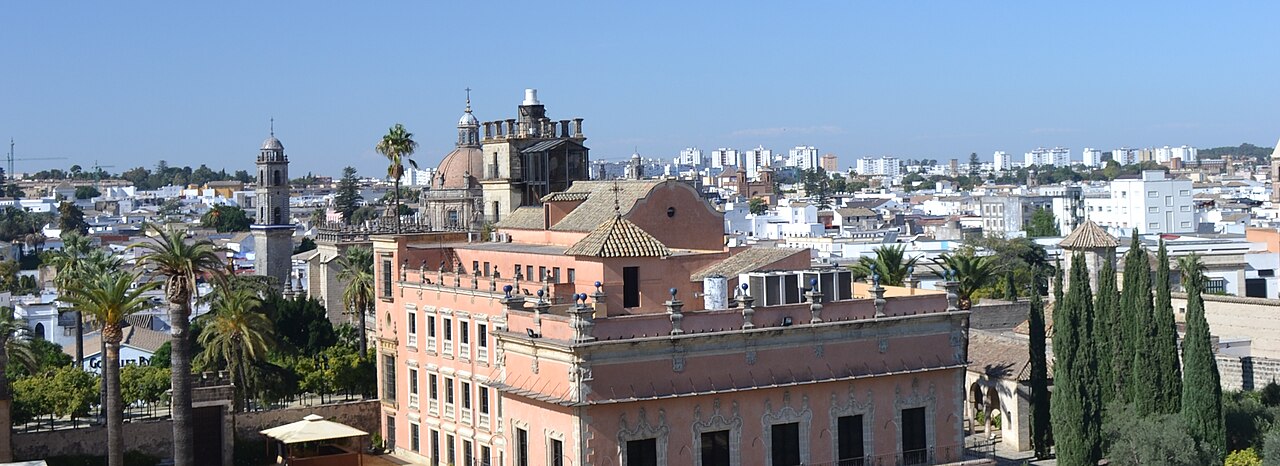
Sanlúcar de Barrameda → Jerez de la Frontera
25 kmTwenty-five kilometers separate two Andalusian wine capitals that live facing the Guadalquivir. From Sanlúcar de Barrameda, where manzanilla is aged with sea breeze, to Jerez de la Frontera, capital of flamenco and sherry, the journey is short but dense: centuries-old bodegas, estuary seafood, and a spoon-based cuisine that invites you to slow down. The A-4, known as the Autovía del Sur (Southern Highway), connects both towns without tolls and makes it possible to combine a day trip with stops that truly deserve your time.
How to get from Sanlúcar de Barrameda to Jerez de la Frontera: quick overview
The route between Sanlúcar de Barrameda and Jerez de la Frontera covers 25 km by road, with an approximate driving time of 25 minutes via the A-4, toll-free. For those without a vehicle, the direct bus is the most practical option: several companies such as the Consorcio de Transportes Bahía de Cádiz (lines M-970 and M-971), BlaBlaCar, the Consorcio de Transportes de Andalucía, InterBus, and Monbus connect both cities in around 35 minutes for a price ranging from 2 to 4 euros. The train is not a viable alternative, as Sanlúcar de Barrameda has no station and there is no direct rail service. There are also no flights between the two towns, given the short distance.
By car from Sanlúcar de Barrameda to Jerez de la Frontera
The most convenient option for covering the 25 km between Sanlúcar de Barrameda and Jerez de la Frontera is by car, with an estimated time of 25 minutes along the Autovía del Sur (A-4), a toll-free road that forms part of one of the historic corridors of southern Spain. The departure from Sanlúcar leads directly onto this highway, which connects to Jerez without significant detours. It is an easy drive, with good road surface and clear signage, suitable for any type of vehicle. For those arriving from other provinces, the A-4 links with the AP-4 (toll motorway from Seville) and with the A-381 toward Algeciras, making Jerez a strategic hub for exploring the province of Cádiz.
Parking in Jerez can be tricky in the historic center, especially during business hours, so it is advisable to look for regulated parking zones or public car parks near the center. From Sanlúcar, a picturesque but slower alternative is to take the conventional A-2000 road, which skirts vineyards and offers a more rural view of the landscape, although it significantly increases travel time.
By bus from Sanlúcar de Barrameda to Jerez de la Frontera
The direct bus is the most recommended alternative for those without a car. Several companies operate the route between Sanlúcar de Barrameda and Jerez de la Frontera, with a duration of approximately 35 minutes and prices ranging from 2 to 4 euros. The Consorcio de Transportes Bahía de Cádiz covers the journey through lines M-970 and M-971, integrated into the metropolitan transport network. In addition, companies such as BlaBlaCar (in its carpooling mode), the Consorcio de Transportes de Andalucía, InterBus, and Monbus also offer regular connections between the two towns.
Tickets can be purchased directly at the Sanlúcar bus station or through each operator’s digital platforms. Frequencies are reasonable throughout the day, although it is advisable to check schedules in advance, especially on weekends and public holidays. For the traveler looking to save money, this is undoubtedly the cheapest option, as the maximum price rarely exceeds 4 euros.
Recommended stops along the way
The route between Sanlúcar and Jerez invites you to pace your stops. From the outset, the drive lets you discover everything from the natural heritage of the Guadalquivir estuary to the wine culture of Jerez. Below, four verified stops that turn a simple transfer into a complete experience.
Fábrica de Hielo Visitor Centre (Sanlúcar de Barrameda)
The ideal starting point is in the Bajo de Guía neighbourhood, a seafaring area beside the river. The Fábrica de Hielo Visitor Centre offers an interactive introduction to the ecosystem of Doñana National Park, which stretches across the other side of the Guadalquivir. Before setting off, it is worth spending about 45 minutes on this visit to understand why this corner of Andalusia is so unique: migratory birds, marshes and a biodiversity that also explains Sanlúcar’s rich food scene.
Cooperativa Vitivinícola Sanluqueña (COVISAN), km 2
Barely two kilometres from the centre of Sanlúcar stands the Cooperativa Vitivinícola Sanluqueña, known as COVISAN. It is an authentic cooperative, not a museum, where local producers sell their manzanilla and other local wines directly at bodega prices. A quick stop of around 20 minutes, ideal for picking up a bottle before continuing the journey or taking one home as a souvenir. Visitors can chat with the cooperative members and learn first-hand about the ageing process of manzanilla.
Venta Esteban (Jerez de la Frontera), km 22
Before entering Jerez, at kilometre 22, Venta Esteban is an almost obligatory stop. This classic restaurant is very popular with locals and retains the bustling, authentic atmosphere of the traditional Andalusian ventas (roadside inns) of a lifetime. To get there, take the exit from the A-480 towards the Lebrija road (A-2000). It is the perfect place to try traditional Jerez cuisine: berza (chickpea and greens stew), oxtail or a good pescaíto frito (assorted fried fish). It is worth allowing a little more time, around 75 minutes, to enjoy the meal unhurriedly.
Bodegas Tío Pepe (González Byass), km 26
Already inside Jerez, at kilometre 26, the Bodegas Tío Pepe by González Byass are one of the cathedrals of Jerez wine. The guided tour, lasting approximately 120 minutes, traces the history of the brand, explains the soleras y criaderas ageing system, and ends with a tasting of its most emblematic wines: Tío Pepe Fino, Alfonso Oloroso, etc. It is a complete immersion in sherry culture, with historic buildings, flower-filled patios and barrels that have seen generations pass.
Where to stay in Jerez de la Frontera
Jerez offers a broad and varied hotel scene. The historic centre is the most sought-after area, as it allows you to walk between the Cathedral, the Alcázar, the bodegas and the flamenco tablaos. This is where charming hotels in old buildings are concentrated, along with mid-range accommodation offering good value for money. Weekend price ranges tend to be between 60 and 150 euros per night for a three- or four-star hotel, although they can rise during events such as the Feria del Caballo (Horse Fair) or the Festival de Jerez.
Another interesting option is the area around Plaza del Arenal and its surroundings, with terraces, restaurants and a lively nightlife. For tighter budgets, there are hostales and guesthouses on streets close to the centre with rates from 40 euros. There are also rural lodgings and rural tourism houses on the outskirts, surrounded by vineyards, ideal for those seeking peace and quiet and wanting to combine bodega visits with countryside walks.
Where to eat along the route
The cuisine between Sanlúcar and Jerez is one of the great highlights of the trip, with dishes that reflect the influence of the sea, the vineyards, and rural tradition.
- Manzanilla-Sanlúcar de Barrameda: A dry white wine made from Palomino grapes. Its biological aging under a layer of flor gives it a fresh, slightly saline character, perfect for pairing with seafood. It is the quintessential aperitif at any Sanlúcar bar.
- Langostino de Sanlúcar (Sanlúcar prawn): A type of prawn highly prized for its flavor and texture. It is an iconic product of the Guadalquivir estuary, where fresh and salt waters mix. It is cooked grilled or in tortillitas (small fritters) and is especially enjoyed at the beach bars of Bajo de Guía.
- Jerez-Xérès-Sherry (Fino/Oloroso): Fortified wines made primarily from Palomino grapes. Their profiles range from dry and sharp (Fino) to complex and robust (Oloroso). They are Jerez’s calling card and pair perfectly with the local cuisine.
- Berza jerezana (Jerez-style stew): A hearty spoon dish based on chickpeas and beans. It is enriched with cabbage, chorizo, morcilla (blood sausage), and bacon, making it a very traditional dish that is especially comforting in the cold months.
- Cola de toro (oxtail stew): A slow-cooked oxtail stew simmered until the meat falls off the bone. It is traditionally served with fried potatoes or mashed potatoes and is one of the most representative dishes of Jerez cuisine.
- Tocino de cielo (heavenly bacon): A very sweet traditional dessert made from egg yolks and sugar. Its origin is linked to the Jerez bodegas, which used egg whites to clarify wine, giving rise to this dense, rich sweet.
Frequently asked questions about the Sanlúcar de Barrameda-Jerez de la Frontera route
How long does it take to get from Sanlúcar de Barrameda to Jerez de la Frontera?
By car, via the Autovía del Sur (A-4), the journey takes approximately 25 minutes to cover the 25 km distance. By direct bus, the duration extends to around 35 minutes, depending on the company and intermediate stops. There is no train connection, as Sanlúcar de Barrameda does not have a station.
Which is cheaper, the train or the bus?
The bus is the most economical option, with prices ranging between 2 and 4 euros. The train is not a viable alternative on this route, given that there is no direct rail connection between Sanlúcar de Barrameda and Jerez de la Frontera.
Is it worth renting a car?
For a short visit focused only on central Jerez, the direct bus may be sufficient. However, renting a car is worth it if you want to make stops such as the Centro de Visitantes Fábrica de Hielo (Ice Factory Visitor Center), COVISAN, or Venta Esteban, all spread along the 25 km route. It also makes it easier to move between bodegas and discover the vineyards of the Marco de Jerez.
When is the best time to travel?
Spring (April-May) and autumn (September-October) are the best seasons to travel this route, thanks to the mild temperatures and events such as the Feria del Caballo (Horse Fair) in Jerez (May) or the Semana Gastronómica del Langostino (Prawn Gastronomy Week) in Sanlúcar. Summer is hotter but allows you to enjoy the terraces and sunsets over the Guadalquivir; winter, although cooler, is ideal for spoon dishes like berza jerezana or cola de toro.
💡 ¿Sabías que...?
- ● Jerez fue incorporada definitivamente a la corona de Castilla en 1264 por el rey Alfonso X el Sabio, tras lo cual la población musulmana, de aproximadamente 7.000 habitantes, fue expulsada de la ciudad. (https://www.jerezciudad.com/conoce_jerez/jerez_historica/cronologia_jerez.php)
- ● Manuel López Cepero y Ardila, nacido en Jerez de la Frontera el 5 de marzo de 1778, fue académico de la Real Academia Española y de la Real Academia de Buenas Letras de Sevilla, además de político y senador. (https://historia-hispanica.rah.es/biografias/26652-manuel-lopez-cepero-y-ardila)
- ● El Barrio del Algarve de Jerez debe su nombre a los caballeros procedentes del Algarve portugués a quienes se les repartieron sus fincas tras la conquista de la ciudad por Alonso X el Sabio en 1264. (https://jerezsinfronteras.es/el-barrio-del-algarve-un-paseo-por-la-historia-de-jerez-de-la-frontera/)
📍 También te puede interesar
Qué ver en Sanlúcar de Barrameda →
Qué ver en Jerez de la Frontera →