Marbella
AndalucíaClimate
Daily budget
The scent of salt air mixed with the perfume of blooming orange trees hits you as soon as you turn the corner toward Plaza de los Naranjos (Orange Tree Square), marking the start of a unique experience in this city of 140,000 inhabitants where luxury coexists with millennia-old history. Here, under a sun that shines with special intensity thanks to its location on the coast of Málaga, every corner tells a story ranging from Roman remains to the most exclusive yachts in the Mediterranean. Get ready to stroll along cobblestone streets that have witnessed Romans, Arabs, and tourists from around the world, in a destination that annually welcomes more than 693,810 travelers according to the INE, seeking that perfect balance between relaxation and sophistication that only Marbella knows how to offer.
The must-seesWhat to see in Marbella: the essentials
Murallas del Castillo (Castle Walls)
These remains of the ancient 10th-century Arab fortress are tangible proof of the Muslim past that defined the city’s original medina. Walking alongside its walls, you can observe how the structure surrounded what is now known as the historic quarter, offering a unique perspective on the defensive architecture of the era. The best part about this monument is that it is visible 24 hours a day from the outside, allowing you to appreciate its majesty both in daylight and illuminated at night, blending perfectly into the urban landscape at no cost to the visitor.
Puerto Banús
This famous luxury marina is a visual spectacle in itself, where impressive yachts line up alongside high-end shops and top-tier restaurants. It is the epicenter of the area’s vibrant nightlife, a place designed for seeing and being seen that maintains uninterrupted activity 24 hours a day. You don’t need to spend a fortune to enjoy it; simply strolling along its basin and observing the movement of boats and people will give you a clear idea of the international status of this part of the Costa del Sol.
Plaza de los Naranjos (Orange Tree Square)
Located in the heart of the Casco Antiguo (Old Town), this square is the ultimate social meeting point, surrounded by historic buildings of great value such as the Town Hall. It is filled with restaurants with terraces where the scent of orange blossom competes with that of local gastronomy, creating an unforgettable atmosphere for visitors. Open 24 hours a day, it is the perfect place to start or end your day, watching local life pass by among the orange trees that give it its name and the whitewashed facades typical of Andalusia.
Basílica Paleocristiana Vega del Mar (Early Christian Basilica of Vega del Mar)
This archaeological site, dating back to the 4th century, represents one of the oldest religious historical remains in the entire coastal area of the province of Málaga. The enclosure remarkably preserves the original structure of three naves and a baptistery, allowing visitors to understand the importance of early Christianity in the region. The visit is conducted via guided tour of the Paleo-Christian heritage, offering an educational immersion in a setting located in San Pedro de Alcántara that contrasts with the modern bustle of the coast.
Marbella Club
This legendary five-star hotel on the Golden Mile began as the private residence of Prince Alfonso of Hohenlohe-Langenburg, giving it an aura of historical exclusivity. The complex is famous for its subtropical gardens, its Andalusian-style villas, and its beach club, remaining a meeting point for luxury tourism on the Costa del Sol since the 50s. Although it is a hotel establishment, its fame transcends accommodation, being a cultural icon that defined modern tourism in the area over half a century ago.
Dólmenes de Antequera
A UNESCO World Heritage Site inscribed in 2016, located approximately one hour by car from Marbella, it includes the Dolmen de Menga, Dolmen de Viera, Tholos de El Romeral, and Peña de los Enamorados.
Rio Verde Roman Villa
Roman villa complex dating mainly from the 2nd century AD, featuring impressive Roman mosaics renowned for their quality and decorative originality, making it a key Roman archaeological site in Marbella.
La Fontanilla Beach
A very popular and central urban beach, with a lively promenade and all the necessary amenities for a perfect sunny day.
Alcazaba of Marbella
These are temporary markets offering varied shopping opportunities within the local tourist offer, set up on specific days of the week in areas designated for street vending.
Church of Nuestra Señora de la Encarnación (Our Lady of the Incarnation)
The city’s most important religious building, constructed over an old mosque, stands out for its Rococo façade and its historical significance in the urban core.
Casco Antiguo (Old Town)
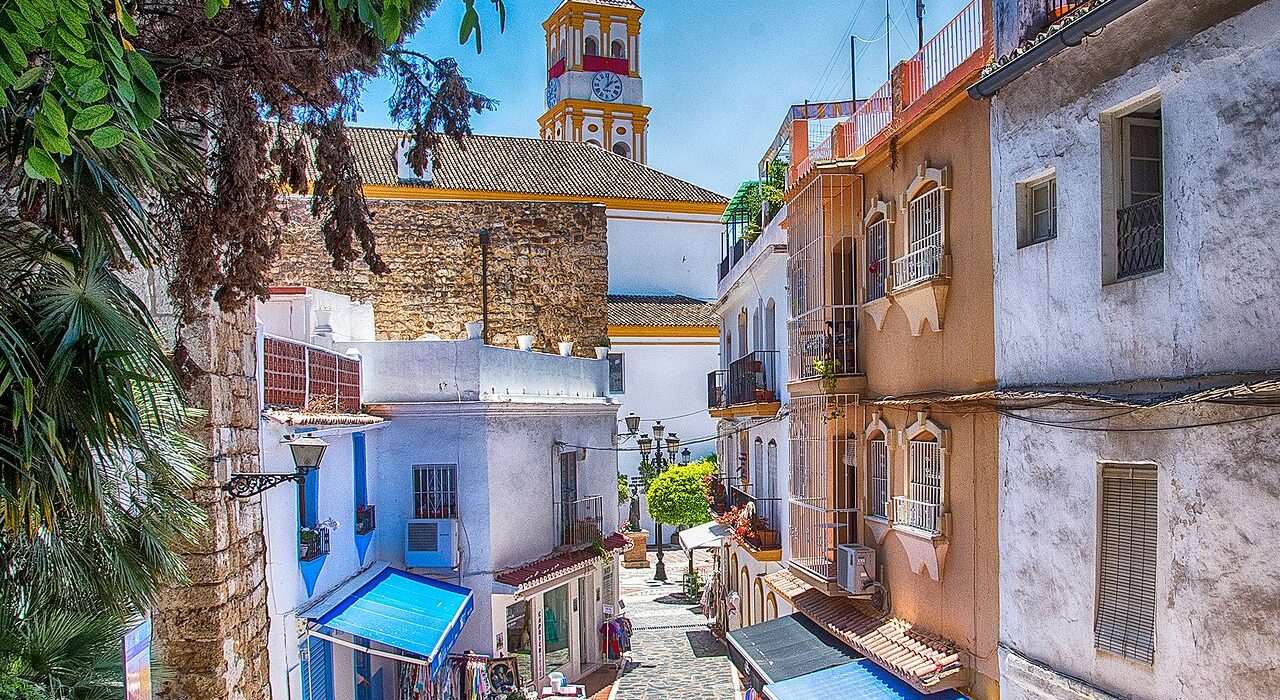
A charming labyrinth of narrow, cobbled streets with whitewashed houses and flower-filled balconies that preserve the original Muslim urban layout.
Milla de Oro
Known as the Golden Mile, this is an exclusive coastal stretch with grand hotels and private residences between Marbella and Puerto Banús, representing the heart of the city’s international glamour.
Avenida del Mar
An open-air promenade featuring a collection of ten bronze sculptures by Salvador Dalí that connects the center with the port area in a cultural and artistic manner.
Historic Quarter of Marbella
The old town preserves the original Muslim urban layout with narrow streets designed to provide shade and coolness, containing historic buildings ranging from the Roman era through Al-Ándalus to the Renaissance.
Parque de la Alameda
A tranquil ‘green lung’ in the city center with a large central fountain and Andalusian tiled benches, ideal for a rest between sightseeing stops.
🍂 Otoño
Si visitas Marbella en otoño, el calor disminuye pero sigue haciendo buen tiempo. Es otra de las mejores épocas para disfrutar de la gastronomía local con tranquilidad. Reserva mesa en los restaurantes con antelación porque sigue habiendo turismo.
What to Do in Marbella
Marbella offers cultural and leisure activities based on its traditional festivals, such as the San Bernabé Fair in June and the seafaring procession of the Virgen del Carmen in July, as well as weekly markets like the Mercadillo del Recinto Ferial on Mondays and the Nueva Andalucía market on Saturdays. You can immerse yourself in local life by visiting these markets, where everything from crafts to antiques is sold, or participate in patron saint celebrations that fill the streets with music and color. For art lovers, strolling along Avenida del Mar to see Dalí’s sculptures or visiting the Teatro Ciudad de Marbella, inaugurated in July 2001 with a capacity of 480 people, are excellent options to enjoy the municipality’s regular program of theater, music, and dance.
Marbella in One Day: Express Itinerary
If you are short on time, this route will allow you to see the city’s essentials without rushing, taking advantage of the proximity of points of interest in the center:
- 09:00 – Plaza de los Naranjos: Start your day in the heart of the Casco Antiguo to enjoy the morning atmosphere and a coffee among the orange trees before the crowds arrive.
- 10:30 – Castle Walls and Church of the Encarnación: Walk towards the remains of the Arab fortress and visit the main church to appreciate the local religious architecture.
- 13:00 – Avenida del Mar: Stroll towards the port viewing Dalí’s outdoor sculptures, enjoying the sea breeze on this cultural promenade.
- 15:00 – Lunch in the Historic Quarter: Take advantage of the area to eat tapas or typical dishes in the narrow streets designed to retain coolness.
- 17:00 – Puerto Banús: End the afternoon at the marina to see luxury yachts and enjoy the vibrant life that characterizes this area 24 hours a day.
Where to eat in Marbella: local gastronomy
Where to stay in Marbella
Casco Antiguo
Ideal para pasear, tapear y sentir la esencia andaluza.
Puerto Banús
El epicentro del lujo, las fiestas y la vida nocturna de alto standing.
Nueva Andalucía
Zona residencial tranquila, conocida como el 'Valle del Golf', ideal para estancias relajadas.
San Pedro de Alcántara
Un pueblo con encanto propio, más asequible y con un ambiente más local.
How to get to Marbella
The city does not have its own train station or AVE service, so options focus on road travel and buses from the nearby airport.
| Medio | Duración / Distancia | Precio aprox. | Frecuencia / Notas |
|---|---|---|---|
| Avión + Bus | Aeropuerto de Málaga-Costa del Sol (AGP) a 51 km | Variable según compañía | Compañías: Avanza, Alsa, Interbus desde la Estación de Autobuses de Marbella. |
| Coche | Depende del origen | Gasolina + Peajes | Vía carreteras AP-7, A-7 o N-340. |
| Bus Interurbano | Variable | Económico | Llega a la Estación de Autobuses de Marbella. |
Getting around Marbella
Once in the city, urban transport is based mainly on the local bus, which connects the different neighborhoods and points of interest. It is important to note that the city center is pedestrianized, making walking the best option for visiting the Casco Antiguo (Old Town), Plaza de los Naranjos, and Avenida del Mar. If you are staying in more distant areas such as Nueva Andalucía or San Pedro de Alcántara, a car or bus will be necessary to travel to the center or Puerto Banús.
Weather in Marbella
Best time to visit Marbella
Day trips from Marbella
If you want to expand your experience beyond the city, you have very close options. Málaga is the quintessential nearby city for day trips, offering culture and museums just a short distance away. Additionally, about an hour’s drive away, you can visit the Antequera Dolmens Site, a UNESCO World Heritage Site inscribed in 2016 that includes the Dolmen of Menga, Dolmen of Viera, Tholos of El Romeral, and Peña de los Enamorados (Lovers’ Rock), representing one of the most important megalitic complexes in Europe.
Who is Marbella for?
Marbella is a versatile destination that attracts 75% foreigners according to the INE, but it has something for everyone. It is ideal for couples seeking luxury and romance on the Golden Mile (Milla de Oro), families enjoying the beaches and golf in Nueva Andalucía, and history lovers wanting to explore everything from the Paleochristian Basilica to the Castle Walls. It is also a strong point for foodies, thanks to its offer of Michelin-starred restaurants and local gastronomy, although backpackers can find more affordable options in San Pedro de Alcántara or hostels in the center.
Frequently asked questions about Marbella
How many days do I need to see Marbella?
With an average stay of 3.49 nights according to the INE, you have enough time to see the essentials. A 3-day itinerary would allow you to tour the Old Town (Casco Antiguo), visit Puerto Banús, enjoy the beach, and take a day trip to the Antequera Dolmens Site without rushing.
Is Marbella expensive?
Marbella has a reputation for luxury, but there are ranges for all budgets. While a 4-5 star hotel can cost between €150 and €400 per night, there are hostels for €25-40 and 3-star hotels between €70 and €120. The average meal costs around €25-40, although Michelin-starred restaurants raise this average.
When is the best time to visit Marbella?
The best time is Spring and Autumn, avoiding the crowds of late July and August. Temperatures are pleasant, with averages of 16°C in winter and 29°C in summer, making the climate mild for most of the year.
How do I get to Marbella from Madrid?
The fastest option is to fly to Málaga-Costa del Sol Airport (AGP), located 51 km from Marbella, and take a bus (Avanza, Alsa, Interbus) or rental car via the AP-7 or A-7. There is no AVE train station in Marbella.
What cultural festivals are there in Marbella?
The Teatro Ciudad de Marbella, inaugurated in July 2001, annually hosts the Marbella International Opera Festival, in addition to a regular program of theater, music, dance, and flamenco with a capacity of 480 people.