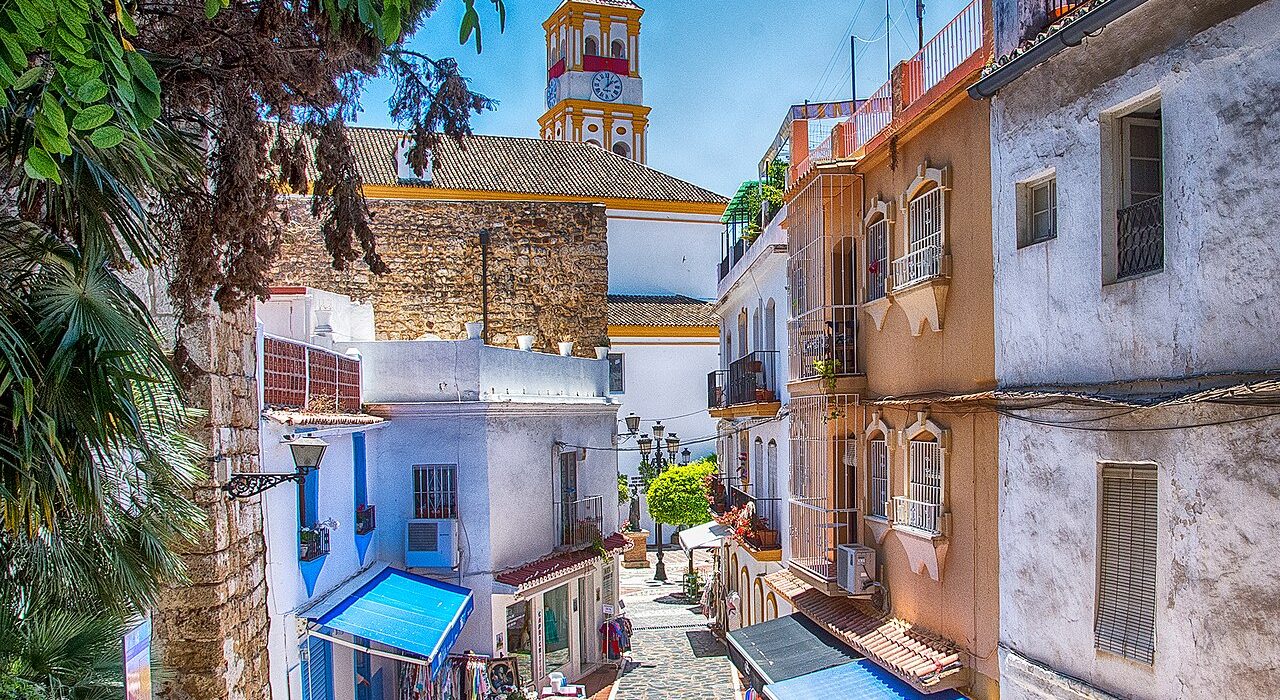
Málaga → Marbella
60 kmForty kilometers of blue coastline, white villages clinging to the hillsides, and the smell of espetos (sardine skewers) roasting on the sand: the road from Málaga to Marbella is one of the most enjoyable drives in southern Europe. In under an hour you go from a cosmopolitan city to the sophistication of the Golden Mile, with the option of stopping in villages so full of character that you’ll be tempted to extend the trip.
How to get from Málaga to Marbella: quick overview
To cover the 60 km separating Málaga from Marbella, you have the options of a private car or bus, as there is no direct rail connection between the two cities nor commercial flights operating such a short route. The bus is the most practical option for those traveling without a vehicle: several companies such as Avanza, BlaBlaCar, EMT Málaga, and Alsa connect both cities in approximately 45 minutes, with tickets from €6.92 to €12.11. If you prefer the freedom to stop wherever you like and drive on your own, a car allows you to visit inland towns such as Coín or Cártama, and the journey takes about 50 minutes via the A-7 or A-45 motorways, both toll-free.
Our advice by traveler type? If you’re traveling light and looking to save money, the direct bus is unbeatable. If you’re with family, carrying luggage, or planning to explore along the coast, a rental car is well worth it.
By car from Málaga to Marbella
Covering the 60 km between Málaga and Marbella takes approximately 50 minutes by road, and you have two major toll-free motorways to choose from. The most common option is the A-7, known as the Autovía del Mediterráneo (Mediterranean Motorway), a fast route that hugs the coast and lets you keep the sea in view as you approach Marbella. It’s the logical choice for those who want to enjoy the scenery and make stops in coastal towns such as Torremolinos or Fuengirola.
The inland alternative is the A-45, the Autovía de Málaga, which connects the capital with the interior of the province and is useful if you plan to detour toward towns in the Guadalhorce Valley such as Alhaurín de la Torre, Alhaurín el Grande, Cártama, Estación de Cártama, Pizarra, or Coín before heading back down to the coast. Both motorways are toll-free, well maintained, and have service areas where you can refuel and stretch your legs.
Before setting off, keep in mind that during summer rush hour, traffic between Málaga and Marbella picks up considerably, especially on Friday afternoons and Sunday evenings. Leaving early in the morning or mid-morning will save you from significant traffic jams.
By bus from Málaga to Marbella
The bus is the most convenient and economical way to connect Málaga and Marbella without your own car. The journey takes about 45 minutes and prices range from €6.92 to €12.11 depending on the company, the schedule, and how far in advance you buy your ticket. Several companies operate on this corridor: Avanza, BlaBlaCar, EMT Málaga, and Alsa cover the route with regular frequencies throughout the day.
Buses depart mainly from the Málaga Bus Station, well connected to the city center and the Cercanías commuter rail network. In Marbella, the arrival terminal is right in the city center, allowing you to explore the old town and the seafront promenade on foot without needing additional transport. Some express lines make few intermediate stops, while others cover the full route stopping in coastal towns, an interesting option if you want to combine transport and sightseeing in a single day.
Booking online a few days in advance usually yields better prices, especially with BlaBlaCar and Alsa. In high season (Holy Week, July, August, and long weekends), it’s advisable to buy your ticket well in advance because demand soars.
Recommended stops along the way
The route between Málaga and Marbella crosses one of the most authentic areas of the province, with towns that deserve a mandatory pause before reaching the coast.
- Torremolinos: Just 15 minutes from Málaga, this coastal town is famous for its lively beach, its seafront promenade full of chiringuitos (beach bars) and its international atmosphere. Perfect for a first coffee overlooking the sea or a morning swim before continuing west.
- Alhaurín de la Torre: A town with a strong Málaga identity, strategically located between the coast and the mountains. Its streets retain traditional Andalusian charm, and from here you can access hiking trails through the nearby sierras.
- Fuengirola: Another essential coastal stop, with more than 8 km of urban beaches, Sohail Castle and a lively marina. Ideal for stretching your legs and trying some pescaíto frito (fried fish) facing the Mediterranean.
- Cártama: At the foot of the Sierra de Mijas, this municipality preserves an imposing Arab castle and a network of whitewashed streets full of charm. It is one of the towns with the most history along the route.
- Estación de Cártama: The most modern area of Cártama, with Cercanías rail services and good connections if you decide to combine train and bus for part of the journey.
- Pizarra: A quiet town in the Guadalhorce Valley known for its rural surroundings and its proximity to the river. Perfect if you are looking to disconnect and enjoy a countryside lunch.
- Alhaurín el Grande: Surrounded by avocado and mango fields, this whitewashed town boasts a lively local scene and several historic fountains right in the town center. Its main square is ideal for tapear (going for tapas).
- Coín: Known as the “heart of the Guadalhorce,” Coín is a delightful stop for anyone traveling along the A-45. Its historic center, the Wine Museum and the viewpoints over the valley deserve a leisurely visit.
If you are driving, planning two or three of these stops turns a simple transfer into a full day of discovery through the most authentic Málaga.
Where to stay in Marbella
Marbella offers accommodation for all tastes and budgets, from boutique hotels with sea views to family apartments in the old town. The price range per night is wide: you can find double rooms from €70-90 in simple establishments outside high season, and rates soar from €200-400 in luxury hotels on the seafront promenade during July, August and Holy Week.
For those looking for atmosphere and nightlife, central Marbella and the Casco Antiguo (Old Town) area are the best option: you have everything within walking distance, including the best restaurants and Venus Beach. Families often prefer to stay in the San Pedro Alcántara area, which is somewhat quieter and has wider beaches. Lovers of luxury and golf opt for the Golden Mile, where the most exclusive five-star hotels and internationally renowned golf courses are concentrated.
If you are looking for a balance between price and comfort, tourist apartments in developments with a pool are a very popular alternative, especially for stays of several days. Remember to book in advance if you are traveling in summer or during the city’s main events.
Where to eat along the route
Malaga’s gastronomy is one of the great draws of this journey, and in Malaga, Marbella, and the towns in between you’ll find a cuisine with its own distinctive character. Here are seven essential stops for your palate:
- Espetos de Sardinas (sardine skewers): The most iconic dish of the Costa del Sol. Fresh sardines skewered on a cane and slowly grilled over embers, often right on the beach sand. Their smoky, salty flavor defines Malaga’s coastal cuisine. You’ll find them at the beach bars (chiringuitos) of Malaga, Torremolinos, Fuengirola, and, of course, Marbella.
- Ajoblanco: A traditional Andalusian cold soup especially popular in Malaga. It’s made with ground almonds, bread, garlic, extra virgin olive oil, and vinegar, and is usually served with Muscat grapes or pieces of melon—a sweet, refreshing contrast ideal for hot days.
- Fritura Malagueña (Pescaíto Frito): A coastal classic consisting of a selection of small fresh fish (anchovies, squid, jack mackerel, rosada) lightly floured and fried in olive oil. It’s an emblematic dish throughout the Costa del Sol, perfect for sharing at the center of the table.
- Ensalada Malagueña: Refreshing and very different from conventional salads, it combines boiled potatoes, flaked salt cod, oranges peeled to the flesh, fresh spring onion, and olives. It’s light, colorful, and perfect for the summer heat.
- Gazpachuelo Malagueño: Malaga’s version of gazpacho: a warm fish and potato soup with a gentle mayonnaise-based dressing that gives it a creamy texture and delicate flavor. Comforting and deeply tied to the local fishing tradition.
- Vino Málaga: Sweet and fortified wines with centuries of tradition, made primarily from Muscat and Pedro Ximénez grapes. They’re perfect as an aperitif or to accompany desserts. You can’t leave without trying a good glass.
- Vino Sierras de Málaga: High-quality white, rosé, and red wines that reflect the diversity of terroirs across the province, including the Ronda area. They pair beautifully with local cuisine and are an excellent choice if you prefer dry wines.
Frequently asked questions about the Malaga–Marbella route
How long does it take to get from Malaga to Marbella?
By car, the journey via the A-7 or A-45 motorways takes approximately 50 minutes for the 60 km distance. By direct bus, the trip takes around 45 minutes with companies such as Avanza, BlaBlaCar, EMT Málaga, or Alsa. Travel time can increase significantly during rush hour or in the summer months.
Which is cheaper, the train or the bus?
There is no direct train between Malaga and Marbella, so the rail option isn’t viable for this route. The bus, on the other hand, offers tickets from €6.92 to €12.11, making it the most economical and practical alternative for covering the 60 km that separate the two cities.
Is it worth renting a car?
It depends on your plans. If you’re only going from Malaga to Marbella and getting around the center, the direct bus is sufficient and more economical. However, if you want to visit inland towns such as Coín, Alhaurín el Grande, Cártama, or Pizarra, or access beaches and coves that are harder to reach by public transport, a rental car gives you priceless freedom and pays for itself quickly.
When is the best time to travel?
The best time to enjoy this route is spring (April to June) and autumn (September to October), when temperatures are mild, the light is beautiful, and there are fewer crowds than in high summer. July and August offer the liveliest coastal atmosphere, but also more heat, more traffic, and higher accommodation prices. Winter is ideal if you’re looking for tranquility and good hotel deals.
💡 ¿Sabías que...?
- ● Marbella albergó los primeros altos hornos de España en el siglo XIX (en El Ángel y La Concepción) y llegó a fabricar el 75% del hierro que se fundía en el país, procedente de la mina de El Peñoncillo. (https://www.malaga.es/es/laprovincia/tradiciones/lis_cd-3681/historia-de-marbella)
- ● Marbella posee una especie marina única en el mundo, la babosa marina Tambja marbellensis, de color verde con líneas amarillas. (https://blog.fuerte-group.com/curiosidades-sobre-marbella/)
- ● Por el término municipal de Marbella discurren 17 ríos y arroyos, algunos con protección ambiental especial a nivel europeo. (https://blog.fuerte-group.com/curiosidades-sobre-marbella/)
- ● El Marqués del Duero diseñó a finales del siglo XIX San Pedro Alcántara, considerada la mayor obra de colonización agrícola realizada en España por un particular, sobre 10.000 hectáreas de terreno. (https://www.malaga.es/es/laprovincia/tradiciones/lis_cd-3681/historia-de-marbella)
📍 También te puede interesar
Qué ver en Málaga →
Qué ver en Marbella →