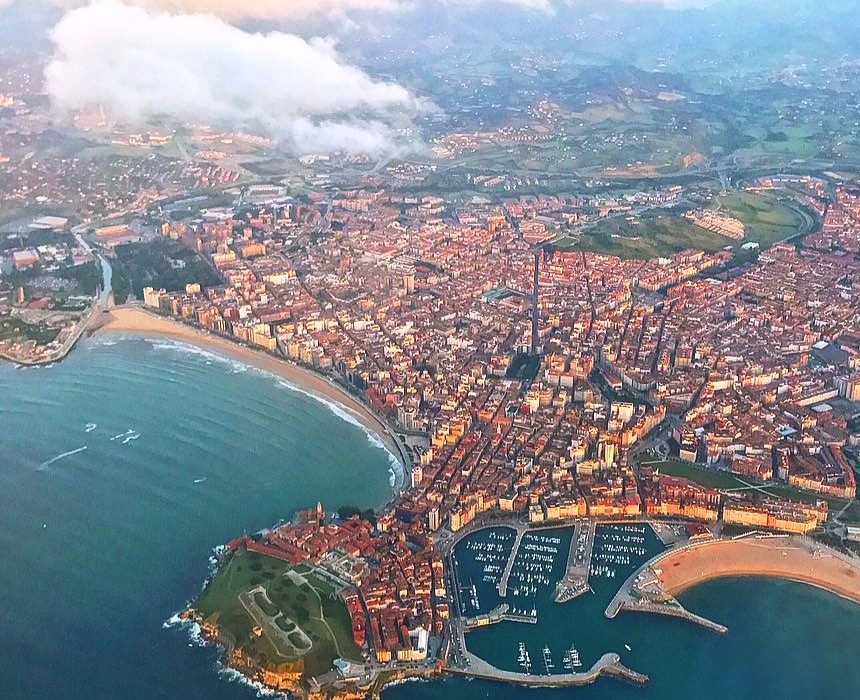
Gijón
AsturiasClimate
Daily budget
Nestled between the mist of the Cantabrian Sea and the lively buzz of its cider houses, this Asturian city offers a vibrant contrast that captivates from the very first step. While the fishing quarter of Cimavilla keeps its historical essence alive with cobblestone streets, the monumental Universidad Laboral (Laboral University) stands tall as the largest building in Spain, proving that here, old and modern coexist in perfect harmony. With a population of 270,000 who know how to enjoy both the tranquility of their urban beaches and the euphoria of their summer festivals, Gijón is the ideal destination for those seeking authenticity without sacrificing comfort.
The must-seesWhat to see in Gijón: the essentials
Universidad Laboral de Gijón
This monumental complex, declared a Site of Cultural Interest with Monument status since 2016, is the most important architectural work of Asturias in the 20th century. Built between 1948 and 1957, it stands out as the largest building in Spain, a fact that becomes evident when exploring its immense courtyards and towers. To visit, it is essential to check opening hours in advance, as access to the cultural site usually requires booking for guided tours or specific events.
Elogio del Horizonte (In Praise of the Horizon)
A work by sculptor Eduardo Chillida, this concrete sculpture located on Cerro de Santa Catalina has become the undisputed symbol of the city. Its design allows the sea and sky to merge through its openings, creating a unique visual experience that changes with the daylight. Access is free 24 hours a day, making it a perfect spot to watch the sunset over the Cantabrian Sea.
Palacio de Revillagigedo
This imposing 18th-century Baroque palace sits beside the Colegiata de San Juan Bautista (Collegiate Church of St. John the Baptist), dominating the entrance to the old town. Today, it operates as a top-tier exhibition center, hosting temporary shows of great cultural interest. Visiting hours depend on the current exhibition and generally require purchasing a ticket.
Museo del Pueblo de Asturias
This open-air ethnographic museum is fundamental to understanding the memory of traditional Asturian life, preserving granaries (hórreos), manor houses, and rural buildings brought from all over the region. Opening hours usually range from 10:00 to 19:00, though they may vary by season, and admission requires a ticket. It is the perfect place to understand how Asturians lived before industrialization.
Playa de San Lorenzo
This is Gijón’s main urban beach, characterized by an extensive golden sand strip and a bustling promenade popularly known as ‘El Muro’. This walkway is the social heart of the city in summer, filled with people strolling, enjoying a drink, or soaking up the sun. Its central location makes it the connecting axis between the Cimavilla neighborhood and the rest of the modern city.
Other points of interest
- Gijón Aquarium: A harbor facility with a maritime history dating back to the 16th century, located near Cimavilla and featuring 682 fixed moorings.
- Jovellanos Museum and Birthplace: A manor house from the 14th–16th centuries preserving historical furniture and Jovellanos’ painting collection.
- Campo Valdés Roman Baths: An archaeological site-museum preserving Roman public baths located in the area of the ancient forum.
- Laboral Center for Art and Industrial Creation: A multidisciplinary space located at the Universidad Laboral dedicated to art, science, and technology.
- Jovellanos Theater: A reference playhouse inaugurated in 1899 on Begoña Promenade, which retains its attached historic café.
- La Escalerona: A historic staircase in Cimadevilla connecting the upper area of the old fishing quarter with the seaside promenade.
- Atlantic Botanical Garden: A garden dedicated to the conservation of Atlantic flora with a significant collection of native plants.
- Campa del Cabo Torres: An Archaeological-Natural Park situated on the ancient castro of Noega, where the presence of Emperor Augustus is mentioned.
- Basilica of the Sacred Heart of Jesus: Known as “La Iglesiona,” built between 1918 and 1922 with modernist influences and panoramic views.
- Church of San Pedro: A Baroque and Neoclassical temple atop Cimavilla that serves as an urban watchtower over the bay.
- Cimavilla Quarter: An old fishing neighborhood with cobblestone streets, colorful houses, and charming cider houses (sidrerías).
- Santa Catalina Park: A green zone on the hill separating Cimavilla from the rest of the city, featuring trails and sea views.
🍂 Otoño
En otoño el ambiente se vuelve más íntimo y los colores de la costa asturiana son espectaculares. Aprovecha para probar la sidra nueva y los platos de temporada en los restaurantes del centro. Viste ropa impermeable para disfrutar de los paseos marítimos aunque llueva.
What to do in Gijón
Gijón offers cultural and leisure activities ranging from the Natural Cider Festival in June to the concerts and fireworks of the Grand Week (Semana Grande) in August. You can stroll through the Mercado del Sur, an iron-architecture building from 1899, to buy fresh produce, or visit the Artisan and Organic Market held on the second weekend of each month in Plaza Mayor. For sports and nature lovers, Santa Catalina Park offers walking trails through coastal vegetation, while Campa del Cabo Torres allows you to explore an archaeological-natural park with views of the lighthouse.
Gijón in one day: express itinerary
If you are short on time, this route will let you see the essentials of the city in 24 hours, combining history, gastronomy, and sea views.
- 10:00 – Cimavilla Quarter: Start your morning getting lost in the cobblestone streets of this old fishing neighborhood and visit the Church of San Pedro to enjoy views of the port.
- 12:00 – San Lorenzo Beach and El Muro: Walk along the city’s most famous promenade and soak up the beach atmosphere before lunch.
- 14:00 – Lunch in the center: Enjoy a fabada (bean stew) or a cachopo (breaded veal steak) at one of the traditional cider houses near the beach.
- 16:30 – Elogio del Horizonte: Head up to Cerro de Santa Catalina to see Chillida’s sculpture and enjoy panoramic views.
- 18:00 – Universidad Laboral: End the day visiting this monumental complex, the largest building in Spain, to admire its 20th-century architecture.
Where to eat in Gijón: local gastronomy
Where to sleep in Gijón
Cimavilla
El corazón histórico y el barrio con más encanto, ideal para pasear, cenar y salir de sidras.
La Arena
Barrio residencial junto a la playa de San Lorenzo, perfecto para un ambiente playero y familiar.
How to get to Gijón
The city is well connected by land, sea, and air, with Asturias Airport and the train station being the main entry points for most travelers.
| Medio | Detalles | Conexiones |
|---|---|---|
| Tren | Estación Gijón Sanz Crespo (con AVE). | Directos a Madrid, Barcelona, Alicante (según Renfe). |
| Autobús | Estación de Autobuses de Gijón. | Compañía principal: Alsa. |
| Avión | Aeropuerto de Asturias (OVD) a 40 km. | Conexión terrestre necesaria desde el aeropuerto. |
| Coche | Acceso por autovías principales. | Carreteras A-8, A-66, AS-II. |
How to get around Gijón
Urban transport is efficient and covers the entire city, although the center is very walkable. You can use the urban bus to reach further points such as the Universidad Laboral or the Botanical Garden. Keep in mind that much of the city center is pedestrianized, which greatly facilitates walking between main attractions like Cimavilla and San Lorenzo Beach.
Weather in Gijón
Best time to visit Gijón
Day trips from Gijón
Gijón’s location in the center of Asturias facilitates getaways to nearby cities. The most direct and popular option is to visit Oviedo, the capital of the Principality, located only 28 km away. You can also head to Avilés, situated 26 km away, to complete a visit to the metropolitan area covering twenty municipalities in the region.
Who is Gijón for?
With 419,309 annual travelers (INE) and an average stay of nearly 2 nights, Gijón is a versatile destination. It is ideal for families seeking the safety and expanse of San Lorenzo Beach, for couples who enjoy the romantic charm of Cimavilla and its sunsets, and for foodies wanting to explore everything from traditional markets to Michelin-starred restaurants. History lovers will find a rich and accessible cultural destination in its museums and Roman archaeological sites.
Frequently Asked Questions about Gijón
How many days do I need to see Gijón?
The average tourist stay is 1.97 nights (INE), suggesting that 2 full days are enough to see the main attractions such as the Universidad Laboral (Laboral University), Cimavilla, and San Lorenzo Beach, although a week allows for excursions to Oviedo and Avilés.
Is Gijón expensive?
Gijón offers options for all budgets: you can eat for €12–20 on a mid-range menu, stay in hostels from €25–40 per night, or choose 3-star hotels between €60–110. Four- and five-star hotels range from €100 to €220.
What is the best time to visit Gijón?
The best time is from June to September, with average summer temperatures of 19°C. If you prefer to avoid crowds but still enjoy good weather, June is ideal for the Fiesta de la Sidra (Cider Festival), while August hosts the Semana Grande (Great Week) with fireworks.
How do I get to Gijón from Madrid?
You can arrive by AVE train from Gijón Sanz Crespo station with a direct connection from Madrid, or by bus via the Alsa company from the Gijón Bus Station. You can also drive along the A-66 motorway.