Tarragona
CataluñaClimate
Daily budget
Imagine walking along cobblestone streets where the sound of your footsteps echoes on stones laid two thousand years ago, and as you look up, the deep blue of the Mediterranean merges with the ochre of Roman stone. Tarragona is not just a stopover; it is a living stage where the Roman Empire left its grandest mark on the Iberian Peninsula, right on the Costa Dorada (Golden Coast). Here, history is not locked away in display cases but coexists with the scent of sea salt and the buzz of terraces in the Part Alta (Upper Town), creating a unique atmosphere that makes you feel like a traveler through time without sacrificing modern comfort.
The must-seesWhat to See in Tarragona: The Essentials
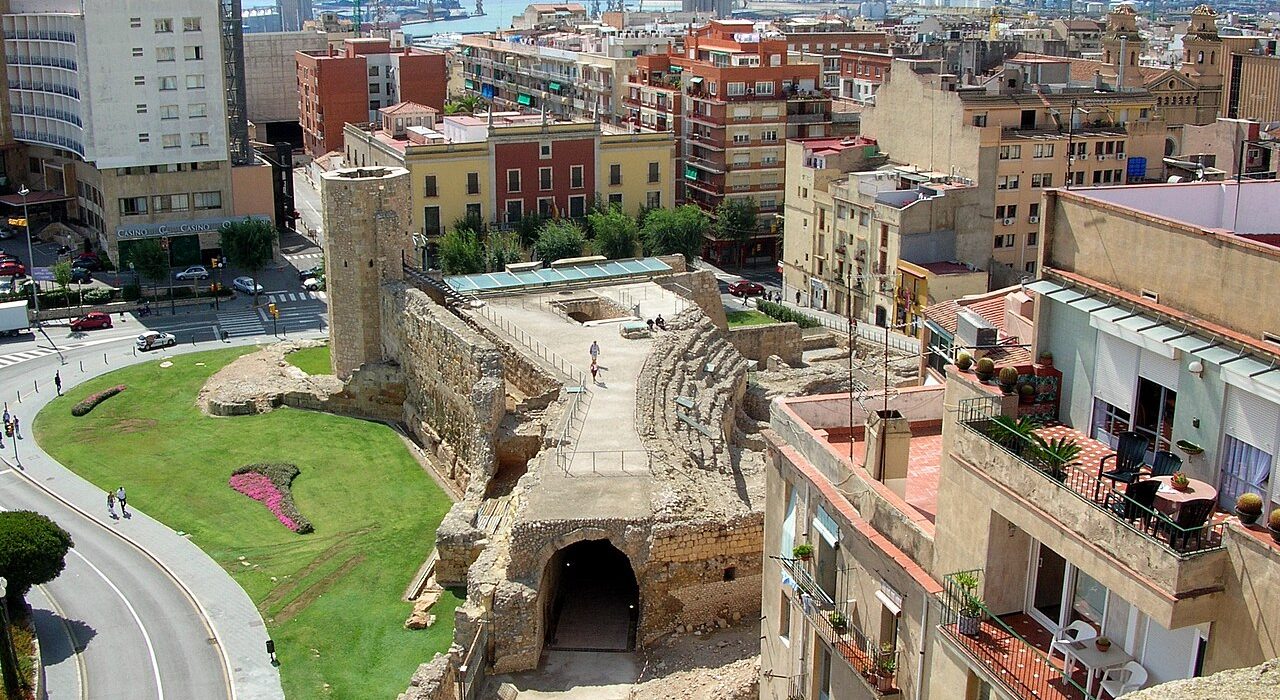
Roman Amphitheatre
This monument is the beating heart of ancient Tarraco and was a fundamental religious and social center, of which we now preserve impressive remains of the basilica and other public buildings. Declared a UNESCO World Heritage Site in 2000, the site allows you to walk on the arena where gladiators once fought and public spectacles were held. Opening hours are from 09:30 to 21:00, and entry requires a ticket—a small investment to access one of the best-preserved Roman testimonies. Located right by the sea, it offers an unparalleled visual combination of historical ruins and coastal landscape.Ferreres Aqueduct (Pont del Diable)
Located on the outskirts, this impressive two-tiered Roman aqueduct is an engineering feat that supplied water to the city in antiquity. Its majestic structure, also recognized by UNESCO since 2000, rises from the landscape, showcasing the constructive power of the imperial era. It is a perfect spot for photography and for understanding the hydraulic logistics that sustained a Roman provincial capital. Although somewhat distant from the center, visiting it is essential to fully comprehend the Archaeological Ensemble.Bará Arch
Built around 13 BC, this monumental arch marked the boundary of the territory of the city of Tarraco along the ancient Via Augusta. It stands with a single semicircular arch made of local sandstone. Managed by the Museu Nacional Arqueològic de Tarragona, its excellent state of conservation makes it a standout example of Roman architecture in Catalonia included on the UNESCO list. Visits are completely free as it is located in an outdoor setting accessible year-round without restrictions. It is a mandatory stop if you are driving north through the province.Tower of the Scipios
This 1st-century funerary monument is situated outside the original urban core, next to the Via Augusta. Its two-story structure preserves two sculpted figures representing Atis on the main façade. Access to the exterior is free, although the interior is not usually open to visitors, allowing you to appreciate its characteristic silhouette at no cost. It is included on the UNESCO World Heritage List as a fundamental part of the Archaeological Ensemble of Tarraco. Its solitary location gives it a mysterious and solemn air well worth contemplating.Mèdol Quarry
This limestone quarry was excavated during the Roman Republic and Empire to build the walls and monuments of Tarraco, featuring a quarry face reaching 12 meters in height. On its walls, you can still distinguish marks left by Roman tools and a central witness column that provides a sense of scale to the magnitude of the extraction work. Admission is free, and it is located just a few kilometers from the urban center, serving as a visible example of the industry that supplied the ancient city. It is a silent yet powerful testament to the raw material that built Hispania Citerior.Other Points of Interest
- Roman Circus and Praetorium: One of the best-preserved Roman circuses in the West, originally used for chariot races, featuring the attached Praetorium tower.
- Roman Walls of Tarragona: Built in the early 1st century AD during the Augustan era, it had a capacity for approximately 10,000 spectators distributed across the semicircular cavea.
- Early Christian Necropolis: Used between the 3rd and 5th centuries, this necropolis contains more than 2,000 tombs of various types and was discovered by chance during railway construction works.
- Praetorium and Plaça del Rei: This 1st-century AD Roman tower was part of the imperial cult precinct and offers panoramic views from its upper terrace.
- Walls (Archaeological Promenade): A Roman walled enclosure, the oldest preserved outside Italy, featuring original towers and gates ideal for a stroll.
- National Archaeological Museum: Founded in the 19th century, it is the oldest museum in Catalonia specializing in Roman archaeology, exhibiting mosaics and sculptures.
- Santa Maria Cathedral: A majestic cathedral transitioning from Romanesque to Gothic styles, built atop an ancient Roman temple in the upper part of the city.
- Balcó del Mediterrani (Mediterranean Balcony): A spectacular viewpoint perched on a cliff offering panoramic views of the sea, the port, and the amphitheater.
- Part Alta (Old Town): A labyrinth of narrow streets and charming squares housing most of the Roman and medieval monuments.
- Historic Center: Coinciding with the ancient Provincial Forum of Tarraco, it was surrounded by the Roman wall, with approximately 1 km currently preserved.
- Playa del Miracle: Located next to the Roman Amphitheater, this semi-urban beach with fine golden sand features calm waters and full services.
- El Serrallo: A traditional fishing neighborhood situated in the port area, boasting numerous fresh fish restaurants and the Church of San Pedro.
🍂 Otoño
Si visitas Tarragona en otoño, el calor disminuye y se convierte nuevamente en una época ideal para explorar. Tendrás ventajas similares a la primavera con un ambiente más relajado tras el verano. No olvides llevar una chaqueta ligera por si refresca por la noche.
What to Do in Tarragona
Tarragona offers immersive cultural activities and unique gastronomic experiences rooted in its heritage and coastal location. During May, do not miss the Tàrraco Viva festival, an international historical dissemination event that recreates the city’s Roman past in its original settings with actors and faithful reenactments. If you visit in September, the Santa Tecla Festivities, declared a Festival of National Tourist Interest, fill the streets with castells (human towers), processions of the Seguici Popular, and traditional acts that define the Catalan character. For a more relaxed experience, strolling through the Mercat Central de Tarragona, a Modernist building, allows you to see local fresh produce and feel the city’s daily pulse.
Tarragona in a day: express itinerary
If you’re short on time, this itinerary lets you hit the city’s Roman essentials and enjoy the sea in one intense but rewarding day.
- 09:30 – Roman Amphitheatre (Anfiteatro Romano): Start your day here to catch the opening, seeing the ruins in great light before the heat or crowds arrive.
- 11:30 – Mediterranean Balcony (Balcó del Mediterrani) and Cathedral: Head up to the Old Town (Part Alta) for views from the lookout point, then visit the majestic Santa María Cathedral right next door.
- 13:30 – Lunch in El Serrallo: Go down to the port to eat in this fishing quarter, tasting fresh fish at one of its traditional restaurants.
- 16:00 – National Archaeological Museum (Museu Nacional Arqueològic): Spend the afternoon understanding the history you saw in the morning through its mosaics and sculptures in Plaça del Rei.
- 18:00 – City Walls (Archaeological Promenade/Passeig Arqueològic): End the day with a relaxed stroll along the Roman walled enclosure as evening falls.
Where to eat in Tarragona: local gastronomy
Where to stay in Tarragona
Part Alta
El corazón histórico, ideal para sumergirse en la historia y disfrutar de restaurantes con encanto.
El Serrallo
Antiguo barrio de pescadores con un ambiente marinero auténtico, famoso por sus restaurantes de pescado fresco.
How to get to Tarragona
The city is well connected by land and air, serving as a key hub on the Mediterranean coast.
| Medio | Detalles | Destinos / Compañías |
|---|---|---|
| Tren | Estación de Tarragona (sin AVE directo en la ciudad, aunque conectada). | Destinos directos: Barcelona, Valencia, Zaragoza, Lleida. |
| Autobús | Estación de Autobuses de Tarragona. | Compañías: Alsa, Hife, Plana. |
| Avión | Aeropuerto de Reus (REU) a 7 km de distancia. | Ideal para vuelos internacionales y chárter. |
| Coche | Acceso rápido por autovía y autopista. | Carreteras: AP-7, A-7, N-340. |
Getting around Tarragona
Once in the city, urban transport is simple and efficient. The city bus covers different zones, connecting the lower town with the Part Alta and the beaches. Moreover, much of the historic center is pedestrianized, making walking the best way to discover hidden corners within the walls and Roman streets.
Weather in Tarragona
Best time to visit Tarragona
Day trips from Tarragona
If you have extra time, proximity to other major cities allows for quick excursions. Barcelona is the most logical and popular option for a day trip, taking advantage of the direct train connection to visit the Catalan capital and return to sleep in the tranquility of Tarragona.
Who is Tarragona for?
Tarragona is an ideal destination for history and archaeology lovers, given its status as a UNESCO World Heritage Site with monuments such as the Amphitheatre and the Aqueduct. It is also perfect for couples seeking a romantic getaway with sea views from the Balcó del Mediterrani (Mediterranean Balcony) and dinners in El Serrallo. Families will find a safe and fun environment at Playa del Miracle and the open spaces along the city walls. With an average stay of 1.77 nights and more than 258,529 annual travelers (according to INE), it is an established destination combining culture and relaxation.
Frequently Asked Questions about Tarragona
How many days do I need to see Tarragona?
1 or 2 days are enough to see the essentials like the Amphitheatre, the Cathedral, and the Museum, although an average stay of 1.77 nights (INE) suggests that many travelers opt for a full weekend to also enjoy the gastronomy and beaches.
Is Tarragona expensive?
Not particularly. Prices are moderate: an average meal costs between €15-25, hostels range from €20-35, and 3-star hotels cost between €50-90 per night, making it accessible for various budgets.
When is the best time to visit Tarragona?
The best time is Spring and Autumn, avoiding the summer heat (average 25°C) and the relative cold of winter (average 12°C), to enjoy visits to outdoor monuments with greater comfort.
How do I get to Tarragona from Madrid?
You can arrive by car via the A-7 or AP-7, or by train to Tarragona Station, although for fast connections from Madrid it is often combined with a high-speed train to Barcelona and then a regional train, or by bus with companies like ALSA.