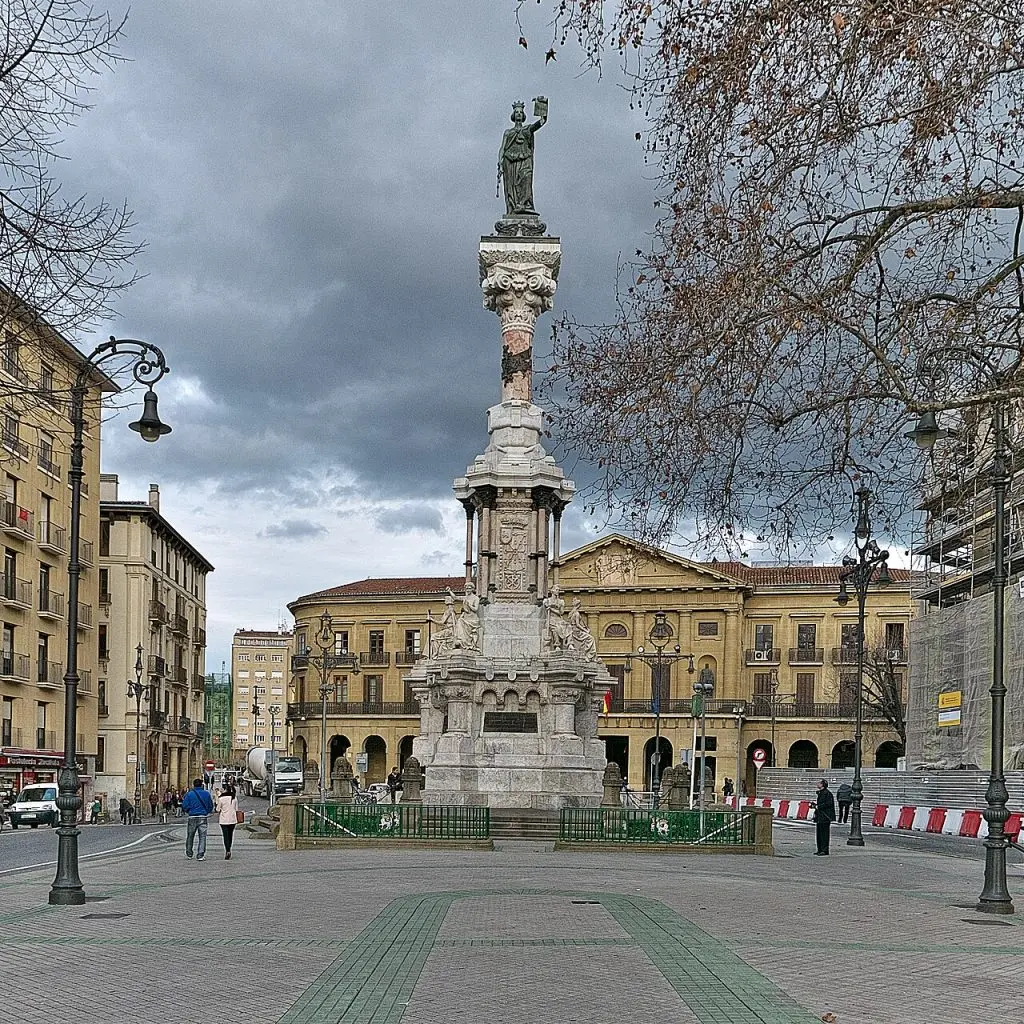
Pamplona
NavarraClimate
Daily budget
What to see in Pamplona: the must-sees
Pamplona packs an exceptional defensive legacy, a lively old town and a cathedral that alone justifies the trip into just a few kilometres. With 402,391 visitors a year (INE) and an average stay of 1.74 nights, the city lends itself to an intense getaway with no shortage of things to do.
Catedral de Santa María la Real
An impressive Gothic complex with one of the most beautiful cloisters in Europe, a space that leaves you speechless with the delicacy of its tracery and the serenity it conveys. The cathedral is open from 10:30 to 19:00 and requires a ticket, so plan your visit well so you don’t get left out. Inside, don’t miss the Occidens Exhibition, a permanent display that traces the history of Western culture through artistic pieces and historical documents, conceived from the essay ‘What is the West?’ by the philosopher Philippe Nemo. The central metaphor presents the West as a table supported by Athens, Rome, Jerusalem and the Germanic spirit, an idea that invites reflection as you wander through its rooms.
Museo de Navarra
It houses the main collection of art and history in Navarra, from prehistory to the present day, which makes it an essential stop to understand the region before or after strolling through its streets. It opens with split hours: from 09:30 to 14:00 and from 17:00 to 20:00. Its route lets you connect with pieces ranging from prehistoric tools to contemporary works, all in a building with a charm of its own.
Murallas and Ciudadela de Pamplona
One of the best-preserved defensive complexes of Renaissance origin in Europe, with 5 km of walls that embrace the old town and are now woven into the city’s daily life. Access is free 24 hours a day, which lets you explore them at your own pace, whether at dawn or dusk. Strolling along its bastions and moats is one of the most rewarding experiences in Pamplona, with ever-changing views over the historic neighbourhoods and the Arga river.
Plaza del Castillo
The nerve centre of the city, an arcaded square lined with cafés and historic buildings where locals meet, stroll and celebrate. Access is free 24 hours a day, so you can cross it at any time of day or night. It’s the best starting point to get your bearings in Pamplona and the perfect spot for a first coffee or a pintxo while watching the local comings and goings.
Parque de la Taconera
The oldest gardens in Pamplona, romantic and Versailles-inspired, with a small zoo that surprises anyone who isn’t expecting it. It’s open from 07:00 to 22:00, although the hours vary depending on the season. It’s a green haven ideal for escaping the urban bustle and strolling among sculptures, fountains and charming corners.
Casco Antiguo de Pamplona
A well-preserved historic quarter that includes cobbled streets, Baroque palaces, medieval churches and other artistic monuments.
Parque Yamaguchi
A Japanese-style garden that symbolises the twinning between Pamplona and the Japanese city of Yamaguchi.
Monumento al Encierro
It depicts the runners being chased by the bulls, freezing in bronze an instant of the run and conveying the tension, courage and dynamism of the moment; it is one of the most photographed monuments in the city.
Centro de Experiencias de San Fermín
An exhibition space dedicated to San Fermín and the tradition of the bull run, where the history and development of this festival of international tourist interest are explained through virtual and augmented reality.
Iglesia de San Saturnino
A historic church located in the old town, dedicated to San Saturnino (or San Cernin), patron saint of the city, with two tall towers that shape a distinctive landmark on the Pamplona skyline and thick walls that bear witness to its former role as a fortress during the disputes between the medieval boroughs.
Portal de Zumalacárregui
For centuries it was the main northern entrance to the city, especially for pilgrims on the Camino de Santiago; it retains its impressive original drawbridge, still operational, a testament to the city’s historic defensive system.
Baluarte de Labrit
A defensive bastion of Pamplona’s walled enclosure, located on the Magdalena front, one of the oldest sections of the entire walled perimeter, built in 1512 on the eastern side of the medieval wall of the Burgo de La Navarrería.
Recorrido del Encierro
The famous 875-metre route along streets such as the Cuesta de Santo Domingo and Estafeta.
Camino de Santiago a su paso por Pamplona
Pamplona forms part of the Camino de Santiago, declared a World Heritage Site.
🍂 Otoño
Si visitas Pamplona en otoño, el ambiente se vuelve más tranquilo y el clima empieza a refrescar. Es un buen momento para visitar el Museo de Navarra o el Palacio Arzobispal sin prisas. Lleva un paraguas plegable, porque las lluvias pueden aparecer de forma intermitente.
What to do in Pamplona
Pamplona offers a unique combination of living history, bar food, festivals with international reach and urban spaces made for walking. The city is best enjoyed on foot, unhurried, letting yourself be carried along by the atmosphere of the Old Town and the neighbourhoods around it.
If you happen to be there during Sanfermines, you’ll experience the city at its most intense: the encierro (bull run) covers 875 metres along streets such as the Cuesta de Santo Domingo and Estafeta, and the Centro de Experiencias de San Fermín lets you understand its history and development through virtual and augmented reality. Outside festival time, the perfect plan is a stroll along the walls at sunset, a visit to the Mercado de Santo Domingo to see fresh local produce and an afternoon of pintxos in the Old Town. Parque de la Taconera and Parque Yamaguchi offer two very different takes on urban nature: one romantic and Versailles-like, the other Japanese and symbolic.
Pamplona in a day: express itinerary
This itinerary lets you see the essentials of Pamplona in a full day, combining monuments, atmosphere and food without any rush.
- 09:30 — Catedral de Santa María la Real: Start the day calmly by visiting the Gothic cloister and the Occidens Exhibition. At that hour the light is perfect and there are no crowds yet.
- 11:30 — Casco Antiguo and Iglesia de San Saturnino: Wander the cobbled streets, discover Baroque palaces and head to the fortress church with its two emblematic towers.
- 13:00 — Plaza del Castillo and pintxos: Cross the arcaded square and sit at a terrace or step into a bar in the old town to try chistorra and pimientos del piquillo rellenos.
- 15:30 — Murallas and Ciudadela: Walk the 5 km of Renaissance walls, open access 24h. The stretch between the Portal de Zumalacárregui and the Baluarte de Labrit is especially evocative.
- 17:30 — Monumento al Encierro and Recorrido del Encierro: Photograph the bronze monument and walk the 875 metres of the route along the Cuesta de Santo Domingo and Estafeta to feel the tension of the run.
- 19:00 — Parque de la Taconera: End the day relaxing in the city’s oldest gardens, among fountains and the small zoo, before heading back to the centre for dinner.
Where to eat in Pamplona: local cuisine
Where to stay in Pamplona
Casco Antiguo
El centro histórico, lleno de bares de pintxos, monumentos y ambiente.
Ensanche
Zona comercial principal con arquitectura señorial, tiendas y una gran oferta gastronómica.
How to get to Pamplona
From Zaragoza, the fastest option is the train: 1 h 47 min (Intercity), 11 a day.
| From | Direct train | Direct bus | Car |
|---|---|---|---|
| Zaragoza | 1 h 47 min · 11/day Intercity | 2 h 17 min · 8/day Inter-Arriaga | 2 h 02 min 178 km |
| San Sebastián | 2 h 05 min · 1/day Intercity | 1 h 15 min · 12/day ALSA | 1 h 08 min 84 km |
| Madrid | 3 h 24 min · 7/day Intercity | — | 4 h 48 min 389 km |
| Bilbao | — | 2 h · 7/day Álavabus | 1 h 52 min 156 km |
| Logroño | — | — | 1 h 04 min 86 km |
| Vitoria-Gasteiz | 57 min · 6/day Intercity | 1 h 21 min · 8/day La Burundesa | 1 h 15 min 99 km |
| Soria | — | 2 h 15 min · 10/day ALSA, Conda | 2 h 14 min 172 km |
| Barcelona | 3 h 59 min · 4/day Intercity | — | 5 h 19 min 427 km |
| Lleida | 2 h 49 min · 4/day Intercity | — | 3 h 27 min 272 km |
| Tarragona | 3 h 22 min · 4/day Intercity | — | 4 h 27 min 406 km |
Direct trains and buses from the official timetables published by the operators on Spain's National Transport Access Point (a reference Wednesday); driving times from OpenStreetMap. Operators that do not publish their timetables may run more services. Check the timetable before you travel.
Getting around Pamplona
Pamplona is a compact city and very easy to explore on foot, especially the pedestrian centre. For longer journeys, the urban bus network covers the whole city and connects the neighbourhoods with the centre. If you arrive by car, bear in mind that the historic centre is mostly pedestrianised, so the most practical option is to leave your vehicle in a car park and get around on foot or by city bus.
Weather in Pamplona
Best time to visit Pamplona
Day Trips from Pamplona
Pamplona is an excellent base for exploring northern Spain. San Sebastián, Logroño and Bilbao are all within reasonable distance for a day trip, each with a very distinct personality.
- San Sebastián: A coastal city famous for its La Concha bay and its pintxos scene. Ideal for combining beach, seaside promenade and fine dining in a single day.
- Logroño: The capital of La Rioja, home to one of Spain’s most famous wine bar streets, Calle Laurel. Perfect for a day of wine and food.
- Bilbao: A city transformed by contemporary architecture, with a strong cultural offering and a lively old town. A good option to contrast with the Pamplona atmosphere.
Pamplona Curiosities You Never Knew
75,000 years of history beneath your feet. Stone tools have been found on the terraces of the Arga river that attest to human occupation of Pamplona for 75,000 years, long before any city existed.
A city razed by a war between neighbourhoods. In 1276, during the War of the Navarrería, the boroughs of San Nicolás and San Cernin joined forces against the Navarrería, which was completely razed. Today those three nuclei form the heart of the Old Town.
The Privilege of the Union turns 600. On 8 September 1423, King Charles III the Noble promulgated the Privilege of the Union, which integrated the three nuclei of Pamplona into a single indivisible community, laying the foundations of the city we know today.
2,100 years since its Roman founding. In 2025, 2,100 years will have passed since, according to the sources, the Roman consul Gnaeus Pompeius Magnus founded the Roman city of Pompelo in the year 75 BCE.
Traces of primitive amphibians in the Plaza del Castillo. In 1876, while strolling through the Plaza del Castillo, Alfonso de Aretillo y Larrinaga discovered pentadactyl footprints of enormous primitive amphibians on several flagstones, which were later moved to the Natural History Museum in Madrid.
San Fermín was born here. San Fermín de Amiens, co-patron of Navarra, was born in Pompaelo (Pamplona) around the year 272, long before his name became associated with the city’s most famous festival.
The Basque name for Pamplona, Iruña, appears to derive from the Basque word “Hiri”, translated as “city or town”, an etymology that connects directly with Navarrese identity.
Who Pamplona Is For
Pamplona is a city for history lovers, foodies and travellers who enjoy strolling without rushing. Couples will find romance in its walls at sunset and in the corners of the Old Town; families will appreciate the calm of the Ensanche and its parks; backpackers can stretch their budget with hostels and pintxos; and food enthusiasts will find everything from bar-top spots to Michelin-starred restaurants. If you’re looking for a party, Sanfermines is a unique experience, but outside those dates Pamplona also has plenty to offer.
💡 ¿Sabías que...?
- ● En las terrazas del río Arga se han hallado herramientas de piedra que atestiguan la ocupación humana de Pamplona desde hace 75.000 años. (https://es.wikipedia.org/wiki/Historia_de_Pamplona)
- ● En 1276, durante la Guerra de la Navarrería, los burgos de San Nicolás y San Cernin se unieron contra la Navarrería, que quedó completamente arrasada. (https://www.pamplona.es/turismo/murallas/historiadepamplona)
- ● El 8 de septiembre de 1423 el rey Carlos III el Noble promulgó el Privilegio de la Unión, que integró los tres núcleos de Pamplona en una sola comunidad indivisible. (https://www.pamplona.es/turismo/murallas/historiadepamplona)
- ● En 2025 se cumplen 2100 años desde que, según las fuentes, el cónsul romano Cneo Pompeyo Magno fundó la ciudad romana de Pompelo en el año 75 a.n.e. (https://www.pamplona.es/pamplona2100)
- ● El nombre euskérico de Pamplona, Iruña, parece derivarse del euskera «Hiri», traducido como «ciudad o villa». (https://es.wikipedia.org/wiki/Historia_de_Pamplona)
- ● En 1876, paseando por la plaza del Castillo, Alfonso de Aretillo y Larrinaga descubrió huellas pentadáctilas de enormes anfibios primitivos en varias losas, que luego fueron trasladadas al Museo de Ciencias Naturales de Madrid. (https://navarracapital.es/la-curiosa-y-casi-secreta-historia-de-las-huellas-de-dinosaurio-en-las-piedras-de-pamplona/)
- ● San Fermín de Amiens, copatrón de Navarra, nació en Pompaelo (Pamplona) alrededor del año 272. (https://es.wikipedia.org/wiki/Ferm%C3%ADn_de_Amiens)
Frequently asked questions about Pamplona
How many days do I need to see Pamplona?
With 1-2 days you can see the essentials: the Cathedral, the Casco Antiguo (Old Town), Plaza del Castillo, the city walls and a museum or two. If you want to take day trips to San Sebastián, Logroño or Bilbao, add at least 3-4 days. The current average stay is 1.74 nights (INE), which confirms that most people visit as a short break.
Is Pamplona expensive?
Not particularly. An average meal costs €15-25, a hostel between €25-40 per night, a 3-star hotel between €70-120 and a 4-5 star hotel between €120-250. The pintxos in the Casco Antiguo are a cheap and delicious way to eat well without spending much.
What is the best time to visit Pamplona?
From May to September, with an average summer temperature of 22°C (AEMET). Spring and summer are ideal for terraces, the city walls and parks. Winter (November to February) is the worst time, with averages of 6°C, although the stew-based cuisine makes up for it if you don’t mind the cold. July is the month of Sanfermines, but it requires booking well in advance.
How do I get to Pamplona from Madrid?
Pamplona has a direct train connection with Madrid (no AVE) and also by bus with companies such as Alsa or Conda. By car, access is via the AP-15 and other roads such as the A-12 or the A-21. Pamplona-Noáin airport (PNA) is 6 km from the centre, although for domestic journeys the train or bus are usually the most practical options.
For more practical information on opening times, tickets and an up-to-date calendar, see the official Pamplona tourism website.
🗺️ Rutas desde Pamplona
- How to Get from Pamplona to Bilbao: Distance, Train, Bus and Car
- How to Get from Bilbao to Pamplona: Distance, Train, Bus and Car
- How to Get from Pamplona to Zaragoza: Distance, Train, Bus and Car
- How to Get from Zaragoza to Pamplona: Distance, Train, Bus and Car
- How to Get from Pamplona to Madrid: Distance, Train, Bus and Car
- How to Get from Madrid to Pamplona: Distance, Train, Bus and Car
- How to Get from Logroño to Pamplona: Distance, Train, Bus and Car
- How to Get from Pamplona to Logroño: Distance, Train, Bus and Car