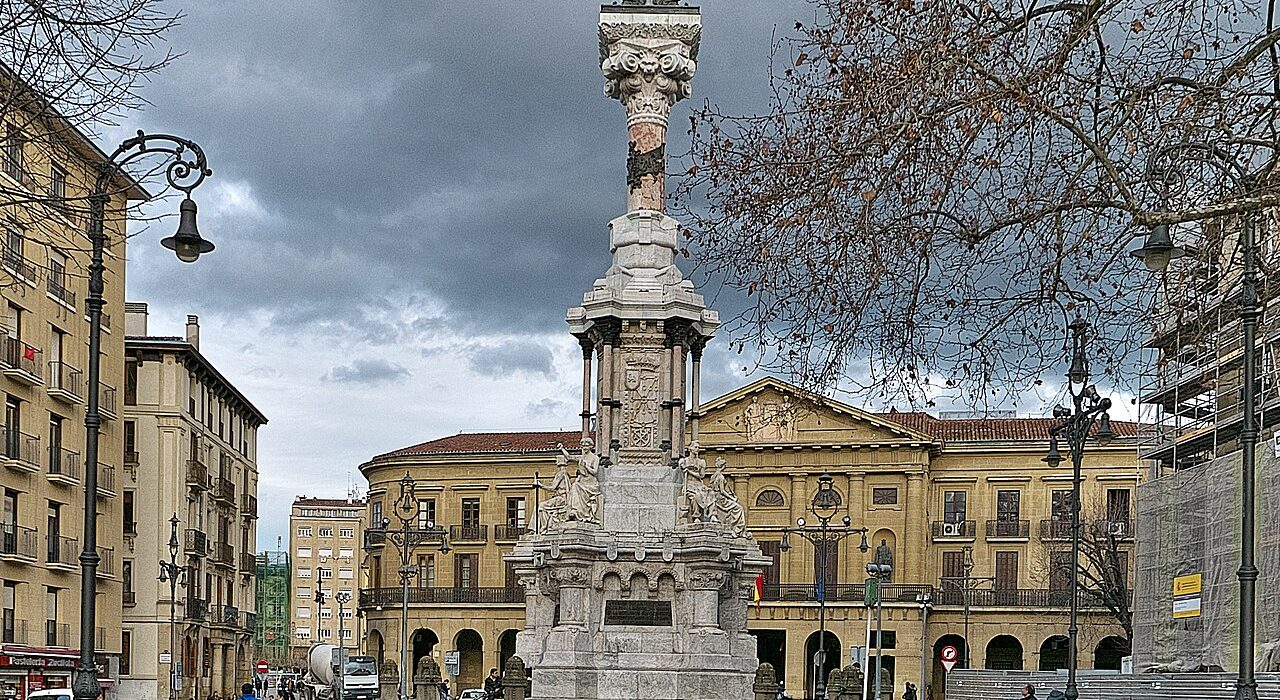
San Sebastián → Pamplona
78 kmCrossing from the salty breeze of La Concha Bay to the green heart of Navarre is one of the most rewarding experiences in northern Spain. This journey isn’t just a 78-kilometer transfer; it’s a trip that takes you from the coastal elegance of San Sebastián to the historic vitality of Pamplona, traversing river valleys and towns with their own distinct personality in under an hour if you choose the road.
How to Get from San Sebastián to Pamplona: Quick Overview
To travel between these two Basque capitals, you have three main options, each with clear advantages depending on your travel style. If you’re looking for total freedom and want to explore the villages along the way, the car is the top choice, covering the distance in just 55 minutes. On the other hand, if you’d rather not worry about driving and want to save money, the ALSA bus is the most balanced alternative, with a 75-minute journey and very competitive prices. The train does exist, operated by Renfe, but its service is very limited (only one train per day), so it requires strict planning. For most travelers seeking flexibility, the recommendation is the car or the bus.
Driving from San Sebastián to Pamplona
The driving route is the fastest and most direct way to connect San Sebastián with Pamplona, allowing you to cover the 78 km distance in an estimated time of 55 minutes. The main advantage of this route is that it runs entirely on toll-free highways, meaning you won’t have to stop at any toll booths, saving you time and money. The main route follows a logical path that skirts the city and heads inland.
The journey begins by taking the A-15, known as the Iruñeko mendebaldeko sahiesbidea (Western Pamplona Bypass). This road allows you to leave the Donostia metropolitan area while avoiding the heavy traffic of the city center. Once past this initial section, the route continues by connecting with the A-10, or Sakanako autobia (Sakana Highway), which is the backbone that takes you south, deep into the geography of Navarre. Finally, to reach your destination, you’ll use the A-12, or Donejakue Bidearen autobia (Way of St. James Highway). It’s important to note that all these roads (A-12, A-10, and A-15) are toll-free highways, making the car journey very economical in terms of road infrastructure costs, with fuel being your only expense.
Taking the Train from San Sebastián to Pamplona
The train service between San Sebastián and Pamplona is operated exclusively by Renfe, using ALVIA high-speed trains. However, it’s crucial to know that the frequency is extremely low: there is only 1 train per day available for this route. The travel time is 125 minutes, which is considerably slower than going by car or bus. The departure station is San Sebastián/Donostia and the arrival station is Pamplona/Iruña.
Due to the scarce frequency, the schedule is very rigid. The first and only train of the day leaves at 6:53 in the morning, and since it’s the sole service, this also coincides with the last train’s schedule. This means that if you miss this train, you won’t have another direct rail option until the following day. It’s a valid choice only if your schedule perfectly aligns with this early departure and you prefer the comfort of the railway over the speed of the road.
By bus from San Sebastián to Pamplona
The bus is arguably the most sensible option for non-drivers, offering a perfect balance between price and journey time. The company operating this service is ALSA, which guarantees a direct trip between the two cities. The journey takes 75 minutes, just 20 minutes longer than by private car, which is very efficient considering you won’t have to worry about parking in Pamplona.
As for cost, prices range from €6 to €13, depending on how far in advance you book and current demand. This price range makes it the most economical option if you’re not sharing a car, beating the cost of fuel and wear and tear on your own vehicle for a solo traveler. ALSA buses are generally very comfortable, allowing you to work or rest during the journey.
Recommended stops along the way
Although the direct route is fast, the area is full of charming towns that are well worth a visit if you decide to rent a car or take a more leisurely trip. Here are the verified stops to enrich your journey:
- Hendaye: Though technically just across the French border, it’s a classic stop for those coming from the north or wanting to start the trip with an international flair. Its long sandy beach and marina are ideal for stretching your legs before heading into Spain.
- Hernani: Located very close to San Sebastián, Hernani is known as the birthplace of sculptors like Eduardo Chillida. It’s a town with a charming old quarter and privileged views of Mount Aralar, perfect for a brief cultural stop.
- Pasaia: This is one of the most picturesque fishing ports on the Cantabrian coast. Crossing the estuary in the small traditional boat (txalupa) to reach the San Juan district is an essential experience. Its cobbled streets and colorful houses are a movie set come to life.
- Errenteria: A town with a rich industrial history that has managed to retain its identity. It’s a strategic point in the Bidasoa valley and boasts several parks and green areas ideal for a quick break.
- Irun: The quintessential border city, Irun is the last Spanish municipality before France. It’s a vibrant place, full of shops and with a powerful food scene. It’s a logical stop if you need to refuel or do some last-minute shopping before leaving the coast.
- Lasarte-Oria: World-famous for its high-end gastronomy (home to Michelin-starred restaurants), Lasarte-Oria is also a peaceful spot beside the Oria River. It’s the perfect place to stop for a quality meal before continuing towards Navarre.
- Andoain: Known as the “villa del Bidasoa” (Bidasoa town), Andoain combines industrial tradition with a strong commitment to culture and sport. Balda Park is an excellent green lung for a walk and a break from the highway traffic.
Where to Sleep in Pamplona
When you arrive in Pamplona, you have several strategic areas to choose your accommodation based on your budget and what you want to do. The most popular and atmospheric option is the Casco Antiguo (Old Town). Sleeping here puts you in the center of the action, surrounded by pintxos bars, the Cathedral, and the Plaza del Castillo (Castle Square). It is ideal for experiencing the essence of the city, although prices can be somewhat higher and nighttime noise is common on weekends.
For those seeking tranquility and more modern buildings, the Ensanche (or Segundo Ensanche, the city’s expansion district) is the recommended area. It is the commercial and residential zone par excellence, with wide streets, shops, and a great selection of chain hotels and tourist apartments. Prices here tend to be mid-range. Finally, if you are traveling by car and looking to save, the peripheral areas near the city entrances or close to the Citadel offer more economical options, although you will need to use public transport or walk further to reach the historic center.
Frequently Asked Questions about the San Sebastián-Pamplona Route
How long does it take to get from San Sebastián to Pamplona?
The time varies depending on the transport: by car it takes 55 minutes covering 78 km. By bus, the journey takes 75 minutes. If you choose the ALVIA train by Renfe, the trip is longer, with a duration of 125 minutes.
Which is cheaper, the train or the bus?
The bus is generally the most economical and flexible option. ALSA tickets range from €6 to €13. The train, being a unique high-speed service (ALVIA) with low frequency, usually has less competitive fares for this short journey and a low range like the bus is not specified.
Is it worth renting a car?
Yes, it is worth it if you plan to visit the recommended stops such as Pasaia, Hernani, or Lasarte-Oria, as public transport does not stop at all these points directly on a single journey. Additionally, the car is the fastest option (55 min) and the highways (A-15, A-10, A-12) are all toll-free.
When is the best time to travel?
If you travel by train, you are obliged to travel at 6:53 in the morning, as it is the only train available (first and last at the same time). For car or bus, avoid peak entry times into Pamplona on weekdays, although the 78 km route is smooth for most of the day.
📍 También te puede interesar
Qué ver en San Sebastián →
Qué ver en Pamplona →