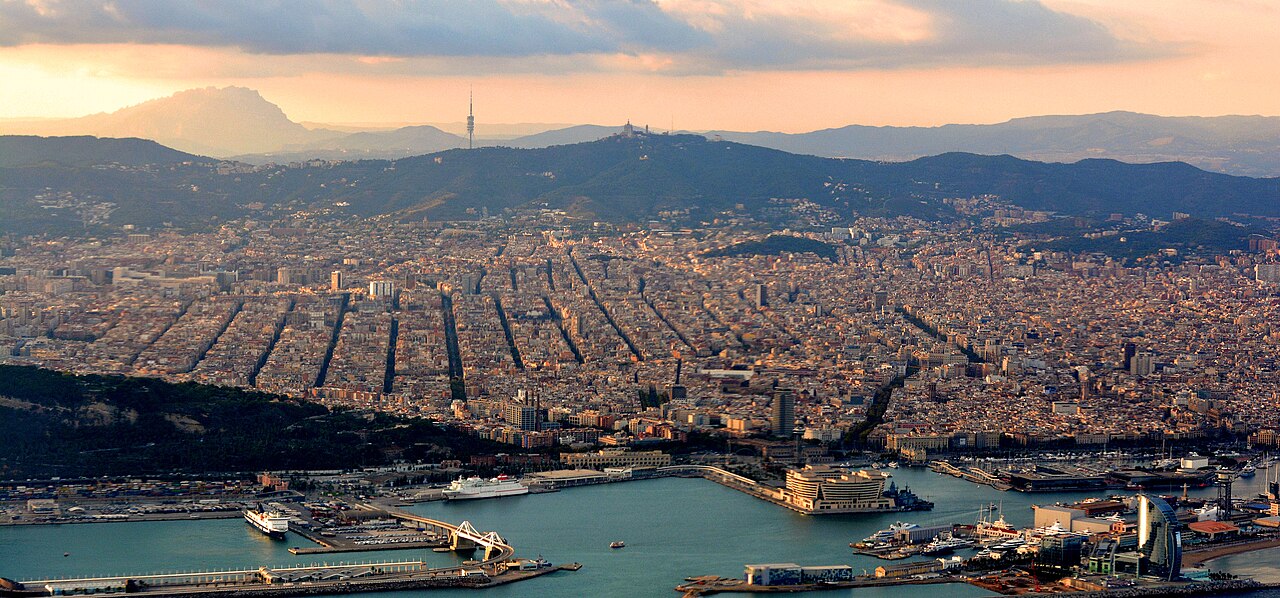
San Sebastián → Barcelona
543 kmImagine leaving the Atlantic mist of the north behind and, in just a few hours, finding yourself bathed in the Mediterranean light of Catalonia. This journey is not just a transfer from point A to point B; it is a crossing through the heart of the Pyrenees and the Ebro Valley, offering a vibrant mix of green and arid landscapes that shift before your eyes as you make your way towards the Ciudad Condal (Count’s City).
How to get from San Sebastián to Barcelona: a quick overview
The best option depends entirely on whether you prioritize freedom of movement or the convenience of public transport. If you are looking for the fastest and most direct experience without worrying about traffic, the Renfe ALVIA train is your choice, although there is only one daily departure. However, if you prefer total flexibility to stop wherever you like and enjoy a toll-free route, the car is the winning option, with an estimated driving time of 5 hours and 30 minutes. For travelers on a tighter budget, the bus offers an economical alternative, though the journey time is considerably longer.
By car from San Sebastián to Barcelona
The total distance to cover is 543 kilometers and the estimated driving time is 5 hours and 30 minutes via a completely toll-free road network. The highlight of this route is that you can do the entire trip without spending a single euro on tolls, using a strategic combination of motorways and national roads that connect the Basque Country, Navarre, Aragon, and Catalonia. The journey begins by heading into the Basque and Navarrese motorway network and then follows the course of the Ebro River to your final destination.
To make this trip successfully, you will need to familiarize yourself with a series of main roads that form the skeleton of the route. Initially, the drive will take you along the A-12 (Donejakue Bidearen autobia) and the A-15 (Autovía de Navarra), which will lead you away from the Basque coastal area and inland. As you progress, you will connect with the A-10 (Sakanako autobia) and subsequently the N-122, a national road that historically linked Zaragoza with Portugal, though on this stretch it serves as a vital link towards the east.
Once in the Ebro basin, the backbone of your journey will be the A-68 (Autovía del Ebro). This road is essential for crossing Aragon from west to east. On certain sections or alternative routes, you might encounter the N-232 or the A-23 (Autovía Mudéjar), which offer parallel connections or access to different industrial and rural areas. The route continues to evolve into Catalonia via the A-22 (Autovía del Camino Catalán) and the A-14 (Autovía de la Ribagorça), modern highways that facilitate access to the Catalan region from the west.
Finally, to enter the Barcelona metropolitan area, the road system branches out. You can use the A-2 (Autovía del Nordeste), which is the main access route from the interior. Other connection options include the A-21 (Pirinioetako autobia) if you are coming from the north, or more specific access roads like the A-27 (Autovía Tarragona-Montblanc). For the final approaches to the city, the national roads N-152 and N-152z, as well as the N-141, are verified options for reaching specific points in the Catalan capital without additional toll costs.
From San Sebastián to Barcelona by Train
The train is the fastest option available according to official data, with a journey time of 376 minutes operated exclusively by Renfe. This service uses ALVIA category trains, which combine the comfort of a long-distance train with the ability to run on different track gauges, although on this specific route the speed is constant and reliable. It is important to note that the frequency is very limited, with only 1 train available per day, so planning is crucial.
The departure time is fixed: the first and only train of the day leaves at 6:53 a.m. from the origin station, San Sebastián/Donostia. This means you need to be at the station well in advance so as not to miss the sole daily connection. The train arrives at its final destination, Barcelona-Sants station, the city’s main transport hub, leaving you perfectly connected to the metro and other urban transport the moment you step off the carriage. Being an ALVIA service, you can expect a level of comfort superior to a standard regional train, ideal for working or resting during the more than 6-hour journey.
From San Sebastián to Barcelona by Bus
The bus is the most economical alternative for travelling between these two cities, with fares ranging from €34.97 to €74.17 depending on how far in advance you book. The companies operating this route are FlixBus and MonBus, two operators known for their extensive networks and competitive prices. Although the saving on the ticket is significant, you should bear in mind that the journey duration increases considerably to 440 minutes, that is, about 7 hours and 20 minutes on the road.
This option is ideal for backpackers or those who are in no rush to arrive and prefer to save that money to spend on experiences in Barcelona. As it is a direct journey, you won’t have to make any transfers, which adds convenience to the trip despite the longer duration. The buses usually have WiFi and power sockets, making the travel time more pleasant for watching series or working, turning the nearly 7 and a half hours into productive or leisure time before arriving in the Ciudad Condal (the city of Barcelona).
Recommended stops along the way
If you decide to drive, the route is dotted with charming towns that deserve a pause to stretch your legs and soak up the local culture. Below, we detail the verified stops you can include in your itinerary to break up the monotony of the road.
- Foix: A historic stop perfect for lovers of medieval architecture. Foix is known for its imposing castle that watches over the town from above, offering incredible panoramic views of the region.
- Hendaye: Located right on the border, Hendaye is the last French town before fully embarking on the journey eastwards. It is famous for its fine sandy beach and seafront promenade, ideal for a brief breather by the sea.
- Tarbes: Capital of the Hautes-Pyrénées, Tarbes offers a tranquil atmosphere and beautiful gardens such as the Massey Garden. It is a strategic point if you want to feel the proximity of the high mountains without straying too far from the main route.
- Saint-Gaudens: This town offers a discreet charm with its collegiate church and its privileged location on the banks of the Garonne River. It is an excellent place for a quiet lunch away from the hustle and bustle of big cities.
- Castelnaudary: Known worldwide as the capital of Cassoulet, this stop is a must for food lovers. Its port on the Canal du Midi is a lovely place to stroll and watch the barges.
- Lourdes: Internationally famous for its Marian sanctuary, Lourdes is a vibrant city full of history and faith. Even if you are not religious, the basilica and the fortified castle overlooking the valley are impressive.
- Pau: An elegant city with a beautiful boulevard offering direct views of the Pyrenees mountain range. It is the perfect place to enjoy a coffee with views of the snow-capped peaks.
- Limoux: Known for its sparkling wines and its carnival, Limoux is a gem in the Aude department. Its main square is one of the largest in France and is well worth a stroll.
Where to sleep in Barcelona
Barcelona offers a diversity of areas to stay that suit all travel styles, from luxury to tight budgets. There is no need to book a specific hotel by name; rather, choose the neighbourhood that best fits your visit plan. For those looking to be in the heart of the action and close to major attractions like La Rambla and the Mercado de la Boquería (Boqueria Market), the Barrio Gótico (Gothic Quarter) and Raval are the ideal areas, although they can be noisier at night.
If you prefer a quieter yet equally central experience, the Eixample district is the recommended area. Here you will find Gaudí’s Modernista architecture, such as the Sagrada Familia and La Pedrera, surrounded by shops, restaurants, and a sophisticated nightlife. Prices in this area tend to be in the mid-to-high range. On the other hand, if you are travelling on a tighter budget or looking for a more bohemian and youthful atmosphere, the neighbourhood of Gràcia or the areas near Sants (close to the train station) offer hostel and tourist apartment options at more competitive prices, while maintaining a good metro connection to the rest of the city.
Frequently asked questions about the San Sebastián–Barcelona route
How long does it take to get from San Sebastián to Barcelona?
The time varies depending on the mode of transport: by car it takes 5 hours and 30 minutes, the ALVIA train journey lasts 376 minutes (approximately 6 hours and 16 minutes), and by bus the trip stretches to 440 minutes (7 hours and 20 minutes).
Which is cheaper, the train or the bus?
The bus is considerably cheaper, with prices ranging from €34.97 to €74.17 with companies like FlixBus and MonBus, while the ALVIA train, being a premium service with just one daily departure, usually has higher fares that fall outside the bus’s budget range.
Is it worth renting a car?
Yes, it’s worth it if you value freedom, as the 543 km route is completely toll-free and allows you to visit incredible stops like Foix, Lourdes or Pau, something you couldn’t do with the train’s single daily departure or the bus’s fixed schedule.
When is the best time to travel?
The best time depends on your goal: if you’re travelling by train, you’ll need to plan around the only daily departure at 6:53; if you’re driving, avoid peak hours on the A-2 and A-68 motorways to keep the journey to 5h 30min, especially in summer or on public holidays.
📍 También te puede interesar
Qué ver en San Sebastián →
Qué ver en Barcelona →