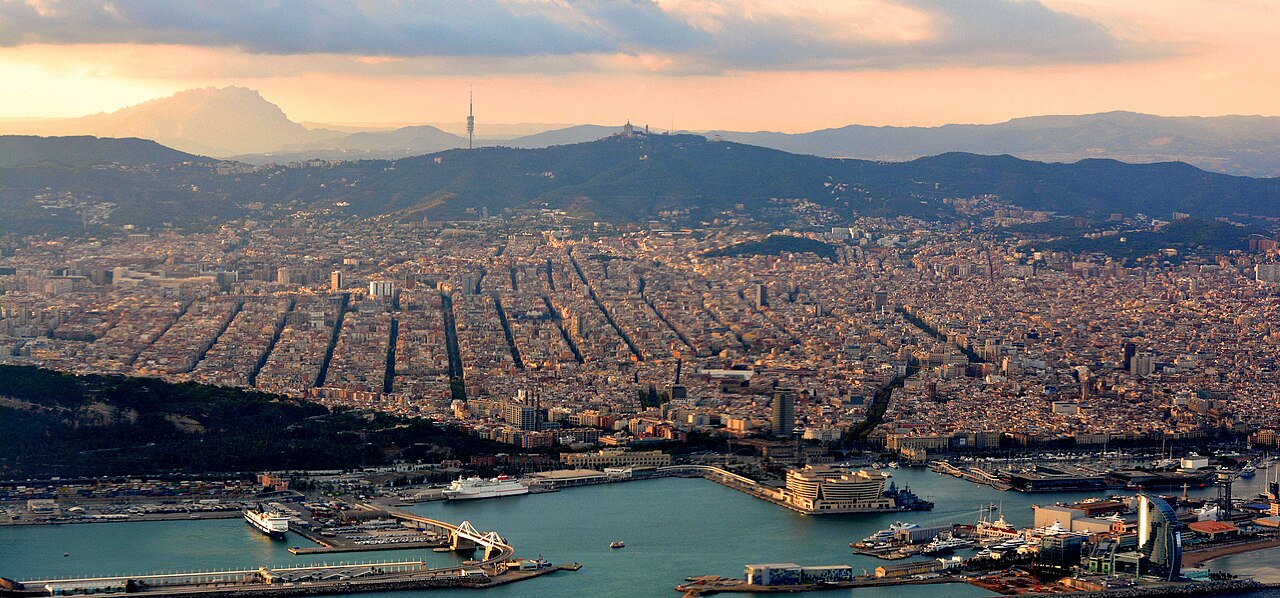
Granada → Barcelona
870 kmLeaving behind the peaks of the Sierra Nevada to venture into the Mediterranean plain is one of the most fascinating landscape transitions you can experience on the Iberian Peninsula. This journey is not just a trip of nearly 900 kilometres, but a bridge between two vibrant cultures where Moorish history fuses with Catalan avant-garde, whether you feel the speed beneath your feet on the AVE or discover hidden corners through your car’s windscreen.
How to Get from Granada to Barcelona: Quick Overview
The fastest way to travel is by AVE train, while driving offers the greatest freedom to explore the coast and the interior.
If your priority is efficiency and time, the Renfe high-speed train is the undisputed choice, covering the distance in just over six and a half hours. On the other hand, if you are travelling with bulky luggage, in a group, or simply enjoy driving, the car allows you to set your own pace, although you will need to dedicate almost nine hours to actual driving. For budget-conscious travellers, the bus represents the economical alternative, though it means sacrificing many hours of travel in favour of a more affordable price.
By Car from Granada to Barcelona
The total distance by road is 870 km and the estimated driving time is 8 hours and 45 minutes, excluding stops.
Driving between these two cities allows you to traverse a modern and generally smooth-flowing network of dual carriageways, made up of multiple sections connecting the south with the Levante region and the northeast. According to route data, the journey relies on a varied infrastructure that includes the A-7 (Autovía del Mediterráneo) and the A-2 (Autovía del Nordeste), which are the backbones of this longitudinal trip. Depending on the variant you choose or traffic conditions, you might travel along the A-31 (Autovía de Alicante) or connect with the A-3 (Autovía del Este) and the A-43 (Autovía del Guadiana) if your route deviates slightly inland.
Other important roads that form part of the connection network for this journey are the A-30 (Autovía de Murcia) and the A-4 (Autovía del Sur), essential for leaving the Andalusian region. On more specific or alternative stretches, the route may involve the N-232, the A-15 (Autovía de Navarra), or the A-35 (Autovía Almansa-Játiva). You may also drive on sections of the A-1 (Autovía del Norte), the A-27 (Autovía Tarragona-Montblanc), the A-23 (Autovía Mudéjar), the A-33 (Autovía del Altiplano), and the A-32 (Autovía Linares-Albacete). The most important thing for the driver is that the vast majority of these listed dual carriageways are toll-free, meaning the cost of tolls is not a determining factor on this trip, allowing you to enjoy economical driving in terms of road infrastructure.
By Train from Granada to Barcelona
The operator Renfe offers a direct AVE service with a duration of 388 minutes and a frequency of one train per day.
This is the premium option for those who value time above all else. The High-Speed service departs directly from Granada station and has its final destination at Barcelona-Sants station, the great transport hub of the Catalan capital. It is crucial to plan ahead because the frequency is limited: according to current schedules, only 1 train is available per day. Both the first and last train of the day leave at 15:30, meaning you have a single daily departure window. During those 388 minutes of travel, you can work, read, or rest without the fatigue of driving, arriving in Catalonia refreshed and ready to start your visit.
By bus from Granada to Barcelona
ALSA and FlixBus operate direct routes lasting 900 minutes, with prices ranging from 61 to 75 euros.
If budget is your main concern, the bus is the most affordable alternative, though it requires patience. The journey is considerably longer than by train or car, stretching up to 900 minutes, which equals 15 hours of travel. However, the comfort of modern buses has improved greatly, and the financial savings are significant. With a price range of 61 to 75 euros, you can save a considerable amount of money that you could invest in experiences once you arrive in Barcelona. It’s an ideal option for students or travelers who are not in a hurry and prefer to avoid the stress of traffic or booking train tickets in advance.
Recommended stops along the way
Breaking the journey into stages is the best strategy to enjoy the scenery and avoid fatigue, and these are the verified stops to do so.
If you decide to make the trip by car, you have the opportunity to turn the journey into a sightseeing route in itself. Here are the key points where it’s worth stopping:
- Alacant / Alicante: A classic stop on the coast. It’s the perfect place to stretch your legs by the sea, soak up a vibrant Mediterranean atmosphere, and perhaps grab a bite near the port before resuming the route north.
- Garrucha: Located on the Almería coast, this fishing town offers a tranquil contrast. It’s ideal if you’re looking for a more authentic and less crowded stop, famous for its red prawns (gambas rojas) and its relaxed seafront promenade.
- Huércal-Overa: Situated inland in Almería, this town serves as an important transport hub. It’s a strategic stop to refuel or grab a quick coffee in a drier, mountainous setting before entering the Valencian Community.
- Albacete: The capital of the La Mancha plain is a fundamental geographical landmark. Known for its cutlery-making culture and pedestrian streets, it’s an excellent midway point to stay overnight or take a long break to eat local dishes.
- Torrevieja: Another gem on the Alicante coast. If your route passes nearby, its famous colorful salt lagoons and its Paseo de la Libertad (Liberty Promenade) offer a visual break very different from the highway asphalt.
- València: Spain’s third-largest city is a must-stop if you have time. You can combine culture (City of Arts and Sciences) with gastronomy (paella) and breaking, making the journey from Granada to Barcelona have a memorable highlight.
- La Solana: In the heart of the province of Ciudad Real, this stop connects you with the essence of La Mancha. It’s a quiet place, ideal for a quick technical stop and observing the area’s traditional architecture.
- Manzanares: Famous for its literary connection to Don Quixote and its cheeses. Stopping here means immersing yourself in Cervantine history and tasting high-quality local products before continuing east.
Where to sleep in Barcelona
The most recommended areas to stay are the Eixample, the Barrio Gótico (Gothic Quarter) and Gràcia, depending on your budget and travel style.
Once you arrive at your destination, choosing the right area is vital. The Eixample is ideal if you are looking for comfort, shops and good transport connections, with a range of mid-range and high-end hotels. The Barrio Gótico and Born are perfect for those who want to be in the historic centre, surrounded by monuments and nightlife, although prices tend to be higher and rooms smaller. On the other hand, Gràcia offers a more bohemian, neighbourhood atmosphere, with more varied accommodation prices and a large number of local restaurants. You don’t need to book a luxury hotel to enjoy the city; there is a wide range of hostales (guesthouses) and tourist apartments to suit different budgets in all these areas.
Frequently asked questions about the Granada-Barcelona route
How long does it take from Granada to Barcelona?
The time varies depending on the transport: by car it is 8 hours and 45 minutes, by AVE train it is 388 minutes (approx. 6 hours and 28 minutes), and by bus it is 900 minutes (15 hours).
Which is cheaper, the train or the bus?
The bus is considerably cheaper, with prices between 61 and 75 euros on companies like ALSA or FlixBus, while the AVE train, being the fastest means, usually has higher fares that are not specified in a range but exceed the bus option.
Is it worth renting a car?
Yes, it is worth it if you plan to make tourist stops in cities like Albacete, Valencia or Alicante, as you have total freedom of schedule, unlike the train which only has one daily departure at 15:30.
When is the best time to travel?
The best time depends on your climate preference, but as it is an 870 km route that crosses from the inland south to the Mediterranean coast, spring and autumn offer more pleasant temperatures for driving or waiting on platforms.
📍 También te puede interesar
Qué ver en Granada →
Qué ver en Barcelona →