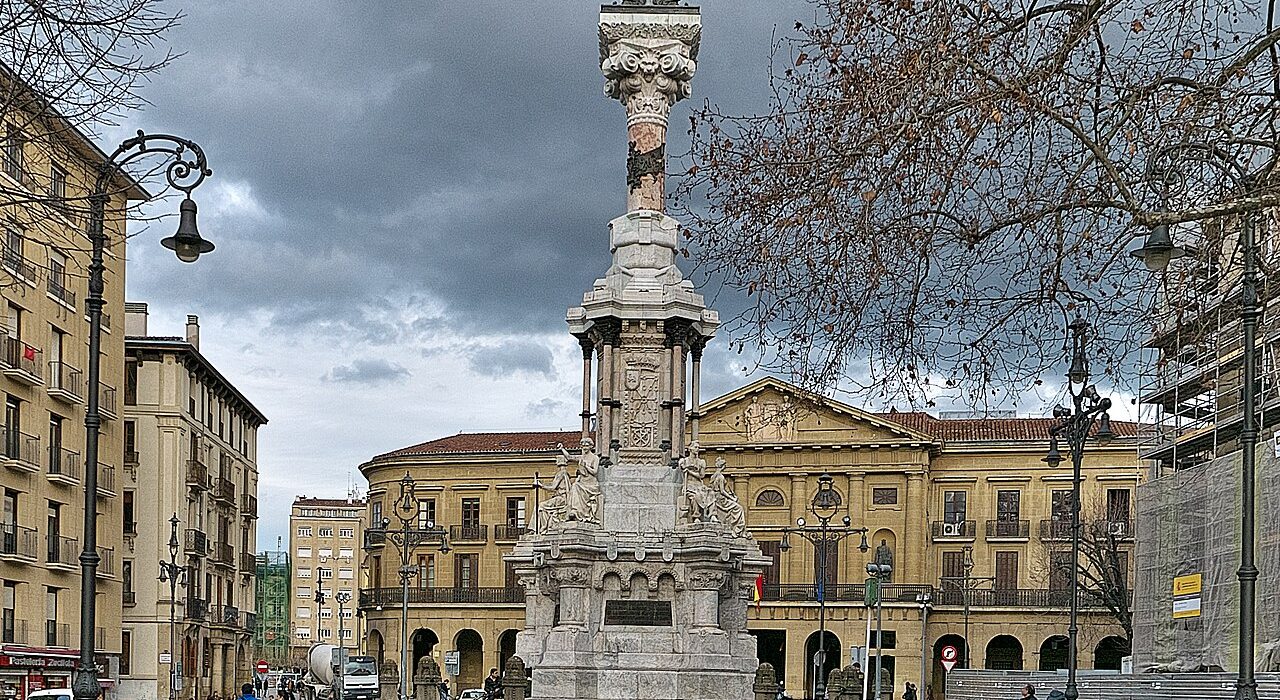
Madrid → Pamplona
410 kmImagine swapping the bustle of the capital for the coolness of the north in just a few hours, crossing landscapes that shift from the golden plains of the Meseta to the green valleys of Navarre almost without noticing. This journey is not just a transfer; it’s a geographical and cultural transition where the speed of the Alvia train competes with the freedom of the open road, offering you the chance to stop in towns with a thousand years of history or head straight to your destination to enjoy the pinchos.
How to Get from Madrid to Pamplona: Quick Overview
The best way to travel from Madrid to Pamplona depends entirely on whether you prioritize speed or flexibility, with three main verified options: the Alvia train to arrive in under 3 and a half hours, a car to enjoy the scenery in 4 hours and 15 minutes, or the bus for the most economical choice. If you are looking for absolute comfort and speed, the train is the undisputed winner; however, if you plan to go sightseeing along the way or move around freely once you are there, a private vehicle is the logical choice for this 410-kilometer journey.
By Car from Madrid to Pamplona
Driving from Madrid to Pamplona means covering a distance of 410 kilometers, which is completed in an estimated time of 4 hours and 15 minutes. The main route relies on the northern highway network, specifically using the A-1 (Autovía del Norte) and the A-15 (Autovía de Navarra), both included in the list of toll-free roads available for this journey. Although the Spanish road system has an extensive network that includes the A-5, A-11, A-2, A-3, A-13, A-12, A-4, A-68, A-21, A-6, A-73, A-62, and A-42, for this specific trip the driver will focus on the highways connecting the center with the north of the peninsula. The advantage of this route is that, according to verified road data, you will not find tolls on the main highways like the A-1 or the A-15, which significantly reduces the cost of the trip compared to other toll routes. It is a comfortable drive, with good asphalt conditions that allow you to maintain a steady speed, ideal for travelers who enjoy driving and want to have total control over their departure and arrival schedule.
By Train from Madrid to Pamplona
The train is the fastest option for connecting Madrid and Pamplona, with a travel time ranging between 204 and 218 minutes depending on the service chosen. Operated by Renfe, this service has a frequency of 7 daily trains, offering great flexibility to adapt the trip to your plans. The star service is the ALVIA, which completes the journey in approximately 204 minutes and has 6 departures a day, being the preferred option for most travelers for its balance between speed and comfort. There is also an Intercity option with 1 daily departure that takes 214 minutes. All connections originate at Madrid Puerta de Atocha – Almudena Grandes station and arrive directly at Pamplona/Iruña station. The first train leaves at 7:32 in the morning, perfect for making the most of the day at your destination, while the last available train departs at 19:39, allowing business travelers or tourists to take care of morning tasks in the capital before leaving. The onboard experience on the Alvia is often highly valued for the smoothness of the journey and the possibility of working or resting during the nearly 3 and a half hours of travel.
How to get from Madrid to Pamplona by bus
The bus is the most affordable way to travel between these two cities, with a ticket price ranging from 28 to 29 euros. The company that operates this direct service is ALSA, a major carrier with an extensive network across Spain. Although the journey time is longer than the train or car, clocking in at 320 minutes (approximately 5 hours and 20 minutes), the value for money is outstanding. This option is ideal for budget-conscious travellers or students who don’t mind trading a bit of time for significant savings on transport. ALSA buses typically feature basic comforts such as air conditioning and reclining seats, making the trip across the central plateau and into the northern valleys quite bearable.
Recommended stops along the way
If you decide to drive, the route is dotted with charming towns that are well worth a pause to stretch your legs or sample the local gastronomy. Here are the verified stops you shouldn’t miss:
- Vitoria-Gasteiz: The capital of the Basque Country, this is a perfect strategic stop at roughly the halfway point. Its medieval quarter (Casco Medieval) and pedestrianised streets make it a haven of peace, ideal for a leisurely lunch before continuing on towards Navarre.
- Tudela: Once in Navarrese territory, Tudela offers a fascinating architectural contrast and is renowned for its fertile market gardens (huerta). It’s the perfect place to sample local produce before reaching the capital.
- Alfaro: Located in La Rioja, this town is famous for its pottery and history. Stopping here allows you to discover a cultural heritage that is far less crowded than that of larger cities along the route.
- Haro: The wine capital of Rioja. Although it’s a slight detour from the main motorway, it’s a must-stop for wine tourism enthusiasts, offering centuries-old wineries and a vibrant atmosphere in its squares.
- Lardero: A point of interest near Logroño that serves as an excellent rest area. Its facilities and proximity to the Riojan capital make it a handy spot to refuel or grab a quick coffee.
- Nájera: Known for its monastery and its links to the Camino de Santiago (Way of St. James), Nájera offers an enriching cultural break. It’s a place where medieval history can be felt on every corner.
- Santo Domingo de la Calzada: Another gem on the Camino de Santiago. Its cathedral and the legend of the rooster make this stop a unique experience, blending spirituality and traditional tourism in a beautifully maintained setting.
Where to stay in Pamplona
Upon arriving in Pamplona, you’ll find a varied range of accommodation to suit different budgets and travel styles, though this guide does not recommend specific hotel names. The most popular areas to stay are the Casco Antiguo (Old Town), where you’ll have the best tapas restaurants and a lively street atmosphere right on your doorstep, and the Segundo Ensanche (Second Expansion District), which is quieter and features wide avenues and parks. As for accommodation types, the city offers everything from standard chain hotels to family-run guesthouses (pensiones) and tourist apartments. Price ranges vary considerably depending on the time of year; outside of the Sanfermines festival, prices are moderate and accessible, while during the July festivities demand skyrockets. If you don’t have a car, it’s advisable to look for accommodation with good connections to the centre, as the city is very walkable but distances to the outskirts may require public transport.
FAQs about the Madrid-Pamplona route
How long does it take to get from Madrid to Pamplona?
Travel time varies depending on the mode of transport: by car it takes 4 hours and 15 minutes, by Alvia train between 204 and 218 minutes, and by bus approximately 320 minutes.
Which is cheaper, the train or the bus?
The bus is significantly cheaper, with prices between 28 and 29 euros according to ALSA, while the Alvia train, though faster, usually has higher fares that exceed the bus option, though they are not set within a fixed range.
Is it worth renting a car?
Yes, it is worth it if you plan to visit recommended stops like Haro, Nájera, or Vitoria-Gasteiz, as the car gives you total freedom to explore the 410 km route at your own pace without depending on fixed schedules.
When is the best time to travel?
The best time to travel depends on your interests: avoid July if you want peace and quiet because of the Sanfermines festival, but any other time is good thanks to the frequency of 7 daily trains and the constant availability of buses and toll-free roads.
📍 También te puede interesar
Qué ver en Madrid →
Qué ver en Pamplona →