Las Rozas de Madrid
Comunidad de MadridClimate
What to see in Las Rozas de Madrid: the essentials
Few travellers associate Las Rozas with Civil War bunkers, restored locomotives or a 120-hectare dehesa (open woodland pasture), and yet all of that is here, just a stone’s throw from the capital. This town of 96,000 inhabitants hides a railway heritage unique in Spain and natural spaces that completely overturn its reputation as a shopping and residential area. Get ready for a route that runs from Republican forts to intimate museums, by way of the municipality’s oldest church.
Barrio Ferroviario de Las Matas
The Barrio Ferroviario de Las Matas (Las Matas Railway District) is a historic quarter tied to the railway and one of the finest examples of a preserved railway settlement in Spain. Its origins are linked to the station and the railway facilities, which gives it a singular heritage value. At calle San José Obrero, 25-27, at the entrance to the district, holdings of the Museo del Ferrocarril (Railway Museum) are conserved, including the Mikado locomotive and other restored railway vehicles, such as a locomotive and a van, displayed in a space set up for visiting. Strolling through its streets is a journey back to the era when the train structured the daily life of an entire neighbourhood.
Dehesa de Navalcarbón
The Dehesa de Navalcarbón is a 120-hectare dehesa located between the A6 and the M-50, very close to the Európolis shopping centre and the Las Rozas exhibition grounds. Inside are several forts from the Spanish Civil War, a direct testimony to the fortifications of Madrid’s northwestern front. It has an artificial river that follows the course of the old canal bed, as well as wooded areas and trails for walking, cycling or doing sport. It is the town’s green lung and a perfect place to combine nature and history on a single walk.
Iglesia de San Miguel Arcángel
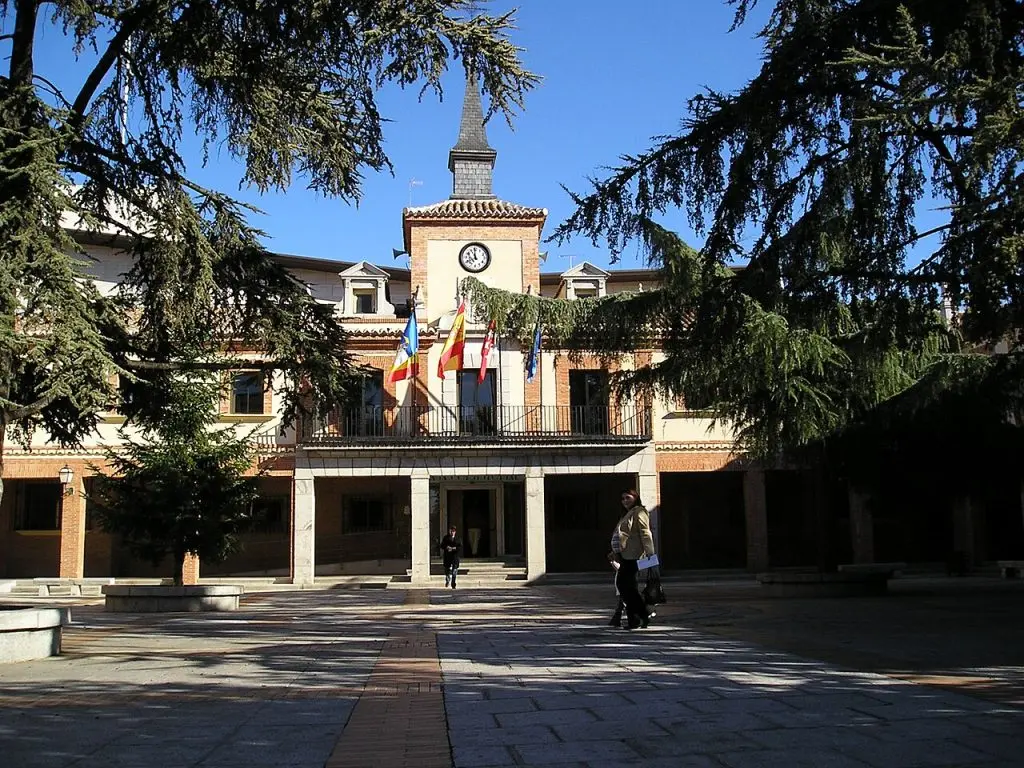
Built in the first half of the 16th century, the Iglesia de San Miguel Arcángel (Church of St Michael the Archangel) is the most significant and oldest singular building in Las Rozas de Madrid. It is one of the few architectural testimonies to its history, as recorded in the book “Arquitectura y Desarrollo Urbano” published in 1991 by the Directorate General of Architecture of what was then the Regional Ministry of Territorial Policy. Together with calle Real —which runs along the arroyo de La Gavia— and the plaza mayor where the town hall stands, the parish church of San Miguel and its surroundings make up the main nucleus that shapes the town centre. It is the essential stop for understanding the town’s origins.
Museo del Ferrocarril Pablo Rubio
This small railway museum in the Las Matas district is an essential and unique enclave for learning about the history of the railway in Spain. It exhibits numerous pieces of great historical interest: rail drills, small lamps, oil cans, lag screws, blowtorches, carbide lamps, lanterns, control panels, cast-iron scales, torches, briquettes, train tail lamps, kilometre and signalling markers, command telephones, wooden and iron pole climbers, signalling spotlights, track jacks and various caps, among other items. The Las Matas district itself now stands as one of the best examples of a preserved railway settlement in the country, which makes the whole a place of great heritage value. It is an essential visit for lovers of trains and industrial archaeology.
Ermita de Nuestra Señora del Retamar
The Ermita de Nuestra Señora del Retamar (Chapel of Our Lady of the Retamar) stands in the recreational area of the same name, a natural setting with a religious tradition in the municipality of Las Rozas. It is a reference point for those who combine a walk in the hills with a quiet stop in a place with a history of devotion.
Búnker de la Guerra Civil II
A protected historic site from the Spanish Civil War located in the municipality of Las Rozas de Madrid; it is one of the bunkers of the Dehesa de Navalcarbón position, built by the Republican People’s Army in the context of the so-called ‘Line of Detention’ designed to protect the western sector of the front.
Puente de Retamar
It is located near the El Retamar area, beside the stream that gives the surroundings its name and in a zone traditionally linked to recreational use and walks in the hills; it remains open to the public 24 hours a day and is a regular crossing point for those exploring the paths and trails of the recreational area, from where you can take in views of the Mediterranean landscape of holm oaks, junipers and riverside vegetation.
Parque de Faure
An urban park in Las Rozas highly rated by locals and visitors alike, with green spaces and areas for strolling and family leisure.
Las Rozas Village
Las Rozas Village is located at Calle Juan Ramón Jiménez, 3, just about 30 minutes from the capital, and features more than 100 boutiques as well as services such as Concierge Services, Hands-Free Shopping and Personal Shopping to make a day of shopping a memorable experience.
Las Rozas The Style Outlets
An outlet shopping centre with stores, restaurants and rest areas, located on Avenida del Noroeste, s/n, bringing together a wide range of brands in a space designed for spending several hours.
Centro Cultural Pérez de la Riva
A municipal cultural centre located at Calle Principado de Asturias, 28, hosting stage performances, exhibitions and cultural programming; its facilities house the Teatro Municipal Federico García Lorca and the Talleres Municipales.
Auditorio Municipal Joaquín Rodrigo
A municipal auditorium dedicated to music and the performing arts, with a regular programme of concerts and shows, located on Avenida del Polideportivo 18 and seating 558.
Museo de la Selección Española de Fútbol
Commercial or entertainment establishment.
Cuadros Club
A museum-type venue in the municipality.
El Abajón
Local monument.
Mirador de la Ciudad del Fútbol
Viewpoint.
Crómlech con campanas
Another unique point of interest.
🍂 Otoño
Si visitas Las Rozas de Madrid en otoño, el clima sigue siendo agradable, sobre todo entre septiembre y octubre, que están dentro de la mejor época para ir. Es el momento de las Fiestas de San Miguel en septiembre, con ambiente festivo y temperaturas suaves. Aprovecha para combinar compras en Las Rozas The Style Outlets con un paseo tranquilo por el Barrio Ferroviario de Las Matas.
What to do in Las Rozas de Madrid
Las Rozas de Madrid offers outlet markets of national renown, patron saint festivities with bull runs, tapas routes through its old town and neighbourhoods with a character all their own such as Las Matas or Európolis. If you enjoy shopping, good food and discovering railway and Civil War history, here you have plans for several days.
- Shopping at Las Rozas Village and The Style Outlets: more than 100 boutiques at the Village and a wide range of brands at The Style Outlets, both designed for spending half a day or a full day.
- Exploring the Dehesa de Navalcarbón by bike or on foot: 120 hectares with trails, Civil War pillboxes and an artificial river that follows the old canal bed.
- Visiting the Barrio Ferroviario de Las Matas and its museum: a Mikado locomotive, a restored wagon and dozens of historic railway pieces in a settlement unique in Spain.
- Joining the Fiestas de San Miguel in September: opening speech, procession, bull runs, concerts, activities for children and fireworks in honour of the patron saint of Las Rozas.
- Enjoying the Ruta de la Tapa: Spanish omelette, ham croquettes and 5J ham in the bars and terraces of the town centre.
- A night out in Európolis: a business and leisure district with the Európolis shopping centre and the Casino Gran Madrid, with a lively atmosphere especially at weekends.
Las Rozas de Madrid in one day: express itinerary
If you only have one day, this route takes you from the town’s most ancient history to its most commercial and natural side, with food stops included.
- 09:30 – Iglesia de San Miguel Arcángel and Casco Antiguo (Old Town): start with Las Rozas’ oldest building, dating from the 16th century, and stroll along Calle Real and Plaza Mayor to understand the town’s origins.
- 11:00 – Barrio Ferroviario de Las Matas and Museo del Ferrocarril Pablo Rubio (Railway District and Museum): discover the Mikado locomotive, the restored goods wagon and the historic pieces of a railway settlement unique in Spain.
- 13:30 – Lunch in the centre or in El Cantizal: try huevos rotos con boletus (broken eggs with wild mushrooms), ham croquettes or 5J ham at one of the area’s taverns or restaurants.
- 16:00 – Dehesa de Navalcarbón: walk or cycle through its 120 hectares, look for the Civil War pillboxes and follow the artificial river that runs through the park.
- 18:30 – Las Rozas Village or The Style Outlets: end the day shopping at more than 100 boutiques or at the outlet centre on Avenida del Noroeste, taking advantage of the fact that they stay open until 22:00.
⭐ Parque París
Park and leisure area located on Avenida de España, s/n, 28231 Las Rozas de Madrid, one of the town’s busiest green spaces, with extensive landscaped areas. It is an urban park with free public access, open 24 hours a day every day, featuring play areas and spaces suitable for families to enjoy. Its location next to Avenida de España makes it a meeting and recreation point for the town’s residents.
Local foodWhere to eat in Las Rozas de Madrid: local cuisine
Where to stay in Las Rozas de Madrid
Casco Antiguo
Núcleo histórico de Las Rozas, con calles estrechas y edificios tradicionales. Alberga la Iglesia de San Miguel y la Plaza Mayor, centro de la vida social y de eventos. Ambiente tranquilo y auténtico, ideal para pasear y conocer la historia local.
Las Matas
Barrio residencial situado al noroeste del municipio, con amplias zonas verdes y un ambiente familiar. Cuenta con su propio núcleo comercial y estación de cercanías. Es una zona tranquila y bien comunicada con Madrid.
El Montecillo
Zona residencial de clase media-alta, con viviendas unifamiliares y adosados. Dispone de centros comerciales y buenos accesos. Ambiente tranquilo y seguro, con servicios cercanos.
La Marazuela
Barrio residencial con una mezcla de viviendas unifamiliares y pisos. Cuenta con zonas verdes y equipamientos deportivos. Es una zona tranquila, bien conectada por carretera y cercanías.
Európolis
Zona empresarial y de ocio, conocida por albergar el centro comercial Európolis y el Casino Gran Madrid. Ambiente animado, especialmente los fines de semana. Ofrece una amplia oferta de restauración y entretenimiento.
Parque Rozas
Barrio residencial moderno con amplias avenidas y zonas verdes. Cerca del Parque Regional del Curso Medio del Río Guadarrama. Ambiente familiar y tranquilo, con servicios locales.
How to get to Las Rozas de Madrid
From Madrid, the fastest option is the bus: 12 min (ALSA), 119 a day.
| From | Direct train | Direct bus | Car |
|---|---|---|---|
| Madrid | 18 min · 108/day Cercanías C7 | 12 min · 119/day ALSA | 20 min 18 km |
| Pozuelo de Alarcón | 7 min · 106/day Cercanías C10 | — | 14 min 12 km |
| Collado Villalba | 16 min · 40/day Regional | — | 17 min 22 km |
| El Escorial | 30 min · 4/day Regional | 29 min · 60/day ALSA | 27 min 29 km |
| Alcalá de Henares | 1 h 16 min · 35/day Cercanías C7 | — | 46 min 54 km |
| Torrejón de Ardoz | 1 h 07 min · 35/day Cercanías C7 | — | 37 min 44 km |
| Coslada | 58 min · 35/day Cercanías C7 | — | 32 min 37 km |
| Guadalajara | 1 h 41 min · 2/day Cercanías C7 | — | 59 min 77 km |
| Ávila | 1 h 24 min · 2/day Regional | — | 1 h 07 min 91 km |
Direct trains and buses from the official timetables published by the operators on Spain's National Transport Access Point (a reference Wednesday); driving times from OpenStreetMap. Operators that do not publish their timetables may run more services. Check the timetable before you travel.
Getting around Las Rozas de Madrid
Urban transport in Las Rozas is based on the local bus network, which connects the town’s main neighbourhoods and areas of interest. For short distances within the old town or between areas such as Európolis and the Dehesa de Navalcarbón (Navalcarbón meadow), walking or cycling is a comfortable option, especially in the warmer months. If you come by car, the A6 and M-50 offer quick access to the different neighbourhoods and shopping areas. For timetables, routes and the cultural calendar, check the official Las Rozas de Madrid tourism website.
Weather in Las Rozas de Madrid
Best time to visit Las Rozas de Madrid
Day trips from Las Rozas de Madrid
Las Rozas de Madrid is a practical base for exploring other towns in the region, thanks to its location west of the capital and its connection via the Autovía del Noroeste. From here you can head to nearby towns in the Community of Madrid to round off your trip with historic heritage, nature or gastronomy. The Cercanías and bus networks make it easy to get around without your own car, and returning to Las Rozas lets you enjoy its leisure and dining options at the end of the day.
Fascinating facts about Las Rozas de Madrid you didn’t know
Its origins may date back to the 3rd century. Las Rozas de Madrid may have been the ancient Miacum, which would place its roots far earlier than is generally believed; the first documents mentioning Las Rozas date from 1376.
Republican bunkers built in 1937. In the Dehesa de Navalcarbón and alongside the El Escorial road, Civil War bunkers built by the 8th Sapper Brigade, 22nd Company, are still visible today.
A pioneer of motorways. Las Rozas was one of the first Spanish municipalities to be connected by motorway, when the Autovía del Noroeste opened in 1967.
Hollywood in Las Matas. In the 1960s, producer Samuel Bronston built Europe’s most important film studios in Las Matas, and for the shooting of “55 Days at Peking” an artificial river was dug and filled using tanker trucks.
An artist of the Generation of ’27 was born here. Marga Gil Roësset, sculptor, illustrator and poet, was born in Las Rozas de Madrid on 3 March 1908 and died there on 28 July 1932.
An unfinished dam with a story. The El Gasco dam, built between 1787 and 1799 on the Guadarrama river, lies in ruins at the confluence of the municipal boundaries of Torrelodones, Galapagar and Las Rozas de Madrid.
The name comes from agriculture. The name Las Rozas comes from the word “roza”, which refers to land being prepared for farming for the first time, indicating that its origins must lie in the establishment of a cultivation area.
Who Las Rozas de Madrid is for
Las Rozas de Madrid is an ideal destination for families, couples and travellers looking for shopping, nature and history without straying far from Madrid. Railway enthusiasts and Civil War buffs will find a heritage here that is unique in Spain, while foodies will delight in its Castilian tapas culture and Iberian produce. It is not a destination for backpackers on a very tight budget, since its affluent profile is reflected in the shopping and dining on offer, but it is perfect for those after a comfortable, safe getaway with good connections to the capital. With 10,597,423 travellers a year according to the INE and 59% of them foreign visitors, this is a municipality well used to welcoming visitors from all over the world.
💡 ¿Sabías que...?
- ● Las Rozas de Madrid pudo ser el antiguo Miacum, por lo que su origen podría remontarse al siglo III. (https://es.wikipedia.org/wiki/Historia_de_Las_Rozas)
- ● Los primeros documentos que mencionan Las Rozas son del año 1376. (https://es.wikipedia.org/wiki/Historia_de_Las_Rozas)
- ● En Las Rozas se conservan búnkeres de la Guerra Civil construidos en 1937 por la Brigada de Zapadores nº 8, 22 compañía, visibles en la Dehesa de Navalcarbón y junto a la carretera de El Escorial. (https://es.wikipedia.org/wiki/Historia_de_Las_Rozas)
- ● Las Rozas fue uno de los primeros municipios españoles en estar comunicado por autovía, cuando en 1967 se inauguró la autovía del Noroeste. (https://es.wikipedia.org/wiki/Las_Rozas_de_Madrid)
- ● En los años sesenta, el productor Samuel Bronston construyó en Las Matas los estudios de cine más importantes de Europa, y para rodar «55 días en Pekín» se excavó un río artificial llenado con camiones cisterna. (https://pueblos10.com/madrid/las-rozas-de-madrid/)
- ● Marga Gil Roësset, escultora, ilustradora y poeta de la Generación del 27, nació en Las Rozas de Madrid el 3 de marzo de 1908 y falleció allí el 28 de julio de 1932. (https://es.wikipedia.org/wiki/Marga_Gil_Ro%C3%ABsset)
- ● La presa de El Gasco es una presa inacabada construida entre 1787 y 1799 sobre el río Guadarrama; sus ruinas se encuentran en la confluencia de los términos municipales de Torrelodones, Galapagar y Las Rozas de Madrid. (https://es.wikipedia.org/wiki/Presa_de_El_Gasco)
- ● El nombre de Las Rozas proviene de la palabra «roza», que designa la zona que se prepara por primera vez para la agricultura, lo que indica que su origen debió de estar en el establecimiento de una zona de cultivos. (https://es.wikipedia.org/wiki/Las_Rozas_de_Madrid)
Frequently asked questions about Las Rozas de Madrid
How many days do I need to see Las Rozas de Madrid?
With one day you can cover the essentials: the Iglesia de San Miguel (Church of St Michael), the Barrio Ferroviario de Las Matas (Las Matas railway district), the Museo del Ferrocarril Pablo Rubio (Pablo Rubio Railway Museum) and the Dehesa de Navalcarbón. If you want to add shopping at Las Rozas Village or The Style Outlets, a leisurely tapas crawl and some cultural activity at the Auditorio or the Centro Cultural Pérez de la Riva, two or three days are ideal. The average stay in the municipality is 2.05 nights, which fits perfectly with a weekend break.
What is the best time of year to visit Las Rozas de Madrid?
The best time is from June to October, with an average summer temperature of 24.7°C, ideal for enjoying the Dehesa de Navalcarbón and the terraces. In winter the average drops to 6.9°C, which makes outdoor plans less pleasant. If you are after fiestas, September is the month of the Fiestas de San Miguel, with bull runs, concerts and fireworks.
How do I get to Las Rozas de Madrid from Madrid?
You can arrive by bus from the Moncloa interchange on lines 625, 628 and 629, which drop you off opposite Las Rozas Village in about 30 minutes. There is also a train connection via Majadahonda station and a taxi from central Madrid takes around 30 minutes. By car, the A6 motorway (Autovía del Noroeste) has connected directly since 1967.
What is special about the Barrio Ferroviario de Las Matas?
It is one of the finest examples of a preserved railway settlement in Spain, with origins tied to the station and the railway facilities. At Calle San José Obrero, 25-27, you can see the Mikado locomotive and other restored railway vehicles, as well as the Museo del Ferrocarril Pablo Rubio with its many historical pieces.
Where can I go shopping in Las Rozas de Madrid?
Las Rozas Village, at Calle Juan Ramón Jiménez, 3, has more than 100 boutiques and services such as Concierge Services, Hands-Free Shopping and Personal Shopping, open from 10:00 to 22:00. There is also Las Rozas The Style Outlets, on Avenida del Noroeste, s/n, with shops, restaurants and rest areas.