Talavera de la Reina
Castilla-La ManchaClimate
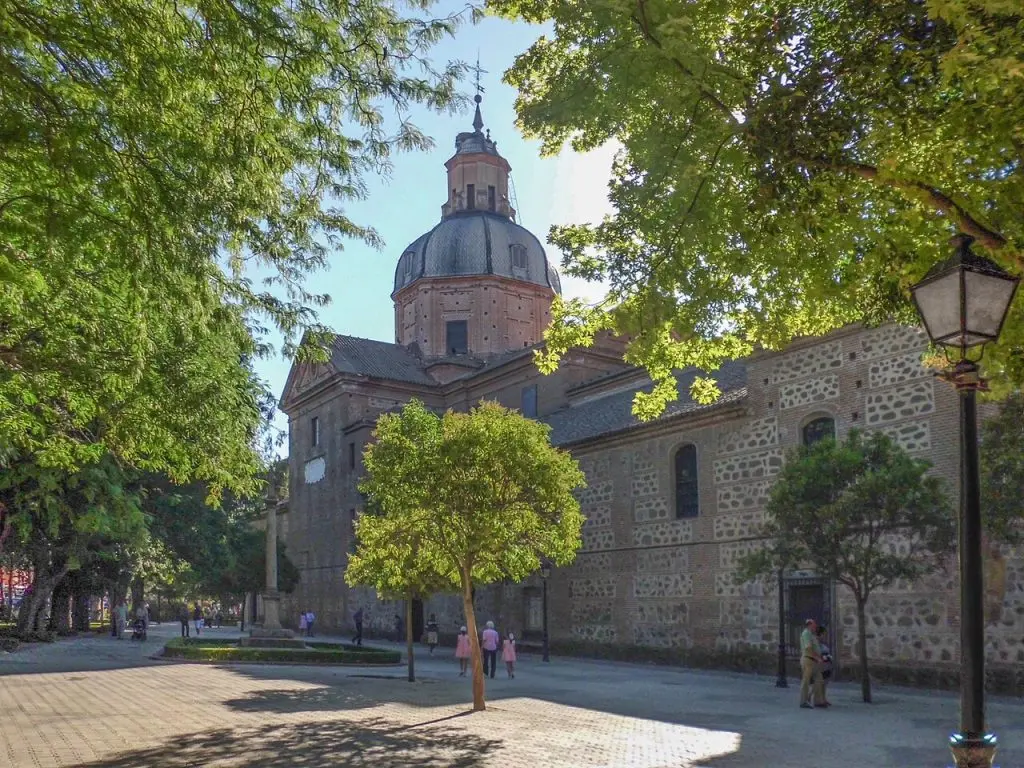
The afternoon sun beats down on the tiles of the Basílica del Prado and, for a moment, the entire façade looks like a glowing mural. You are in Talavera de la Reina, a city of 83,000 inhabitants on the banks of the Tagus where ceramics are not merely looked at: they are breathed in. From the albarrana towers guarding the old town to the modernist bandstand in the gardens, everything here has the texture of the handmade and the calm of a city that has spent centuries letting itself be loved.
The must-seesWhat to see in Talavera de la Reina: the essentials
Talavera de la Reina packs a monumental heritage into its historic centre, from medieval walls to temples with centuries of history, all of it interspersed with the ceramics recognised by UNESCO in 2019 as Intangible Cultural Heritage of Humanity.
Museo Ruiz de Luna
The Museo Ruiz de Luna houses the personal collection of the ceramicist Juan Ruiz de Luna, made up of valuable pieces of Talavera pottery dating from the 16th to the 20th century, including personal works by the artist. It is one of the most important collections of Talavera tiles and earthenware in existence, and a visit gives you the exact measure of why this city is a global byword for ceramics. Winter opening hours (16 September to 15 June) are Tuesday to Saturday from 10:00 to 14:00 and 16:00 to 18:00, and Sundays from 9:30 to 14:30; in summer (16 June to 15 September) it opens Tuesday to Friday and on public holidays from 8:30 to 15:00, Saturdays from 10:00 to 14:00 and 16:00 to 18:00, and Sundays from 9:30 to 14:30. Bear in mind that last entry is 15 minutes before closing.
Basílica de Nuestra Señora del Prado
Its interior preserves one of the largest collections of Talavera tiles and ceramics applied to architecture, with panels spanning centuries of pottery tradition. The walls and porticoes turn the temple into a genuine living museum of ceramics, where ceramics are not a mere ornament but part of the city’s identity. The temple combines art, architecture and devotion, with Baroque light in its dome and centuries of history in every panel.
Colegial de Santa María la Mayor
Popularly known as la Colegial (the Collegiate Church), this temple held the title of collegiate church from 1211 to 1851, which is why it is still called that today. Most of the structure it still preserves belongs to the 14th and 15th centuries, such as the cloister or the marvellous rose window on the main façade, made of clad brick. It presides over the Plaza del Pan, the city’s historic nerve centre, next to the Antiguo Ayuntamiento (Old Town Hall), and its 18th-century tower is one of the most recognisable silhouettes of the old town.
Murallas de Talavera de la Reina
The medieval walled enclosure protected the city and came to have three circuits whose layouts ran tangential to the Islamic alcazaba. A good part of the wall of the first and oldest circuit survives today, with albarrana towers and stretches of wall integrated into the historic centre. Islamic-fortification in style with Christian towers, its construction dates back to the 10th century, with later interventions between the 13th and 14th centuries, and it is listed as a site of cultural interest.
Jardines del Prado
The gardens form part of the cultural and landscape heritage of Talavera and are a regular stop on the tourist itineraries that cross the city. They are the perfect setting for a quiet stroll among ceramics, greenery and the modernist bandstand that presides over the promenade.
Yacimiento de Entretorres
This is a group of remains linked to the city’s historic defensive enclosure, a testimony to its medieval past and its urban evolution, which can be visited on guided tours booked through the Oficina comarcal de Turismo de Talavera de la Reina (Talavera de la Reina regional tourist office).
Convent of Santo Domingo
The former Convent of Santo Domingo was founded in 1520 by the Dominicans, at the request of Fray Juan Hurtado de Mendoza and sponsored by Cardinal Fray García de Loaisa, a native of Talavera, and its church, one of the most representative examples of Talavera’s convent architecture, dates from that period.
Convent of Santa Catalina (San Prudencio)
It forms part of Route 4 of the tourist routes of Talavera de la Reina, alongside the Church of the Encarnación, the Palace of the Marquis of Villatoya, the Victoria Theatre, the Palenque Theatre, the Plaza Padre Juan de Mariana, the Town Hall and the Rafael Morales Cultural Centre.
Church of Santiago el Viejo
A church of medieval origin in the Mudéjar style located on Calle Templarios, considered one of the oldest in the city, with a rose window on the main façade and a polygonal apse adorned with two superimposed tiers of blind arches.
Church of San Andrés
A church historically linked to the Royal Silk, Gold and Silver Factory of Talavera de la Reina, with its first documentary references dating from the early 13th century and rebuilt in the 16th century; for information on visits, contact the Talavera de la Reina Tourist Office (925 826 322 – oficinaturismo@talavera.org).
Torre Albarrana
An albarrana tower (freestanding defensive tower) integrated into the complex of walls and defensive towers of Talavera de la Reina, one of the most representative elements of the city’s medieval fortification system, which can be explored outdoors without the need to enter any building.
Kiosco Musical El Prado
A Modernista music kiosk located in the Jardines del Prado, listed as a heritage element by the Instituto de Promoción Económica de Talavera, and a visual landmark of the Prado promenade.
Teatro Victoria
A historic theatre whose origins date back to an old Corral de Comedias (courtyard playhouse) from the early 17th century; in 1912 the Talavera businessman Miguel Fernández Santamaría built the new theatre and named it after his daughter, Victoria. After a period of abandonment, it was acquired by the Town Hall in 1991 and reopened in 1994, recovering its original name, in a style that combines Modernista architecture with elements typical of theatrical tradition.
Puente de Santa Catalina
Popularly known as Puente Viejo (Old Bridge), it is one of the most outstanding monuments of the historic ensemble of Talavera de la Reina, and from it visitors can enjoy views of the old town, the riverbank and the ancient walls and towers that dot the city.
Palacio Arzobispal
Commercial or entertainment establishment.
🍂 Otoño
Si visitas Talavera de la Reina en otoño, el calor va remitiendo y septiembre aún ofrece buen tiempo para callejear. Las Ferias de San Mateo y la festividad de la Virgen del Prado marcan el ambiente de esta estación. Es una época cómoda para visitar el Museo Ruiz de Luna o la Colegial de Santa María la Mayor sin aglomeraciones.
What to do in Talavera de la Reina
Talavera de la Reina offers strolls through a historic quarter brimming with ceramics, outdoor routes along the Tagus River, a festive calendar that kicks off in January with the Cabalgata de Reyes (Three Kings’ Parade) and runs through to the Ferias de San Mateo (San Mateo Fair) in September, and a neighbourhood life best enjoyed without rushing.
- Explore the walls and albarrana towers: the fortified complex can be visited outdoors, with no need to enter any building, and it’s a wonderful way to understand medieval Talavera while photographing the best-preserved towers.
- Stroll through the Jardines del Prado and the La Alameda area: the city’s main green lung beside the Tagus River is the favourite spot for family relaxation and seasonal open-air events.
- Go for tapas along the Ronda del Cañillo and the old town: the tapas bars and traditional taverns are the natural territory of callos a la talaverana (Talavera-style tripe) and the most authentic local atmosphere.
- Attend the Ferias de San Mateo in September: the city’s main fair, with a fairground in the Parque de la Alameda, free concerts, bullfights and activities for all ages.
- Experience the fiesta of the Virgen del Prado in September: floral offering, solemn mass and procession in honour of the city’s patron saint.
Talavera de la Reina in a day: express itinerary
With a well-organised day you can see the essentials of the historic quarter, eat by the river and finish with a green stroll. This is the plan I would follow:
- 9:30 — Basílica de Nuestra Señora del Prado: start with the temple that best sums up the city’s ceramic identity, with its tile panels tracing centuries of pottery tradition.
- 10:45 — Walls and Torre Albarrana: walk outdoors along the best-preserved stretches of the medieval walled enclosure and understand why Talavera came to have three defensive circuits.
- 12:00 — Colegial de Santa María la Mayor and Plaza del Pan: visit the temple that was a collegiate church from 1211 to 1851 and take a look at its brick-clad rose window before grabbing a drink in the square that presides over the historic centre.
- 13:30 — Museo Ruiz de Luna: make the most of the morning opening hours to see one of the most important collections of Talavera tiles and pottery, with pieces from the 16th to the 20th centuries.
- 15:00 — Lunch by the Puente de Santa Catalina: cross the Puente Viejo (Old Bridge) and try the conejo al ajillo (garlic rabbit) at the traditional kiosks that have been serving it by the river for over 60 years.
- 17:30 — Jardines del Prado and Kiosco Musical: end the day with a stroll among greenery and ceramics, with the modernist kiosk as a visual landmark and the perfect finishing touch.
Where to eat in Talavera de la Reina: local cuisine
Where to stay in Talavera de la Reina
Casco Histórico
El corazón de la ciudad con calles empedradas, plazas tradicionales y la famosa cerámica talaverana en fachadas y edificios. Alberga los monumentos más importantes y ofrece un ambiente tranquilo ideal para pasear.
Barrio de San Antón
Zona residencial tradicional situada cerca del río Tajo, conocida por su tranquilidad y proximidad al puente Viejo. Es un área con encanto local pero con menos oferta turística directa que el centro.
Ensanche o Centro Moderno
La zona comercial y de servicios alrededor de la Avenida de Portugal y la Calle del Carmen, donde se concentran tiendas, bancos y restaurantes modernos. Ofrece mayor comodidad y accesibilidad para el visitante actual.
Barrio de Puerta de Cuartel
Área urbana consolidada que conecta el centro con las zonas de expansión al norte, caracterizada por ser principalmente residencial y de paso. Cuenta con parques locales y servicios básicos para residentes.
Zona de La Alameda
Entorno verde junto al río Tajo que funciona como el principal pulmón y zona de ocio al aire libre de la ciudad. Es el lugar preferido para el descanso familiar y eventos estacionales al aire libre.
How to get to Talavera de la Reina
From Madrid, the fastest option is the train: 1 h 23 min (Regional), 13 a day.
| From | Direct train | Direct bus | Car |
|---|---|---|---|
| Madrid | 1 h 23 min · 13/day Regional | — | 1 h 32 min 121 km |
| Leganés | 1 h 07 min · 13/day Intercity | — | 1 h 21 min 113 km |
| Cáceres | 1 h 49 min · 13/day Intercity | — | 1 h 59 min 179 km |
| Plasencia | 1 h 20 min · 7/day Regional | — | 1 h 31 min 133 km |
| Badajoz | 2 h 48 min · 5/day Intercity | — | 3 h 04 min 281 km |
| Mérida | 2 h 28 min · 5/day Intercity | — | 2 h 26 min 226 km |
| Fuenlabrada | 1 h 01 min · 4/day Regional | — | 1 h 22 min 113 km |
| Sevilla | 6 h 42 min · 2/day Regional | — | 4 h 28 min 413 km |
Direct trains and buses from the official timetables published by the operators on Spain's National Transport Access Point (a reference Wednesday); driving times from OpenStreetMap. Operators that do not publish their timetables may run more services. Check the timetable before you travel.
Getting around Talavera de la Reina
Talavera de la Reina has an urban bus service for getting between neighbourhoods, although the historic centre and the riverside area are perfectly walkable. For more practical information on timetables, tickets and events, see the official Talavera de la Reina tourism website.
Weather in Talavera de la Reina
Best time to visit Talavera de la Reina
Day trips from Talavera de la Reina
Talavera de la Reina is an excellent base for exploring other cities in the region of Castile-La Mancha. Its location in the northwest of the autonomous community makes it possible to combine your visit with nearby destinations of great heritage and scenic interest, ideal for day trips by road.
Little-known facts about Talavera de la Reina
The ceramics that won over UNESCO. In 2019, the ceramics of Talavera de la Reina were recognised by UNESCO as Intangible Cultural Heritage of Humanity. This is no decorative title: it speaks of centuries of pottery-making that have shaped the city’s visual identity, from the tiles of the Basílica del Prado (Basilica of El Prado) to the pieces in the Museo Ruiz de Luna (Ruiz de Luna Museum).
Three walls for a single city. Talavera de la Reina once had three walled enclosures, built from Roman times through to the Middle Ages. Much of the first and oldest enclosure survives today, with albarrana towers that still define the skyline of the historic centre.
A royal wedding gift. The epithet ‘de la Reina’ (‘of the Queen’) dates back to 24 June 1328, when Alfonso XI married María of Portugal and gave her the city as a gift. Ever since, the name of Talavera has been forever linked to that queen.
A festival that comes from Ceres. The festival of Las Mondas is a Christianised survival of the Roman spring festival honouring Ceres, goddess of agriculture. It is one of those cases in which the festive calendar preserves the memory of far older rites.
Who is Talavera de la Reina for
Talavera de la Reina is a city for travellers who enjoy heritage without the crowds, ceramics as a guiding thread and deeply rooted gastronomy. Couples will find quiet corners in the Barrio de San Antón (San Antón Quarter) and strolls along the river; families have La Alameda and the Jardines del Prado (Prado Gardens) as their natural space; lovers of history and ceramics will find an unmissable destination here thanks to its monumental ensemble and its UNESCO recognition; and foodies can alternate traditional tapas on the Ronda del Cañillo with the contemporary cuisine of Raíces-Carlos Maldonado, its Michelin star.
💡 ¿Sabías que...?
- ● La cerámica de Talavera de la Reina fue reconocida por la UNESCO como Patrimonio Cultural Inmaterial de la Humanidad en 2019. (https://www.talaveravalley.es/secretos-leyendas-y-curiosidades-de-talavera-de-la-reina/)
- ● Talavera de la Reina llegó a tener tres recintos amurallados, construidos desde la época romana hasta la Edad Media. (https://www.talaveravalley.es/secretos-leyendas-y-curiosidades-de-talavera-de-la-reina/)
- ● El apelativo 'de la Reina' se remonta al 24 de junio de 1328, cuando Alfonso XI se casó con María de Portugal y le regaló la ciudad. (https://es.wikipedia.org/wiki/Talavera_de_la_reina)
- ● La fiesta de Las Mondas es una pervivencia cristianizada de la fiesta primaveral romana en la que se rendía culto a Ceres, diosa de la agricultura. (https://es.wikipedia.org/wiki/Talavera_de_la_reina)
Frequently asked questions about Talavera de la Reina
How many days do I need to see Talavera de la Reina?
With one well-organised day you can see the essentials: the Basílica del Prado, the walls, the Colegial de Santa María la Mayor (Collegiate Church of Santa María la Mayor), the Museo Ruiz de Luna and the Puente de Santa Catalina (Santa Catalina Bridge). If you want to add guided visits to the Yacimiento de Entretorres (Entretorres archaeological site), go for tapas at a leisurely pace and enjoy the gardens and the river area, two days are perfect.
What is the best time of year to visit Talavera de la Reina?
The best time is from May to September, with an average summer temperature of 25.0°C according to AEMET and a festive calendar that includes the Ferias de San Isidro in May and the Ferias de San Mateo and the Virgen del Prado in September. Winter has an average of 7.1°C and annual rainfall is 418.7 mm.
How do I get to Talavera de la Reina from Madrid?
You can arrive by car via the road, with a distance of 140 km from Adolfo Suárez Madrid-Barajas Airport and a journey time of approximately 1 h 41 min. There is also a train connection, although Talavera de la Reina station does not have AVE; check times and prices with Renfe.
Which typical dishes should I try in Talavera de la Reina?
Don’t leave without trying the cocido a la paja (slow-cooked stew), with its broth served separately and its torrija of soaked fried bread; the conejo al ajillo (garlic rabbit) from the kiosks beside the Puente Romano (Roman Bridge), where it has been served for more than 60 years; and the callos a la talaverana (Talavera-style tripe), with its thick, spiced stew, especially on the Ronda del Cañillo and in the old town.
Does Talavera de la Reina have a Michelin-starred restaurant?
Yes, the city is home to Raíces-Carlos Maldonado, a contemporary cuisine restaurant with one Michelin Star in Talavera de la Reina.