Morella
Comunidad ValencianaClimate
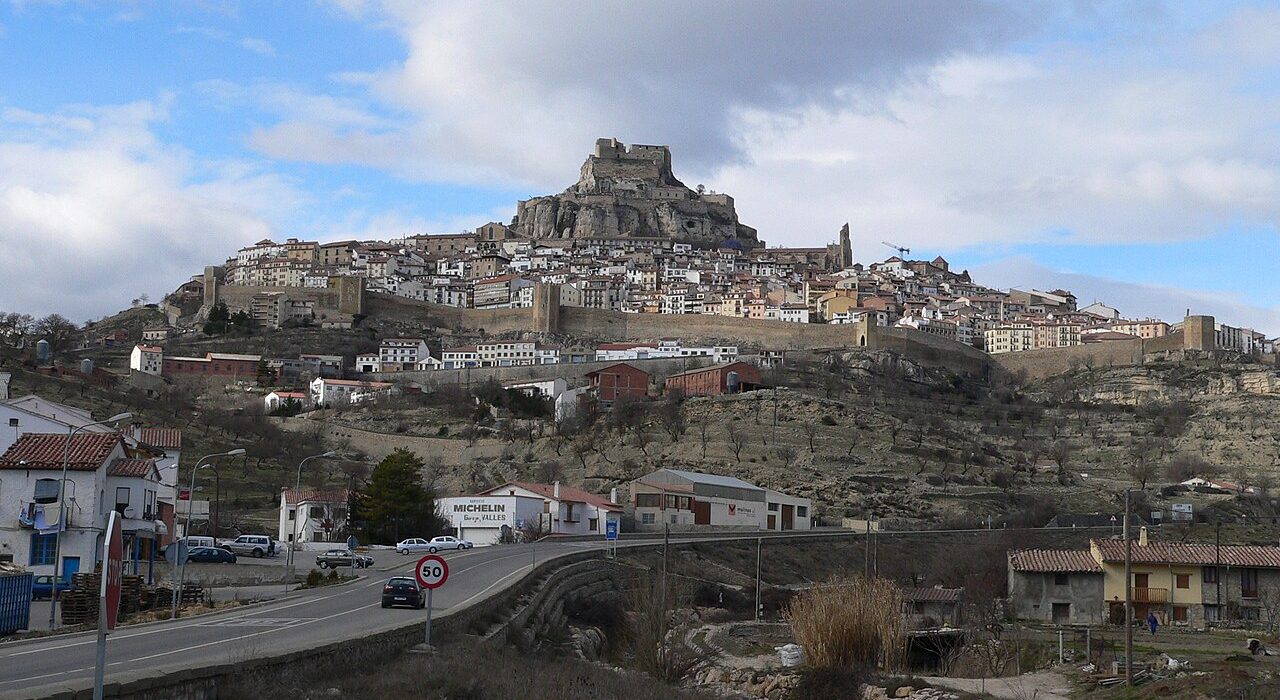
Climbing up to the 984 meters where this town sits means encountering a sinuous silhouette of walls protecting a Gothic monumental complex declared a Cultural Heritage Site. Dominating the landscape from a rock at 1,072 meters, the castle watches over an old town that preserves a perfect medieval layout, historically inhabited by Iberians, Romans, and Christians. Here, time seems to have stood still among vaulted arcades and cobblestone streets that led General Cabrera to turn the square into the main Carlist stronghold in Spain.
The must-seesWhat to see in Morella: the essentials
Abrigos Rupestres de Morella la Vella (Rock Shelters of Morella la Vella)
This set of prehistoric rock art, discovered in 1917, is part of the UNESCO World Heritage Site and is located in the Els Ports region. It includes visitable shelters such as the Galería Alta de la Masía and the Coveta de la Cornisa, whose realistic paintings are smaller than those of the Barranco de Valltorta. The space was modified with a façade to enclose it like a house, even being used by the Carlists as barracks during their conflicts.
Basílica Arciprestal Santa María la Mayor (Archpriestly Basilica of Saint Mary the Greater)
Considered a jewel of Mediterranean religious Gothic architecture, this temple was built between 1263 and 1330 and presides over the heart of the town. Inside, the spiral choir staircase wrapped around a column stands out, while the main façade displays the scene of the Last Judgment in great detail. The sculpturally significant doors, known as the Portal dels Apòstols (Door of the Apostles) and the Portal de les Verges (Door of the Virgins), are key elements for understanding the sacred art of the area.
Convent de Sant Francesc (Convent of Saint Francis)
This former convent, founded in 1233, dates back to the 13th century and is located within the walled enclosure of the city of Morella. It is a remarkable Valencian Gothic construction that forms part of the town’s religious Gothic heritage, standing out for its single nave and cloister. Currently, it is regularly used for cultural activities and exhibitions, keeping its community use alive.
Iglesia de San Juan (Church of Saint John)
This Baroque church features a façade blessed in 1791 and a cloister-like interior with three naves in the Corinthian order that surprises with its spaciousness. Its high dome, spacious transept, and burnished marble columns with sculpture by Cristóbal Maurat stand out, making it one of the largest temples in the diocese. It possesses a robust unfinished bell tower that adds a singular character to its architectural profile.
Murallas Medievales de Morella (Medieval Walls of Morella)
This defensive enclosure was erected in the 14th century and extends for almost 2.5 kilometers surrounding the mesa on which the population sits.
Castell de Morella (Morella Castle)
This historical-artistic complex stands out for its architectural and cultural heritage and preserves a well-preserved medieval layout that testifies to the historical importance of the town.
Portal de Sant Mateu (Gate of Saint Matthew)
This preserved remnant corresponds to one of the eight gates and towers of the walled enclosure of Sant Mateu, located on Maestrat street.
Arcos del Mercado (Market Arches)
These vaulted arcades are part of the town’s medieval structure and are visible in the streets of Morella’s old town, characterizing its architectural heritage.
What to do in Morella
Morella offers specific data-driven activities focused on its festive and commercial heritage, such as strolling through the porticoes of Calle Blasco de Alagón during the Mercat dels Diumenges (Sunday Market). Visitors can immerse themselves in history by participating in the Sexenni, an emblematic festival celebrated every six years in honor of the Virgin of Vallivana, or by enjoying the medieval fire festival of Sant Antoni in January. Additionally, it is possible to explore the Jewish heritage in the La Judería quarter or admire the views from the viewpoints of Roquetes del Puig del Rei and Mas de Bessó.
Morella in one day: express itinerary
- 09:00 – Arciprestal Basilica of Santa María la Mayor: Start the day admiring the spiral choir staircase and the Last Judgment façade of this Gothic gem.
- 11:00 – Medieval Walls and Castle: Walk the 2.5-kilometer defensive enclosure and climb up to the castle to understand why it was a nearly impregnable fortress.
- 13:30 – Market Arches and Old Town: Stroll through the cobblestone streets and vaulted arcades before heading to lunch.
- 16:00 – Convent de Sant Francesc: Visit this former 13th-century convent to see its single nave and Gothic cloister.
- 18:00 – Church of San Juan: End the day observing the high dome and polished marble columns of this Baroque temple.
Where to eat in Morella: local gastronomy
Where to sleep in Morella
Centro Histórico (Casco Antiguo)
El corazón de Morella, declarado Conjunto Histórico-Artístico, donde se encuentran la mayoría de los puntos de interés como la Calle Blasco de Alagón y la Basílica de Santa María la Mayor.
El Castillo y las Murallas
Coronando la ciudad, el emblemático castillo y el impresionante recinto amurallado ofrecen vistas espectaculares y un viaje a la historia medieval de Morella.
La Judería
Un pequeño y pintoresco barrio dentro del casco antiguo, caracterizado por sus arcos y plazoletas, que revela la herencia judía de la ciudad.
How to get to Morella
| Medio | Duración / Distancia | Precio aprox. | Frecuencia |
|---|---|---|---|
| Autobús | Variable según origen | Económico | Compañías Autos Mediterráneo y Autobuses Altaba |
| Avión + Bus/Taxi | Aeropuerto de Castellón (CDT) a 47.7 km | Variable | Según vuelos |
| Coche | Vía CV-10, N-232, CV-15, CV-12, AP-7 | Combustible | Libre |
Getting around Morella
The center of Morella is pedestrianized, making it easy to explore the cobblestone streets and arcades on foot without hassle. For longer distances or if you have reduced mobility, the city has an urban bus service connecting the different points of interest.
Weather in Morella
Best time to visit Morella
Day trips from Morella
From Morella you can explore cities in the region taking advantage of excellent road connectivity via routes such as the CV-10 and the N-232. Its strategic location in the Puertos de Morella district allows for trips to other nearby municipalities that share this historical and natural heritage.
Little-known facts about Morella
Morella celebrates the ‘Sexenni’, one of the oldest festivals in Spain, every six years since 1678 as a vow of gratitude to the Virgin of Vallivana for sparing the city from the plague in 1672.
In the district, fossils of a new species of giant sauropod dinosaur, the ‘Garumbatitan morellensis’, have been found; it lived 122 million years ago and represents the first documented dinosaur remains in Spain in the 19th century.
During the First Carlist War, General Ramón Cabrera, nicknamed ‘El Tigre del Maestrazgo’ (The Tiger of Maestrazgo), made Morella the capital of his territory and the main stronghold of the Carlist cause in Spain between 1838 and 1840.
The origin of the name ‘Morella’ is uncertain, although one theory suggests it derives from the Latin ‘maurellus’ or ‘maurus’, meaning ‘dark’ or ‘black’, possibly due to the color of the soil or its ancient inhabitants.
Who is Morella for?
This destination is ideal for history and Gothic architecture lovers who enjoy strolling through old towns declared Historic-Artistic Sites. It is also perfect for foodies interested in inland gastronomy and families seeking a safe, pedestrian-friendly environment away from the coastal bustle.
Frequently asked questions about Morella
How many days do I need to see Morella?
With a one-day express itinerary, you can see the 4-5 main attractions such as the Basilica and the Castle, but more time is recommended to enjoy the museums and local gastronomy.
What is the best time to visit Morella?
The best time is from June to September, when the average temperature is more pleasant for exploring the 2.5 kilometers of walls and viewpoints.
How do I get to Morella from the nearest airport?
The nearest airport is Castellón Airport (CDT), located 47.7 km away, from where you can take ground transportation to the city.
Which festivals stand out in Morella?
Standouts include the Sexenni, held every six years (next in 2030), and Sant Antoni in January, a medieval fire festival with rural traditions.