Orihuela
Comunidad ValencianaClimate
What to see in Orihuela: the essentials
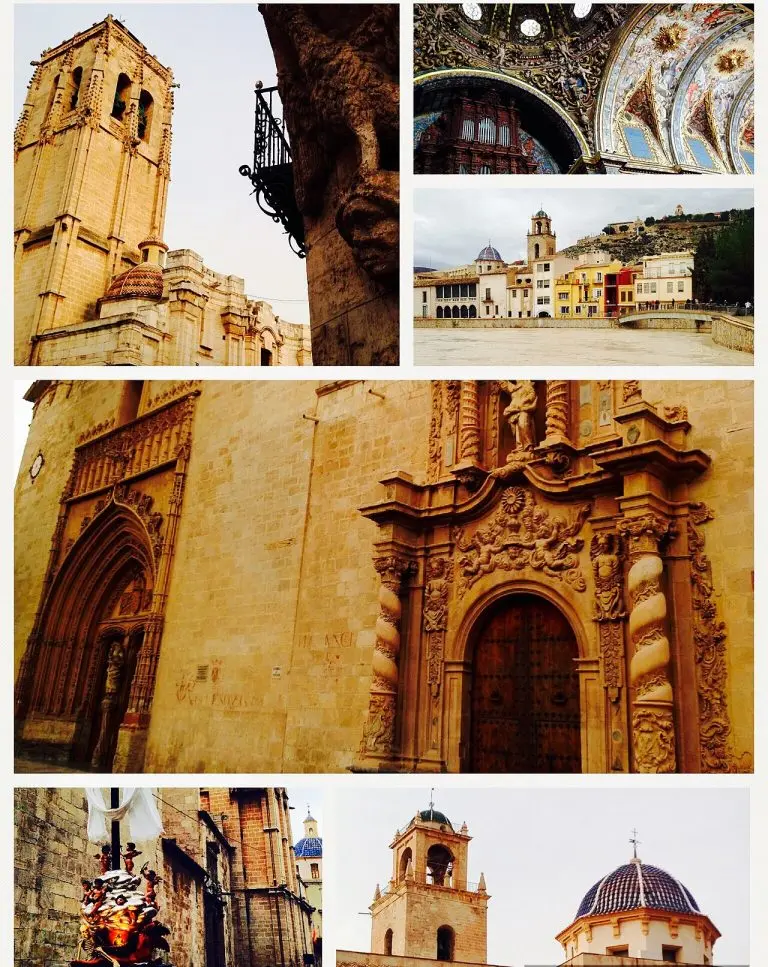
The first stop in Orihuela is its historic centre, declared a Conjunto Histórico Artístico in 1969. This is where most of the city’s national monuments are concentrated, and the best way to explore it is on foot and unhurried. The density of heritage is so high that within a few streets you can visit a cathedral, an episcopal palace, a 16th-century university and several monumental churches.Catedral del Salvador y Santa María de Orihuela
Construction of Orihuela Cathedral began at the end of the 13th century on Visigothic and Hispano-Arab remains, and in 1281 Alfonso X the Wise granted it the rank of principal church of the town, above the parishes of Santas Justa y Rufina and Santiago Apóstol. Don’t expect a vast Gothic building or overflowing luminosity: its beauty lies in its proportions, in the sobriety of Catalan Gothic and in the sense of recollection it conveys. It is one of the two cathedral seats of the Diocese of Orihuela-Alicante, alongside San Nicolás de Bari in Alicante. Enter slowly, look up and let the vaults tell you eight centuries of history.Colegio Diocesano de Santo Domingo
This former monastery is one of Orihuela’s monumental jewels and a visit that deserves time. Opening hours are Tuesday to Friday from 10:00 to 14:00 and 16:00 to 19:00, Saturdays at the same times, and Sundays and public holidays only from 10:00 to 14:00, with an entry fee of 2 €. Its convent architecture and cloister are among the most photogenic in the city. It also sits next to Monte de San Miguel, the same surroundings where Miguel Hernández spent part of his childhood and studied for some years.Castillo de Orihuela
Climbing up to the castle is the best excuse to gain some perspective over the Vega del Segura. This fortress of medieval origin, with Visigothic and Gothic influences, was declared a Monumento Bien de Interés Cultural on 3 June 1931 and today stands in ruins, included on the Lista Roja del Patrimonio (Red List of Heritage). Even so, it is a visitable space within the city’s heritage routes and the climb is worth it for the views. Go with comfortable footwear and water, especially in summer.Antigua Universidad de Orihuela
For more than two hundred years, this building awarded university degrees until 1834, when, with the Mendizábal disentailment, it had to close its doors after the Church sold off part of its lands. Today it is one of the campuses of the University of Alicante and houses the Cátedra Arzobispo Loazes. Its civil architecture and its ties to Orihuela’s cultural and ecclesiastical history make it an essential stop in the historic centre.Palacio Episcopal de Orihuela
The Palacio Episcopal is one of those visits that surprise you inside: a courtyard, a grand staircase and representative rooms that preserve part of the Diocesan Archive. It is currently linked to the Museo Diocesano de Arte Sacro, whose rooms house a notable collection of sacred art. The star piece is «La tentación de Santo Tomás de Aquino», painted by Diego Velázquez between 1632 and 1633, alongside works from other schools and periods. The visit combines civil and religious architecture in the heart of the monumental quarter.Diocesan Museum of Sacred Art of Orihuela
Among its most outstanding works is “The Temptation of Saint Thomas Aquinas” by Velázquez (1632-1633), one of the museum’s most significant pieces, which also houses a historical archive with ecclesiastical documentation of heritage value and runs educational sections such as “The Document of the Month”.Miguel Hernández House Museum
The house where the poet Miguel Hernández lived with his family from 1914 to 1934, on the slopes of Mount San Miguel, next to the College of Santo Domingo where he studied; here he combined herding goats with the discovery of the classics before leaving for Madrid.Museum of the Reconquista
A museum dedicated to the history of the Reconquista and the incorporation of Orihuela into the Crown of Castile and Aragon, managed by the ‘Santas Justa y Rufina’ Moors and Christians Festival Association, with archaeological pieces, documents and objects linked to the festive tradition; it is located at Calle Francisco Die, 32-34, open Tuesday to Friday from 10:00 to 14:00 and 16:00 to 19:00, Saturdays from 10:00 to 14:00 and closed on Mondays.Parish Church of Santiago Apóstol
A Catholic temple declared a National Monument (code RI-51-0001078), belonging to the Diocese of Orihuela-Alicante under the patronage of Santiago Apóstol, patron saint of the city, whose construction began in the 15th century with the involvement of the architect Jerónimo Quijano and combines Gothic, Renaissance and Baroque styles.Church of Las Santas Justa y Rufina
A church located at Calle Mayor de Ramón y Cajal, 24, in the heart of the historic centre, with a façade and tower that are landmarks of Orihuela’s old town and a rich artistic and sculptural heritage that forms part of the Diocesan Museum of Sacred Art.Plaza de Montserrate
An emblematic square in Orihuela’s historic centre, a meeting point and place to rest during the monumental route.Monument to José María Muñoz
A memorial located in Plaza de Montserrate, in the very heart of monumental Orihuela.River Segura as it passes through Orihuela
The course of the Segura, nestled between traditional embankments and riverbanks, has historically shaped the irrigation system of the Orihuela huerta with weirs, irrigation channels and mills, and its surroundings offer routes and viewpoints to discover the river ecosystem and its historical relationship with the city.Orihuela Costa Beaches (Punta Prima, Playa Flamenca, La Zenia, Cabo Roig, Dehesa de Campoamor)
The municipality’s coastline stretches along 16 kilometres of coast, just over 20 kilometres from the town centre, with cliffs and crystal-clear waters and fine sandy beaches such as Punta Prima, Playa Flamenca, La Zenia, Cabo Roig, Dehesa de Campoamor and Mil Palmeras, as well as marinas and water sports activities.🍂 Otoño
Si visitas Orihuela en otoño, el clima sigue siendo muy agradable y las lluvias son escasas, perfecto para combinar interior y exterior. Septiembre es especial por las Fiestas de la Virgen de Monserrate, y aún puedes disfrutar del ambiente animado. Visita la Casa Museo de Miguel Hernández o la Antigua Universidad de Orihuela sin prisas y con ropa ligera.
What to do in Orihuela
Orihuela offers heritage routes through its historic centre, riverside walks along the Segura, beach days at Orihuela Costa and a festive calendar that combines religious tradition and popular culture. If you coincide with the Fiestas de la Virgen de Monserrate in September, you’ll see the patron saint of Orihuela parade through the streets amid religious and festive events. In January, the San Antón festival fills the centre with animals to receive the blessing of the patron saint of animals, a charming and very local scene. The historic centre is perfect for wandering aimlessly among Baroque palaces, monumental churches and squares such as Plaza de Montserrate. If you’re looking for nature, the Segura offers riverside walks among groves and riparian vegetation, with viewpoints to understand the historical relationship between water and the Orihuela huerta. And if the sea is your thing, Orihuela Costa awaits with 16 kilometres of coastline, coves, marinas and a much quieter atmosphere than other tourist areas of Alicante.Orihuela in a day: express itinerary
If you only have one day in Orihuela, this route lets you see the essentials without rushing too much:- 9:30 – Catedral del Salvador y Santa María (Cathedral of the Saviour and Saint Mary): start with the temple that Alfonso X the Wise elevated to main church in 1281; its Catalan-Gothic proportions are worth an unhurried visit.
- 10:45 – Palacio Episcopal y Museo Diocesano de Arte Sacro (Episcopal Palace and Diocesan Museum of Sacred Art): take the opportunity to see the Velázquez from 1632-1633 and the palace’s historic rooms in a single visit.
- 12:00 – Colegio Diocesano de Santo Domingo (Diocesan College of Santo Domingo): enter the cloister for €2 and explore the monastery before it closes at midday.
- 13:30 – Casa Museo de Miguel Hernández (Miguel Hernández House Museum): head down to the foot of Monte de San Miguel to see the house where the poet lived from 1914 to 1934.
- 14:30 – Lunch in the old town: try the pelotica or the arroz y costra at any restaurant in the centre.
- 17:00 – Castillo de Orihuela (Orihuela Castle) and viewpoint: climb the hill to bid farewell to the city with views over the Segura plain and the monumental complex.
Where to eat in Orihuela: local cuisine
Where to stay in Orihuela
Casco Histórico
El corazón monumental de la ciudad con calles empedradas, palacios barrocos y la imponente Catedral del Salvador. Ofrece un ambiente tranquilo y cultural, ideal para pasear entre historia y arquitectura religiosa.
Orihuela Costa
Zona costera turística formada por varias urbanizaciones y playas, conocida por su clima suave y oferta de ocio al aire libre. Es un área extensa con muchos apartamentos vacacionales, campos de golf y centros comerciales.
El Rabal
Barrio tradicional situado extramuros del casco histórico que conserva una atmósfera auténtica y menos masificada. Es una zona residencial con comercios locales donde se puede observar la vida cotidiana de los oriolanos.
Dehesa de Campoamor
Urbanización costera dentro de Orihuela Costa destacada por su puerto deportivo y sus calas de aguas tranquilas. El entorno es muy familiar y seguro, con amplias zonas peatonales junto al mar.
La Reja
Barrio histórico ubicado cerca del castillo y la muralla, caracterizado por sus vistas panorámicas sobre la vega y el silencio de sus calles empinadas. Zona residencial antigua que mantiene la esencia del Orihuela tradicional.
How to get to Orihuela
From Elche, the fastest option is the train: 13 min (AVE), 32 a day.
| From | Direct train | Direct bus | Car |
|---|---|---|---|
| Elche | 13 min · 32/day AVE | 1 h 15 min · 1/day ALSA | 32 min 34 km |
| Murcia | 13 min · 31/day AVE | 50 min · 1/day ALSA | 27 min 22 km |
| Alicante | 34 min · 30/day AVE | 1 h 45 min · 1/day ALSA | 49 min 58 km |
| Madrid | 2 h 29 min · 5/day AVE | — | 4 h 40 min 420 km |
| San Vicente del Raspeig | 1 h 24 min · 5/day Regional | — | 49 min 59 km |
| Valencia | 3 h 32 min · 4/day Regional | — | 2 h 23 min 203 km |
| Elda | 1 h 45 min · 4/day Regional | — | 52 min 64 km |
| Xàtiva | 2 h 48 min · 4/day Regional | — | 1 h 52 min 152 km |
| Cartagena | 1 h 14 min · 3/day Regional | — | 1 h 03 min 78 km |
| Albacete | 1 h 36 min · 3/day AVE | — | 1 h 58 min 167 km |
Direct trains and buses from the official timetables published by the operators on Spain's National Transport Access Point (a reference Wednesday); driving times from OpenStreetMap. Operators that do not publish their timetables may run more services. Check the timetable before you travel.
Getting around Orihuela
Orihuela’s old town is perfectly explored on foot: distances between monuments are short and the cobbled streets invite a stroll. For journeys between the centre and the outlying neighbourhoods there is a city bus, which connects the main areas of the city. If you are staying in Orihuela Costa and want to visit the old town, you will need a car or interurban public transport, as the coast is more than 20 kilometres from the urban core, accessible by heading out towards Bigastro and passing through San Miguel de Salinas.Weather in Orihuela
Best time to visit Orihuela
Day trips from Orihuela
Orihuela’s location, at the southwestern tip of the province of Alicante and on the border with the Region of Murcia, makes it an excellent base for exploring the region’s cities. The most natural day trips are to the nearby towns of the Vega Baja and the surrounding area, which offer contrasts between coast, market gardens and historical heritage. The proximity to Murcia makes it possible to combine Orihuela’s monumental tourism with an urban getaway in less than half an hour by train. To the east, Alicante offers urban beaches, a castle and a broader cultural offering, accessible by train or car. If you prefer something quieter, the surrounding coastal towns and the inland areas of the Vega Baja let you discover the life of the huerta, local markets and the region’s gastronomy without travelling far.Orihuela curiosities you never knew
A Visigothic capital that ruled over two present-day provinces. Long before it was a border city, Orihuela was the capital of a Visigothic territory that covered the present-day provinces of Alicante and Murcia. That historical importance explains the density of monuments that surprises visitors today. The legend of Teodomiro and the warrior women. According to tradition, the Visigothic nobleman Teodomiro placed women dressed in warriors’ uniforms on the city walls to force a negotiation with the Arab invader. A wartime trick that is still told in Orihuela. A bishopric persecuted for centuries. The bishopric of Orihuela was not created until 1564, after being a long-held aspiration of the people of Orihuela. Today the diocese of Orihuela-Alicante has two cathedral seats, something rather unusual. Miguel Hernández was not born in the house that is visited today. The poet was born in 1910 in a smaller house on Calle San Juan, but the Casa Museo that is visited today is the home where the family lived from 1914 to 1934, on the slopes of Monte de San Miguel. There he herded goats and discovered the classics before leaving for Madrid. A city that inspired novels. Orihuela was a source of inspiration for Gabriel Miró in his novels «Nuestro Padre San Daniel» and «El obispo leproso». The literary city is as real as the monumental one. Its own university for more than two centuries. Orihuela had its own university from the 16th century until the 19th century, until the Mendizábal confiscation forced its closure in 1834. Today the building lives on as a site of the University of Alicante. More than seven centuries of Muslim rule and reconquest. In the year 713 the city was taken by the Muslims, who held power until 1242, when it was reconquered by the Christians. That imprint can be seen in the gastronomy, the place names and the urban layout.Who Orihuela is for
Orihuela is a city for lovers of history and heritage who want to explore a historic centre declared a Conjunto Histórico Artístico without the crowds of other destinations. It is also ideal for couples seeking a quiet atmosphere, cobbled streets and a first-rate cultural offering with the Velázquez of the Museo Diocesano as a major draw. Families will find in Orihuela Costa a safe, human-scale setting with beaches, coves and pedestrian areas, while foodies will delight in a distinctive gastronomy that ranges from the pelotica to arroz y costra. If you are looking for nightlife or mass tourism, Orihuela is not your destination; if you are looking for authenticity, history and good food, it will hardly disappoint you.💡 ¿Sabías que...?
- ● Orihuela fue capital de una demarcación visigoda que abarcaba las actuales provincias de Alicante y Murcia. (https://www.orihuela.es/historia/)
- ● Según la leyenda, el prócer visigodo Teodomiro situó en las murallas de la ciudad a mujeres vestidas con uniformes de guerreros para forzar la negociación frente al invasor árabe. (https://www.orihuela.es/historia/)
- ● El obispado de Orihuela se creó en el año 1564, un largo anhelo de los oriolanos. (https://www.orihuela.es/historia/)
- ● Orihuela ha dado hombres ilustres como el poeta Miguel Hernández, el pintor Joaquín Agrasot, el cardenal Desprades (primer nuncio Apostólico) y el arzobispo Loaces. (https://www.orihuela.es/historia/)
- ● Orihuela fue fuente de inspiración para Gabriel Miró en sus novelas 'Nuestro Padre San Daniel' y 'El obispo leproso'. (https://www.orihuela.es/historia/)
- ● El casco antiguo de Orihuela fue declarado Conjunto Histórico Artístico (BIC estatal) con fecha de firma de acto el 24/04/69 y publicación en el BOE el 06/05/69. (https://eduwp.edu.gva.es/patrimonio-cultural/ficha-inmueble.php?id=1715&lang=es)
- ● Orihuela contó con Universidad propia desde el siglo XVI hasta el siglo XIX. (https://eduwp.edu.gva.es/patrimonio-cultural/ficha-inmueble.php?id=1715&lang=es)
- ● En el siglo VIII (713) la ciudad fue tomada por los musulmanes, quienes mantuvieron el poder hasta 1242, cuando fue reconquistada por los cristianos. (https://eduwp.edu.gva.es/patrimonio-cultural/ficha-inmueble.php?id=1715&lang=es)
Frequently asked questions about Orihuela
How many days do I need to see Orihuela?
With a full day you can see the essentials of the old town: the Cathedral, the Episcopal Palace with its Velázquez, the Colegio de Santo Domingo, the Miguel Hernández House Museum and the Castle. If you want to add the beach in Orihuela Costa or visit all the museums at a leisurely pace, 2-3 days is ideal.
What is the best time of year to visit Orihuela?
From April to October, with average temperatures of 26.4 °C in summer and 11.5 °C in winter. Annual rainfall is only 284.2 mm, so clear days are the norm. April, May, September and October are ideal for combining monuments and beach without extreme heat.
How do I get to Orihuela from Madrid?
Orihuela has no AVE station. The most common option is to take an AVE to Alicante and from there a Cercanías train or bus to Orihuela-Miguel Hernández station. The journey from Alicante by train takes around an hour.
Is it worth visiting Orihuela Costa if I’m going to the old town?
Yes, especially if you’re travelling in summer. Orihuela Costa is just over 20 kilometres from the centre, with 16 kilometres of coastline, beaches such as Punta Prima, La Zenia and Cabo Roig, and a much quieter atmosphere than other tourist areas of Alicante.
What typical dish should I try in Orihuela?
La pelotica is the signature dish: a ball of minced meat cooked in broth, traditionally associated with the local Jewish cuisine. The arroz y costra and the almojábanas from convent baking are also unmissable.