Algeciras
AndalucíaClimate
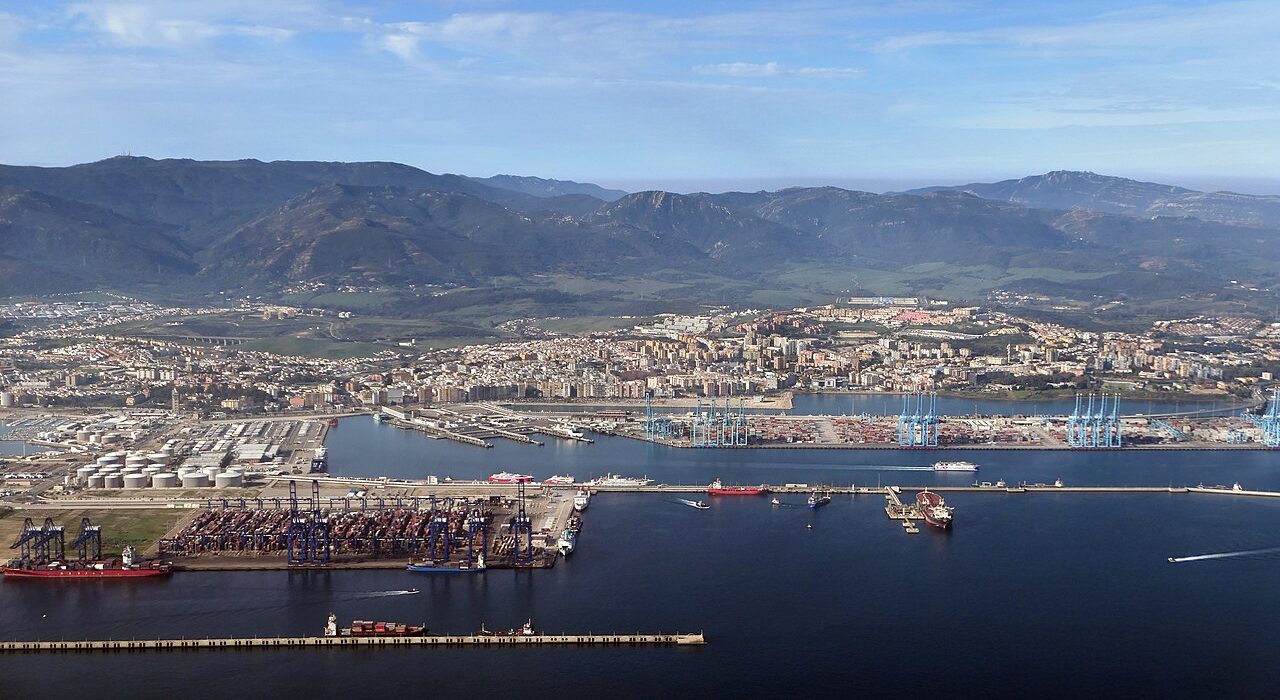
Between the roar of the containers that move more than 5.1 million TEUs a year and the whisper of the waves that once bathed the ancient Medina of Al-Yazira, Algeciras is a city that refuses to be defined at a single glance. Here, the industrial might of a strategic port between the Mediterranean and the Atlantic coexists with the calm of a history dating back to the landing of Tariq ibn Ziyad in 711 AD. While one part of the city gazes toward Africa across the Strait, the other takes refuge in narrow streets where the fishing tradition and the Andalusian legacy still beat strongly.
The must-seesWhat to see in Algeciras: the essentials
Torre de los Adalides (Tower of the Adalides)
This historic monument is one of the few visible vestiges remaining of the old wall and fortress that defended the city during the Reconquista. Originally built in the 14th century, the tower served as an advanced lookout point to protect access to the town from the mainland. Although its structure has undergone modifications over the centuries, it retains the characteristic sturdiness of the military architecture of the period. It is an ideal place to pause and reflect on the historic sieges that shaped the fate of Algeciras, especially the crucial siege of 1342-1344. You can visit it in its urban setting, incorporating its view into a stroll through the old town at no entrance cost.
Museo Municipal de Algeciras (Municipal Museum of Algeciras)
Housed in a historic building, this museum is the perfect gateway to understanding the evolution of the city from its origins to the present day. Its rooms hold a varied collection that includes archaeological finds from the Roman fish-salting factory and objects that narrate the daily life of its inhabitants through the centuries. It stands out for offering essential context to appreciate the open-air monuments, explaining the importance of Algeciras as a commercial and military enclave. It is a recommended visit for rainy days or for history lovers looking to delve beyond the surface. Admission is usually affordable and opening hours are adapted to typical tourist visits.
Fuerte de San García (Fort of San García)
Situated in an elevated position overlooking the bay, this fort is an imposing display of military engineering designed to protect the port from enemy attacks. Its strategic location made it possible to control maritime traffic and defend the coast, serving as a key point in the defense of the Strait of Gibraltar. Today, its ruins and preserved structures offer spectacular panoramic views over the sea and the city, making it a unique natural lookout. It is a place that combines military history with scenic beauty, ideal for those seeking photography and silence away from the bustle of the center. Access is free and allows you to explore its surroundings at your leisure.
Acueducto de El Cobre (El Cobre Aqueduct)
This work of hydraulic engineering is a fascinating testament to the technical capacity of the past to supply water to the population and local industries. Built to transport water from nearby springs to the urban center, its arches and structure remain standing as a monument to human ingenuity. It is a distinctive feature of the Algeciras landscape that often goes unnoticed by the hurried traveler, but which deserves a stop to be appreciated in its entirety. Its state of preservation allows for a close look at the materials and construction techniques used in its time. It is located in an area that invites a leisurely walk to admire its architecture from different angles.
Factoria Romana de Salazones
This archaeological site is tangible proof of the economic importance Algeciras held during the Roman Empire, dedicated mainly to the production of garum (fermented fish sauce) and salted fish. The ruins allow you to walk among the ancient tanks and structures where fish was processed for export throughout the Mediterranean. It is an essential site for understanding the city’s seafaring vocation, which has been tied to the sea for thousands of years not only as a transport route but also as a source of wealth. The visit offers a direct connection with the area’s industrial past, showing how fishing activity has been the driving force of the local economy since antiquity. It is an open-air monument integrated into the urban fabric, recalling the Roman legacy in Andalusia.
Other points of interest
- The Centro de Interpretacion de la Cultura Andalusi (Andalusian Culture Interpretation Center) offers a detailed look at the Muslim heritage in the region.
- The Hornos Romanos de El Rinconcillo (Roman Kilns of El Rinconcillo) complement the visit to the factory by showcasing the ceramic industry of the period.
- The Museo de Arte Sacro (Museum of Sacred Art) houses religious pieces of great historical and artistic value from the city.
- The Ave Maria Stella Maris sculpture pays homage to the Virgin of the Sea, patron saint of sailors.
- The Casa natal de Paco de Lucía (Birthplace of Paco de Lucía) is a pilgrimage site for lovers of flamenco and Spanish guitar.
- The Reloj de sol (sundial) is a decorative and functional element in the public space that marks the passage of time.
- The Excalibur Castle is an architectural curiosity that draws attention for its distinctive style.
- The Plaza del Coral-Paco de Lucía is an urban space dedicated to the memory of the brilliant guitarist from Algeciras.
- The Puerta del Mar (Sea Gate) marks one of the historic access points to the port area and the sea.
- The monument to the Escopeteros de Getares (Riflemen of Getares) recalls the forest guards and their work in the area.
- The Monumento al Pandero (Monument to the Pandero) celebrates the musical and flamenco tradition of the land.
- The Parque del Centenario (Centennial Park) serves as a large green viewpoint for resting and observing the surroundings.
- The Toro de Osborne (Osborne Bull) nearby is an unmistakable visual icon of the Spanish landscape.
- The image of the Virgen de la Palma (Virgin of the Palm) presides over local devotion and its main festivities.
- The monument to Blas Infante Pérez de Vargas honors the father of Andalusian nationalism.
- The Estatua Alfonso XI (Statue of Alfonso XI) recalls the king who conquered the city in the 14th century.
- The monument to Francisco Javier Castaños Aragorri highlights the figure of this distinguished military man.
🍂 Otoño
En otoño las temperaturas bajan gradualmente y pueden aparecer algunas lluvias de los 601.5mm anuales. Es una estación encantadora para probar la gastronomía local con menos turistas. Lleva siempre un paraguas plegable en tu mochila por si acaso.
What to do in Algeciras
Algeciras offers specific activities ranging from immersing yourself in Roman history to enjoying the vibrant Andalusian festive life. You can wander through the Casco Antiguo (Old Town) to get lost in its narrow streets and traditional architecture, or visit La Bajadilla to feel the authentic seafaring atmosphere next to the fishing port. If you travel in summer, it is essential to take part in the Fiestas Patronales de Nuestra Señora de la Palma (Patron Saint Festivities of Our Lady of the Palm) in August, with its solemn maritime procession, or enjoy the Algeciras Jazz Festival in July, which fills spaces like the Parque de las Acacias with music. For a more family-friendly experience, the El Rinconcillo neighborhood and its park offer the perfect space for relaxation, while in December the Mercado Medieval (Medieval Market) transforms Plaza Alta into a historical scene full of crafts and performances.
Algeciras in a day: express itinerary
If you’re short on time, this itinerary lets you see the city’s essentials in one intense but complete day:
- 09:00 – Factoria Romana de Salazones (Roman Fish-Salting Factory): Start the morning by connecting with the city’s origins and understanding its importance in the Roman Empire.
- 11:00 – Museo Municipal de Algeciras (Algeciras Municipal Museum): Delve deeper into local history and visit the archaeological rooms to contextualize what you saw earlier.
- 13:30 – Lunch in La Bajadilla: Head to the old fishing quarter to taste ortiguillas fritas (fried sea anemones) or fideos con chirlas (noodles with clams) in an authentic setting.
- 16:00 – Fuerte de San García (San García Fort): Climb up to this military enclave to enjoy the best panoramic views of the bay and take photographs.
- 18:00 – Torre de los Adalides and the Old Town: End the day strolling through the historic heart, seeing the tower, and soaking up the atmosphere in the squares lined with orange trees.
Where to eat in Algeciras: local gastronomy
Where to stay in Algeciras
Casco Antiguo
El corazón histórico de la ciudad con calles estrechas y arquitectura tradicional andaluza. Alberga la mayoría de los monumentos históricos, plazas con naranjos y una oferta concentrada de bares de tapas.
La Bajadilla
Antiguo barrio de pescadores situado junto al puerto pesquero, conocido por su ambiente marinero auténtico y sus numerosos chiringuitos y restaurantes de pescado fresco.
El Rinconcillo
Zona residencial tranquila cerca del centro que cuenta con el parque más grande de la ciudad, ideal para paseos familiares y descanso lejos del ruido portuario.
San García
Barrio comercial y residencial en expansión que conecta el centro con las zonas altas, caracterizado por tener grandes superficies comerciales y una vida local activa.
Punta Carnero
Zona costera al sur de la ciudad famosa por sus vistas panorámicas al Estrecho de Gibraltar y a África, con un entorno natural de acantilados y faro.
Los Barrios (zona perimetral / industrial)
Nota: Los Barrios es un municipio independiente, no un barrio de Algeciras. Se omite para cumplir la instrucción de no inventar. Se sustituye por Zona Portuaria/Industrial como referencia visual.
How to get to Algeciras
The city is well connected by land, with train and bus being the main options for domestic travelers.
| Medio | Duración | Precio aprox. | Frecuencia |
|---|---|---|---|
| Tren | Variable según origen | Variable | Diaria (Estación Algeciras-Paco de Lucía) |
| Autobús | Variable según origen | Económico | Frecuente (Estación de Autobuses del Puerto) |
It’s important to note that the train station does not currently have AVE service, so rail journeys tend to be medium-distance or regional.
How to get around Algeciras
To get around within the city, the most practical and widespread option is the urban bus. The bus network covers the different neighborhoods, connecting the historic center with areas such as La Bajadilla, El Rinconcillo, and the more distant residential areas. Given the city’s topography and the distances between some points of interest, such as Fuerte de San García or Punta Carnero, public transport is a useful tool for saving time and effort, especially on the hottest days.
Weather in Algeciras
Live webcam — La Línea de la Concepción*
Algeciras* The nearest webcam to Algeciras is in La Línea de la Concepción, 8.9 km away.
Source: Windy Webcams
Best time to visit Algeciras
Day trips from Algeciras
Algeciras serves as an excellent base for exploring the cities of the region. Its location in the Campo de Gibraltar and its connection to the province of Cádiz make it easy to reach other nearby towns rich in history and scenery. You can plan outings to discover the surrounding area and enjoy the diversity that southern Andalusia offers, taking advantage of the transport infrastructure available from the bus or train station.
Things you didn’t know about Algeciras
Did you know that Algeciras handles the largest volume of container traffic in Spain? With more than 5.1 million TEUs moved in 2022, its port is one of the most important in the Mediterranean, a fact that contrasts with its population of 123,000 inhabitants.
The city’s name hides a geographical secret: it derives from the Arabic ‘Al-Jazira Al-Khadra’ (The Green Island), referring to an island that has since disappeared off its coast and was founded in 711 AD after the landing of Tariq ibn Ziyad.
In the world of cinema, scenes from the James Bond film ‘Die Another Day’ (2002) were shot at the Port of Algeciras. Its industrial infrastructure was so convincing that it stood in for an exchange in North Korea.
The city has a surprising connection to music and entertainment: Isabel Pantoja, ‘La Tonadilla’, was born in the La Bajadilla neighborhood on August 2, 1956, and the birthplace of Paco de Lucía is now a monument open to visitors.
In 1309 and 1344, Algeciras was the scene of crucial sieges during the Reconquista, and it was the first Spanish city to use documented gunpowder in defensive combat during the siege of 1342-1344.
The Algeciras Conference of 1906 brought together representatives from 13 nations to resolve the Moroccan crisis, an international diplomatic milestone held in the city’s current Teatro Florida.
The Los Alcornocales Natural Park, which includes part of Algeciras, is home to one of the largest and best-preserved cork oak forests in the world, with an area exceeding 170,000 hectares.
Finally, Algeciras boasts the only bullring in Spain built specifically with an octagonal shape, the Plaza de Toros de Las Palomas, inaugurated in 1890 and declared a Site of Cultural Interest.
Who Algeciras is for
Algeciras is a versatile destination that especially appeals to history lovers interested in the Reconquista and the Roman legacy, as well as foodies seeking authentic gastronomic experiences based on fresh fish. It is also ideal for travelers in transit who need a comfortable stop before crossing to Africa or continuing along the coast, and for families looking for quiet areas such as El Rinconcillo. With 190,904 annual travelers (INE) and 53% foreigners, the city offers a blend of local authenticity and functional tourist services.
💡 ¿Sabías que...?
- ● Algeciras posee el mayor volumen de tráfico de contenedores de España y uno de los más importantes del Mediterráneo, moviendo más de 5,1 millones de TEUs en 2022 según datos portuarios. (Autoridad Portuaria de la Bahía de Algeciras)
- ● El nombre de Algeciras deriva del árabe 'Al-Jazira Al-Khadra' (La Isla Verde), haciendo referencia a una isla hoy desaparecida frente a su costa que fue fundada en el año 711 d.C. tras el desembarco de Tariq ibn Ziyad. (Real Academia Española / Ayuntamiento de Algeciras)
- ● En 1309 y nuevamente en 1344, Algeciras fue escenario de asedios históricos cruciales durante la Reconquista, siendo la primera ciudad española en utilizar pólvora documentada en combate defensivo durante el sitio de 1342-1344. (Crónicas de Alfonso XI / Museo de Historia de Algeciras)
- ● La Conferencia de Algeciras de 1906 reunió a representantes de 13 naciones para resolver la crisis marroquí, marcando un hito diplomático internacional celebrado en el actual Teatro Florida de la ciudad. (Ministerio de Asuntos Exteriores de España)
- ● El Parque Natural de Los Alcornocales, que incluye territorio de Algeciras, alberga uno de los bosques de alcornoques más extensos y mejor conservados del mundo, con una superficie superior a las 170.000 hectáreas. (Junta de Andalucía - Consejería de Medio Ambiente)
- ● Isabel Pantoja, conocida como 'La Tonadilla' y figura máxima de la copla española, nació en el barrio de La Bajadilla de Algeciras el 2 de agosto de 1956. (Biografías oficiales / Prensa verificada)
- ● Escenas de la película de James Bond 'Muere otro día' (2002) fueron rodadas en el Puerto de Algeciras y sus alrededores, simulando un intercambio en Corea del Norte debido a la similitud de sus infraestructuras industriales. (IMDb / Productora Eon Productions)
- ● Algeciras cuenta con la única plaza de toros de España construida específicamente con forma octogonal, la Plaza de Toros de Las Palomas, inaugurada en 1890 y declarada Bien de Interés Cultural. (Consejería de Cultura de la Junta de Andalucía)
Frequently asked questions about Algeciras
How many days do I need to see Algeciras?
With an average stay of 1.8 nights according to tourism data, a weekend is enough to see the main attractions such as the Factoría Romana (Roman Fish-Salting Factory), the Museo Municipal (Municipal Museum), and to enjoy the local cuisine in La Bajadilla. If you want to include day trips to the surrounding region or enjoy the local fiestas patronales (patron saint festivals), consider extending your visit to 3 or 4 days.
What is the best time of year to visit Algeciras?
The best time is from May to October, when the average summer temperature is 21.7°C, ideal for outdoor activities. The winter months are mild with an average of 13.3°C, but the annual rainfall of 601.5 mm means you could encounter some rainy days.
How do I get to Algeciras from Madrid?
You can get there by train to Algeciras-Paco de Lucía station (no direct AVE service; it requires a transfer or a medium-distance train) or by bus from the Estación de Autobuses del Puerto de Algeciras (Algeciras Port Bus Station). Both options offer regular connections with the capital.
Where can I check the events calendar?
For more practical information on opening hours, tickets, and the updated schedule of festivals such as the Jazz Festival or the Mercado Medieval (Medieval Market), you can check the official Algeciras tourism website.