Soria
Castilla y LeónClimate
The unmistakable aroma of the crispy rind of a freshly fried torrezno (pork belly strip) greets you the moment you cross the threshold of any bar in the center, marking the start of a culinary experience that defines this city. With a population of barely 39,000 inhabitants, Soria invites you to abandon your usual pace and stroll through streets where Celtiberian history and the poetry of Machado intertwine beneath a uniquely clear light. It is not just a stop along the way, but a destination where silence and Romanesque monumentality allow you to reconnect with what truly matters, far from the tourist crowds.
The must-seesWhat to See in Soria: The Essentials
Numancia Archaeological Site
This Celtiberian city settlement is universally famous for its heroic resistance against the Roman Empire, transcending its local origins to become a symbol of freedom. The archaeological site includes visible remains of walls and dwellings that allow visitors to imagine the lives of those inhabitants who fought for their independence. Its historical significance is profound, often cited as a heroic feat that defines the region’s character. To visit, it is advisable to check the opening hours, as it is located on the outskirts, but the immersion in ancient history is absolutely worth it. It is a place where the past feels tangible in every stone.
Concatedral de San Pedro (Co-Cathedral of St. Peter)
This city co-cathedral features an extraordinary Romanesque cloister, one of the most important artistic gems in the province. Although the temple was rebuilt in the Gothic style in the 16th century, its heritage value and essence lie in its Romanesque past, sharing status with Santo Domingo and San Juan de Duero. The cloister offers a serene and detailed beauty that deserves a leisurely visit to appreciate its capitals. It is a central element for understanding the religious and artistic evolution of Soria over the centuries. Its location in the city center makes it easily accessible on any walking tour.
Claustro de San Juan de Duero (Cloister of St. John of Duero)
Founded in the 12th century by the Order of the Hospitallers of St. John of Jerusalem, this monument is perhaps the most iconic image of the city. Its early 13th-century cloister stands out, famous for its interlaced arches that display a fascinating blend of Islamic and Christian influences. It was declared a National Monument in 1882 and currently functions as an annex to the Museo Numantino, ensuring its conservation and accessibility. The views from the courtyard towards the Duero River and the city are spectacular, especially at sunset. It is a magical place where the architecture tells stories of crusades and coexistence.
Palacio de los Condes de Gómara (Palace of the Counts of Gómara)
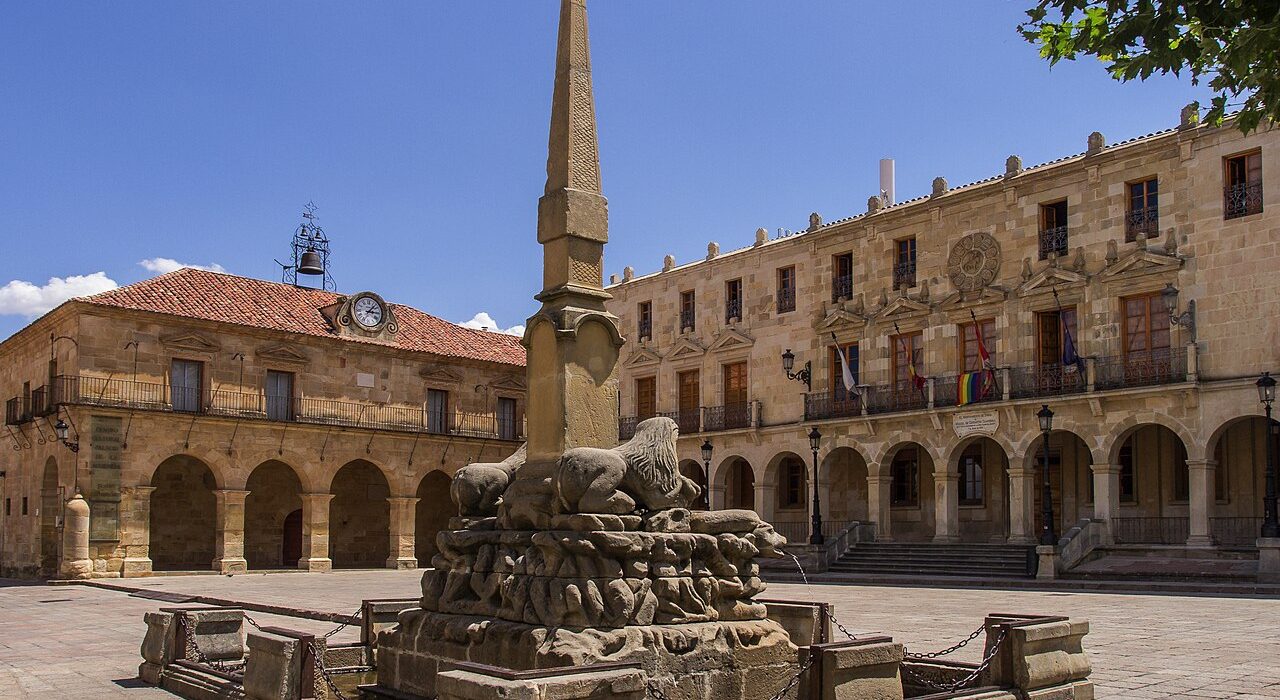
This 16th-century noble palace, financed by the Mesta (the powerful medieval sheepherders’ guild), stands out imposingly for its Renaissance Herrerian façade, one of the most beautiful in Castile and León. It currently functions as the Palace of Justice, but its exterior is an essential heritage landmark for exploring Soria’s historic center. The architecture reflects the economic power of the era and the city’s importance on the wool route. It occupies a privileged position visually dominating the square, making it an obligatory point of reference. Its stone façade is a perfect example of the Renaissance style in Soria.
Museo Numantino (Numantine Museum)
This museum is the result of the merger of the Provincial and Numantine museums following a renovation that began in the 1980s, housed in a building designed by José Luis Morales and Marín. It displays the chronological evolution of the province from the Lower Paleolithic to the Middle Ages, featuring a first-rate Celtiberian section. It is the ideal place to contextualize everything you will see in the city, from Numancia to the medieval period. The rooms are organized to offer an educational and comprehensive journey through local history. Without a doubt, it is an indispensable cultural stop for any traveler interested in the past.
Castillo de Soria
Located in the Parque del Castillo (Castle Park), this Arab-origin site from the 9th-10th centuries features the ruins of the keep and a pool with strategic views over the city and the Duero River.
Iglesia de Nuestra Señora de la Mayor
Built on top of the 12th-century Romanesque church of San Gil, this church was rebuilt in the 16th century and witnessed the life of the poet Antonio Machado in Soria.
Círculo Amistad Numancia
Popularly known as the Casino, this heritage building from the mid-19th century has represented the city’s social and cultural life since 1848, making it one of the oldest casinos in Spain.
Iglesia de Santo Domingo
Known as the “Bible in Stone” for the iconographic richness of its late 12th-century Romanesque sculptures, this church is currently occupied by the Community of the Poor Clares (Comunidad de Hermanas Clarisas).
Museo Casa de los Poetas
Located on the third floor of the Casino, this interactive space brings you closer to the poetry of Machado, Bécquer, and Gerardo Diego through verses, objects, and sounds that recreate their era.
San Saturio
Tradition places the hermit Saturio in the caves along the Duero in the 6th century, and the current temple, rebuilt in 1698, combines Baroque architecture with a natural setting that inspired Bécquer and Machado.
Muralla Medieval de Soria
This historic walled enclosure had an original perimeter of approximately 4,100 metres and today retains fragments and vestiges integrated into the urban landscape, following the topography of the hills.
Puente de Piedra
This medieval bridge of Romanesque origin, documented since 1157, crosses the Duero River and serves as the main access route to the Claustro de San Juan de Duero (Cloister of San Juan de Duero).
Plaza Mayor
The nerve centre of the historic quarter, whose history was shaped by the granting of a market charter in the time of Alfonso X, is the recommended starting point for guided tour itineraries.
What to do in Soria
Soria offers specific activities based on its rich historical heritage, its connection to the nature of the Duero River, and its vibrant cultural life centred on poetry and gastronomy. You can wander through the old town discovering the traces of the poets, enjoy a picnic in the riverside parks, or immerse yourself in Celtiberian history by visiting the museums. Moreover, the city is an excellent spot for mushroom foraging in autumn or simply strolling to its strategic viewpoints, such as the Mirador del Castillo or the Mirador de los Cuatro Vientos, to take in the panoramic views.
Soria in a day: express itinerary
If you are short on time, this itinerary lets you see the essentials of the city on foot, taking advantage of the proximity of the monuments in the historic centre.
- 10:00 AM – Plaza Mayor: Start your day in the nerve centre, near the Palacio de los Condes de Gómara (Palace of the Counts of Gómara), to feel the city’s pulse and admire the Renaissance architecture.
- 11:30 AM – Concatedral de San Pedro: Head to this Romanesque gem to visit its extraordinary cloister and understand the city’s religious importance.
- 13:30 PM – Torrezno lunch: Make a mandatory stop at any bar in the centre to try the most emblematic local snack, Torrezno de Soria, before continuing.
- 16:00 PM – Claustro de San Juan de Duero: Cross the Puente de Piedra to visit this 12th-century monastery and enjoy its unique arches and the river views.
- 18:00 PM – Museo Numantino or Casa de los Poetas: End the afternoon choosing between ancient history at the Museo Numantino or literary sensibility at the Casa de los Poetas inside the Casino.
Where to eat in Soria: local gastronomy
Where to sleep in Soria
Casco Antiguo (Zona Centro)
El corazón histórico de Soria, donde se concentran los principales monumentos y la mayor parte del encanto medieval de la ciudad. Sus calles peatonales y plazas invitan a pasear y descubrir su rica historia.
San Juan de Duero - El Soto
Situado al otro lado del río Duero, este barrio es conocido por el emblemático Monasterio de San Juan de Duero y por sus amplias zonas verdes. Es ideal para paseos junto al río y disfrutar de la naturaleza sin alejarse de la ciudad.
El Calaverón
Un barrio residencial tranquilo y bien conectado, cercano al centro pero con su propia personalidad. Ofrece una mezcla de comercios locales y servicios, ideal para quienes buscan una estancia más auténtica y relajada.
Los Pajaritos
Conocido principalmente por ser el hogar del Estadio de Los Pajaritos, este barrio es vibrante y activo, especialmente en días de partido. Cuenta con buenas infraestructuras y zonas verdes.
Santa Clara - Vistahermosa
Una zona con predominio de nuevas construcciones y urbanizaciones, que ofrece una mayor tranquilidad y espacios más modernos. Ideal para quienes buscan confort y un ambiente más contemporáneo.
How to get to Soria
To reach the capital, you can use the conventional rail network or the bus services, the latter often being the most direct option from other provincial capitals.
| Medio | Duración | Precio aprox. | Frecuencia |
|---|---|---|---|
| Tren | Variable según origen | Variable | Diaria (Estación de Soria sin AVE) |
| Autobús | Variable según origen | Económico | Diaria (Estación de autobuses de Soria) |
How to get around Soria
The historic centre of Soria is very walkable, but for longer distances or outer neighbourhoods, the city has an urban bus service that connects the different points of interest. It is a practical system for getting around if you are staying in areas like Los Pajaritos or Santa Clara and want to visit the centre without walking long distances.
Weather in Soria
Best time to visit Soria
Day trips from Soria
From Soria you can take day trips to other cities in the Castile and León region, taking advantage of its strategic location in the east of the autonomous community. Although the focus is on the capital, the province offers many nearby destinations to explore the historical and natural richness of the area, making it an ideal starting point to discover the rural surroundings and neighbouring towns.
Who is Soria for
Soria is a perfect destination for couples seeking romance and tranquillity, as well as for history and culture lovers who want to delve into the Celtiberian and Romanesque past without the crowds. It is also ideal for foodies interested in Castilian gastronomy made with top-quality products, especially torrezno and wild mushrooms, and for families looking for a safe environment full of green spaces like the Parque del Castillo or the banks of the Duero River.
Frequently Asked Questions about Soria
How many days do I need to see Soria?
With an average stay of 1.89 nights according to the INE, a weekend is enough to see the essentials. However, to enjoy the gastronomy and museums at a leisurely pace, 2 or 3 days are recommended.
What is the best time of year to visit Soria?
The best time is from June to September, when the average summer temperature is 19.6°C. Avoid winter if you don’t like low temperatures, as the average is 4.1°C.
How do I get to Soria from Madrid?
You can get there by bus from the bus station or by conventional train from the Soria station, although there is currently no direct AVE line.
Where can I find updated information on schedules?
For more practical information on museum opening hours, tickets, and cultural events, I recommend checking the official Soria tourism website.
Is Soria a tourist city?
Yes, it receives around 136,416 travelers annually (INE), with 9% being foreigners. It is a quiet destination, far from mass tourism, ideal for a relaxing trip.