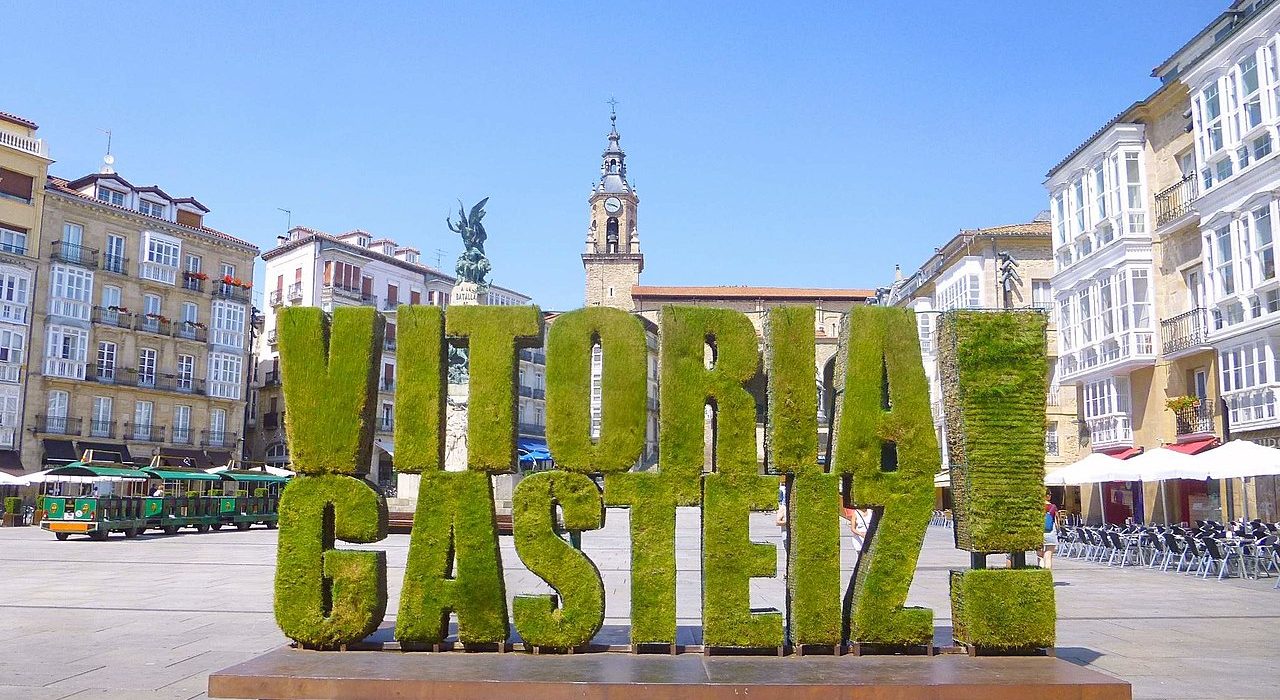
Vitoria-Gasteiz
País VascoClimate
Daily budget
Being European Green Capital is not just a title; it is a reality you breathe as you walk through its parks and pedestrian streets. Vitoria-Gasteiz combines a fascinating medieval history, visible in its almond-shaped old town, with an institutional modernity that makes it the political heart of the Basque Country. With a population of 250,000, it offers a perfect human scale to get lost among its arcaded squares and enjoy a cuisine that ranges from the most traditional pintxo (Basque tapas) to internationally acclaimed haute cuisine.
The must-seesWhat to see in Vitoria-Gasteiz: the essentials
Catedral de Santa María (Old Cathedral)
This 13th-century Gothic monument is probably the city’s most emblematic building, world-famous because its complex guided tours ‘Abierto por Obras’ (Open for Works) inspired Ken Follett’s novel. Visitors can access it from Tuesday to Sunday between 10:00 and 19:00 to tour its naves and discover the secrets of its restoration, although purchasing a ticket is mandatory to take part in these guided experiences. The cathedral stands out not only for its religious architecture but also for how it has allowed tourists to see the conservation process in real time, becoming a benchmark in heritage management.
Los Arquillos (The Little Arches)
Designed by Justo Antonio de Olaguibel in the late 18th century, this Neoclassical architectural ensemble is an essential piece of urban engineering for understanding the city’s expansion. Its main function was to connect the Medieval Quarter with the new expansion area, bridging a 23-metre height difference by creating a platform on which stone dwellings and arcaded galleries were built. Today, walking along Los Arquillos allows you to appreciate the constructive integration that links the main square with the old city, offering privileged views of the transition between eras.
Catedral de María Inmaculada (New Cathedral)
Popularly known as the New Cathedral, this imposing Neo-Gothic building is the most important of its style in the city and is located opposite La Florida Park in the romantic ensanches (19th-century expansions). Although the Diocese was established in 1862, construction of this Latin cross plan temple did not begin until 1904 and its inauguration was delayed until 1969. Its façade and towers dominate the urban landscape of the expansion district, contrasting with the sobriety of the historic quarter and showcasing Vitoria-Gasteiz’s architectural evolution towards modernity.
Basque Parliament
This institutional building, situated opposite La Florida Park, has housed the Basque legislative seat since the 1980s and represents the democratic power of the autonomous community. The interior lobby is notable for its use of noble materials combined with contemporary details, creating a solemn yet open space for citizens. Guided tours are available that explain in detail its democratic function and the history of Basque institutions, making it a point of interest for those wishing to understand regional politics.
Santuario de Nuestra Señora de Estíbaliz (Sanctuary of Our Lady of Estíbaliz)
Located on the outskirts, this 12th-century Romanesque sanctuary is dedicated to the patron saint of Álava and was declared a Bien de Interés Cultural (Heritage of Cultural Interest) in 1931. The structure retains early Gothic elements, with its cloister being particularly noteworthy, and houses a valuable museum of sacred art inside. The available guided tours offer an in-depth look at the history and religious heritage of the site, making it an essential cultural excursion for understanding devotion and medieval art in the province.
Other points of interest
- Plaza de la Virgen Blanca (White Virgin Square): The heart of Vitoria’s social life and the setting for its festivals, presided over by the obelisk monument to the Battle of Vitoria.
- Parque de la Florida (Florida Park): A romantic 19th-century botanical garden in the city center, home to more than 95 species of trees.
- Casco Medieval (La Almendra Medieval – The Medieval Almond): The city’s old town, with an almond-shaped layout and charming streets named after old guilds.
- Palacio-Casa del Marqués de la Alameda (Palace-House of the Marquis of Alameda): The finest example of domestic Baroque architecture in Vitoria, built between 1731 and 1735, notable for its double eaves.
- Palacio Villa Suso (Villa Suso Palace): A 16th-century Renaissance palace commissioned by Martín de Salinas, ambassador to Charles V, now a conference center.
- Palacio de la Provincia (Provincial Palace): Built in 1918 for the Ajuria family, it serves as the official residence of the Lehendakari (Basque President) and stands out for its traditional Basque style.
- Palacio de la Diputación Foral de Álava (Palace of the Provincial Council of Álava): An institutional building from 1833 made of ashlar stone, representing the historic architecture of Álava with its grand staircase and atrium.
- Monumento a la Batalla de Vitoria (Monument to the Battle of Vitoria): A work by Gabriel Borrás y Abella in the Plaza de la Virgen Blanca, commemorating the victory against Napoleon.
- Plaza del Machete (Machete Square): A historic square behind the Church of San Miguel, where city officials once swore their oaths of office.
- Casco Antiguo de Vitoria-Gasteiz (Old Town of Vitoria-Gasteiz): Preserves the medieval layout founded by Sancho VI the Wise, with streets named after old trades, such as Correría and Herrería.
- BIBAT Museoa: A museum complex in the Bendaña Palace housing the Fournier Playing Card collection and the Álava Museum of Archaeology.
- Iglesia de San Vicente Mártir (Church of St. Vincent Martyr): The last church built in the old town, it is the only example in Álava of a hall church with access to the tower.
- Iglesia de San Miguel (Church of St. Michael): A Gothic church from the 14th and 15th centuries with a single nave and ribbed vaults, forming part of the city’s familiar skyline.
- Iglesia de San Pedro (Church of St. Peter): A 14th-century Gothic parish church attached to the defensive wall, with a fortress-like appearance visible from the outside.
- ARTIUM Museoa: The Basque Museum of Contemporary Art, a benchmark institution with a major collection of Basque and Spanish artists.
- Anillo Verde (Green Belt): A network of peri-urban parks surrounding the city, ideal for walking or cycling, with the Salburua wetlands as a highlight.
- Plaza de la Constitución (Constitution Square): A historic space known as Plaza Nueva, featuring 18th-century neoclassical architecture and uniform arcades.
- Plaza Nueva (New Square): Located in the heart of the old town, built in the 19th century in a neoclassical style with semicircular arches and sandstone.
- Itinerario Muralístico (Mural Trail): A route of large-scale murals on the facades of the Casco Medieval that have revitalized the neighborhood with urban art.
- Plaza de España (Spain Square): A commercial and entertainment hub located in the city.
🍂 Otoño
En otoño el clima se vuelve más fresco y húmedo, pintando los parques de colores ocres. Es un momento excelente para probar la gastronomía local sin las multitudes del verano. Viste por capas para adaptarte a los cambios de temperatura durante el día.
What to do in Vitoria-Gasteiz
Vitoria-Gasteiz offers cultural and outdoor activities ranging from visits to contemporary art museums to immersion in nature in its peri-urban parks. You can explore the Green Ring (Anillo Verde), a network of parks ideal for walking or cycling where the Salburua wetlands stand out, or delve into history by visiting the BIBAT Museoa to see the Fournier playing card collection, considered probably the finest in the world. For lovers of modern art, ARTIUM Museoa is a benchmark with an important collection of Basque and Spanish artists, while the Mural Itinerary (Itinerario Muralístico) allows you to discover how urban art has revitalized the facades of the Medieval Quarter.
Vitoria-Gasteiz in one day: express itinerary
If you are short on time, this route allows you to see the essentials of the city in a busy but enjoyable day:
- 10:00 – Cathedral of Santa María: Start the morning with the guided tour ‘Abierto por Obras’ (Open for Works) to understand the city’s Gothic history.
- 12:00 – Medieval Quarter and Plaza de la Virgen Blanca: Stroll through the old guild streets like Correría and Herrería until you reach the social heart of the city.
- 14:00 – Lunch in the Old Town: Enjoy the local cuisine in the bars of the Medieval Almond (Almendra Medieval).
- 16:00 – Los Arquillos and Plaza Nueva: Walk up the neoclassical arches to see the connection with the city expansion and wander around Plaza Nueva.
- 18:00 – Parque de la Florida and New Cathedral: End the day relaxing in the botanical garden and admiring the neo-Gothic facade of the New Cathedral.
Where to eat in Vitoria-Gasteiz: local cuisine
Where to stay in Vitoria-Gasteiz
Casco Viejo (Almendra Medieval)
Ideal para sumergirse en la historia, disfrutar de la arquitectura y la ruta de pintxos.
Ensanche
Zona comercial y de negocios con arquitectura del siglo XIX, ideal para compras y pasear.
How to get to Vitoria-Gasteiz
The city is well connected by road, train, and air, making access easy from the main Spanish capitals.
| Medio | Detalles | Conexiones |
|---|---|---|
| Tren | Estación de Vitoria-Gasteiz (sin AVE). | Destinos directos: Madrid, Barcelona, Burgos, San Sebastián. |
| Autobús | Estación de Autobuses de Vitoria-Gasteiz. | Compañías: Alsa, La Unión, Bilman Bus. |
| Avión | Aeropuerto de Vitoria (Foronda) (VIT) a 11 km. | Conexiones aéreas nacionales e internacionales. |
| Coche | Acceso por autopistas y carreteras nacionales. | Carreteras: A-1, AP-68, N-622, N-240. |
How to get around Vitoria-Gasteiz
Urban transport is efficient and the city centre is largely pedestrianised, making it ideal for walking. You can use the city bus and tram to move between different neighbourhoods and reach points further from the historic centre. The city is designed to be walkable, especially in the Old Town where access is free all day and it is recommended to explore on foot to appreciate the architecture.
Weather in Vitoria-Gasteiz
Best time to visit Vitoria-Gasteiz
Day trips from Vitoria-Gasteiz
Vitoria-Gasteiz’s strategic location makes it easy to take day trips to nearby cities. Bilbao is a popular destination for combining urban culture and renowned museums, while Logroño offers a unique food and wine experience in the neighbouring La Rioja region. Both cities are well connected and allow you to enjoy a change of scenery in just a few hours of travel.
Who is Vitoria-Gasteiz for?
Vitoria-Gasteiz is an ideal destination for couples and families seeking tranquillity and culture, as well as for history lovers keen to explore a well-preserved medieval old town. Foodies will find paradise here among its pintxos bars and Michelin-starred restaurants, while active travellers can enjoy the Anillo Verde (Green Ring) and its cycling routes. With an average stay of 2.28 nights and nearly 400,000 visitors per year (INE), it is a city that welcomes tourists who value quality of life and heritage.
Frequently asked questions about Vitoria-Gasteiz
How many days do I need to see Vitoria-Gasteiz?
With an average stay of 2.28 nights according to tourism data, two full days are enough to see the main attractions such as the Old Cathedral, Los Arquillos and the Casco Medieval (Medieval Quarter), as well as to enjoy the local cuisine.
Is Vitoria-Gasteiz expensive?
Prices are moderate for a provincial capital; an average meal costs between €12 and €20, and you can find accommodation in hostels from €20-35 per night or 3-star hotels between €60 and €100.
What is the best time to visit Vitoria-Gasteiz?
The best time is summer (June to September) with average temperatures of 20°C, although if you prefer to avoid crowds and enjoy the autumn atmosphere, spring is also pleasant before the August festivities.
How do I get to Vitoria-Gasteiz from Madrid?
You can arrive by train at Vitoria-Gasteiz Station with direct services from Madrid, or by bus via the Bus Station with companies such as Alsa. It is also accessible by car on the A-1 motorway.