Palencia
Castilla y LeónClimate
More than eight hundred years ago, in 1208, the ‘Studium Generale’ was founded here, Spain’s first university, long before Salamanca. Today, that same land that witnessed the birth of higher learning welcomes you with the imposing Cristo del Otero (Christ of the Mound), a 21-meter sculpture watching over the plains of Tierra de Campos from a hilltop. Palencia is not just a stopover between capitals; it is a destination with its own soul, where medieval history blends with wood-fired oven gastronomy and a tranquility that invites you to lose yourself in its unhurried streets.
The must-seesWhat to see in Palencia: the essentials
Palencia offers a concentrated monumental heritage that you can explore on foot, highlighting its Gothic cathedral and its arcaded main square. Here are the places you cannot miss:
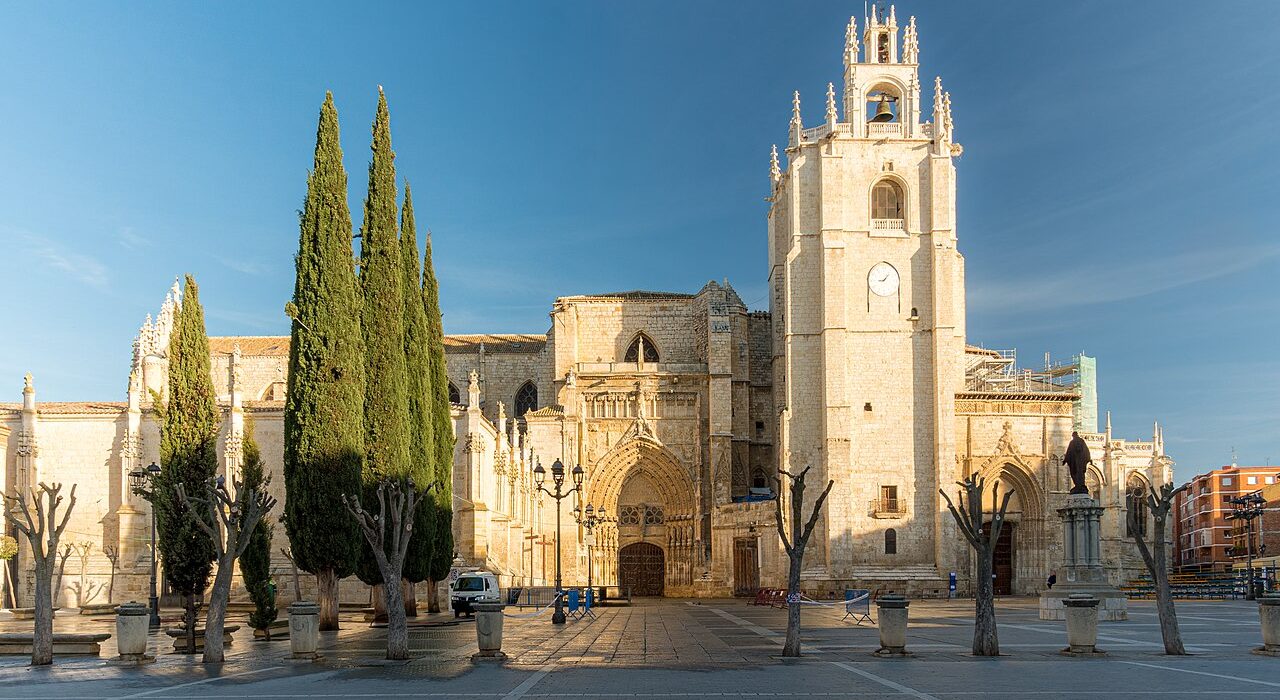
Catedral de San Antolín (Cathedral of Saint Antoninus)
According to tradition, it was founded by Saint Dominic of Guzmán in the 13th century and declared a National Monument in 1931. Its architecture is a fascinating blend of Isabelline Gothic and Plateresque elements from the 16th century, consecrated in 1534. Inside, be sure to look for the mausoleum of the Marquises of Poza and the funerary niches decorated with praying statues, which are true Renaissance jewels.
Ayuntamiento de Palencia (Palencia City Hall)
This Neoclassical building, designed by Jerónimo de la Gándara and completed in the 19th century, presides over the Plaza Mayor, occupying the only side without arcades. Inside, the main staircase features a mural by the painter Germán Calvo that narrates the history and tribulations of the city. Keep in mind that institutional visits usually require prior request during office hours.
Monasterio de las Claras (Monastery of the Poor Clares)
This is a Gothic temple built around the year 1400, famous for being the setting where Zorrilla placed his story of Margarita La Tornera. It houses the Cristo de la Buena Muerte (Christ of the Good Death) and features a highly expressive Baroque High Altar from the 18th century. The monastic church has a Greek cross floor plan with a triple apse, offering unique religious architecture in the city.
Iglesia de San Miguel (Church of Saint Michael)
It is an 11th-century temple declared a Site of Cultural Interest in 1992, known for its openwork tower standing 70 meters high. Legend places the marriage of Rodrigo Díaz de Vivar and Doña Jimena here, highlighting its transitional architecture between Romanesque and Gothic styles. It is open to the public for tourist visits and religious worship, serving as a key point in the eponymous neighborhood.
Monumento a la Virgen (Monument to the Virgin)
Founded in 1523 by the order of Dominican nuns in the heart of the historic center, this complex is famous for the production of traditional sweets. Its church boasts an octagonal floor plan and a Baroque dome that make it unmistakable in the urban skyline. Visits to the temple are subject to the community’s worship schedule, so it is recommended to respect prayer times.
Cañón de Artillería y Acueducto Las Gatillas (Artillery Cannon and Las Gatillas Aqueduct)
This 18th-century hydraulic infrastructure recalls the cultural importance of barge transport in the region via the Canal de Castilla. In Palencia, the aqueducts of El Tesoro and Las Gatillas stand out as heritage points of interest visible on the southern route. Access is free as they are located on public roads, allowing you to follow the history of the canal on foot or by bicycle.
Plaza Mayor (Main Square)
A civic space from the 17th century promoted by Charles I, rectangular in shape with arcades on three of its four sides. The fourth side is occupied by the City Hall, a Neoclassical building from 1878, serving as the commercial and social nerve center of the city. It is an open public space accessible throughout the day, ideal for sitting and observing local life.
Museo Catedralicio (Cathedral Museum)
Located in the antechamber and chapter house of the Cathedral, it houses jewels of painting and sculpture such as the canvas of Saint Sebastian by El Greco and the diptych of The Passion by Pedro Berruguete. Other notable works include a relief by Felipe Bigarny and an anamorphic portrait of Charles V. Access is included with the general entrance to the Catedral de San Antolín, facilitating a combined visit.
Museo de Farmacia y Medicina (Museum of Pharmacy and Medicine)
Located in the Casa del Cordón, a prominent civil Renaissance palace from the 16th century commissioned by Francisco Núñez de Paz. It treasures collections of prehistoric, Roman, and medieval pieces in a palace featuring a façade with coats of arms and a Franciscan cord. Opening hours vary by season, and access includes free entry for EU citizens according to current regulations.
🍂 Otoño
Si visitas Palencia en otoño, el ambiente es tranquilo y las temperaturas bajan, pero aún son agradables para caminar por el casco histórico. Puedes aprovechar para visitar el Museo de Farmacia y Medicina de Palencia y el Ayuntamiento de Palencia sin prisas. Lleva calzado impermeable, porque las lluvias empiezan a ser más frecuentes.
What to do in Palencia
Palencia offers deeply rooted cultural and religious activities, especially during its patron saint festivities and Holy Week. You can immerse yourself in tradition by descending into the Crypt of San Antolín on September 2 to drink water from the well with healing properties, or follow the moving processions of Holy Week, declared a Festival of International Tourist Interest. For a more relaxed experience, stroll through the Huerta de Guadián (Guadián Orchards) along the Carrión River, the city’s main green lung, perfect for sports and relaxation in the Parque del Salón de Isabel II.
Palencia in one day: express itinerary
If you are short on time, this route will allow you to see the essentials of the capital of Palencia on foot:
- 10:00 – Catedral de San Antolín (Cathedral of San Antolín): Start the day admiring the Isabelline Gothic architecture and the mausoleum of the Marquises of Poza.
- 12:00 – Plaza Mayor and Ayuntamiento (Town Hall): Stroll through this 17th-century civic space and observe the mural by Germán Calvo inside the consistory.
- 14:00 – Lunch in the Casco Antiguo (Old Town): Enjoy roasted lechazo churro (suckling lamb) or patatas a la importancia (potatoes in saffron sauce) at one of the bars on Calle Mayor.
- 16:30 – Monasterio de las Claras (Convent of the Poor Clares): Visit the temple where Zorrilla set Margarita La Tornera and admire the Baroque High Altar.
- 18:00 – Acueducto Las Gatillas (Las Gatillas Aqueduct): End the day with a walk south to see the hydraulic engineering of the Canal de Castilla at sunset.
Where to eat in Palencia: local gastronomy
Where to stay in Palencia
Casco Antiguo / Centro
El corazón histórico y monumental de Palencia. Aquí se concentran la Catedral, la Plaza Mayor y la Calle Mayor, principal arteria comercial. Es una zona con mucho ambiente, ideal para pasear, tapear y descubrir la historia de la ciudad.
Barrio del Cristo
Situado en un cerro al norte de la ciudad, este barrio es famoso por albergar el Cristo del Otero, uno de los símbolos de Palencia. Es una zona más tranquila y residencial, con impresionantes vistas panorámicas de la ciudad y la comarca de Tierra de Campos.
Huerta de Guadián / Ribera del Carrión
Zona verde junto al río Carrión. Es el principal pulmón de la ciudad, un lugar perfecto para el ocio, el deporte y el relax. El Parque del Salón de Isabel II es un jardín romántico y el lugar de encuentro por excelencia para los palentinos.
Barrio de San Miguel
Un barrio con encanto alrededor de la iglesia de San Miguel, de aspecto fortificado y con una torre gótica singular. Es una zona con sabor medieval, más tranquila que el centro pero a pocos pasos de la Calle Mayor, con algunos bares de tapas muy recomendables.
Ave María
Un barrio residencial y popular, conocido por su ambiente animado y su mercado. Ofrece una visión más auténtica de la vida local palentina, alejada del circuito puramente turístico. Ideal para quienes buscan una experiencia local y gastronomía casera.
How to get to Palencia
The city is well connected by train and road, located just 48 km from Valladolid.
| Medio | Duración | Precio aprox. | Frecuencia |
|---|---|---|---|
| Tren (Palencia) | Variable según origen | Variable | Diaria (sin AVE directo) |
| Autobús | Variable | Económico | Regular |
Getting around Palencia
The center of Palencia is very walkable, but for longer distances you have the city bus. The train station is easily accessible to reach the center, from where you can walk to most points of interest.
Weather in Palencia
Best time to visit Palencia
Day trips from Palencia
Given its location in the autonomous community of Castile and León, Palencia is an ideal starting point for exploring cities in the region. Its proximity to Valladolid, just 48 km away, stands out particularly, making them the two closest provincial capitals in Spain. You can also explore the surroundings of the Canal de Castilla (Canal of Castile), visiting the quadruple lock system in Frómista, one of the most important hydraulic engineering works of the Enlightenment.
Palencia facts you didn’t know
Did you know that the name ‘Palencia’ comes from the Latin ‘Pallantia’, derived from the term ‘palla’ (rock) used by the Vaccei, the pre-Roman people of the area? Furthermore, the city holds curious artistic secrets, such as one of the gargoyles on the Cathedral representing a photographer with his camera, added in homage to José Usieto during a restoration.
Another surprising fact is that Elena de Céspedes, one of the first documented intersex or transgender individuals in Europe, worked as a surgeon in Palencia in the 16th century before being prosecuted by the Inquisition. And of course, let’s not forget that the imposing castle of Ampudia, in the province, served as a filming location for the Hollywood blockbuster ‘El Cid’ (1961).
Who is Palencia for?
Palencia is ideal for history lovers seeking authenticity without crowds, foodies wanting to try the best lechazo (suckling lamb), and families needing green spaces like the Huerta de Guadián. Its compact size and cultural offerings make it perfect for weekend getaways or cultural travelers.
Frequently asked questions about Palencia
How many days do I need to see Palencia?
1 or 2 days are enough to see the main monuments such as the Cathedral, the Plaza Mayor, and the Cathedral Museum, as well as enjoying the local gastronomy.
What is the best time to visit Palencia?
The best time is from June to September, taking advantage of average temperatures of 19.3°C and events like the Fiestas de San Antolín (Saint Antoninus Festivities) in September.
How do I get to Palencia from Madrid?
You can reach it by train at Palencia station (no direct AVE) or by bus. The city is 48 km from Valladolid, which facilitates regional connections.
Where can I find more practical information?
To expand on information regarding opening hours, tickets, and the updated agenda, consult the official tourism website of Palencia.