Badajoz
ExtremaduraClimate
Daily budget
Crossing the Puente de Palmas (Palmas Bridge) at sunset offers one of the city’s most iconic views, where golden light reflects off the Herrerian granite as the Guadiana River flows calmly toward the Portuguese border. With a population of 150,000, Badajoz is not merely a transit point but the economic and cultural capital of Extremadura, a place where history blends with vibrant, accessible urban life. Here, the walls of the Recinto Abaluartado (Bastioned Enclosure) are not just ancient stone; they are the perfect setting to understand why this city has always been a crossroads between Spain and Portugal.
The must-seesWhat to see in Badajoz: the essentials
Villa romana de La Cocosa
This archaeological site is a hidden treasure certifying the region’s deep Roman footprint, recognized as a monument by UNESCO. Inside, you can observe the remains of a Roman villa that narrates daily life from centuries ago, a verifiable fact making it a must-visit for lovers of ancient history. Although access may require prior planning as it is a specific site, the richness of its mosaics and structures makes it unique within Badajoz’s tourism landscape.
Catedral Metropolitana de San Juan Bautista
This cathedral-fortress stands out for its imposing Gothic style, combining an austere, defensive exterior with a richly decorated interior that surprises visitors. To visit, note its specific opening hours from 11:00 to 13:00 and 18:00 to 19:00, and be aware that admission is required to enter the temple. It is the religious heart of the city and a perfect example of how sacred architecture adapted to the defensive needs of the frontier.
Museo Extremeño e Iberoamericano de Arte Contemporáneo
The MEIAC positions itself as a reference center for contemporary art from Spain, Portugal, and Ibero-America, housed in a building that is a work of art in itself. With extensive hours from 10:00 to 20:00, it is the ideal place to escape the heat and enjoy avant-garde exhibitions that dialogue with the region’s cultural identity. Its permanent collection and temporary exhibitions make it a modern highlight within the historic center.
Recinto Abaluartado
This modern fortification, built between the 17th and 19th centuries, extends beyond the Cerca Vieja (Old Wall) as part of a complete defensive system that still survives today. Walking through it, you will find significant remnants allowing you to understand the city’s military strategy during centuries of border conflicts. It is an open space perfect for strolling and appreciating the magnitude of the walls that protected Badajoz.
Catedral de San Juan Bautista de Badajoz
As a Metropolitan Catholic temple in Extremadura, this monument serves as the seat of the archdiocese and a fundamental pillar of local religious identity. Its importance lies not only in its worship but in its historical status within the autonomous community, marking the spiritual center of the capital of Badajoz.
Casa Mudéjar
This civil construction from the 14th or 15th century is an exceptional witness to Mudéjar architecture in the region, built of adobe and brick with a portico of marble columns. It currently houses the Tourist Office and a Temporary Exhibition Hall, making it your first point of contact to plan your visit and learn about the city’s heritage.
Other points of interest
- Jardines de la Alcazaba (Alcazaba Gardens): Enjoy these Arabic-inspired gardens located inside the Alcazaba, an oasis of tranquility.
- Puente de Palmas: Cross this monumental granite bridge in Herrerian style that connects the two banks of the Guadiana River.
- Museo Arqueológico Provincial (Provincial Archaeological Museum): Visit this museum guarding the history of the Badajoz Carnival, declared a Festival of National Tourist Interest.
- Teatro López de Ayala: Attend a performance at this historic theater, a key monument for performing arts in Badajoz.
- Plaza de Toros: Discover the museum and documentation center on the history of bullfighting located in the city’s bullring.
- Casco Histórico (Historic Center): Stroll through this urban area featuring walls of Arab origin and picturesque streets with arcades, the starting point for local cuisine.
- Museo Extremeño del Deporte (Extremadura Sports Museum): Explore the facilities dedicated to Extremaduran sports in this specific Badajoz museum.
- Ermita de Bótoa: Head to the outskirts to visit this Marian temple, a prominent religious monument.
- Iglesia de Santa Catalina: Step inside this Church of Saint Catherine, another example of the city’s religious heritage.
- Puente Serapio: Observe this other monument crossing the river, complementing Badajoz’s historical infrastructure.
- Plaza de Minayo: Take a break in this square in Badajoz city, a charming public space.
- Plaza de San Francisco: Walk through this square in Badajoz, Extremadura, surrounded by history and local life.
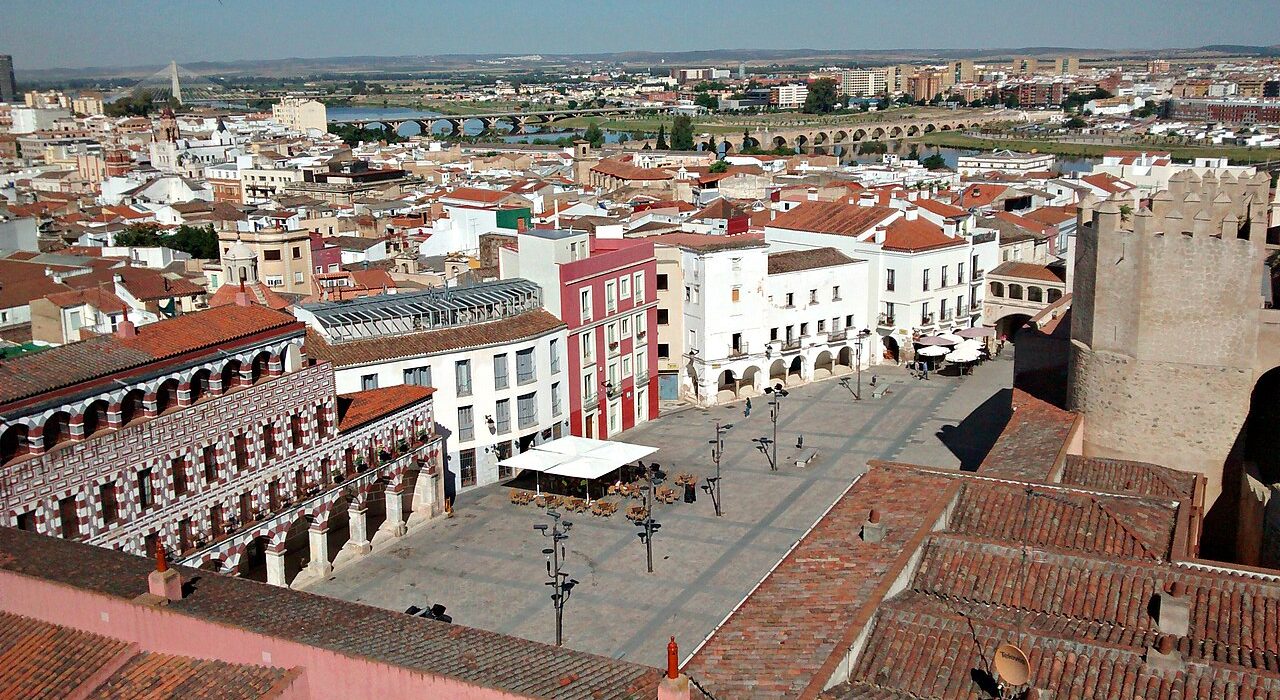
- Plaza Alta: Admire this historic-monumental complex, one of the most emblematic squares in Badajoz (Spain).
- Museo del Carnaval (Carnival Museum): Immerse yourself in the festivities at this museum dedicated to the history of the carnival, declared a Festival of National Tourist Interest.
- Parroquia de San José: Visit this religious monument that is part of the city’s network of churches.
- Yacimiento de El Jardal: Discover this archaeological site that sheds more light on the area’s past.
- Dolmen de Toriñuelo: Do not miss this megalithic monument, proof of the antiquity of human settlement.
- Alcazaba de Badajoz: Climb up to this historic-monumental complex for the best views of the city.
- Cerca Vieja: Walk along this ancient extension of the walled enclosure that survives with important historical remains.
- Torre de Espantaperros: Look up at this landmark, which also serves as a visual highlight.
- Plaza de España: End your tour at this square, a commercial or entertainment hub in the nerve center of the city.
🍂 Otoño
Si visitas Badajoz en otoño, el clima sigue siendo perfecto para el turismo antes de que llegue el frío. Es ideal para visitar la Alcazaba con tranquilidad y disfrutar de la gastronomía local. Lleva siempre un paraguas pequeño por si te pilla algún chaparrón inesperado.
What to do in Badajoz
Badajoz offers top-tier cultural and festive activities, with its Carnival and themed markets standing out above all. If you visit the city in February, you cannot miss the Badajoz Carnival, considered one of the best in Spain for its parades and musical groups, nor the Almossassa festival, which commemorates the founding of the city with a unique Arab-themed market and atmosphere. For nightlife, the Valdepasillas neighborhood is the place to be, full of modern bars and restaurants, while the Old Town is ideal for strolling and discovering monuments during the day.
Badajoz in one day: express itinerary
If you are short on time, this itinerary allows you to see the essentials of the Extremaduran capital in 24 hours:
- 10:00 – Casa Mudéjar (Mudejar House): Start here to pick up information at the Tourist Office and admire the architecture from the 14th or 15th centuries.
- 11:30 – Catedral Metropolitana de San Juan Bautista (Metropolitan Cathedral of Saint John the Baptist): Take advantage of the morning opening hours (11-13) to visit the Gothic interior of this fortress temple.
- 13:30 – Lunch in the Casco Histórico (Historic Center): Sample local gastronomy in the streets with arcades before continuing.
- 16:00 – MEIAC: Dedicate the afternoon to contemporary art at this museum, open until 20:00.
- 18:30 – Recinto Abaluartado (Bastioned Enclosure) and Alcazaba: End the day walking along the walls and enjoying sunset views over the Guadiana River.
Where to eat in Badajoz: local gastronomy
Where to sleep in Badajoz
Casco Antiguo
El corazón histórico de la ciudad, ideal para pasear y descubrir monumentos.
Valdepasillas
Barrio moderno con una gran oferta de bares, restaurantes y vida nocturna.
How to get to Badajoz
Getting to the city is easy thanks to its road, train, and air connections, making it an important hub near Portugal.
| Medio | Detalles | Conexiones |
|---|---|---|
| Tren | Estación de Badajoz (sin AVE). | Destinos directos: Madrid, Cáceres, Mérida, Lisboa (según Renfe). |
| Autobús | Estación de Autobuses de Badajoz. | Compañías: Alsa, Leda, Damas. |
| Avión | Aeropuerto de Badajoz (BJZ) a 14 km. | Conexiones nacionales e internacionales limitadas. |
| Coche | Acceso por autovías principales. | Carreteras: A-5, A-66, N-432, N-V. |
How to get around Badajoz
Once in the city, urban transport is efficient. You can use the city bus to move between different neighborhoods and attractions if you do not want to walk. Given the concentration of monuments in the Casco Histórico (Historic Center), walking is often the best way to explore it.
Weather in Badajoz
Best time to visit Badajoz
Day trips from Badajoz
If you have extra time, Mérida is the perfect nearby city for an excursion. Located a short distance away, it offers exceptional Roman heritage that complements a visit to the Villa romana de La Cocosa in Badajoz. It is an ideal opportunity to compare the history of the two Extremaduran capitals in a single trip.
Who is Badajoz for?
Badajoz is an ideal destination for history buffs and military architecture enthusiasts, thanks to its Bastioned Enclosure (Recinto Abaluartado) and the Alcazaba. It is also perfect for foodies eager to taste authentic Jamón Ibérico and Torta de la Serena without the crowds found in more mass-tourism hotspots. Travelers seeking an authentic, tranquil experience away from mass tourism will find here a city of 150,000 inhabitants with full services and a pleasant pace of life.
Frequently Asked Questions about Badajoz
How many days do I need to see Badajoz?
With a one-day express itinerary, you can see the essentials like the Cathedral and MEIAC, but 2 or 3 days are recommended to leisurely visit the Roman Villa of La Cocosa, the Alcazaba, and enjoy the local gastronomy without rushing.
Is Badajoz expensive?
No, it is an affordable destination. An average meal costs between €15–€25, and you can find accommodation in hostels for €20–€35 per night or 3-star hotels ranging from €60–€90, according to indicative city data.
When is the best time to visit Badajoz?
The best times are spring and autumn, avoiding summer when the average temperature rises to 26°C and can become stifling for street tourism. In winter, the average is 9°C, which is cool but manageable.
How do I get to Badajoz from Madrid?
You can reach it by train from Badajoz Station (no AVE service) with a direct route from Madrid, or by car via the A-5 highway. Bus connections are also available through companies like ALSA.