Logroño
La RiojaClimate
Daily budget
The clinking of glasses on Calle Laurel as evening falls, the aroma of chorizo and choricero pepper rising from a pot of patatas a la riojana (Rioja-style potatoes), and the golden light filtering through the leaves of Parque del Ebro on the banks of the Ebro River: Logroño is a city to be enjoyed with all five senses. This capital of La Rioja, with around 152,000 inhabitants, is the crossroads where the Camino de Santiago (Way of St. James) stops to eat pinchos (small bites) and where every September wine skins are emptied in the Plaza del Ayuntamiento (Town Hall Square). Here you eat as if every day were a festival, you walk among monuments eight centuries old, and you sleep without breaking the bank.
The must-seesWhat to see in Logroño: the essentials
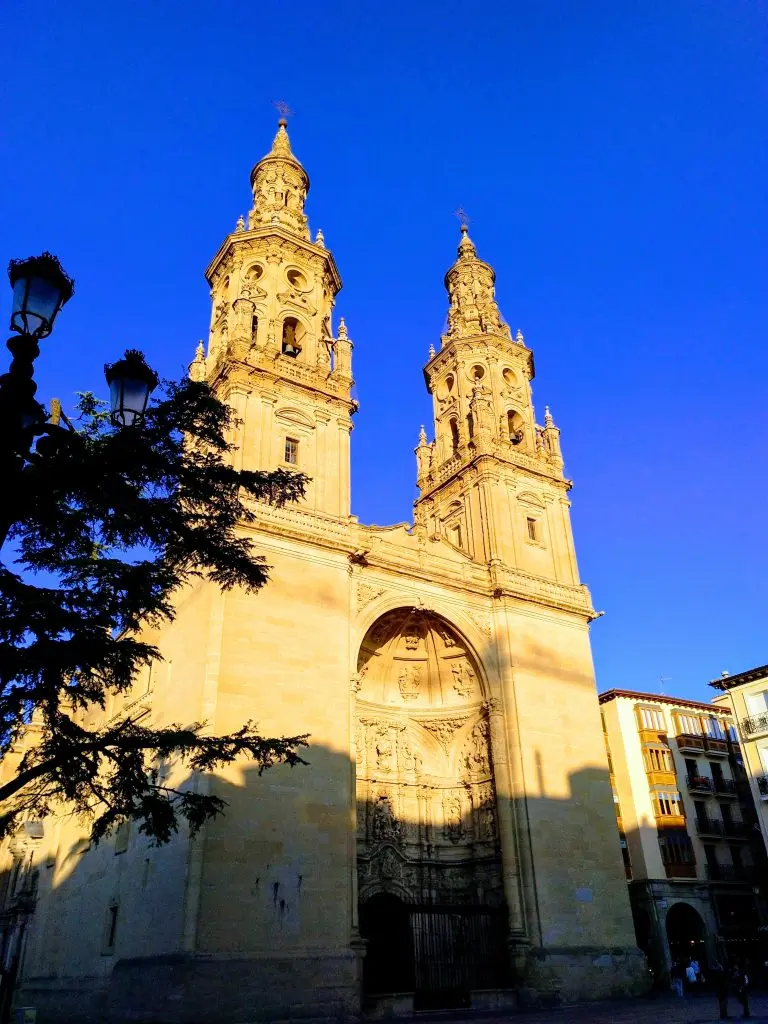
Concatedral de Santa María de la Redonda (Co-Cathedral of Saint Mary of the Round)
The Concatedral de Santa María de la Redonda is the most emblematic building in Logroño’s old town and a must-stop just steps from the Camino de Santiago. Declared a Bien de Interés Cultural (Site of Cultural Interest), this co-cathedral has undergone numerous renovations and expansions over the centuries that have shaped the complex we know today, with its twin towers crowned by a Baroque balustrade. It is declared a Bien de Interés Cultural and is one of the essential stops when visiting Logroño’s old town, very close to the Camino de Santiago. It is well worth pausing at its main altarpiece and the choir stalls, two of its most celebrated treasures.
Iglesia de Santa María de Palacio (Church of Saint Mary of the Palace)
If there is one church in Logroño that stands out from the rest, it is Santa María de Palacio, famous for its octagonal tower topped with a spire, popularly known as “la aguja” (the needle). It is the only one of the four churches in Logroño’s old town that retains its cloister, and it stands between Calle Mayor and Calle Ruavieja, very close to the Albergue de Peregrinos (Pilgrims’ Hostel). Beneath its cloister, the remains of the old church of Santa María la Vieja were found, founded by the Order of the Holy Sepulchre, and tradition holds that a donation from Alfonso VII “The Emperor” made it possible to build the current temple, known as the Imperial Church of Santa María de Palacio. Its Latin cross floor plan and its location next to the historic city wall make it a landmark of Logroño’s heritage.
Museo de La Rioja (Museum of La Rioja)
To understand the history of this region in a single visit, the Museo de La Rioja, at 19 Calle San Agustín, is the most convenient option. It houses collections spanning the history of La Rioja from prehistory to the contemporary era, with Celtiberian, Roman, and medieval pieces, and also features an art gallery with works by Riojan and Spanish artists. The building itself is worth the visit: a palace built in the mid-18th century by Don Pedro Ruiz de la Porta. It opens Tuesday to Saturday from 10:00 to 20:30, and Sundays and public holidays from 10:00 (check the full schedule on the official website). The museum has three floors that can be explored through a virtual tour on its website.
Parque del Ebro (Ebro Park)
With 150,000 square meters of green space along the river, Parque del Ebro is the main natural enclave within the city for outdoor activities such as walking, exercising, or enjoying the banks of the Ebro. Inaugurated in 1993 after the renovation of a former wetland area, it is now filled with trees and fully integrated into the urban surroundings. Together with the Espolón, the Parque de la Ribera, and the Parque del Carmen, it forms one of the city’s best-known green spaces. Its main entrance is on Calle del Norte in Logroño, and on weekends it fills with locals running, cycling, or simply sitting and watching the Ebro flow by.
Muralla del Revellín and Cubo del Revellín
The Cubo del Revellín is a defensive tower that housed the city’s first prison, and together with the western gate it forms the only visible stretch of Logroño’s ancient walls. It is an artillery bastion built around a triple platform formed by the combination of a wall walk and two firing galleries with embrasures, the upper one without a permanent roof and the lower one under a flat vault. In its upper cylinder were the embrasures for the cannons with the sighting slits for the marksmen, and in the lower part there was a powder magazine where ammunition and cannons were stored. It offers a quick and intriguing glimpse of the walled Logroño, very close to the old town.
Calle Laurel
A famous street in the old town, popularly known as ‘the elephants’ path’ for its lively nightlife, it is packed with dozens of bars specializing in pinchos and tapas from La Rioja’s gastronomy, with one absolute classic: the traditional ‘matrimonio’ (anchovy and boquerón pairing).
Calado de San Gregorio
A traditional underground Riojan winery carved beneath the old town, a singular example of the city’s subterranean wine architecture, with visitable tinajas (large earthenware jars) and lagares (wine presses), open from 10:00 to 14:00 and from 16:00 to 20:00 every day.
Paseo del Espolón
Flanked by statues of illustrious figures, it is the city’s main social meeting point, with origins dating back to 1757 as a public promenade outside the walls, and the six stone statues representing monarchs gifted by General Espartero in 1856.
Iglesia de San Bartolomé
A church of Romanesque origin from the 12th century, initially built attached to the medieval wall, declared a Bien de Interés Cultural (Site of Cultural Interest) on September 18, 1866, with a Gothic doorway featuring archivolts and figures of saints, and a Gothic main altarpiece inside.
Iglesia de Santiago el Real
Its Gothic doorway and tower are the most outstanding elements of the complex, declared a Bien de Interés Cultural and linked by tradition to the early days of Christian evangelization in the region.
Puente de Piedra
The traditional entry point for Jacobean pilgrims into the city, over the Ebro River, and the subject of restoration work carried out under historical heritage protection programs.
Monasteries of San Millán de Yuso and Suso
A monastic complex declared a UNESCO World Heritage Site in 1997 for being the birthplace of the Spanish language, with the Glosas Emilianenses (10th-11th centuries) at Suso, about 50 km from Logroño in San Millán de la Cogolla.
Bodegas Franco-Españolas
A commercial and entertainment establishment linked to Rioja’s winemaking tradition, very much present in the city’s tourist offering.
For updated opening hours, tickets, and cultural events, the official Logroño tourism website is the most reliable reference.
🍂 Otoño
Si visitas Logroño en otoño, el ambiente es tranquilo y los paseos junto al Ebro se llenan de colores cálidos. Las temperaturas invitan a refugiarse en el Museo de La Rioja o a descubrir la iglesia de Santa María de Valvanera con calma. Consejo: lleva un buen chubasquero, porque la lluvia va cogiendo protagonismo según avanza la estación.
What to do in Logroño
Logroño offers an agenda centered around tapeo (bar-hopping for tapas) on Calle Laurel, shopping at the Mercado de San Blas, strolls along the Espolón and the Ebro Park, and visits to wineries such as the Calado de San Gregorio or Bodegas Franco-Españolas. The Fiestas de San Mateo, in September, are the great excuse to visit the city: during those days anyone can take part in the grape stomping in the Plaza del Ayuntamiento, a tradition institutionalized since 1956. If you enjoy walking, the stretch of the Camino de Santiago as it passes through Logroño is one of the liveliest, with the entrance over the Puente de Piedra and the exit toward Navarre.
Logroño in a day: express itinerary
- 10:00 – Museo de La Rioja. Start the day with some context: prehistory, Roman times, and a Riojan art gallery, right in the city center.
- 11:30 – Concatedral de Santa María de la Redonda and the old town. Stroll through Plaza del Mercado, La Redonda, and the Iglesia de Santiago el Real, all just a few steps apart.
- 13:00 – Iglesia de Santa María de Palacio. Climb up to see “the spire” and peek into the cloister, with the remains of Santa María la Vieja.
- 14:30 – Tapas crawl on Calle Laurel. Bars serving the “matrimonio” (anchovy and boquerón pairing), morcilla pinchos, and a local wine.
- 17:00 – Puente de Piedra and Parque del Ebro. Cross the Ebro like a pilgrim and wander through the 150,000 m² park along the riverbanks.
- 19:00 – Muralla del Revellín and Paseo del Espolón. End the day with the statues of monarchs gifted by Espartero and a stroll among the locals.
Where to eat in Logroño: local gastronomy
Where to stay in Logroño
Casco Antiguo
El corazón histórico de Logroño, lleno de monumentos, iglesias y calles con encanto.
Calle Laurel
Famosa zona de tapeo con decenas de bares, cada uno con su pincho estrella. Es el epicentro de la vida social y gastronómica.
How to get to Logroño
From Zaragoza, the fastest option is the bus: 1 h 50 min (ALSA), 7 a day.
| From | Direct train | Direct bus | Car |
|---|---|---|---|
| Zaragoza | 2 h 04 min · 7/day Intercity | 1 h 50 min · 7/day ALSA | 1 h 55 min 171 km |
| Vitoria-Gasteiz | — | 1 h 15 min · 14/day Álavabus, ALSA, Bilmanbus | 1 h 05 min 63 km |
| Burgos | 2 h 13 min · 2/day Intercity | 1 h 40 min · 3/day ALSA | 1 h 37 min 134 km |
| Pamplona | — | — | 1 h 10 min 86 km |
| Bilbao | 2 h 20 min · 1/day Intercity | 1 h 30 min · 12/day Álavabus, ALSA, Bilmanbus | 1 h 32 min 136 km |
| Madrid | 3 h 43 min · 2/day Intercity | 4 h · 8/day ALSA | 3 h 58 min 327 km |
| Soria | — | 1 h 15 min · 8/day ALSA | 1 h 28 min 101 km |
| Barcelona | 4 h 04 min · 1/day Intercity | 6 h 05 min · 5/day ALSA | 5 h 14 min 474 km |
| Santander | — | 3 h · 5/day ALSA, Bilmanbus | 2 h 41 min 234 km |
| Lleida | 2 h 53 min · 2/day Intercity | 4 h 05 min · 3/day ALSA | 3 h 26 min 317 km |
Direct trains and buses from the official timetables published by the operators on Spain's National Transport Access Point (a reference Wednesday); driving times from OpenStreetMap. Operators that do not publish their timetables may run more services. Check the timetable before you travel.
How to get around Logroño
The center of Logroño is pedestrian-friendly and easy to explore on foot, making the old town, Calle Laurel, and the Paseo del Espolón a flat, unhurried stroll. To reach other neighborhoods and areas farther from the center, the city has an urban bus network with regular routes. If you arrive by car, the best option is to leave it at your accommodation and forget about it until your day trip.
Weather in Logroño
Best time to visit Logroño
Day trips from Logroño
Logroño’s location in the Ebro corridor makes it a great base for excursions. Vitoria-Gasteiz, Pamplona, and Burgos are the three most common day trips, all within a short drive by highway. The Monasteries of San Millán de Yuso and Suso, about 50 km from Logroño, are an essential visit declared a UNESCO World Heritage Site in 1997 as the birthplace of the Spanish language, since the Glosas Emilianenses (10th–11th centuries) are preserved at Suso.
Things you didn’t know about Logroño
The name Logroño goes way back: it comes from the Celtic word “GRONIO,” meaning ford, referring to its origins next to a ford on the Ebro River. A city that literally owes its name to a river crossing.
The first documented mention of the town (as “Locrunio”) dates from the year 956, when King García Sánchez of Navarre donated it to the Monastery of San Millán de la Cogolla. That small town would become the capital of an entire region centuries later.
Logroño was the first Spanish Capital of Gastronomy, in 2012, and also a European City of Sport in 2014; it was also declared Spain’s first commercial city in 1997. A city that has been “the first” in more things than it seems.
Logroño received its Fuero (municipal charter) in 1095 from King Alfonso VI, making it one of the most influential medieval charters on the peninsula. Almost a thousand years later, it remains a key document in Spanish legal history.
Calle del Laurel has one of the highest densities of bars per square meter in the world, with more than 50 establishments in less than 200 meters. Literally, every step brings a different pincho (small snack).
The Puente de Piedra (Stone Bridge) over the Ebro River, built in the 16th century, is the main historic crossing of the French Way of the Camino de Santiago in the city. Every year, hundreds of thousands of pilgrims cross it before entering La Rioja.
During the Fiestas de San Mateo, anyone can take part in the grape stomping in the Plaza del Ayuntamiento, a tradition institutionalized since 1956. You don’t need to be a winemaker: just have clean feet and plenty of enthusiasm.
The name Logroño appears in the Cantar de Mio Cid (Song of My Cid) as a place passed through during the campaigns of the 11th century. Setting foot in Logroño is, literally, stepping on the same ground as El Cid.
Who Logroño is for
Logroño is, above all, for lovers of gastronomy and tapeo (bar-hopping for tapas): Calle Laurel, with more than 50 bars in under 200 meters, and two Michelin stars in the old town make that clear. It is also a perfect city for pilgrims and walkers traveling the Camino de Santiago, for couples looking for getaways with wine and strolls, and for foodies who want to alternate between a pincho de barra (bar-top snack) and a tasting menu. Families with children will enjoy Parque del Ebro, the monuments of the old town, and children’s menus in the 15-25€ per person range. Backpackers will find hostels from 20-40€ a night right in the center, which makes Logroño a very competitive stop in northern Spain.
Frequently asked questions about Logroño
How many days do I need to see Logroño?
With one well-planned day you can cover the essentials: Concatedral, old town, Parque del Ebro, Muralla del Revellín, Paseo del Espolón, and tapeo on Calle Laurel. If you add the Monasteries of San Millán de Yuso and Suso (about 50 km away) or an excursion to Vitoria-Gasteiz, Pamplona, or Burgos, two days is ideal. The average traveler stay in the city is 1.63 nights, according to INE data.
Is Logroño expensive?
No, compared to other northern capitals. An average meal runs between 15-25€ per person when tapeando, hostels cost 20-40€ a night, 3* hotels between 60 and 100€, and 4-5* hotels between 90 and 200€. The level only goes up if you opt for Michelin-starred restaurants like Tondeluna or Kiro Sushi.
What is the best time of year to visit Logroño?
From May to September, with average temperatures around 22.2°C in summer and 6.7°C in winter, according to climatological data. September also coincides with the Fiestas de San Mateo and the traditional grape stomping in the plaza del Ayuntamiento.
How do I get to Logroño from Madrid?
By direct train from Logroño station, with an approximate duration of between 3 h 15 and 3 h 45 according to Renfe and prices from 30 to 60€. By bus (Alsa) and by road (AP-68, A-12, N-232) you can also arrive without complications.
Is a visit to the Monasteries of San Millán worth it?
Yes, especially if you are interested in the history of the language: the monastic complex was declared a World Heritage Site by UNESCO in 1997 for being the birthplace of Castilian Spanish, and in Suso the Glosas Emilianenses (10th-11th centuries) are preserved, the first annotations in the Castilian language. It is about 50 km from Logroño, in San Millán de la Cogolla, and can be combined into a half-day excursion.
🗺️ Rutas desde Logroño
- How to Get from Logroño to Burgos: Distance, Train, Bus and Car
- How to Get from Burgos to Logroño: Distance, Train, Bus and Car
- How to Get from Logroño to Zaragoza: Distance, Train, Bus and Car
- How to Get from Zaragoza to Logroño: Distance, Train, Bus and Car
- How to Get from Logroño to Pamplona: Distance, Train, Bus and Car
- How to Get from Pamplona to Logroño: Distance, Train, Bus and Car
- How to Get from Vitoria-Gasteiz to Logroño: Distance, Train, Bus and Car
- How to Get from Logroño to Vitoria-Gasteiz: Distance, Train, Bus and Car