Almería
AndalucíaClimate
Daily budget
Imagine strolling through a city where the sun is not just a star in the sky, but the architect that has shaped centuries of history between white walls and Arab fortresses. Almería awaits you to discover how the European desert merges with the Mediterranean, creating a unique landscape where you can walk on the filming sets of western movies and, minutes later, get lost in alleyways that echo the presence of Berber pirates. It is a destination that is not just visited, but felt on the skin thanks to its unparalleled light and an atmosphere that blends the tranquility of the south with the vibrant energy of a historic port.
The must-seesWhat to see in Almería: the essentials
Almería concentrates its most valuable heritage in monuments that narrate its past as a strategic borderland and a cinematic stage.
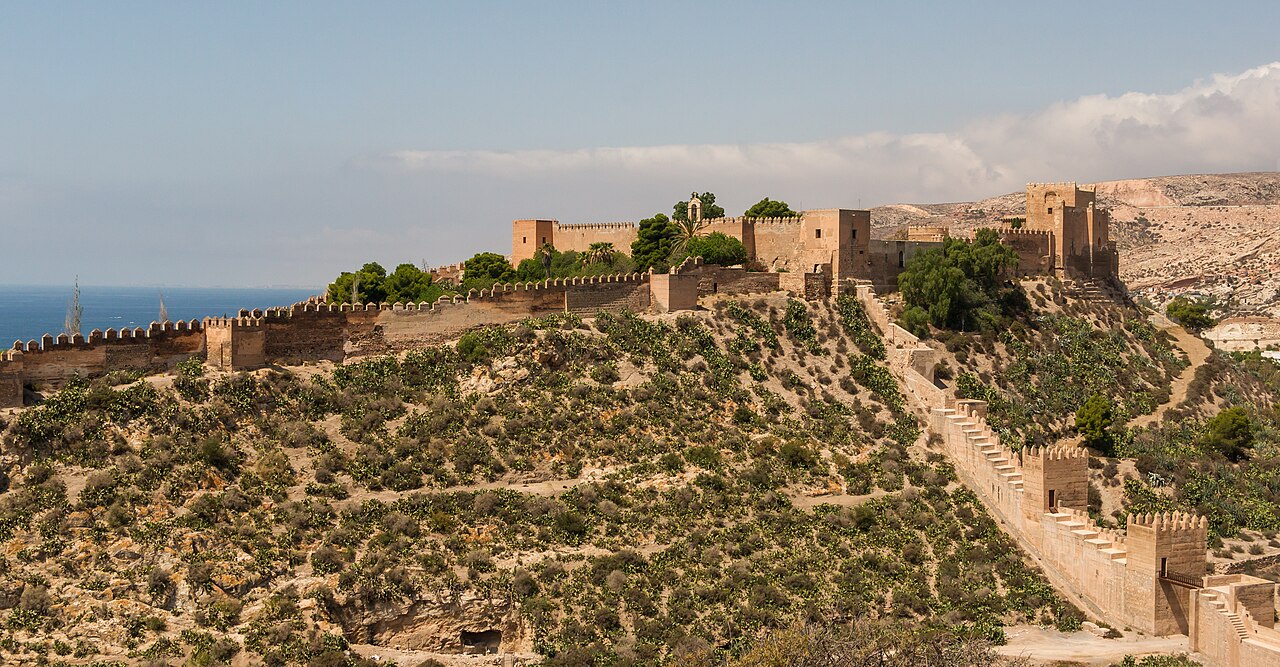
Alcazaba and Walls of Cerro de San Cristóbal
This impressive 10th-century Arab fortress stands as the largest in Spain, dominating the city from its privileged position. When visiting, you will not only tour its walled enclosures but also enjoy spectacular views encompassing the entire city and the Mediterranean Sea. Keep in mind that opening hours vary seasonally, generally operating from 09:00 to 18:00, and purchasing a ticket is mandatory to access this essential monument.
Tabernas Desert
This park hosts the only true desert in continental Europe, an arid environment receiving less than 250 mm of rain per year. Its fame transcends borders for having been the preferred setting for spaghetti western films since the 1960s, preserving iconic sets like Mini Hollywood. It is a place where extreme nature and film history meet in a landscape that seems taken from another continent.
Museum of Almería
As the province’s main archaeological museum, this space is fundamental to understanding the region’s roots, highlighting findings from the prehistoric cultures of Los Millares and El Argar. You can visit it from Tuesday to Saturday from 10:00 to 14:00 and from 17:00 to 20:00, although you must remember it remains closed on Mondays. It is a mandatory stop for those seeking to comprehend the historical depth of the territory before exploring its corners.
Cable Inglés
This structure is an old iron ore loading pier extending over the sea, considered a masterpiece of early 20th-century industrial architecture. Exterior access is free, allowing you to approach and admire this unique engineering feat that connects land and water in a visually striking way. It is one of the city’s most photogenic symbols and a testament to its industrial past.
Civil War Shelters
This network of 4.5 km of underground galleries was built specifically to protect the population from bombings during the Spanish Civil War. Visits are conducted exclusively with a guide at 10:30–13:30 and 17:30–20:30, requiring prior ticket purchase. Walking through these tunnels is an immersive experience that transports you to one of the most critical moments in the city’s recent history.
Cabo de Gata-Níjar Natural Park
This protected area features the Las Amoladeras Visitor Center, located at kilometer 7 of road ALP-202, which offers information on volcanic geology and local flora.
‘Antonio de Torres’ Guitar Museum
It is an interactive space dedicated to the history of the Spanish guitar and to the Almería luthier considered the father of the modern guitar.
Plaza de la Constitución (Old Square)
Located in the heart of the old town, this arcaded square houses the City Hall and the monument to the ‘Coloraos’, serving as the quintessential social meeting point.
Paseo Marítimo and Playa del Zapillo
This 3 km urban coastal promenade features a fine-sand beach next to the city center, ideal for leisure with beach bars and views of the Cable Inglés (English Cable).
Castillo de Santa Ana
Fortification built in the late 16th century in the port as a refuge against pirate attacks, preserving its main watchtower and offering panoramic views.
Iglesia de Santiago
Church founded in 1494 with a Renaissance structure, it is one of the historic parishes of the old town alongside the Cathedral.
Catedral de la Encarnación
This unique 16th-century cathedral-fortress was built for defense against Berber pirates, blending Gothic and Renaissance styles.
Muralla de la Hoya
11th-century wall that enclosed the city to the north, connecting the Alcazaba with the Cerro de San Cristóbal through the Barranco de la Hoya.
Refugio Antiaéreo de la Alcazabilla
Civil War shelter built between 1936 and 1938 under the Plaza de la Alcazabilla, designed by architect Guillermo Langle at a depth of 9 meters.
Playa de los Muertos
Spectacular virgin beach with crystal-clear waters in the Cabo de Gata Natural Park, famous for its beauty and foot access.
Palacio de los Marqueses de los Vélez
Historic castle of the Marquisate of Los Vélez in the Plaza de la Libertad, located in the municipality of Cuevas del Almanzora, featuring coats of arms of the Fajardo family.
🍂 Otoño
Si visitas Almería en otoño, el mar sigue caliente y las multitudes disminuyen significativamente. Aprovecha esta temporada perfecta para probar la gastronomía local sin las aglomeraciones del verano.
What to do in Almería
Almería offers specific activities ranging from historical immersion in its neighborhoods to participation in festivals declared of Tourist Interest.
One of the most authentic experiences is getting lost in the Casco Histórico (Historic Center), ideal for immersing yourself in history and enjoying tapas bars while visiting key monuments. If you prefer a more relaxed and family-friendly atmosphere, the El Zapillo neighborhood awaits with its lively promenade and numerous seaside restaurants. Don’t miss the Mercado Central de Almería, located in a 19th-century iron architecture building, where you can see local produce firsthand. Additionally, if your visit coincides with the right dates, you can enjoy Holy Week, declared of National Tourist Interest, or the Fair and Festivities in honor of the Virgen del Mar in August, with its concerts and bullfighting events.
Almería in one day: express itinerary
To make the most of a short visit, this itinerary covers the main highlights, optimizing time and travel.
- 09:30 – Alcazaba: Start the day with energy by visiting the largest Arab fortress in Spain to enjoy the best panoramic views before the heat sets in.
- 11:30 – Catedral de la Encarnación: Head down from the Alcazaba to the 16th-century cathedral-fortress to admire its blend of Gothic and Renaissance styles.
- 13:30 – Mercado Central and Lunch: Go to the 19th-century iron building to experience the local atmosphere and try a chérigan or migas in the surrounding area.
- 16:00 – Civil War Shelters: Take the guided tour of the underground galleries to learn about the history of civilian protection during the conflict.
- 18:00 – Paseo Marítimo and Cable Inglés: End the day walking along the 3 km coastal promenade, watching the sunset over this masterpiece of industrial architecture.
Where to eat in Almería: local gastronomy
Where to sleep in Almería
Casco Histórico
Ideal para sumergirse en la historia, visitar monumentos y disfrutar de las tascas y bares de tapas.
El Zapillo
Barrio junto a la playa urbana de la ciudad, con un animado paseo marítimo y muchos restaurantes y bares.
How to get to Almería
The city is well connected through various transport infrastructures that facilitate access from different points of the peninsula.
| Medio | Detalles | Conexiones |
|---|---|---|
| Tren | Estación Intermodal de Almería (sin AVE). | Destinos directos: Madrid, Granada, Sevilla. |
| Autobús | Estación Intermodal de Almería. | Compañías: Alsa, Busbam. |
| Avión | Aeropuerto de Almería (LEI). | Ubicado a 9 km de la ciudad. |
| Coche | Red de carreteras principal. | Vías: A-7, A-92, N-340a. |
Getting around Almería
Urban transport is efficient, and the city layout favors walking in certain areas.
To get around the city, you can use the urban bus service covering different zones. Additionally, much of the city center is pedestrianized, making it very comfortable to walk between main attractions such as the Cathedral, Plaza de la Constitución, and the Mercado Central without needing a vehicle.
Weather in Almería
Best time to visit Almería
Day trips from Almería
The city’s strategic location allows for quick getaways to other top-tier cultural destinations in Andalusia.
From Almería, you can organize excursions to Granada, a nearby city full of Nasrid heritage and university culture. You also have the option to travel to Seville, another essential Andalusian capital offering a unique monumental and festive experience. Both cities are listed as nearby destinations for day trips, taking advantage of available transport connections.
Who is Almería for?
This destination is ideal for a wide variety of travelers, from history lovers to families seeking sun and beach.
Almería is perfect for history lovers, given its rich heritage including the Alcazaba and war shelters, and for foodies wanting to try unique dishes like gurullos. It is also an excellent destination for families, especially if staying in El Zapillo near the beach, and for backpackers who can take advantage of budget hostels in the historic center. With 354,510 annual travelers (source INE) and 27% foreigners, it is a place that knows how to welcome all types of tourism with an average stay of 2.19 nights.
Frequently Asked Questions about Almería
How many days do I need to see Almería?
With an average stay of 2.19 nights according to the INE, you have enough time to see the essentials. A one-day express itinerary covers the 4-5 main attractions such as the Alcazaba (Moorish fortress) and the Cathedral, but it is recommended to add another day to visit the Museum of Almería and the Civil War Shelters at a leisurely pace.
Is Almería expensive?
Almería is an accessible destination. Indicative prices suggest that an average meal costs between €15-25. Accommodation ranges from €20-35 per night in hostels to €90-180 in 4-5 star hotels, offering options for different budgets.
When is the best time to visit Almería?
The best time is Spring and Autumn, avoiding the summer heat (July-August) when the average temperature is 26°C. Winter is mild with an average of 13°C, but spring and autumn offer the most balanced climate for tourism.
How do I get to Almería from Madrid?
You can reach it by train from the Almería Intermodal Station, which has direct destinations from Madrid (no AVE). You can also take the bus from the same intermodal station with companies like ALSA, or fly to Almería Airport (LEI), located 9 km away.