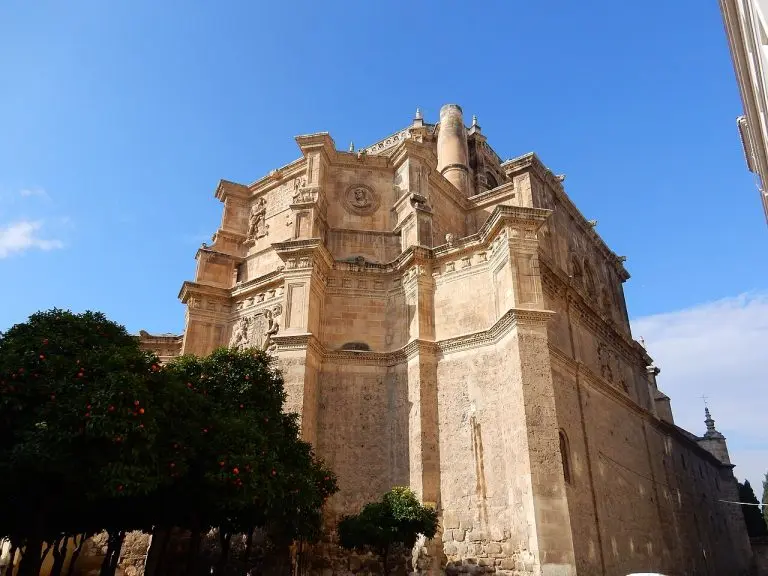
Almería → Granada
167 kmLinking the Tabernas Desert with the peaks of the Sierra Nevada in under two hours is one of those small luxuries that only southern Spain can offer. The route between Almería and Granada crosses a natural corridor flanked by arid mountains, fertile plains and that exact point where the Almerían levante begins to smell of Granada snow.
How to get from Almería to Granada: quick summary
The fastest and most flexible option is the car: 167 km along the A-92 in roughly 1h 45min with no tolls. The ALSA bus is the cheapest alternative, with tickets from €5 and a 2-hour journey. The direct Renfe train takes between 167 and 191 minutes depending on the type of train, with 6 daily departures. For travellers who want to explore the stops along the way or move around Granada freely, the car is unbeatable; for tighter budgets, the bus wins on price and frequency.
Driving from Almería to Granada
The car journey is essentially resolved on a single road: the A-92, a toll-free motorway connecting Seville with Almería via Granada, covers about 140 km of the total 167 km route. Driving is comfortable and the road surface is in good condition, with two lanes in each direction for most of the way. The landscape changes gradually: you leave Almería among dry riverbeds and bare hills, cross the Los Vélez region and, as you climb towards Guadix, the first foothills of the Sierra Nevada appear. The final kilometres before Granada run through the vega, with views of the Alhambra on clear days. The last stretch is completed via the A-4002, the Murcia road (Fargue), which provides about 5 km of urban access to the Granadan capital. There are no tolls along the entire route.
By train from Almería to Granada
Yes, there is a direct train between the two cities, operated by Renfe, with a duration ranging from 167 to 191 minutes depending on the type of train. The fastest service is the MD (Media Distancia), with 5 trains a day completing the journey in 167 minutes; in addition, a daily ALVIA runs that takes 180 minutes. The total frequency is 6 trains a day, with departures from Almería station from 05:59 to 18:06. The destination is Granada station. Tickets can be purchased at ticket offices, machines or through Renfe’s official channels, and the price varies depending on how far in advance you book and the type of seat, although no exact ranges are provided for this route. It is a comfortable option for those who prefer to avoid the road, although the travel time is longer than by car or bus.
By bus from Almería to Granada
The direct bus is the cheapest option and one of the fastest: a 120-minute journey with tickets between €5 and €22. The company operating the route is ALSA (also listed as Alsa on some search engines), with regular departures throughout the day. The buses are modern, with air conditioning and luggage space, and connect the central stations of both cities. For travellers without a car, this is the best value-for-money-and-time option along the entire corridor.
Recommended stops along the way
These are the verified stops on the route between Almería and Granada, ideal for stretching your legs, refuelling or discovering charming villages without straying too far from the A-92.
- Alhendín: a municipality in the metropolitan area of Granada, just a few kilometres from the city. Its old town preserves a layout of Arab origin and it is a natural gateway to the vega. A good option for a short stop before entering Granada.
- Aguadulce: a town in the province of Almería located next to the A-92, in the Poniente region. It is one of the first possible stops after leaving Almería, with basic services and a quiet atmosphere. Its proximity to the motorway makes it a practical halt.
- El Parador de las Hortichuelas: a coastal settlement in the municipality of Roquetas de Mar, although reaching it from the A-92 requires a short detour. It is an area of beach and intensive farming, with chiringuitos (beach bars) and a seafront promenade. Ideal if you want to combine the route with a quick swim.
- Padul: a municipality in the province of Granada located in the Valle de Lecrín, at the foot of Sierra Nevada. It stands out for its lagoon and its hiking trails. It is one of the most interesting stops for nature lovers, with bars and restaurants serving traditional cuisine.
- Armilla: a city in Granada’s metropolitan belt, known for its air base and its shopping park. It is the gateway to the city: from here you can reach Granada in less than 10 minutes via the A-4002. Useful for refuelling or doing some last-minute shopping.
- Churriana de la Vega: a residential and farming municipality in the vega of Granada, with a pleasant historic centre and plenty of local life. Its tapas bars are a good introduction to the local gastronomy before arriving in Granada.
- Huétor Vega: located just 4 km from the centre of Granada, this village retains a semi-rural feel with views of Sierra Nevada. Its steep streets and viewpoints make it a photogenic stop.
- La Zubia: the gateway to the Sierra Nevada Natural Park from the metropolitan area. It is the last recommended stop before Granada, with hiking trails that start from the town itself and a food scene focused on mountain produce.
Where to stay in Granada
Granada offers accommodation for every budget, from hostels and guesthouses in the historic centre to boutique hotels and tourist apartments. The most sought-after area is the Albaicín, with its cobbled alleys and views of the Alhambra, although driving there is tricky. The centre, around Calle Reyes Católicos and Plaza Nueva, has the largest concentration of hotels and is well connected. The Realejo, the old Jewish quarter, is a quieter alternative full of character. For those travelling by car, the Armilla area or hotels with parking on the outskirts may be more practical. Prices vary greatly depending on the season: in spring and autumn, a double room can cost around 60 to 120€, while in summer or during Semana Santa (Holy Week) prices rise considerably.
Where to eat along the route
The food between Almería and Granada is a journey in itself, with dishes that reflect the agricultural and livestock history of both provinces. These are the essentials by area:
- Ajoblanco (Almería): a cold soup made with raw almonds, bread, garlic, olive oil, vinegar and salt. It is served very cold, often accompanied by grapes or pieces of melon. It is Almería’s answer to gazpacho and a refreshing gem in the warm months.
- Migas (Granada and Almería): a thrifty dish made with crumbled stale bread and sautéed with garlic, olive oil and accompaniments such as chorizo, pancetta or peppers. It is hearty, flavoursome and very typical in roadside ventas and village bars.
- Tortilla del Sacromonte (Granada): a thick omelette that incorporates lamb’s brains, sweetbreads and sometimes ham, as well as egg and potato. It is a dish with plenty of character, typical of Granada’s Sacromonte neighbourhood, ideal for curious palates.
- Vino de la Tierra de Almería (Almería): young, fruity wines made with native grapes from the province, protected under the geographical indication. They are the perfect match for cold dishes and fried fish.
- Vino de Granada (Granada): reds, whites and rosés covered by the geographical indication ‘Vino de la Tierra de Granada’, with varieties such as Tempranillo, Garnacha or Syrah. The Contraviesa district and the Altiplano are emerging production areas.
- Miguelitos de La Roda (La Roda, Albacete): although their origin lies in Castile-La Mancha, these puff pastries filled with pastry cream and dusted with icing sugar are easy to find in cafés and service areas along the A-92. They are a crunchy, creamy bite that works as a sweet stop along the way.
- Pisto manchego (Castile-La Mancha): a stew of chopped tomato, pepper, courgette and onion sautéed in olive oil. Although it originates from La Mancha, its presence on roadside menus and in restaurants across the south-east of the peninsula makes it a tasty and comforting vegetable option.
Frequently asked questions about the Almería-Granada route
How long does it take from Almería to Granada?
By car, the 167 km journey along the A-92 takes approximately 1h 45min. By bus, ALSA takes 120 minutes. By train, Renfe’s MD services take 167 minutes and the ALVIA 180 minutes. The car and the bus are the fastest options; the train, although direct, is the slowest.
Which is cheaper, the train or the bus?
The bus is clearly cheaper: ALSA tickets cost between 5 and 22€ per journey. The Renfe train has no fixed published price range for this route, but historically the MD and ALVIA services tend to be more expensive than the bus, especially if booked at short notice. For tight budgets, the bus is the winning option.
Is it worth renting a car?
Yes, especially if you want to make the most of recommended stops such as Padul, La Zubia or Armilla, which are not well connected by public transport. The car lets you complete the journey in 1h 45min along the A-92 with no tolls and explore the vega and the foothills of Sierra Nevada at your own pace. If you are only going to visit the centre of Granada, the bus is enough and more economical.
When is the best time to travel?
Spring and autumn are the best seasons: mild temperatures, green landscapes in the vega and fewer crowds than in summer. Winter is ideal for combining a visit to Granada with snow in Sierra Nevada, although the road journey may have stretches with morning frost. Summer is hot in Almería, but Granada offers the relief of altitude and the cool terraces of the Albaicín.
💡 ¿Sabías que...?
- ● El nombre de Granada podría provenir del árabe 'gar-anat' ('colina de peregrinos') o del latín 'granatum' ('granado'), aunque la teoría más aceptada lo remonta al siglo XI, cuando los ziríes trasladaron la capital de su reino de Medina Elvira a Medina Garnata. (https://www.abc.es/viajar/abci-diez-curiosidades-granada-quizas-no-sabias-incluso-granadinos-202202231358_noticia.html)
- ● La Alhambra fue el único monumento español con posibilidades de convertirse en una de las 'nuevas' siete maravillas del Mundo Moderno en 2007, pero se quedó a las puertas de entrar en la lista. (https://www.abc.es/viajar/abci-diez-curiosidades-granada-quizas-no-sabias-incluso-granadinos-202202231358_noticia.html)
- ● Granada es la única ciudad en España donde todavía se puede disfrutar de tapas gratuitas con cada bebida que se pide en un bar o restaurante. (https://granadaplanes.com/blogs/monumentos-y-sitios-historicos-granada/las-10-curiosidades-sobre-granada-que-no-sabias)
- ● La Universidad de Granada es una de las más antiguas de Europa, fundada en 1531, con raíces en una madrasa nazarí de 1349, y hoy matricula a más de 60.000 estudiantes. (https://www.exploregranada.org/articles/topic/travel-insights)
- ● La Alhambra limita el número de visitantes desde 1993 y lo endureció tras un estudio de 1998 que concluyó que los Palacios Nazaríes solo podían albergar con seguridad a 535 personas a la vez. (https://www.exploregranada.org/articles/topic/travel-insights)
- ● El escritor y poeta Federico García Lorca nació en Fuente Vaqueros, un pueblo cerca de Granada, y se inspiró mucho en la ciudad para su obra literaria. (https://granadaplanes.com/blogs/monumentos-y-sitios-historicos-granada/las-10-curiosidades-sobre-granada-que-no-sabias)
- ● Bajo Granada se han encontrado 16 kilómetros de túneles, sótanos y pasadizos de los 50 que podrían existir, según el periodista César Requesens. (https://www.bbc.com/mundo/noticias/2013/03/130305_cultura_granada_subterranea_espana_np)
📍 También te puede interesar
Qué ver en Almería →
Qué ver en Granada →