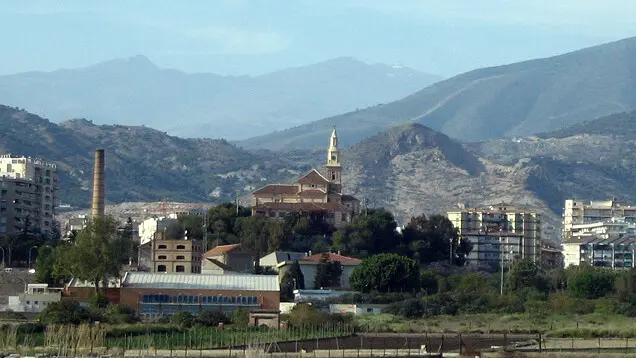
Motril
AndalucíaClimate
What to see in Motril: the essentials
Motril is not just about the beach: it is a town with a fascinating sugar-producing past, architecture that blends Gothic and Mudéjar styles, and corners that smell of history. Here is what you cannot miss.
Iglesia Mayor de la Encarnación (Main Church of the Incarnation)
It is the oldest surviving building in Motril, erected between 1510 and 1514 on the site of the old Alixara mosque. Its construction was the work of the Granada master builder Alonso Márquez, who designed a sober Gothic-Mudéjar temple with a single nave, large arches and side chapels between buttresses. In the early 17th century a classicist transept was added, enlarging the main chapel. Entry is free and it opens Monday to Friday from 10:30 to 13:30, but as this coincides with worship times, it is best to check the mass schedule beforehand. It is at Plaza de España, 9, and its phone number is 958 600323.
Fábrica Azucarera Nuestra Señora del Pilar (Sugar Factory)
Inaugurated in 1883, it is the only sugar factory in Motril preserved almost in its entirety and a testament to the town’s sugarcane splendour in the 19th and 20th centuries. It operated for more than a century and today can be visited free of charge with guided tours from Tuesday to Sunday in several slots (morning, afternoon and evening depending on the day). There is even a restaurant within the complex, so you can round off your visit by eating there. Book at reservas@fabricadelpilarmotril.es or on 624 149438.
Museo Preindustrial del Azúcar (Ingenio de la Palma) (Pre-Industrial Sugar Museum)
This museum plunges you straight into the history of sugarcane, the historic hallmark of Motril on the Costa Tropical. The site turns the remains of the sugar mill into a museum, with technological recreations of the production process and associated archaeological material. Before you go, check opening times and approximate prices at the tourist office, as visiting conditions may vary.
Castillo de Carchuna (Carchuna Castle)
A defensive fortress built around 1775 to protect the coast from pirate raids and pillaging from North Africa. It stands in the district of Carchuna, and its construction forms part of the consolidation of coastal defences of the kingdom of Granada after the conquest of 1492. It is an interesting stop for understanding how this coastline was fortified against piracy over the centuries.
Ayuntamiento de Motril (Town Hall)
The building presides over Plaza de las Comunidades Autónomas alongside other singular buildings and forms part of Motril’s historic and artistic ensemble. Here you will find the Municipal Tourist Office, open Monday to Saturday from 10:00 to 14:15 and 17:00 to 19:00 (in summer, 18:00 to 20:00) and Sundays from 09:30 to 13:30. Drop by if you need maps, up-to-date opening times or recommendations.
Casa de la Palma
A former sugar factory developed on a 16th-century mill, today a municipally owned cultural centre at Avda. Marquesa de Esquilache, 4. Its small Mudéjar coffered ceiling and carved corbels stand out.
Villa Astrida
It reveals the more human side of King Baudouin of Belgium through personal objects, including the chair in which he died on 31 July 1993. Admission costs €6.00 and there are winter and summer opening hours with guided tours.
Centro de Arte José Hernández Quero (José Hernández Quero Art Centre)
An exhibition space dedicated to the Motril-born painter José Hernández Quero, a key figure in Andalusian contemporary art, housed in a restored former residence in the town centre.
Iglesia de la Victoria (Church of La Victoria)
A 1604 temple founded by D. Alonso de Contreras for the Minim friars, with a grey stone Mannerist façade dated 1610 and attributed to Pedro Cano.
Ermita de Nuestra Señora de las Angustias (Chapel of Our Lady of Sorrows)
A religious temple in the Las Angustias neighbourhood that houses the titular image and hosts liturgical and devotional events, with architecture typical of an Andalusian chapel.
Charca de Suárez
A natural area with observation points and free guided routes, although opening hours vary greatly by season: from March to May entry is only with a prior appointment due to the wildlife breeding season.
Parque de los Pueblos de América
The green lung of the city centre, with more than 50 exotic American trees and shrubs, each with its own information panel, and home to the Tourist Office at its entrance.
Mercado Municipal de Motril
A food market with stalls selling fish, meat, subtropical fruit from the vega (avocados and mangoes) and local produce, ideal for getting a feel for everyday life.
Playa de Poniente
The beach closest to the centre, just 2 km away, with a promenade dedicated to King Baudouin, chiringuitos (beach bars) and a lively night-time atmosphere.
Estatua del Cardenal Belluga
A monument dedicated to Motril’s illustrious native son, Cardinal Belluga.
Recuerdo de la caña de azúcar
A sculpture depicting a man leading a donkey loaded with sugar cane towards Calle de las Cañas.
Skate Park
A commemorative skateboard honouring the creator of the skate park.
🍂 Otoño
Si visitas Motril en otoño, el clima sigue siendo muy agradable, con temperaturas entre 20 y 26 °C y pocas lluvias. Es otra de las mejores épocas, con menos masificación turística y mar aún templado. Aprovecha para conocer el Museo Preindustrial del Azúcar o la Fábrica Azucarera Nuestra Señora del Pilar sin prisas.
What to do in Motril
Motril offers food markets brimming with subtropical produce, patron saint festivities with a day-and-night fair, seafaring processions, routes through natural spaces such as the Charca de Suárez, and tapas crawls in authentic neighbourhoods like Santa Adela or San Antonio. If you come in August, the Fiestas Patronales in honour of the Virgen de la Cabeza fill the city with free concerts at the Caseta Municipal and a procession on the 15th. In July, the Virgen del Carmen is carried out to sea in the coastal neighbourhoods. For something quieter, the Parque de los Pueblos de América is perfect for strolling among species brought from the Americas, and the Mercado Municipal lets you buy avocados and mangoes straight from the vega.
Motril in a day: express itinerary
- 09:30 – Iglesia Mayor de la Encarnación: start with the oldest building in the city (1510-1514), with its Gothic-Mudéjar blend. Free entry and no crowds early in the day.
- 10:30 – Ayuntamiento and Plaza de las Comunidades Autónomas: stop by the Tourist Office to confirm the day’s opening hours and pick up a map. Take the chance to see the historic-artistic ensemble.
- 11:30 – Fábrica Azucarera Nuestra Señora del Pilar: free guided tour of the only sugar factory preserved almost in its entirety, inaugurated in 1883. Book ahead on 624 149438.
- 13:30 – Mercado Municipal and tapas in Santa Adela: buy subtropical fruit and try Motril shrimp or dried octopus in the neighbourhood bars.
- 17:30 – Parque de los Pueblos de América: a stroll among more than 50 American species with information panels, ideal for walking off lunch.
- 19:30 – Playa de Poniente: end the day on the King Baudouin promenade, with chiringuitos and Mediterranean views just 2 km from the centre.
Where to eat in Motril: local cuisine
Where to stay in Motril
Casco Antiguo
Centro histórico de Motril, con calles estrechas y plazas como la Plaza de la Constitución. Alberga la Iglesia Mayor de la Encarnación y el Ayuntamiento. Ambiente tranquilo durante el día y animado en las horas de tapeo.
Barrio de San Antonio
Barrio tradicional situado al norte del centro, conocido por su ambiente popular y sus casas encaladas. Acoge la Ermita de San Antonio y ofrece una experiencia auténtica lejos del turismo masivo.
Barrio de la Joya
Zona residencial moderna con amplias avenidas y parques, ideal para familias. Cuenta con supermercados, centros comerciales y zonas de restauración. Bien comunicada con el centro y las playas.
Barrio de Varadero
Zona costera de Motril, junto al puerto y la playa de Varadero. Ambiente marinero y tranquilo, con paseo marítimo y restaurantes de pescado. Ideal para desconectar y disfrutar del mar.
Barrio de Santa Adela
Barrio obrero y popular, con gran vitalidad y tradición de bares de tapas. Se encuentra la Plaza de Santa Adela y el Mercado Municipal. Ambiente auténtico y precios asequibles.
Zona de Playa Granada
Área turística junto a la playa de Granada, con complejos hoteleros y campos de golf. Ambiente internacional y relajado, con chiringuitos y actividades acuáticas. Ideal para vacaciones de sol y playa.
How to get to Motril
Motril is about 70 km from Granada city and 3 km from the Mediterranean. The most direct way to arrive by public transport is by bus, with a stop at the Estación de Autobuses de Motril (Motril Bus Station).
| Medio | Duración | Precio aprox. | Frecuencia |
|---|---|---|---|
| Autobús desde Granada | 1 h – 1 h 15 min | 8 – 12 € | Varias al día |
| Autobús desde Málaga | 1 h 45 min – 2 h | 15 – 20 € | Varias al día |
| Autobús desde Almería | 1 h 30 min – 1 h 45 min | 12 – 18 € | Varias al día |
| Coche desde Granada (A-44 y A-7) | 50 min – 1 h | Peaje + gasolina | Libre |
Getting around Motril
Motril has an urban bus service to get you between the centre, the neighbourhoods and the beaches. For short distances, the old town is perfectly walkable: the Iglesia Mayor (Main Church), the Ayuntamiento (Town Hall) and the Mercado (Market) are close to one another. If you want to go to Playa de Poniente or Playa Granada, the urban bus is the most comfortable option without a car, and there is also road access from the Puerto road, the Rambla de las Brujas and Playa Grana. To get around the coast and the outlying districts such as Carchuna, consider renting a car or using local taxis.
Weather in Motril
Best time to visit Motril
Day trips from Motril
Motril is an excellent base for exploring the Costa Tropical and the province of Granada. You can take day trips to other towns in the region, combining coast, history and mountains. Granada city, with the Alhambra and the Albaicín, is about 70 km away and is an essential getaway. To the west, the Granada coastline offers towns such as Salobreña and Almuñécar, with historic centres and beaches. To the east, the Almería coast appears with more arid landscapes and coves. For inland nature, Las Alpujarras is just a step away and offers white villages and mountain trails. Check the official Motril tourism website for events, up-to-date opening times and more ideas.
Fascinating facts about Motril you didn’t know
The name Motril comes from the Latin Murteto, meaning ‘place of myrtles’. It evolved as Murtetu > Mutreto > Mutrit > Mutril > Mutrayil > Motril. So every time you stroll through its streets, you’re walking on a place name with more than a thousand years of history.
Motril has Phoenician origins. It lies three kilometres from the Mediterranean and seventy from Granada, and its coastal setting made it a strategic point for maritime trade since ancient times.
The last Nasrid queen spent her summers here. During the final years of the Nasrid Kingdom, the Alcazaba on the Cerro de la Carquifa (now the Cerro de la Virgen) was the summer residence of Aixa al-Horra, mother of Boabdil the Younger, the last Moorish king of Granada. Yes, the mother of the last Nasrid king chose Motril to escape the heat.
A man from Motril redrew the map of Spain. Francisco Javier de Burgos, Secretary of State and of the Ministry of Development after the death of Ferdinand VII, established the new territorial division of Spain into provinces. In other words, the current Spanish provincial map was born, in part, from the mind of a man from Motril.
Who is Motril for?
Motril is a city for travellers seeking authenticity without giving up the beach. Couples will enjoy the Barrio de Varadero (Varadero district) and Playa Granada, with seafront promenades, chiringuitos (beach bars) and golf. Families have in the Barrio de la Joya (La Joya district) a quiet residential area with parks and supermarkets. Backpackers will find affordable prices and genuine tapas in Santa Adela. Lovers of history and architecture have plenty to explore: from the 1510 Gothic-Mudéjar Iglesia Mayor (Main Church) to the 1883 sugar factory. And foodies will be amazed by the quisquilla (small shrimp), the pulpo seco (dried octopus), the Torta Real and the Ron Montero. Motril is not a tourist set: it is a living city, with the scent of sugar cane and sea salt.
💡 ¿Sabías que...?
- ● El nombre de Motril probablemente deriva del latín Murteto, que significa 'lugar de mirtos', con la evolución Murtetu > Mutreto > Mutrit > Mutril > Mutrayil > Motril. (https://es.wikipedia.org/wiki/Motril)
- ● Motril es una población de origen fenicio, situada a tres kilómetros del Mediterráneo y setenta de Granada. (https://motrilturismo.com/sites/default/files/folletos-pdf/folletos/motril_guia_agroturistica.pdf)
- ● Durante los últimos años del Reino Nazarí, la Alcazaba situada en el Cerro de la Carquifa (actual Cerro de la Virgen) fue residencia de verano de Aixa al-Horra, la última reina nazarí, madre de Boabdil el Chico, el último rey moro de Granada. (https://motrilturismo.com/sites/default/files/folletos-pdf/folletos/motril_guia_agroturistica.pdf)
- ● Francisco Javier de Burgos, uno de los personajes motrileños más ilustres, fue secretario de Estado y de Despacho de Fomento tras la muerte de Fernando VII, y estableció la nueva división territorial de España en provincias. (https://www.ideal.es/granada/v/20101227/costa/herencia-cultural-javier-burgos-20101227.html)
Frequently asked questions about Motril
How many days do I need to see Motril?
With 2-3 days you have plenty of time to see the essentials: the Iglesia Mayor de la Encarnación (Main Church of the Incarnation), the Fábrica Azucarera Nuestra Señora del Pilar (Our Lady of the Pillar Sugar Factory), the Museo Preindustrial del Azúcar (Pre-Industrial Sugar Museum), the Town Hall and Playa de Poniente. If you want to add the Charca de Suárez, the Parque de los Pueblos de América and a day trip to the coast or to Granada, stretch it to 4-5 days.
What is the best time to visit Motril?
According to climate data, the best time is May, June, September and October, with temperatures between 20 and 26 °C, mild sea and little rain. July and August are the worst months due to the muggy heat (heat + high sea humidity) and the high tourist numbers. Annual rainfall is only 410 mm, so rain will rarely ruin your trip.
How do I get to Motril from Madrid?
There is no direct train to Motril. The most practical option is to fly or take the train to Granada or Málaga and then take a bus to the Estación de Autobuses de Motril (Motril Bus Station). From Granada, the bus takes between 1 h and 1 h 15 min; from Málaga, between 1 h 45 min and 2 h. You can also drive along the A-44/A-7.
What typical products should I try in Motril?
The quisquilla de Motril (a small crustacean with a delicate flavour, served boiled as a tapa), the pulpo seco (salted and wind-dried octopus), the Torta Real (a dessert of Arab origin with almonds and sugar) and the Ron Montero (made in Motril since 1963). All of them can be found in bars, markets and specialist shops in the city.
Is there a beach in Motril?
Yes. Playa de Poniente is the closest to the centre, just 2 km away, with a seafront promenade dedicated to King Baudouin, chiringuitos and nightlife. There is also the Playa Granada area, more tourist-oriented, with hotel complexes and golf courses.