Barcelona
CataluñaClimate
Daily budget
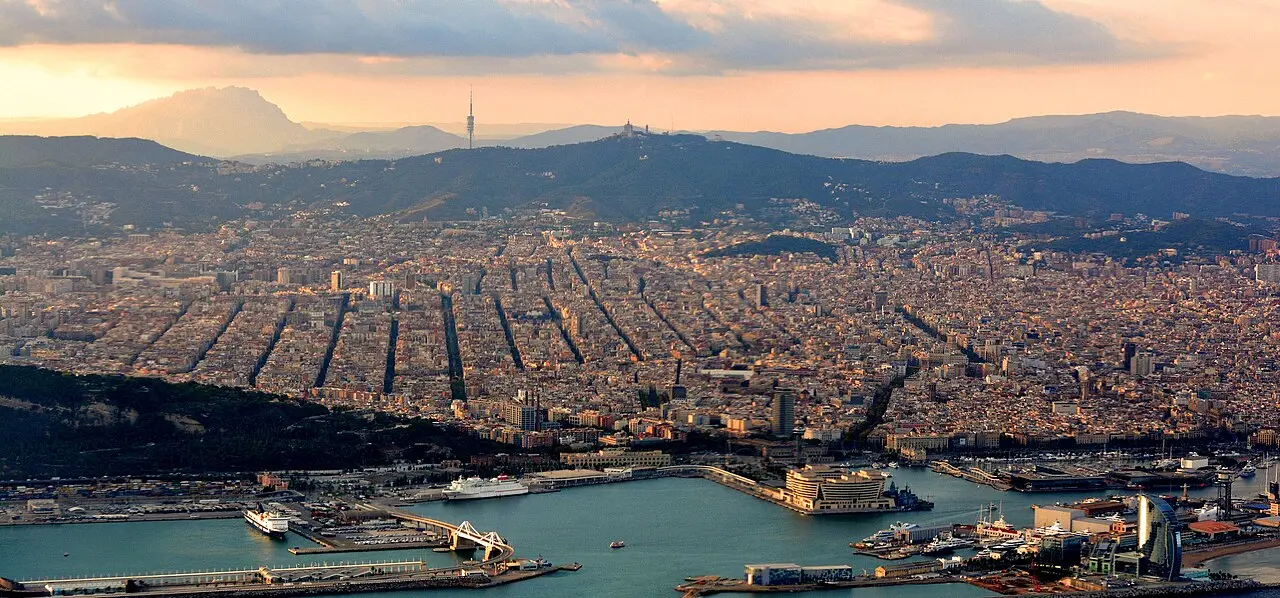
It’s eight in the evening at Plaça de Catalunya and the summer heat is starting to ease. You head down La Rambla dodging human statues and flower stalls, with the murmur of 1.6 million residents and thousands of travellers blending into a single current. In the distance, the sun drops behind the port, and you understand why this street is considered the seventh most famous in the world: Barcelona isn’t visited, it’s felt on every corner.
The must-seesWhat to see in Barcelona: the essentials
Basílica de la Sagrada Familia
The Sagrada Familia is Antoni Gaudí’s unfinished masterpiece and the finest example of Catalan Modernista architecture, declared a UNESCO World Heritage Site in 2005. Inside, notice the columns branching like a stone forest and the light filtering through the stained glass, changing colour depending on the time of day. On the Passion Façade there is a magic square of numbers whose sums in any direction come to 33, the age at which Jesus Christ died. It is open from 9:00 to 19:00 and requires a ticket; book in advance because tickets sell out almost every day.
Catedral de Barcelona
Barcelona Cathedral presides over the heart of the Gothic Quarter with its blend of Gothic and Neo-Gothic styles. It’s worth circling it through the medieval alleyways and stepping into its cloister, home to thirteen white geese. It’s a visit that pairs perfectly with a stroll through the city’s oldest neighbourhood.
Casa Milà (La Pedrera)
Casa Milà, known as La Pedrera, is a Modernista building by Gaudí declared a UNESCO World Heritage Site in 1984. Its star attraction is the rooftop, a surreal landscape of sculpted chimneys nicknamed “the warriors” that seem to watch over the city. It is open from 9:00 to 20:30 and requires a ticket; heading up to the terrace at sunset is one of Barcelona’s finest architectural experiences.
Casa Batlló
Casa Batlló is another stroke of genius from Gaudí, with a façade inspired by organic and marine forms that seems almost alive. It was declared a UNESCO World Heritage Site in 2005 and its interior is a riot of curves, light and details evoking the seabed. It is open from 9:00 to 20:00 and requires a ticket; if you only visit one Modernista house, this and La Pedrera are the two top contenders.
Park Güell
Park Güell is a public park with gardens and architectural elements by Gaudí, famous for its colourful trencadís mosaics. It was declared a UNESCO World Heritage Site in 1984 and its terraces offer one of the loveliest views of Barcelona with the sea in the background. It is open from 9:30 to 19:30 and requires a ticket; the monumental zone is where the undulating benches and the famous ceramic dragon are concentrated.
La Rambla
La Rambla, also called Les Rambles, is Barcelona’s most emblematic artery and one of its universal symbols. Heading down from plaça de Catalunya, the promenade takes different names along its sections, such as la Rambla de Canaletas at the top. Day and night it fills with human statues, street artists, kiosks, flower stalls, cafés and terraces. Access is free and open all day.
Palau de la Música Catalana
The Palau de la Música Catalana is a Modernista concert hall declared a UNESCO World Heritage Site in 1997. Its great jewel is the central coloured-glass skylight, an inverted dome that floods the hall with natural light. It is open from 10:00 to 15:30 and requires a ticket; even if you don’t attend a concert, the guided tour is well worth it.
Museu Nacional d’Art de Catalunya (MNAC)
The MNAC occupies the Palau Nacional on Montjuïc and houses one of the finest collections of Romanesque art in Europe. From its steps you can enjoy a formidable panoramic view of the city. It’s an essential stop if you head up to Montjuïc.
Barrio Gótico
The Gothic Quarter is the city’s oldest core, with labyrinthine medieval streets, hidden squares and Barcelona Cathedral as its great landmark.
Playa de la Barceloneta
La playa de la Barceloneta is Barcelona’s most famous and central beach, full of life, restaurants and water activities.
Castell de Montjuïc
The Castell de Montjuïc is a military fortress perched at over 170 metres above sea level, with formidable panoramic views over the city and the port, free entry to the grounds and the option of arriving by cable car or bus.
Museo Picasso
The Museo Picasso houses one of the most important collections of the early works of the painter Pablo Picasso.
Arc de Triomf
The Arc de Triomf stands at the start of the passeig de Lluís Companys and offers free, open access.
Mercat de la Boqueria
The Mercat de la Boqueria is one of the largest covered markets in Europe and a gastronomic and tourist landmark of the city.
Poble Espanyol
The Poble Espanyol is a commercial and entertainment complex that recreates the architecture of different regions of Spain.
Museu Marítim de Barcelona
The Museu Marítim de Barcelona is dedicated to the city’s naval and maritime history.
🍂 Otoño
Si visitas Barcelona en otoño, el calor del verano ya ha bajado y caminar por La Rambla o acercarte a la Casa Milà se vuelve mucho más agradable. La luz dorada de esta estación realza la arquitectura de la Sagrada Familia y el Park Güell, y hay menos aglomeraciones que en verano. Aprovecha para visitar interiores como el Palau Güell a media mañana, sin prisas y con temperatura ideal.
What to do in Barcelona
Barcelona offers centuries-old markets, film festivals all year round, neighbourhoods with a character all their own and an urban beach that buzzes with life from morning until night. You can start the day at the Mercat de la Boqueria, get lost in the Gothic Quarter, head up to Montjuïc to see the castle and come back down to the Barceloneta to round things off with a swim. If you’re travelling in November, it coincides with L’Alternativa, the city’s independent film festival; and throughout the year there are events such as Fire!!, the Barcelona Queer Film Festival, or the Mostra Internacional de Films de Dones. Gràcia is ideal for families and for quiet afternoons of squares and design shops, while El Born combines the Museo Picasso with a vibrant nightlife of tapas bars and cocktail lounges.
Barcelona in a day: express itinerary
With just one day, prioritise the essentials and get around on foot or by metro. This is the plan I would follow:
- 9:00 – Sagrada Familia: go in first thing to avoid the crowds and see the morning light through the stained-glass windows.
- 11:30 – Casa Batlló or Casa Milà: choose one of Gaudí’s two modernist houses; both are UNESCO World Heritage Sites and are located in the Eixample.
- 13:30 – La Rambla and Mercat de la Boqueria: stroll down Barcelona’s most famous street and grab a bite at the market.
- 15:30 – Gothic Quarter: lose yourself in its medieval streets and stop by the Catedral de Barcelona.
- 18:00 – Barceloneta: end the day with a walk by the sea and a seafood dinner in the old fishermen’s neighbourhood.
Where to eat in Barcelona: local cuisine
Where to stay in Barcelona
Gothic Quarter
The historic heart of the city, perfect for getting lost in its medieval streets.
Gràcia
Bohemian, village-like atmosphere with lively squares, design shops, and alternative theaters.
El Born
Combines culture, featuring the Picasso Museum, with a vibrant nightlife of tapas bars and cocktail lounges.
La Barceloneta
Former fishing neighborhood by the beach, ideal for enjoying seafood and the sea.
Getting to Barcelona
From Madrid, the fastest option is the train: 3 h 02 min (AVE), 31 a day.
Barcelona - Plaça Espanya (2,4 km from the centre)
| From | Direct train | Direct bus | Car |
|---|---|---|---|
| Madrid | 3 h 02 min · 31/day AVE | 7 h 50 min · 12/day ALSA | 6 h 52 min 618 km |
| Zaragoza | 1 h 38 min · 28/day Ouigo | 3 h 45 min · 19/day ALSA | 3 h 30 min 309 km |
| Tarragona | 34 min · 115/day AVANT | 1 h 25 min · 12/day Teresa y José Plana, Empresa Plana, ALSA | 1 h 21 min 99 km |
| Girona | 39 min · 81/day AVE | 1 h 35 min · 3/day Barcelona Bus | 1 h 21 min 101 km |
| Vic | 1 h 05 min · 49/day Rodalies R3 | 1 h · 24/day Osona Bus, Transports Elèctrics Interurbans, SA -TEISA- | 1 h 07 min 70 km |
| Sitges | 43 min · 72/day Rodalies R2 | 36 min · 59/day Cintoi Bus, Cintoi Bus - Empresa Plana | 42 min 40 km |
| Montserrat | 1 h · 33/day FGC R5 | 55 min · 19/day La Hispano Igualadina, Autocares Julià | 1 h 03 min 60 km |
| Valencia | 3 h 09 min · 12/day AVE Euromed | 4 h · 13/day ALSA | 3 h 59 min 349 km |
| Málaga | 6 h 41 min · 2/day AVE | 15 h · 4/day ALSA | 10 h 42 min 959 km |
| Granada | 6 h 49 min · 2/day AVE | 12 h 45 min · 4/day ALSA | 9 h 23 min 837 km |
Direct trains and buses from the official timetables published by the operators on Spain's National Transport Access Point (a reference Wednesday); driving times from OpenStreetMap. Operators that do not publish their timetables may run more services. Check the timetable before you travel.
Getting around Barcelona
Barcelona has an efficient urban transport network made up of metro, city bus and tram. The metro is the fastest way to cross the city, with good frequency and connections to key stations such as Barcelona Sants. The city bus covers areas the metro doesn’t reach and is useful for getting around at night. For the historic centre, the Gothic Quarter, El Born and Barceloneta, walking is best: distances are short and the stroll is part of the charm. For more practical information on timetables, tickets and what’s on, see the official Barcelona tourism website.
Weather in Barcelona
Best time to visit Barcelona
Day trips from Barcelona
If you have extra days, there are nearby escapes that are well worth it. Sitges is the classic beach excursion with a Mediterranean vibe, just a train ride from Barcelona. Montserrat combines nature and spirituality with its rocky massif and its monastery, ideal for a gentle day of hiking. Vic, with its arcaded main square and traditional market, offers a quieter, more inland Catalonia. All three work perfectly as a day trip from Barcelona.
Barcelona curiosities you didn’t know
Barcelona was born as Barcino, a small city of Roman foundation between the 1st century BC and the early Middle Ages, and you can still trace that past beneath the Gothic Quarter (Barrio Gótico).
The statue of Christopher Columbus at the end of Las Ramblas, built for the 1888 Universal Exposition, does not point toward America but toward Majorca, a detail that puzzles almost every visitor.
Barcelona’s sandy beaches were created for the 1992 Olympic Games; until then the city had no urban beaches like the ones we know today.
The panot, the four-petaled flower-shaped paving stone you step on throughout the Eixample, was born in the early 20th century when the City Council was looking for a resistant and uniform pavement for the streets.
La Rambla is considered the seventh most famous street in the world, according to a prestigious architecture website, and it is the perfect showcase of Barcelona’s urban life.
Who Barcelona is for
Barcelona is a city for almost everyone. Couples enjoy strolls through the Gothic Quarter, dinners in El Born and sunsets from Montjuïc. Families find a quiet, plaza-filled atmosphere in Gràcia, with Park Güell as a great outdoor plan. Backpackers have hostels from 25-40 € per night and a metro network that connects everything. Lovers of history and architecture get lost among Gaudí, the Romanesque art of the MNAC and the medieval streets. And foodies have everything from the Boqueria to three-Michelin-star restaurants. With 9,096,195 travelers a year (INE) and 83% of them foreign, Barcelona is a destination that blends international tourism with authentic local life.
💡 ¿Sabías que...?
- ● Barcelona fue fundada como Barcino, una pequeña ciudad de fundación romana, entre el siglo I a. C. y los inicios de la Edad Media. (https://www.barcelona.cat/es/conocebcn/la-historia)
- ● La estatua de Cristóbal Colón, situada al final de las Ramblas, fue construida con motivo de la Exposición Universal de 1888 y señala hacia Mallorca, no hacia América. (https://supercurioso.com/curiosidades-de-barcelona/)
- ● Las playas de arena de Barcelona se crearon para los Juegos Olímpicos de 1992; hasta entonces no había ninguna. (https://www.getyourguide.com/es-es/explorer/barcelona-ttd45/fun-facts-about-barcelona/)
- ● La Sagrada Familia tiene un cuadrado de números en la Fachada de la Pasión en el que las sumas en cualquier dirección dan 33, la edad en la que murió Jesucristo. (https://www.abc.es/viajar/abci-diez-curiosidades-barcelona-quiza-desconocias-202202151417_noticia.html)
- ● El panot, el adoquín con forma de flor de cuatro pétalos, se originó a principios del siglo XX cuando el Ayuntamiento buscaba un pavimento resistente y uniforme para las calles del Eixample. (https://historia.nationalgeographic.com.es/a/feliz-dia-merce-5-datos-que-quiza-no-conocias-sobre-historia-barcelona_24585)
- ● La Rambla está considerada la séptima calle más famosa del mundo, según una prestigiosa web de arquitectura. (https://www.rtve.es/television/20240514/cinco-curiosidades-sobre-barcelona/16102622.shtml)
Frequently asked questions about Barcelona
How many days do I need to see Barcelona?
With 3 full days you can see the essentials: Sagrada Familia, Casa Batlló or La Pedrera, Park Güell, the Gothic Quarter, La Rambla and Barceloneta. If you add a fourth day, take the opportunity to visit Montjuïc, the MNAC or take a day trip to Sitges or Montserrat. The average stay for travellers is 2.4 nights (INE), but the city has plenty more to offer.
Is Barcelona expensive?
It depends on the type of trip. An average meal costs between 25 and 35 €, a hostel between 25 and 40 € per night, and a 3-star hotel between 80 and 150 €. There are options for tighter budgets as well as high-end dining with Michelin three-star restaurants. The key is choosing the right area and booking in advance.
What is the best time to visit Barcelona?
Spring (April-June) and autumn (September-October) are the best times, with pleasant temperatures and fewer crowds. In summer the average is 28°C and late July and August are the worst months due to heat and overcrowding. In winter the average is around 10°C, ideal for indoor plans.
How do I get to Barcelona from Madrid?
The fastest option is the AVE from Madrid, arriving at Barcelona Sants station with several daily departures; check schedules and prices with Renfe. There are also buses from Estació del Nord with companies such as Alsa, and frequent flights to Barcelona-El Prat Airport, located 15 km from the centre.
Do I need to book tickets for the Sagrada Familia?
Yes. The Sagrada Familia requires a ticket and is open from 9:00 to 19:00. Tickets often sell out, especially in high season, so it is advisable to book in advance to guarantee access and choose your time slot.
🗺️ Rutas desde Barcelona
- How to Get from Vic to Barcelona: Distance, Train, Bus and Car
- How to Get from Barcelona to Vic: Distance, Train, Bus and Car
- How to Get from Girona to Barcelona: Distance, Train, Bus and Car
- How to Get from San Sebastián to Barcelona: Distance, Train, Bus and Car
- How to Get from Barcelona to San Sebastián: Distance, Train, Bus and Car
- How to Get from Granada to Barcelona: Distance, Train, Bus and Car
- How to Get from Barcelona to Granada: Distance, Train, Bus and Car
- How to Get from Bilbao to Barcelona: Distance, Train, Bus and Car