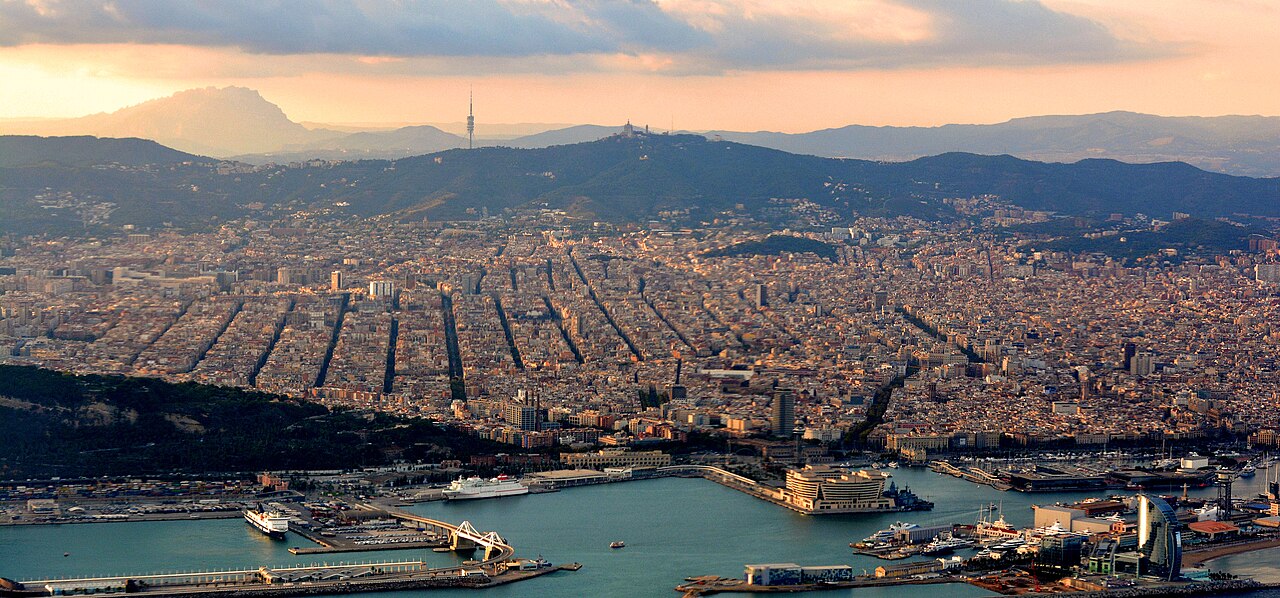
Crossing the Ebro Valley to connect two of Spain’s most vibrant cities is an experience that blends the efficiency of high-speed travel with the freedom of the open road, offering landscapes that shift dramatically from Zaragoza’s arid plains to the Mediterranean breeze.
How to get from Zaragoza to Barcelona: a quick overview
The best way to travel from Zaragoza to Barcelona depends entirely on whether you prioritize speed or flexibility. The AVE high-speed train is the fastest choice, taking just 98 minutes, while driving is the best alternative for exploring the region, covering a distance of 296 km.
If you’re a business traveler or a tourist short on time, the train operated by Renfe is unbeatable, whisking you from Zaragoza-Delicias and dropping you in the heart of Barcelona-Sants in just over an hour and a half. On the other hand, if your plan involves moving around freely, making stops along the way, or traveling in a group, the car is a very solid option thanks to a network of toll-free highways that make the journey easy. For travelers on a tighter budget, the Alsa bus offers a competitive fare of €15.71, though travel times can be longer. In short, the route is perfectly connected and allows you to tailor the mode of transport to the specific needs of each itinerary.
Driving from Zaragoza to Barcelona
Driving from Zaragoza to Barcelona covers a distance of 296 km and typically takes an estimated 3 hours using a network of toll-free highways.
The main and most direct route for this journey is the A-2, known as the Autovía del Nordeste (Northeast Highway). This road is the backbone of the trip, crossing the Ebro Valley and directly connecting the two capitals without any toll costs, making it an economical and efficient choice for the driver. Along the way, you may encounter connections to other major roads serving the surrounding areas.
Depending on your exact departure point in Zaragoza or specific detours, you might use the A-68 (Autovía del Ebro) or the A-23 (Autovía Mudéjar), although the A-2 is usually the main artery for this destination. As you approach the Tarragona area and inland Catalonia, the network connects with the A-27 (Autovia Tarragona-Montblanc), which provides access to areas like Montblanc without the need for tolls.
For those seeking alternative routes or connections from northern Aragon into Catalonia, there are options such as the A-22 (Autovia del Camí Català), the A-14 (Autovia de la Ribagorça), and, on the final approach to the city of Barcelona, the N-152z (N-152z Barcelona – Ripoll). All of these listed roads have the advantage of being toll-free, which significantly reduces the total cost of the trip compared to other pay motorways that may exist in the region. Driving is generally smooth, allowing you to maintain a constant speed for most of the 3-hour journey.
By train from Zaragoza to Barcelona
The train is the fastest means of transport between Zaragoza and Barcelona, with the AVE service completing the journey in just 98 minutes according to Renfe data.
The rail offering is extensive, with a frequency of 26 trains per day operating between Zaragoza-Delicias (the departure station) and Barcelona-Sants (the arrival station). The service hours are broad, starting with the first train at 8:11 in the morning and ending with the last at 22:07 at night, offering great flexibility for planning your day.
Within Renfe’s offering, there are different categories based on speed and type of service:
- AVE: The premium and fastest option, with 19 daily services completing the journey in 98 minutes.
- AVE INT: An intermediate service with 1 train per day taking 103 minutes.
- ALVIA: Offers 3 daily services with a duration of 120 minutes.
- Intercity: Has 1 train per day and a travel time of 130 minutes.
- REG.EXP. (Regional Exprés): The slowest option, with 2 trains per day that can take up to 381 minutes, ideal for travelers who are not in a hurry and are looking to save money.
The variety of options allows the traveler to choose between the maximum speed of the AVE or more economical and leisurely services, ensuring there is a train available for almost any schedule within the operating window.
By bus from Zaragoza to Barcelona
The bus is the most economical option for traveling from Zaragoza to Barcelona, with fares starting from 15.71€ operated by the company Alsa.
There is a direct bus service between both cities, eliminating the need for complicated transfers. The main company operating this route is Alsa, a well-established operator in road transport in Spain. Although the exact journey duration in the data provided appears as variable, the bus remains a viable alternative for those travelers who prioritize saving on the ticket over the speed of the journey.
When choosing this option, the traveler should bear in mind that, although the price of 15.71€ is very competitive compared to the train or the cost of fuel and car wear and tear, the time on board will be longer. It is a recommended option for students, backpackers, or travelers without strict time constraints who prefer to allocate those savings to other parts of their trip in Barcelona.
Recommended stops along the way
Driving the route allows you to discover key towns along the way that are worth a quick visit or a stop to stretch your legs.
Below, we detail the verified points of interest for stopping during the journey:
- Fraga: Located on the natural border between Aragon and Catalonia, Fraga is a strategic spot ideal for a first stop after leaving Zaragoza. It is known for its agriculture and its location beside the Cinca River.
- Les Borges Blanques: This town is famous for its production of olive oil and almonds. It is a perfect place to buy high-quality local products before heading further into Catalonia.
- Lleida: A provincial capital and historic city, Lleida offers important monuments such as the Seu Vella (Old Cathedral). It is the most logical and complete stop if you wish to visit a medium-sized city with all services.
- Montblanc: Known for its impressive medieval wall, Montblanc is a historical gem on the route. Stopping here allows you to walk through a setting that seems frozen in time.
- Sabadell: Already in the Barcelona metropolitan area, Sabadell is a major industrial and commercial city. It is a good stopping point if you want to avoid the traffic of central Barcelona immediately.
- Terrassa: Neighbouring Sabadell, Terrassa stands out for its Modernista heritage and its location at the foot of the Sant Llorenç del Munt mountain. It offers an interesting cultural alternative before reaching the final destination.
- Montcada i Reixac: Situated very close to Barcelona, this town is known for its castle and its quarries. It is one of the last possible stops before fully entering the urban fabric of the Catalan capital.
- Santa Coloma de Gramenet: Located in the Barcelonès area, this densely populated municipality serves as the northern gateway to Barcelona, featuring natural spaces such as Can Zam Park.
Where to stay in Barcelona
Barcelona offers a wide variety of areas to stay, from the historic centre to the more modern neighbourhoods, catering to different budgets and travel styles.
For those looking to be in the heart of the action and close to the main tourist attractions, the Barri Gòtic (Gothic Quarter) and Las Ramblas are the classic areas. Here you will find charming hotels in historic buildings, although prices tend to be higher due to high demand and the prime location.
If you prefer a quieter but well-connected area, the Eixample is an excellent choice. This district, designed by Cerdà, offers wide streets, Modernista architecture, and a great selection of restaurants and shops. It is ideal for families and travellers who value order and safety, with price ranges spanning from budget options to luxury hotels.
For a more bohemian and youthful atmosphere, the Gràcia neighbourhood is highly recommended. Once an independent village, it retains a village-square feel with numerous terraces and an authentic local vibe. Accommodation here tends to be tourist apartments or small boutique hotels.
Finally, if budget is a priority, outlying areas with good metro connections, such as Sants (near the train station) or Sant Andreu, can offer more competitive rates. In general, prices in Barcelona fluctuate greatly depending on the season, being higher in summer and during international events, so booking in advance is recommended to secure the best available rates on the market.
FAQs about the Zaragoza to Barcelona route
How long does it take to get from Zaragoza to Barcelona?
Travel time depends on the mode of transport you choose. By car, the 296 km journey takes about 3 hours. By train, the fastest option is the AVE, which takes just 98 minutes, while the Regional Exprés can take up to 381 minutes. By bus, the duration depends on traffic and stops and is generally longer than the train.
Which is cheaper, the train or the bus?
Generally, the bus is the most economical option, with prices verified from 15.71€ with the company ALSA. The AVE train, though much faster (98 minutes), usually has higher fares, although early-booking discounts are available. The Regional Exprés train can compete with the bus on price, but the travel time is considerably longer.
Is it worth renting a car?
Renting a car is worthwhile if you plan to visit recommended stops along the route, such as Montblanc, Lleida, or Fraga, or if you need mobility once in Barcelona to explore the surrounding areas. If your goal is simply to travel from one city center to the other, the AVE train is more comfortable and faster (98 minutes compared to 3 hours by car), saving you the stress of traffic and parking in the Catalan capital.
When is the best time to travel?
The best time to travel depends on your preferences for weather and crowds. Spring and autumn offer pleasant temperatures for driving the route or visiting the intermediate stops. In summer, temperatures in the Ebro Valley can be very high, making the air-conditioned train a more advisable choice. Additionally, traveling outside national holidays ensures better availability on trains and buses.