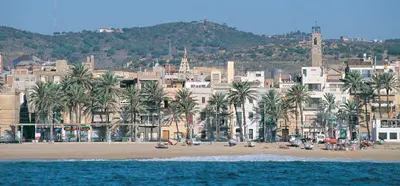
Badalona
CataluñaClimate
What to see in Badalona: the essentials
Badalona keeps a secret that few coastal cities can boast: beneath its streets lies a complete Roman city, fast asleep. You don’t come here just for the beach; you come to walk over the remains of Baetulo, one of the first Roman colonies on the Iberian Peninsula, founded around 100 BC. That contrast between the Mediterranean and archaeology is what makes this city of 225,000 inhabitants—the fourth most populous in Catalonia—so special.
Museu de Badalona (Badalona Museum)
This museum, opened in 1966, was built literally on top of the Roman baths of Baetulo, which are preserved in exceptional condition beneath the city’s streets. As you wander through its rooms you can see the Venus of Badalona up close, a small sculpture just 28 centimetres tall considered one of the most important female figures in Catalonia. It’s the perfect starting point for understanding why Badalona is much more than its seafront. The baths are visited via walkways that place you directly over the original remains—an experience that impresses by how well preserved everything is.
Vil·la romana de l’Estrella (Roman Villa of l’Estrella)
This archaeological site, listed by UNESCO, shows you how well-off families lived on the outskirts of Baetulo. It is a Roman villa where you can still make out the rooms and part of the original structure. It’s a brief but very interesting stop if you’re passionate about archaeology and want to complete the picture of Roman Badalona beyond the centre.
Mare de Déu de Montserrat
This historic building is part of Badalona’s architectural heritage and stands out for its value as a listed monument. Its presence in the urban fabric reflects the city’s evolution from its industrial and working-class past to the present day. It’s worth a stop if you’re interested in local architecture and buildings with a story.
Sant Roc
Another of Badalona’s historic buildings, preserved as a testament to the city’s growth. Its heritage value lies in its age and the role it has played within the local community. It sits within an urban setting that blends the old with the contemporary.
Sant Pau
This church is one of Badalona’s most venerable temples and forms part of the city’s everyday landscape. Its location makes it a landmark for getting your bearings in the centre and a point of interest for those seeking religious buildings with character. The simplicity of its architecture contrasts with the bustling life of the surrounding streets.
Garden of Quintus Licinius
This archaeological site in Badalona preserves remains linked to the Roman era and complements the city’s heritage offerings. It’s a brief visit that helps you gauge the mark Rome left on this stretch of the Catalan coast.
Teatro Principal
The Teatro Principal is one of Badalona’s leading performing arts venues and hosts a regular programme of stage productions.
Sant Sebastià
A historic building in Badalona that forms part of the city’s heritage catalogue.
Santa Clara
A historic monument set within Badalona’s urban fabric.
Estraperlo Club del Ritme
A monumental venue linked to Badalona’s music and cultural scene.
Plaça de la Vila
A monumental square that anchors part of Badalona’s historic centre.
Plaça de Trafalgar
A square of heritage interest within Badalona’s street layout.
Plaça de Barberà
A monumental urban space of historic value in the city.
Plaça Roja
A distinctive square that forms part of Badalona’s urban points of interest.
Teatre Zorrilla
A historic theatre in Badalona that forms part of the local stage offering.
Teatre Blas Infante
A theatre venue in Badalona integrated into the city’s cultural network.
Ermita de la Miranda
A hermitage set in an elevated spot commanding part of Badalona’s coastline.
🍂 Otoño
Si visitas Badalona en otoño, el ambiente se vuelve más tranquilo y las lluvias son escasas, con 460.0mm al año. Puedes acercarte a Sant Roc o a Sant Pau con un clima agradable para caminar. Lleva un paraguas plegable por si acaso.
What to do in Badalona
Badalona offers a combination of urban beach, Roman archaeology and neighbourhood life that is best enjoyed on foot and without rushing. You can start the day by exploring the old town of Dalt la Vila, climb its narrow streets of medieval and Roman origin, and then head down to the seafront promenade for fresh fish by the sea. If you happen to be there during the FILMETS Badalona Film Festival, the city becomes a showcase for international cinema with screenings and parallel activities. The municipal markets and the squares in the centre are perfect for mingling with local life, especially in the Centre neighbourhood, where shopping and the liveliest atmosphere are concentrated.
Badalona in a day: express itinerary
This route lets you see the essentials of Badalona in a full day, combining history, neighbourhood and beach without rushing.
- 10:00 – Museu de Badalona: Start with the Roman baths and the Venus of Badalona to understand the founding of Baetulo in 100 BC. It is the city’s archaeological jewel and the best starting point.
- 11:30 – Dalt la Vila: Climb up to the old town through its steep medieval lanes. Here you can breathe the most authentic history and see buildings such as the church of Sant Pau or the surroundings of Plaça de la Vila.
- 13:00 – Seafront promenade and beach: Head down to La Platja and walk along almost five kilometres of sand. It is the moment to grab a drink on a terrace overlooking the Mediterranean.
- 14:30 – Lunch by the sea: Try the grilled sardines or the seafood fideuá at the marina restaurants. Local fish is Badalona’s great culinary bet.
- 17:00 – Vil·la romana de l’Estrella: Round off the day with this Roman villa listed by UNESCO, a perfect contrast to the morning at the beach and a way to complete your visit to the city’s Roman past.
Where to eat in Badalona: local cuisine
Where to stay in Badalona
Centre
Es el corazón histórico y administrativo de la ciudad, donde se concentran los principales servicios, comercios y la vida cotidiana. El ambiente es urbano y dinámico, con una mezcla de arquitectura modernista y edificios contemporáneos cerca del Ayuntamiento.
Dalt la Vila
Corresponde al casco antiguo de Badalona, situado sobre una pequeña colina con calles estrechas y empinadas de origen medieval y romano. Es la zona con más encanto histórico, hogar del Museo de Badalona y las famosas Termas Romanas.
La Platja
Zona costera que abarca el paseo marítimo y la extensa playa de arena, muy frecuentada en verano por familias y deportistas. Ofrece un ambiente relajado con numerosos chiringuitos, restaurantes de pescado y acceso directo al mar.
Manresà
Barrio residencial tranquilo ubicado en la parte alta de la ciudad, conocido por albergar el Hospital Universitari Germans Trias i Pujol (Can Ruti). Es una zona alejada del ruido turístico, con amplias zonas verdes y un carácter principalmente local.
Sistrells
Área moderna en expansión situada al norte, caracterizada por nuevos desarrollos residenciales y grandes parques urbanos diseñados para el ocio familiar. Es una zona menos densa que el centro, ideal para paseos tranquilos lejos del bullicio.
Getting to Badalona
From Barcelona, the fastest option is the bus: 11 min (Empresa Casas), 2 a day.
| From | Direct train | Direct bus | Car |
|---|---|---|---|
| Barcelona | 18 min · 95/day Rodalies R1 | 11 min · 2/day Empresa Casas | 16 min 11 km |
| L'Hospitalet de Llobregat | 30 min · 95/day Rodalies R1 | — | 27 min 21 km |
| Mataró | 22 min · 95/day Rodalies R1 | 45 min · 21/day Empresa Casas | 21 min 22 km |
| Santa Coloma de Gramenet | — | 9 min · 23/day Empresa Casas, Autocares R. Font | 10 min 5 km |
| Mollet del Vallès | — | 30 min · 4/day Empresa Sagalés | 21 min 19 km |
| Sabadell | — | 1 h 35 min · 3/day Empresa Sagalés | 24 min 22 km |
| Cerdanyola del Vallès | — | 31 min · 2/day Autocares R. Font | 19 min 14 km |
Direct trains and buses from the official timetables published by the operators on Spain's National Transport Access Point (a reference Wednesday); driving times from OpenStreetMap. Operators that do not publish their timetables may run more services. Check the timetable before you travel.
Getting around Badalona
The city bus is the main form of public transport within Badalona and connects the neighbourhoods with each other and with Pep Ventura train station. To get around the centre, Dalt la Vila and the beach area, walking is the most comfortable option and lets you discover squares and corners that would otherwise go unnoticed. If you arrive by train, Pep Ventura station leaves you close to the centre and the seafront promenade, so many visits can be done on foot from there.
Weather in Badalona
Best time to visit Badalona
Day trips from Badalona
Badalona is part of the Barcelonés comarca (district) and its location makes it a practical base for exploring other cities in the region. Its proximity to Barcelona means you can combine Badalona’s beach and local atmosphere with the cultural and monumental offerings of the Catalan capital in a single day. Other coastal and inland towns in the Barcelonés are accessible by train or city bus, making excursions easy without a car. If you’re looking for variety, you can alternate beach days in Badalona with urban getaways to neighbouring municipalities.
Badalona curiosities you didn’t know
Beneath the streets of Badalona, the Roman baths of Baetulo are preserved in an exceptional state of conservation, and the Museum of Badalona, inaugurated in 1966, was built over them. Walking through the museum is literally walking over the city’s Roman history.
Baetulo was founded ex novo around 100 BC as one of the first colonies of Hispania Tarraconensis. It was not a haphazard settlement: the Romans chose this point on the coast and laid out a city from scratch with strategic criteria.
The jewel of the Museum of Badalona measures just 28 cm: it is the Venus of Badalona, one of the most important female representations in Catalonia. Small in size, enormous in historical and artistic value.
Badalona achieved city status in 1897, when Queen Regent Maria Christina of Austria granted it the title. It was recognition for a population that was already emerging as an industrial and maritime hub.
Badalona has almost five kilometres of beach, according to the official Aigües de Barcelona website. It is one of the most extensive urban seafronts in the metropolitan area.
Can Ruti hospital takes its official name, Hospital Universitari Germans Trias i Pujol, in honour of two doctor brothers from Badalona. A local tribute that gives its name to one of the leading healthcare centres in Catalonia.
Who Badalona is for
Badalona is for travellers looking for an authentic Catalan experience without giving up the sea. Families will find quiet spaces, green areas and direct access to the beach at La Platja and in neighbourhoods such as Sistrells and Manresà. History and archaeology lovers have more than enough reason to choose this city in the Museum of Badalona and the Roman villa of l’Estrella. Foodies will delight in the local fish cuisine and in the Michelin Selection of Almarge, Tastavents and Bàlsamic. And those who simply want to escape the mass tourism of Barcelona without going too far will find a slower pace and more restrained prices here.
💡 ¿Sabías que...?
- ● Bajo el suelo de Badalona se conservan las termas romanas de Baetulo en un estado de conservación excepcional, y sobre ellas se construyó el Museo de Badalona, inaugurado en 1966. (https://patrimoni.gencat.cat/es/coleccion/baetulo)
- ● Baetulo se fundó ex novo alrededor del año 100 a.C. como una de las primeras colonias de la Hispania Tarraconensis. (https://patrimoni.gencat.cat/es/coleccion/baetulo)
- ● La joya del Museo de Badalona mide solo 28 cm: es la Venus de Badalona, una de las representaciones femeninas más importantes de Cataluña. (https://patrimoni.gencat.cat/es/coleccion/baetulo)
- ● Badalona alcanzó la condición de ciudad en 1897, cuando la reina regente María Cristina de Austria le concedió el título. (https://es.wikipedia.org/wiki/Badalona)
- ● Badalona tiene casi cinco kilómetros de playa, según la web oficial de Aigües de Barcelona. (https://www.aiguesdebarcelona.cat/es/el-agua-en-tu-ciudad/tu-barrio-ciudad/badalona)
- ● El hospital de Can Ruti recibe su nombre oficial, Hospital Universitario Germans Trias i Pujol, en honor a dos médicos hermanos de Badalona. (https://www.aiguesdebarcelona.cat/es/el-agua-en-tu-ciudad/tu-barrio-ciudad/badalona)
Frequently asked questions about Badalona
How many days do I need to see Badalona?
With a full day you can see the essentials: the Museum of Badalona, Dalt la Vila, the beach and the Roman villa of l’Estrella. If you want to enjoy the food scene at a leisurely pace, explore the neighbourhoods and take a nearby excursion, two or three days are ideal.
What is the best time of year to visit Badalona?
From May to October, with average summer temperatures of 23.9°C and annual rainfall of just 460.0 mm. July and August are the liveliest beach months, while May, June, September and October offer good weather with fewer crowds.
How do I get to Badalona from Madrid?
Badalona has no AVE station, so the most common option is to reach Barcelona by high-speed train and from there take a Cercanías train to Pep Ventura station or a city bus. The journey from Barcelona is short and frequent.
Does Badalona have a beach?
Yes, Badalona has almost five kilometres of urban beach, according to the official Aigües de Barcelona website. The seafront promenade is home to beach bars, fish restaurants and direct access to the sand, especially popular in summer with families and sports enthusiasts.
What is special about the Museum of Badalona?
The museum was built over the Roman baths of Baetulo, preserved in exceptional condition beneath the city’s streets. Inside, it displays the Venus of Badalona, a sculpture of just 28 cm considered one of the most important female representations in Catalonia.