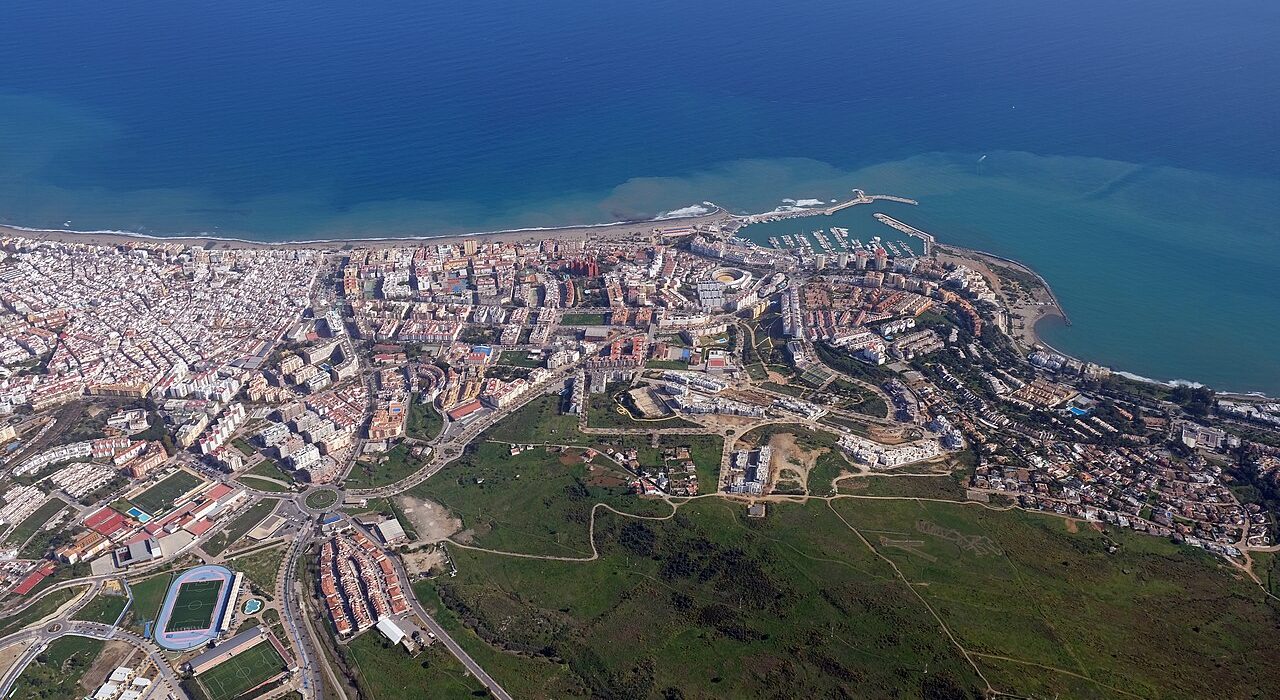
Estepona
AndalucíaClimate
Did you know that Estepona holds the record for more than 300 days of sunshine a year, making it one of the municipalities with the highest number of sunlight hours in the entire Iberian Peninsula? This privileged light not only bathes its 23 kilometers of coastline, but also illuminates an old town that has been transformed into the first open-air urban art museum in Andalusia. Beyond the numbers, walking through its streets means feeling the sea breeze mingled with the scent of more than 2,000 geranium planters decorating the Plaza de las Flores (Flowers Square), the true social heart of the city.
The must-seesWhat to see in Estepona: the must-sees
If you come looking for culture and visual beauty, you need to prioritize these spots. I have selected the ones that truly make a difference on your visit, separating the iconic from the complementary.
La Última Cena (Urban Art)
This work is the crown jewel of the innovative project launched in 2020, when the city inaugurated its open-air museum already boasting more than 40 giant murals painted on the facades of the old town. What you should really look for is the technique and monumental scale of the piece, which transforms a gray wall into a striking visual experience with no entrance fee. Being part of an urban museum, the practical detail is that you can visit it at any hour of the day or night, integrating art into your stroll without the need for reservations or opening hours.
Paleontological Museum
This space is essential for understanding the deep past of the area, offering a collection that stands out for its educational and scientific value within the region. The highlight is the opportunity to see up close the fossil remains that tell the geological history of the territory, a perfect plan for hot or rainy days. Although it is a niche museum, its central location makes it a must-stop for natural history lovers.
Estepona Castle
Originally built in the 18th century to defend the coast from Barbary pirates, this monument is one of the few coastal castles in the province that keeps its original structure almost intact. Inside, you should seek out the panoramic views it offers from its walls, which visually dominate the sea and the white village. It is a silent but powerful testimony to the military history of the Western Costa del Sol.
Bullfighting Museum
Reflecting the deep bullfighting tradition of Andalusia, this museum houses a significant collection of trajes de luces (bullfighters’ suits of lights), posters, and objects related to the national fiesta. What you should highlight is the quality of the exhibited items, which show the evolution of bullfighting in the region. It is a quick but intense visit that connects directly with the Feria y Fiestas Mayores (Annual Fair and Main Festivities) held in July.
STOA Art Gallery
This cultural space acts as a contemporary artistic dynamizer, offering temporary exhibitions that contrast with the traditional architecture of the surroundings. The most interesting thing is seeing how the artistic avant-garde coexists with the historic setting of the old town. It is a brief but inspiring stop for those seeking something more than sun and beach.
Other points of interest
- La Recalada: A sculptural monument that pays tribute to seafaring life and the return to port.
- Mausoleo Romano (Roman Mausoleum): Archaeological remains that attest to the Roman presence in these fertile lands.
- Monumento a la Constitución (Constitution Monument): An urban landmark located in a busy thoroughfare of the city.
- Mirador Playa del Cristo (Playa del Cristo Viewpoint): An elevated spot ideal for panoramic photographs of the coastline.
- Mirador del Carmen de Estepona (Carmen de Estepona Viewpoint): Another privileged perspective for contemplating the Sierra Bermeja in the background.
- Art Gallery: An additional exhibition space that complements the local cultural offering.
- En Tus Brazos (In Your Arms): An urban sculpture that adds a romantic touch to the promenade.
- Manuel Sanchez Ariza: A monument dedicated to a local figure of relevance to the community.
- Antonio Machado: A tribute to the universal poet integrated into the urban landscape.
- Homenaje al Turista (Tribute to the Tourist): A sculpture that celebrates the importance of visitors to the local economy.
- Evasion: An artistic work that invites reflection in the public space.
- Doctor Manuel Alcántara: A monument that recalls the medical work or historical figure of the same name.
- San Isidro Labrador (Saint Isidore the Laborer): A statue linked to the pilgrimage and agricultural traditions of the municipality.
- Regando el Jardín (Watering the Garden): A sculpture that evokes Estepona’s fame as the city of flowers.
- Fundación Antonia Guerrero (Antonia Guerrero Foundation): A cultural space or memorial dedicated to this personality.
- La Huerta de Irene (Irene’s Vegetable Garden): A point of interest that recalls the agricultural past and the values of the land.
🍂 Otoño
Si visitas Estepona en otoño, todavía podrás disfrutar de días agradables antes de que llegue el frío real. Es una ventaja excelente para practicar golf o senderismo con menos turistas alrededor. Lleva calzado cómodo y revisa el pronóstico, ya que podría caer alguna lluvia ocasional.
What to do in Estepona
Estepona offers specific activities that go beyond a simple dip in the sea, taking advantage of its privileged climate and rich cultural agenda. You can immerse yourself in tradition during the Feria y Fiestas Mayores (Main Fair and Festivities) in July, where the festive atmosphere in honor of San Fernando includes casetas and bullfighting events, or experience the magic of the Noche Blanca del Flamenco (White Night of Flamenco) in June, with free singing and dancing performances that last all night. If you prefer something more family-oriented, the Romería de San Isidro Labrador (Pilgrimage of Saint Isidore the Laborer) in May will let you see decorated carts and flamenco dresses, while in November the Mercado Medieval (Medieval Market) transforms the old town with craft stalls and jugglers.
Estepona in a day: express itinerary
If you’re short on time, this plan lets you see the essentials without rushing too much, taking advantage of the compactness of the center.
- 10:00 AM – Old Town and Murals: Start by getting lost in the cobblestone streets adorned with flower pots to see the mural of La Última Cena (The Last Supper) and others among the 40 giant murals of the open-air museum.
- 12:30 PM – Castillo de Estepona (Estepona Castle): Head up to the 18th-century fortress to enjoy the intact panoramic views and understand the defense against Barbary pirates.
- 14:30 PM – Lunch in La Rada: Go down to the fishing quarter to eat fritura malagueña (Malaga-style fried fish) or sardinas al espeto (skewered sardines) at the chiringuitos along the seafront promenade.
- 17:00 PM – Paleontological or Bullfighting Museum: Choose one of the indoor museums to cool off and learn about local history before sunset.
- 19:30 PM – Mirador Playa del Cristo (Playa del Cristo Viewpoint): End the day with a walk to the viewpoint to watch the sun set over the sea with the Sierra Bermeja in the background.
Where to eat in Estepona: local gastronomy
Where to stay in Estepona
Casco Antiguo
El corazón histórico de la ciudad, conocido por sus calles empedradas adornadas con macetas de flores y fachadas blancas. Ofrece un ambiente tranquilo durante el día que se anima por la noche con bares de tapas y restaurantes tradicionales.
Puerto Deportivo
Zona moderna construida alrededor de la marina, caracterizada por paseos marítimos amplios, yates de lujo y una amplia oferta de ocio nocturno. Es el centro de la vida social contemporánea de Estepona con numerosos clubes y restaurantes internacionales.
Centro Ciudad
Área comercial y administrativa que conecta el casco antiguo con la costa, llena de tiendas, bancos y servicios locales. Es una zona funcional y bulliciosa ideal para quienes buscan comodidad y acceso rápido a todos los puntos de interés.
La Rada
Barrio tradicional situado junto al puerto pesquero y la playa homónima, manteniendo un fuerte carácter marinero y auténtico. Es famoso por su oferta gastronómica basada en pescado fresco y por ser más tranquilo que la zona del puerto deportivo.
Nueva Atalaya
Zona residencial elevada al oeste del centro, conocida por sus urbanizaciones con jardines, campos de golf y vistas panorámicas al mar. Ofrece un entorno muy tranquilo y seguro, alejado del ruido del centro pero bien conectado.
Selwo
Área ubicada en la parte alta de la ciudad, dominada por grandes complejos residenciales y zonas verdes. Destaca principalmente por albergar un importante parque de fauna y ofrecer un alojamiento tipo resort familiar.
How to get to Estepona
The city is very well connected by road and bus, with land transport being the main option for most travelers.
| Medio | Rutas y Carreteras | Compañías / Detalles |
|---|---|---|
| Autobús | Estación de Autobuses de Estepona | Avanza, Interbus, Transportes Generales Comes, Alsa |
| Coche | Autovía del Mediterráneo | Carreteras A-7 y AP-7 (peaje) |
| Acceso Local | Conexión interior | Carretera MA-8301 |
How to get around Estepona
Once in the city, getting around is easy. The center is pedestrianized, which invites you to walk and discover the murals and shops at your own unhurried pace. For longer distances or to reach residential areas such as Selwo or Nueva Atalaya, you can use the urban bus, which efficiently covers the main routes. Given the size of the municipality (137.5 km²), having a car can be useful if you plan to explore the more remote inland areas or the golf courses, but for the average tourist, walking and the bus are sufficient.
Weather in Estepona
Live webcam — Manilva*
Estepona* The nearest webcam to Estepona is in Manilva, 9.6 km away.
Source: Windy Webcams
Best time to visit Estepona
Day trips from Estepona
Estepona is part of the Western Costa del Sol region and the association of municipalities of the same name, making it a perfect base for exploring the area. Although specific data on neighboring towns is not detailed individually in this guide, its location in the southwestern part of the province of Málaga makes it easy to access other coastal destinations. You can use the A-7 and AP-7 roads to move quickly east or west, taking advantage of the fact that the judicial district of Estepona covers a wide and well-connected area.
Curious facts about Estepona you didn’t know
This city holds secrets that make it unique beyond its tourist fame. Here are some facts that will surprise you:
It is known as the ‘City of Orchids’ because its botanical garden is home to more than 3,000 species of orchids, making it one of the largest collections in Europe, a fact few visitors realise at first glance.
The municipality has more than 21 kilometres of coastline and has been awarded the Blue Flag uninterrupted for more than 25 consecutive years for the quality of its waters and beaches, an enviable record of sustainability.
The etymology of the name comes from the Arabic place name ‘Astabbuna’, meaning ‘place of steppes’ or ‘land of pastures’, reflecting its origin as an agricultural and livestock settlement very different from the tourist destination it is today.
The town was the filming location for several scenes of the film ‘Lawrence of Arabia’ (1962), due to the similarity of its nearby arid landscapes to the deserts of the Middle East, a cinematic touch of luxury.
Who Estepona is for
Estepona is a versatile destination that works perfectly for couples seeking romance in the Old Town, and for families who need the safety and open spaces of Nueva Atalaya or Selwo. History lovers will enjoy the Castle and the museums, while foodies will find a gastronomic paradise in La Rada and the Mercado de Abastos (Market Hall). It is not so much a destination for low-budget backpackers, but rather for travellers who value quality of life, urban art and well-preserved tradition.
💡 ¿Sabías que...?
- ● Estepona es conocida como la 'Ciudad de las Orquídeas' porque su jardín botánico alberga más de 3.000 especies de orquídeas, siendo una de las colecciones más grandes de Europa. (Ayuntamiento de Estepona)
- ● El municipio cuenta con más de 21 kilómetros de costa y ha obtenido la Bandera Azul de forma ininterrumpida durante más de 25 años consecutivos por la calidad de sus aguas y playas. (ADEAC (Asociación de Educación Ambiental y del Consumidor))
- ● En el año 2020, Estepona inauguró el primer museo al aire libre de arte urbano de Andalucía, contando con más de 40 murales gigantes pintados en las fachadas del casco antiguo. (Junta de Andalucía)
- ● La etimología del nombre proviene del topónimo árabe 'Astabbuna', que significa 'lugar de estepas' o 'tierra de pastos', reflejando su origen como asentamiento agrícola y ganadero. (Diccionario de Toponimia Española (RAE))
- ● El Castillo de San Luis, construido en el siglo XVIII para defender la costa de los piratas berberiscos, es uno de los pocos castillos costeros de la provincia que mantiene su estructura original casi intacta. (Consejería de Cultura de la Junta de Andalucía)
- ● Estepona posee el récord de tener más de 300 días de sol al año, lo que la convierte en uno de los municipios con mayor número de horas de insolación de toda la península ibérica. (Agencia Estatal de Meteorología (AEMET))
- ● La localidad fue escenario de rodaje de varias escenas de la película 'Lawrence de Arabia' (1962), debido a la similitud de sus paisajes áridos cercanos con los desiertos de Oriente Medio. (Film Spain (ICAA))
- ● La Plaza de las Flores es considerada el corazón social de la ciudad y está decorada permanentemente con más de 2.000 macetas de geranios, manteniendo una tradición floral que data de mediados del siglo XX. (Patronato de Turismo de la Costa del Sol)
Frequently asked questions about Estepona
How many days do I need to see Estepona?
With an express itinerary of 1 day you can see the main sights, but to enjoy the gastronomy, museums and beaches at a relaxed pace, at least 3 days are recommended. This will allow you to explore both the old town and the residential areas and the 23 km of coastline.
What is the best time of year to visit Estepona?
The best time is from July to September, when the average summer temperature reaches 25.4°C and key events such as the Feria (Fair) and the Jazz Festival take place. However, the mild winter (14.9°C) is also pleasant for cultural visits.
How do I get to Estepona by public transport?
You can get to the Estepona Bus Station using companies such as Avanza, Interbus, Transportes Generales Comes or Alsa. The city is connected mainly by the A-7 and AP-7 roads.
What typical dishes should I try?
You cannot leave without trying the sardinas al espeto (skewered sardines) at the chiringuitos (beach bars), the fritura malagueña (Málaga-style fried fish) in the old town bars and the sopa campera (country-style soup) in the traditional mesones (taverns).