Torrevieja
Comunidad ValencianaClimate
Daily budget
The sun beats down on the Salinas de Torrevieja (Torrevieja Salt Flats) and the water turns that impossible pink that looks like it belongs on another planet. Further north, in the Parque Natural (Natural Park), storks circle over the Laguna Rosa (Pink Lagoon) while the wind carries a smell of salt that has defined this stretch of the Alicante coastline for centuries. Here, in the Vega Baja del Segura region, life is lived slowly: a cold beer on the Paseo Marítimo Juan Aparicio, an arroz a banda (rice cooked in fish stock) facing the Mediterranean, and the certainty that the city they call “the old tower” has more layers than it lets on.
The must-seesWhat to see in Torrevieja: the must-sees
Parque Natural de las Lagunas de La Mata y Torrevieja (La Mata and Torrevieja Lagoons Natural Park)
Torrevieja’s Pink Lagoon owes its characteristic color to a bacterium that releases a pinkish pigment in waters with a salt concentration of approximately 350 g/l, a natural phenomenon unique in Spain. The park stretches across the municipalities of Torrevieja, Guardamar del Segura, Los Montesinos, and Rojales, in the very heart of the Vega Baja del Segura region. It is a perfect spot to walk among birds, observe flamingos, and understand why salt has shaped the history of this coastline. It remains open 24 hours a day and has accessible entrances for people with reduced mobility, so there’s no excuse to miss it.
Molino del Agua (Water Mill)
Declared a protected area in 2006, this 17-hectare enclave blends mobile dunes by the sea with inland areas already stabilized by a Mediterranean pine forest. Its fauna includes the endemic beetle Paratriodonta alicantina and the Kentish plover, a protected bird that nests in these open sandy areas. To explore it in depth, guided tours are organized in two time slots that allow you to discover a meeting point between nature and history within the municipality’s environmental heritage.
Torre Cervera or Torre del Moro
This medieval watchtower on the Alicante coast was built to defend the shoreline from pirate attacks and stands on a hill above Cabo Cervera, within the Cabo Verde residential development. Its elevated position allowed visual control of the coastline, a typical feature of the Mediterranean defensive system. It is surrounded by the gardens of Parque de la Torre del Moro, with privileged views of the Mediterranean and the Torrevieja coast. The area is freely accessible and open 24 hours a day, so you can head there at sunset for a memorable photo.
Museo del Mar y de la Sal (Museum of the Sea and Salt)
Located at 10 Patricio Pérez Street, this municipally managed ethnographic museum documents the city’s historical relationship with the sea and the salt industry. It preserves pieces on fishing traditions, salt extraction, and local maritime culture, and allows you to trace Torrevieja’s evolution from a fishing village to one of the main salt-producing centers of the Mediterranean. Admission is free and inside you can learn about traditional fishing techniques and the construction of the salt flats—a perfect plan for a hot midday.
Eras de la Sal (Salt Flats)
An emblematic monument linked to the city’s salt-making tradition, the Eras de la Sal are part of Torrevieja’s cultural heritage and are worth a visit to understand the historical importance of salt in the local economy.
Paseo Marítimo Juan Aparicio (Juan Aparicio Seafront Promenade)
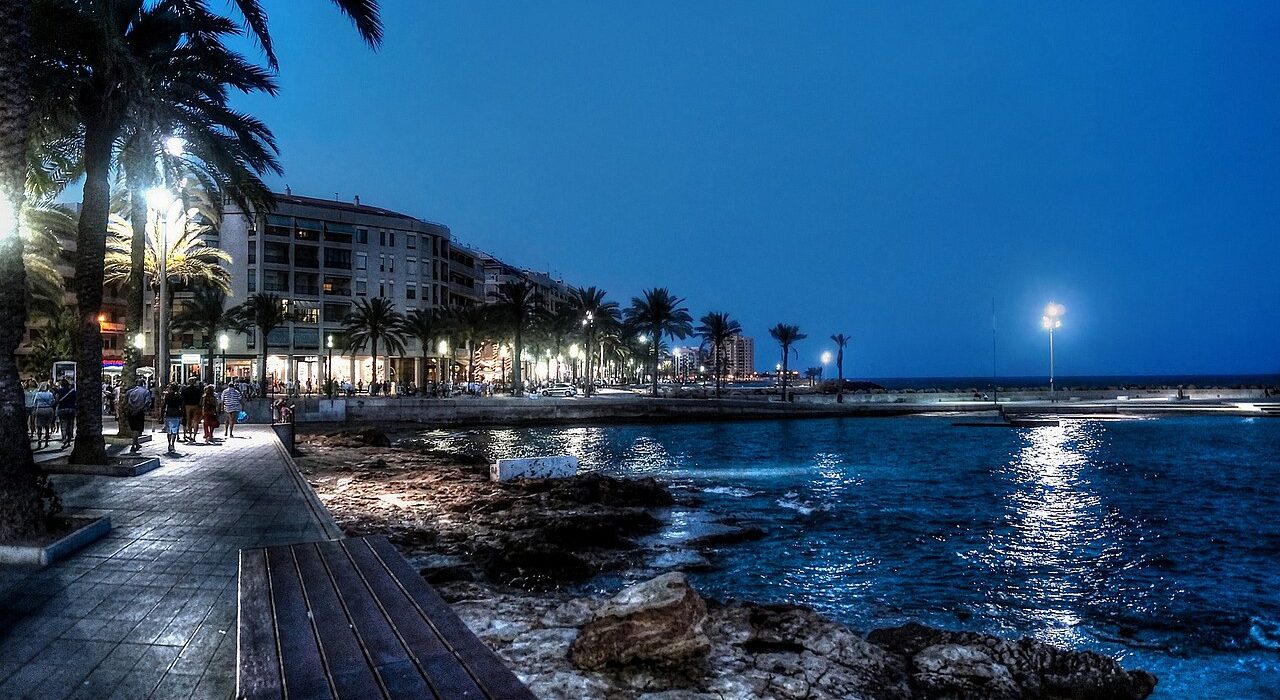
A seafront promenade alongside the port and the downtown beaches, dotted with sculptures and with open views of the Mediterranean.
Paseo Marítimo de Torrevieja (Torrevieja Seafront Promenade)
It runs along the urban coastline, skirting the main beaches and connecting the port with the swimming areas, with restaurants, viewpoints, and pedestrian zones; it is also part of the contemporary architecture itineraries of the PAC cycle promoted by the Instituto Alicantino de Cultura Juan Gil-Albert.
Playa del Cura (Priest’s Beach)
A highly visited urban beach, located between Punta Margallo and the Juan Aparicio promenade, with calm waters, sun loungers, umbrellas, and water activities.
Faro de Punta Prima (Punta Prima Lighthouse)
A coastal lighthouse integrated into the maritime signaling network of the Alicante coastline, located in Punta Prima.
Playa de los Locos (Crazy People’s Beach)
A sandy beach east of the urban center, 760 meters long, with lifeguard service, adapted bathing, and boardwalks; perfect for a morning of pure Mediterranean.
🍂 Otoño
Si visitas Torrevieja en otoño sigues dentro de la mejor época, con temperaturas agradables que permiten explorar la Torre Cervera o Torre del Moro con calma. Las Eras de la Sal y los paseos marítimos ofrecen un ambiente más relajado que en verano, perfecto para disfrutar sin prisas. Consejo práctico: lleva alguna prenda ligera de abrigo para la noche y aprovecha la menor afluencia para fotografiar los lugares con tranquilidad.
What to do in Torrevieja
Torrevieja offers a well-rounded plan for all tastes: getting lost among the 700 stalls of the Friday Market (Mercadillo de los Viernes), buying fresh produce at the 40 stalls of the “La Plasa” Market Hall (Mercado de Abastos “La Plasa”), swimming at Playa del Cura, walking to the Torre del Moro at sunset, and finishing with a caldero (fish and rice stew) dinner facing the harbor. If you fancy something quieter, residential neighborhoods like Aguas Nuevas or Los Balcones let you switch off just a stone’s throw from the Pink Lagoon and several golf courses. And when you’re in the mood for some action, the city center and marina concentrate the best nightlife in town.
Torrevieja in a day: express itinerary
- 09:00 — La Mata and Torrevieja Lagoons Natural Park: start the day in one of the most unique landscapes in the Valencian Community, with the Pink Lagoon as the star and birds everywhere.
- 11:00 — Museum of the Sea and Salt (Museo del Mar y de la Sal): brush up on the city’s salt-producing history right in the center, with free entry and a short visit.
- 13:00 — “La Plasa” Market Hall: snack among the 40 stalls of fresh produce and shop for a local meal.
- 14:30 — Lunch in the city center / marina: arroz a banda (rice cooked in fish stock) or caldero at one of the restaurants facing the harbor, with views of the boats.
- 17:00 — Torre Cervera or Torre del Moro: head up to Cabo Cervera to see the medieval watchtower and its views over the Mediterranean.
- 19:00 — Juan Aparicio Promenade and Playa del Cura: swim, grab a beer, and stroll as the sun sets over the coast.
Where to eat in Torrevieja: local gastronomy
Where to stay in Torrevieja
Centro de Torrevieja y Puerto Deportivo
El vibrante corazón de la ciudad, ideal para el ocio urbano. Aquí se encuentran numerosas tiendas, restaurantes, bares y el animado puerto deportivo, epicentro de actividades marítimas y vida social.
Playa del Cura
Una de las playas más céntricas y populares, con arena fina y aguas tranquilas. Su extenso paseo marítimo está repleto de bares, restaurantes y heladerías, ofreciendo un ambiente animado durante todo el día.
Playa de los Locos
Playa semiurbana de arena dorada y aguas claras, ideal para disfrutar en familia. Cuenta con servicios de playa, chiringuitos y un paseo marítimo que la conecta con otras zonas costeras.
La Mata
Una zona tranquila conocida por su larga playa de arena y su cercanía al Parque Natural de las Lagunas de La Mata y Torrevieja. Es perfecta para quienes buscan relax, naturaleza y largos paseos.
Los Balcones
Urbanización residencial al sur de Torrevieja, caracterizada por sus chalets y zonas verdes. Ofrece un ambiente sereno y mayor privacidad, con fácil acceso a campos de golf y la Laguna Rosa.
Aguas Nuevas
Zona residencial moderna al norte de Torrevieja, muy popular entre familias. Dispone de urbanizaciones con servicios y está estratégicamente ubicada cerca de parques acuáticos y las salinas.
How to get to Torrevieja
| Medio | Duración | Precio aprox. | Frecuencia |
|---|---|---|---|
| Bus (Avanza / Costa Azul, Alsa, Bilmanbus) | Variable según origen | Económico | Servicios regulares desde la Estación de Autobuses de Torrevieja |
| Coche por AP-7 | Variable según origen | Peajes de la autopista | Acceso directo a la ciudad |
| Coche por N-332 | Más lento que la AP-7 | Gratuito | Recorre el litoral alicantino |
| Coche por CV-905 | Conexión comarcal | Gratuito | Acceso desde la Vega Baja del Segura |
How to get around Torrevieja
Torrevieja’s center is pedestrian-friendly and easy to cover on foot: the Juan Aparicio Promenade, the marina, the Museum of the Sea and Salt, and Playa del Cura are all just a few minutes’ walk from each other. To move between more outlying neighborhoods like La Mata, Los Balcones, or Aguas Nuevas, the convenient option is the urban bus, which covers the main residential and tourist routes. If you come by car, the AP-7 and N-332 provide quick access, but within the city center the best strategy is to park and forget about the wheel.
Weather in Torrevieja
Best time to visit Torrevieja
Day trips from Torrevieja
The obvious big excursion is Alicante, capital of the province, with its Santa Bárbara Castle dominating the city, its colourful old town and an Explanada de España that is one of the most recognisable postcard images of the Mediterranean. It is well connected by road via the AP-7 and the N-332, allowing for a full day trip there and back without rushing, combining a morning swim in Torrevieja with a cultural afternoon in Alicante.
Things you didn’t know about Torrevieja
The name has medieval origins. Torrevieja owes its name to a “torre vieja” (old tower), a watchtower located near Cala Cornuda, one of the two defensive towers that existed in the Cabo Cervera area during the Reconquista. This is also where the nickname “Torre del Moro” (Moor’s Tower) for the current Torre Cervera comes from.
Salt changed the city in 1802. A Royal Order from King Charles IV ordered in 1802 the transfer of salt production from Torrelamata to Torrevieja, and the following year the monarch approved the plan for the new town, marking the beginning of its urban development.
Tourism began in 1884. The opening of the railway as the Albatera-Torrevieja branch of the Murcia-Alicante line in 1884 boosted the incipient tourism in the municipality, when it was still a salt-producing and fishing village. Today Torrevieja receives around 10,446 travellers a year (INE), with 61% of them foreign visitors and an average stay of 3.14 nights.
Who Torrevieja is for
Torrevieja is especially well suited to families looking for safe beaches like Playa del Cura or Playa de los Locos, couples wanting to combine dinners in the Puerto Deportivo with sunset swims, and foodies drawn by the caldero (fish and rice stew), arroz a banda (rice cooked in fish stock) and salted fish. Backpackers find hostels from €25-45 a night and a mild climate almost all year round, and nature lovers have in the Parque Natural de las Lagunas de La Mata y Torrevieja a setting that is hard to match in the Comunidad Valenciana.
💡 ¿Sabías que...?
- ● El nombre de Torrevieja proviene de una 'torre vieja' o torre vigía situada cerca de la cala Cornuda, una de las dos torres defensivas que existían en la zona del cabo Cervera durante la Reconquista. (https://es.wikipedia.org/wiki/Torrevieja)
- ● En 1802, una Real Orden del rey Carlos IV ordenó el traslado de la explotación de la sal desde Torrelamata a Torrevieja, y en 1803 el rey aprobó el plano de la nueva población. (https://www.pescatorrevieja.com/historico/historia/3ciud/ciudad.htm)
- ● En 1884 se inauguró el ferrocarril como ramal Albatera-Torrevieja de la línea Murcia-Alicante, lo que impulsó el turismo incipiente en el municipio. (https://torrevieja.es/es/ciudad/quienes-somos/evolucion-historica)
Frequently asked questions about Torrevieja
How many days do I need to see Torrevieja?
With two or three days you can cover the main attractions: La Mata and Torrevieja Lagoons Natural Park, Museum of the Sea and Salt, Torre del Moro, Molino del Agua, Eras de la Sal and several beaches. The average recorded stay is 3.14 nights (INE), a figure that fits well with a relaxed trip.
Is Torrevieja expensive?
It is not an expensive city: an average meal costs around €12-20, a hostel between €25-45 per night, a 3-star hotel between €35-70 and a 4-5-star hotel between €80-150 per night. It is easy to adapt to different budgets.
What is the best time to visit Torrevieja?
The best window runs from March to November, according to AEMET data, with average temperatures of 25.2°C in summer and 12.3°C in winter and only 270.9 mm of annual rainfall. If you are looking for pure beach time, aim for July and August.
How do I get to Torrevieja from Madrid?
The most convenient option is the long-distance bus from Torrevieja Bus Station, operated by companies such as Alsa, Avanza (Costa Azul) and Bilmanbus. If you prefer to drive, the AP-7 is the fast route, with the N-332 as a free alternative along the coast.
Is Torrevieja a coastal city?
Yes, it is a coastal city and municipality in the province of Alicante, in the Valencian Community, located on the shores of the Mediterranean Sea and next to the La Mata and Torrevieja lagoons. With around 101,000 inhabitants it is the fifth most populated city in the Valencian Community.