Total Solar Eclipse in Segovia, Spain — August 12, 2026: Exact Times and Where to Watch
In Segovia, the solar eclipse on August 12, 2026, will be TOTAL, with totality beginning at 20:31 local time and lasting exactly 0 min 57 s. This event marks a historic moment for the Iberian Peninsula, representing the first total solar eclipse visible from mainland Spain since August 30, 1905—a gap of 121 years. While the duration in Segovia is brief compared to the path’s center, the opportunity to witness the sun’s corona against the backdrop of a UNESCO World Heritage city is unique. This guide provides verified astronomical data, specific viewing locations with clear western horizons, and essential safety protocols for travelers.
Eclipse timeline in Segovia
The eclipse sequence in Segovia unfolds during the late evening hours, with the sun descending toward the horizon. The event begins with the first contact (partial phases) at 19:35:47 CEST, as the moon starts to obscure the solar disk. The critical moment occurs at 20:31:09, when totality begins. For 57 seconds, the sky will darken significantly, revealing the solar corona. Totality ends at 20:32:06, followed by the final partial phases until the sun sets or the eclipse concludes at 21:19:04. All times are in Central European Summer Time (CEST).
| Phase | Local time in Segovia (CEST) |
|---|---|
| First contact (partial begins) | 19:35:47 |
| Totality begins | 20:31:09 |
| Maximum eclipse | 20:31:37 |
| Totality ends | 20:32:06 |
| Last contact (partial ends) | 21:19:04 |
| Totality duration | 0 min 57 s |
| Magnitude | 1.003 |
Source: NASA Five Millennium Catalog. Local times CEST (UTC+2), August 12, 2026.
Segovia sits on the southern edge of the path of totality (“borde sur de la banda”), which explains the short duration of 57 seconds compared to the peninsular maximum of 1 minute 49 seconds in Oviedo. Being off the centerline means the moon covers the sun completely (magnitude 1.003), but the alignment is not as deep as in northern Spain. Travelers should note that while 57 seconds is fleeting, it is sufficient to experience the dramatic temperature drop and the 360-degree sunset effect. However, precision is key; you must be in position well before 20:30 to maximize this brief window.
Where to watch it in Segovia
Selecting a viewing location in Segovia requires strict adherence to one criterion: an unobstructed WESTERN horizon. During totality, the sun will be extremely low, at an altitude of approximately 10° to 12° above the west-northwest horizon. Any building, hill, or tree line blocking this specific angle will obscure the total phase. Elevated positions are superior, as they allow you to see over the dense urban fabric of the old town.
Based on topography and orientation, here are the verified viewing spots in Segovia:
- Muralla de Segovia (City Walls): Walking along the medieval walls offers significant elevation above the street level. Sections of the wall facing west provide a clear line of sight over the lower buildings of the old town. This is arguably the best vantage point to combine the astronomical event with the historic architecture. The observation note for this city highlights the Roman Aqueduct as a unique photographic backdrop; from certain points on the walls or nearby elevated terrain, you may frame the eclipse with the aqueduct’s arches.
- Mirador del Postigo del Consuelo: This viewpoint is strategically located on the southern edge of the old town. Its elevation and open exposure make it a strong candidate for capturing the low sun. The name “Postigo” implies a small gate or opening, often situated to command views of the surrounding plains, which is ideal for a low-horizon eclipse.
- Torreón de Lozoya: As a fortified tower, this structure provides height. If accessible to the public or if there is an adjacent open square, the elevation helps clear the immediate rooflines. Verify access restrictions closer to the date, as historic towers often have limited capacity.
- Plaza Mayor de Segovia: While the main square is the heart of the city, it presents a high risk for this specific eclipse. Surrounded by tall buildings and the cathedral, the western horizon is likely obstructed. You may experience the ambient darkness and the crowd atmosphere here, but you risk missing the actual totality if the sun dips behind a rooftop before the 57-second window closes. Use this spot for the partial phases, but move to higher ground for totality.
August skies in Castilla y León: real odds
According to data from AEMET (State Meteorological Agency), the statistical probability of a clear sky in the Castilla y León zone during mid-August ranges between 70% and 85%. These are among the best meteorological conditions in Spain for this event. However, travelers must prepare for two specific risks: extreme heat and isolated storms. Temperatures can exceed 35°C even in the evening, making hydration critical while waiting for the 20:31 event. Additionally, the region is prone to isolated afternoon thunderstorms (“tormentas vespertinas aisladas”). While the overall odds favor clear skies, you must monitor the forecast 24 to 48 hours in advance. If a storm front approaches from the west, have a backup plan to move east, though the narrow path of totality limits long-distance relocation options on the day.
Getting to Segovia for the eclipse
Segovia is easily accessible from Madrid, the main international hub. While we do not have specific published route guides for this city yet, the standard connection is the high-speed AVE train from Madrid-Chamartín to Segovia-Guiomar, taking approximately 30 minutes, or regular bus services from the Moncloa interchange. On August 12, 2026, expect unprecedented traffic congestion on the AP-6 highway and at train stations. Hundreds of thousands of visitors will converge on the path of totality. The smart play is to arrive in Segovia on August 11th. Attempting to drive in on the morning of the eclipse carries a high risk of getting stuck in gridlock, potentially causing you to miss the event entirely.
Where to stay: book now or arrive the day before
Accommodation inside the path of totality has been booking up rapidly since early 2025. Hotels in Segovia and nearby towns like San Ildefonso will likely be sold out or charging premium rates. Our honest advice is to book immediately with a free cancellation policy. If you cannot find lodging in Segovia, consider staying in a city outside the path, such as Madrid or Valladolid, and commuting early on the 12th. However, staying within Segovia allows you to walk to your viewing spot without worrying about parking or train delays during the critical evening hours.
Safety: the 30 seconds you must read
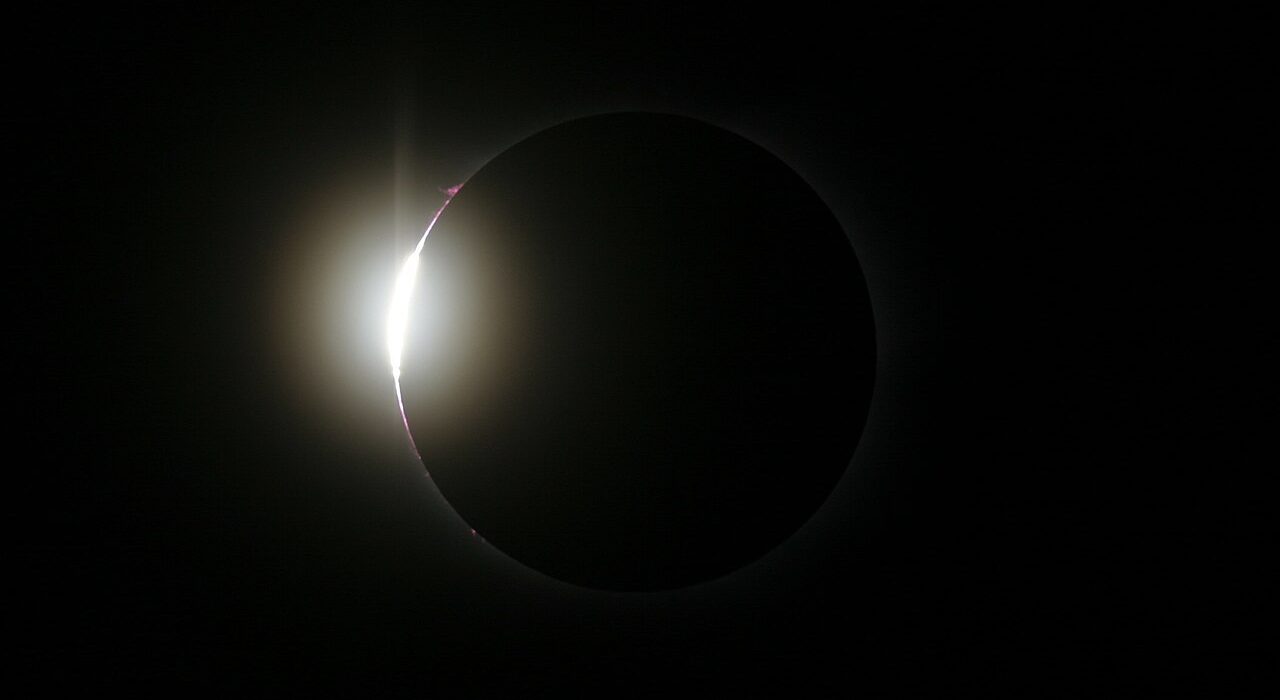
Viewing a solar eclipse requires strict eye protection to prevent permanent retinal damage. You must wear ISO 12312-2 certified eclipse glasses during ALL partial phases (from 19:35 until 20:31, and again after 20:32). The only exception is during the 57 seconds of totality in Segovia, when the sun is completely covered. The moment the “diamond ring” effect appears at the end of totality, you must look away and immediately put your glasses back on. Do not use sunglasses, smoked glass, or unfiltered cameras. For a comprehensive safety briefing, read our complete guide to the 2026 eclipse in Spain.
- ISO 12312-2 certified eclipse glasses — one per person, bought well in advance. See options on Amazon ES.
The eclipse near Segovia
Travelers often compare viewing locations to maximize their duration of totality. The table below compares Segovia’s timing with nearby cities. Note that moving north generally increases the duration, while moving south risks exiting the path of totality entirely.
| City | Distance | Totality duration | Totality begins |
|---|---|---|---|
| Guadalajara | 87 km | 1 min 07 s | 20:31:21 |
| Valladolid | 94 km | 1 min 27 s | 20:29:53 |
| Palencia | 124 km | 1 min 43 s | 20:29:08 |
| Burgos | 159 km | 1 min 44 s | 20:28:24 |
Make a trip of it: what to see in Segovia
Since the eclipse occurs at sunset on August 12, the entire day is free for tourism. Segovia is compact and rich in history, headlined by the Roman Aqueduct, the Alcázar fortress, and the Gothic Cathedral. We recommend exploring the city in the morning and early afternoon, then heading to your viewing spot by 19:00 to secure your position. For a detailed itinerary, consult our full city guide: what to see and do in Segovia.
Frequently asked questions
What time is the eclipse in Segovia?
The partial phase starts at 19:35:47 CEST. Totality runs from 20:31:09 to 20:32:06, with maximum at 20:31:37. The partial phase ends at 21:19:04.
How long does totality last in Segovia?
0 min 57 s. Being off the centerline, the duration is shorter than the peninsular maximum (Oviedo, 1 min 49 s).
Will the eclipse be total in Segovia?
Yes. Segovia is inside the path of totality with magnitude 1.003. The sun will be completely covered by the moon for 0 min 57 s.
Do I need eclipse glasses?
Yes — ISO 12312-2 certified glasses during all partial phases. Only during totality can you safely look at the sun with the naked eye. Sunglasses do NOT protect.
What if it is cloudy in Segovia on August 12?
Clear-sky probability for this zone is 70-85% (AEMET historical data). MEJORES condiciones meteorológicas estadísticas. Hidratación importante. Check the AEMET forecast 24-48 hours before and stay mobile.
When is the next total solar eclipse visible from Spain?
Soon: 2027-08-02. An exceptional back-to-back for the same region.
Conclusion
The August 12, 2026 total solar eclipse is a once-in-a-lifetime event for travellers visiting Spain. With careful planning — picking a centerline location, checking the AEMET forecast 24-48h before, wearing ISO 12312-2 glasses during partial phases and booking accommodation early — you can witness one of nature’s most spectacular phenomena. Use this guide alongside our city guides and itineraries to build the trip of a lifetime.