Vilanova i la Geltrú
CataluñaClimate
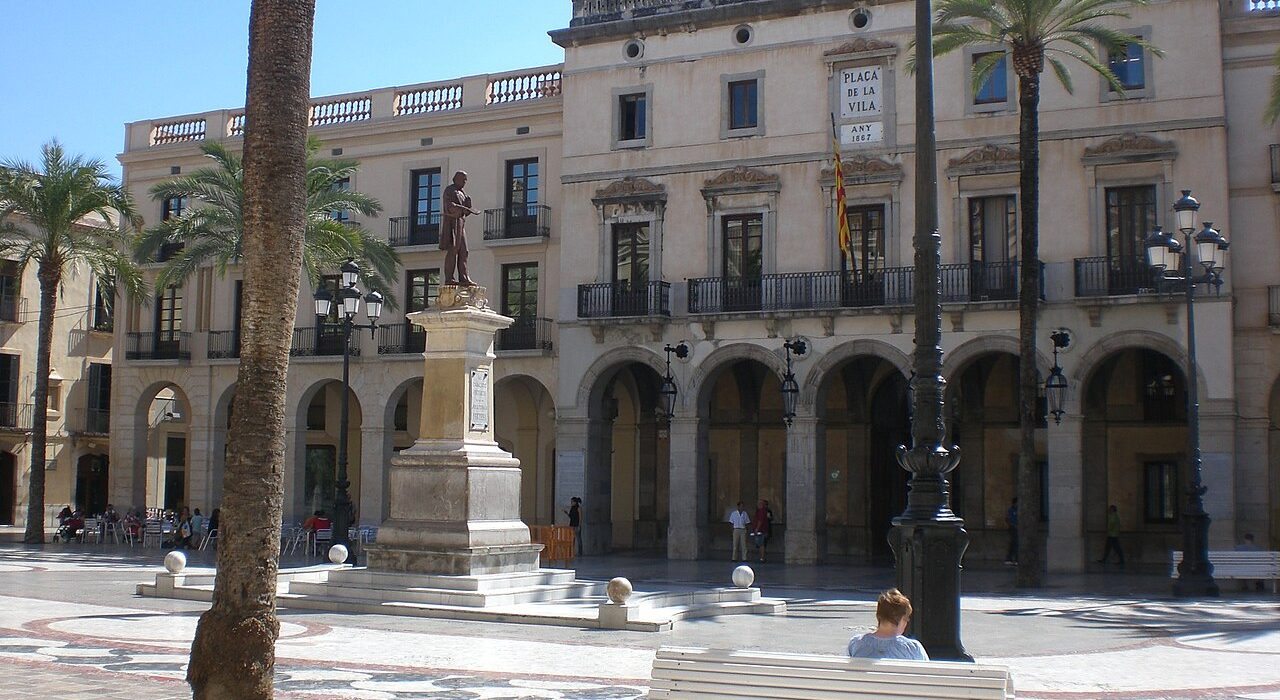
The sun falls over Plaça de la Vila and the terraces begin to fill with vilanovins ordering their first caña (small draft beer) of the day. A few meters away, the sea breaks against the Passeig Marítim and leaves that scent of salt that defines the city. Here, in the Garraf region, a town of 68,000 inhabitants looks history straight in the eye with its Castle of la Geltrú in the background, while winter’s xató (traditional salad with romesco sauce) waits in the kitchens for the Festa Major de Sant Antoni (main festival of Saint Anthony). This is Vilanova i la Geltrú: what Barcelona no longer has, and what many still don’t know exists.
The must-seesWhat to see in Vilanova i la Geltrú: the essentials
Castell de la Geltrú
You have to climb up to the old quarter of la Geltrú to understand where it all comes from. The first written mention of the castle dates from 1078, although its current structure is the result of a long Gothic construction that extended between the 12th and 15th centuries, to which historicist renovations and, later, a contemporary rehabilitation were added. Located at Plaça de Font i Gumà, 1, it is a regular setting for festivals and historical reenactments that bring its walls back to life. It is recommended to visit at dusk, when the stone still holds the warmth of the sun. Admission is usually free and opening hours can be checked on the official tourism website of Vilanova i la Geltrú.
Biblioteca Museu Víctor Balaguer
It is, probably, the most elegant corner of the city. This museum and library were inaugurated on October 26, 1884 at the initiative of the writer, historian, and patron Víctor Balaguer i Cirera, declared an adoptive son of Vilanova in 1880. Inside, a historic library with Balaguer’s personal collections, an art gallery with notable pieces, and a section dedicated to Mediterranean culture coexist. The building itself, with its eclectic air, already deserves a leisurely visit. Before going, it is worth checking opening hours and possible guided tours on the municipal website.
Museu del Ferrocarril de Catalunya
Few railway museums in Spain have such a convenient setting: it is literally next to the Renfe Rodalies station, at Plaça Eduard Maristany, s/n (tel. +34 938 158 491, comunicacio@museudelferrocarril.org). It preserves an outstanding collection of steam locomotives, as well as historic carriages and rolling stock displayed on its tracks. The collections are organized into clearly differentiated sections: passenger cars, buildings, steam locomotives, diesel locomotives, electric locomotives, historical objects, and other vehicles. It is an especially fun visit for families and for anyone who has ever boarded one of those old trains. Plan at least two hours so you don’t leave anything behind on the platform.
Museu Romàntic Can Papiol
Listed as a Cultural Asset of Local Interest, this house was the residence of the influential Papiol family, originally from l’Arboç (Baix Penedès), who settled in Vilanova in the mid-17th century and built their wealth on land exploitation. The museum offers a carefully crafted evocation of 19th-century society, with the living room, dining room, and bedrooms just as a well-to-do family left them. It is located in the historic center of the city and allows you to understand, in just one hour, how the Catalan elites of Romanticism lived. Ideal to combine with the nearby Casa Cabanyes on a morning of heritage sightseeing.
Iglesia Parroquial de Santa María de la Geltrú
The main temple of the old quarter of la Geltrú, its current structure mainly reflects the Baroque and later reforms carried out after the separation of la Geltrú as an independent parish. It preserves architectural and artistic elements that bear witness to the different stages of construction and renovation undergone over the centuries. Beyond its religious value, it remains one of the historical and heritage reference points of the old town. It is worth going inside even if only to contemplate the nave and the light entering through its side chapels.
Church of Sant Antoni Abat
The Church of Sant Antoni Abat is a religious building located in Vilanova i la Geltrú, known for its local “vilanoví” character and for serving as a link between Barcelona and Tarragona.
Temple of Sant Gervasi
Religious building located in the old town of Vilanova i la Geltrú, listed among the city’s main historic monuments.
Casa Cabanyes
Casa Cabanyes is one of the standout stately buildings in the old town, a 19th-century noble mansion that forms part, together with the Can Papiol museum, of the town’s bourgeois architectural heritage.
Medieval wall and Portal del Nin
Remains of the old walled enclosure that once defined the old core survive at various points in the historic center. The Portal del Nin, built in the 14th century, is the only one still standing today and practically the only vestige of the wall, which has now almost entirely disappeared. It stands at the junction of Carrer Sant Antoni and Plaça Llarga.
Plaça de la Vila
The main square in the center of Vilanova i la Geltrú, considered the civic heart of the city. It is protected as a Cultural Asset of Local Interest with identifier IPAC 4480.
Teatre Principal
Historic theater opened in 1878 and located at number 4 Rambla Principal, right in the historic center. It forms part of Vilanova i la Geltrú’s notable cultural, theatrical, and musical tradition, which dates back to the 18th century and became firmly established above all from the 19th century onward.
Passeig Marítim of Vilanova i la Geltrú
It runs along practically the entire seafront of the city. Along its route lies the Iberian archaeological site of Darró (Adarró), evidence of the ancient occupation of this stretch of the Vilanova coastline, adding heritage and historical value to the seafront promenade.
🍂 Otoño
Si visitas Vilanova i la Geltrú en otoño, el calor se va y las temperaturas se vuelven más templadas, ideales para caminar sin agobios y descubrir la cultura local, como el Museo Romántico Can Papiol o el Castillo de la Geltrú. Además, la lluvia hace acto de presencia con moderación, lo que da un encanto especial al paisaje. Consejo práctico: aprovecha para probar la gastronomía de temporada, especialmente los platos con castañas y setas de la comarca.
What to do in Vilanova i la Geltrú
Vilanova i la Geltrú offers activities for all tastes: festivals and historical reenactments at Castell de la Geltrú, immersion in the bourgeois heritage of Museu Can Papiol and Casa Cabanyes, routes along the seafront with a stop at the Iberian site of Darró, and a lively cultural program at Teatre Principal. Between February and August, the streets fill with Carnival, with parades and costume contests, and with Festa Major in honor of Mare de Déu de les Neus, featuring traditional dances, street parades, correfocs, castells, gegants, concerts, and firework displays for almost three weeks. For everyday life, Mercat del Centre lets you buy fish fresh from the auction and enjoy tapas at Bar del Mercat, run by the same family for more than 40 years.
Vilanova i la Geltrú in one day: express itinerary
- 10:00 h · Castell de la Geltrú: start the day up high, with the first light over the old core and views across the entire Garraf region.
- 11:30 h · Museu Can Papiol: head down to the historic center and step right into a 19th-century bourgeois house, just a stone’s throw from Casa Cabanyes.
- 13:30 h · Xató in the center: eat in a traditional celler in the center and try the Garraf’s most emblematic salad, especially if you coincide with the Festa Major de Sant Antoni.
- 16:00 h · Biblioteca Museu Víctor Balaguer: an hour among books, paintings, and the story of a patron who changed the city.
- 18:00 h · Passeig Marítim and the Darró site: go down to the sea, walk to the beach, and end the day with red shrimp from the auction at a chiringuito facing the Mediterranean.
Where to eat in Vilanova i la Geltrú: local gastronomy
Where to stay in Vilanova i la Geltrú
Centre / Eixample
El corazón de Vilanova i la Geltrú. Concentra el grueso del comercio local, terrazas, servicios y la vida ciudadana diaria. Una zona práctica y animada para moverse a pie.
Barri de Mar (Ribes Roges)
Antiguo barrio de pescadores junto al puerto, con calles estrechas y un ambiente marinero muy auténtico. Cerca de la platja de Ribes Roges y del Club Nàutic.
Barri Antic / La Geltrú
Zona histórica con la iglesia gótica de Santa Maria de la Geltrú, calles estrechas y casas antiguas. Conserva un ambiente tranquilo y patrimonial, muy distinto al centro moderno.
Sant Joan
Barrio tradicional cercano al centro, con mezcla de residencial y comercial, bien comunicado con la estación de tren. Ambiente local y de paso.
Tacó / La Collada
Zona más periférica y residencial, al sur de la ciudad, con espacios abiertos y ambiente tranquilo. Menos interés turístico directo, pero útil si se busca estancia tranquila o cercanía a las playas del sur.
Platja de Vilanova (zona playa)
Área frente al frente marítimo principal, con paseo marítimo, restaurantes de pescado y chiringuitos. Toma el pulso en verano y ofrece atardeceres sobre el Mediterráneo.
How to get to Vilanova i la Geltrú
Vilanova i la Geltrú has a train station (Vilanova i la Geltrú, no AVE) and a bus station (Estació). The road connection with Barcelona and Tarragona is smooth and is usually the most convenient option for visitors arriving without haste.
| Medio | Duración | Precio aprox. | Frecuencia |
|---|---|---|---|
| Tren (Rodalies/Regionales, según Renfe) | Variable según origen | Según tarifa Renfe | Servicios diarios, según Renfe |
| Autobús | Variable según origen | Económico | Servicios diarios |
| Coche | Variable según origen | Solo peajes y combustible | Libre |
How to get around Vilanova i la Geltrú
The city is easily explored on foot, especially in the Centre/Eixample, the Barri Antic, la Geltrú, and the Barri de Mar. For trips between outlying neighborhoods, the southern beaches, and the station, the urban bus covers the main points and allows you to get around without a car. If you come with your own vehicle, the Passeig Marítim and the surrounding neighborhoods offer parking, although in summer it is advisable to arrive early to find a spot near the beach.
Weather in Vilanova i la Geltrú
Best time to visit Vilanova i la Geltrú
Day trips from Vilanova i la Geltrú
Vilanova i la Geltrú’s location, as the capital of the Garraf comarca and co-capital of the Penedès vegueria, makes it an excellent starting point for day trips along the Catalan coast and inland. From here you can easily combine a morning of heritage sightseeing in the town itself with an afternoon in neighboring towns, either north toward Barcelona or south toward Tarragona. The Renfe network and intercity buses make it easy to get back in time for dinner of arroz caldoso de gamba roja (brothy red prawn rice) in the Barri de Mar.
Things you didn’t know about Vilanova i la Geltrú
It once held capital status. In 1418, Alfonso IV granted Vilanova i la Geltrú the privilege of becoming a “street of Barcelona,” a town with the same rights as the capital — a detail that still explains local pride today.
Its Indiano heritage can be counted. In Vilanova i la Geltrú, 116 heritage elements have been recorded, linked to 60 names of indianos vilanovins (returned emigrants who made their fortune in the Americas), the result of money brought back from Cuba in the 19th century.
Its name is a historical document. The place name “la Geltrú” derives from the Germanic name Wisaltrud (Guisaltrud in Old Catalan), while “Vilanova” literally means “new town.”
It is twinned with Cuba. Vilanova i la Geltrú has been officially twinned with Matanzas (Cuba) since 1998, due to the large-scale emigration of Catalans to Cuba in the 19th century.
It had a very famous patron. Víctor Balaguer, a Romantic playwright and historian born in Barcelona in 1824, was declared an adoptive son of Vilanova in 1880 and left his library-museum to the town, inaugurated in 1884.
It was born of a legend. According to legend, Vilanova was founded as a result of a rebellion against the “droit du seigneur” of the feudal lord of la Geltrú, whose inhabitants fled toward the sea to found the Vila Nova.
Who Vilanova i la Geltrú is for
Vilanova i la Geltrú is, above all, for those looking for a getaway with local flavor: couples seeking seaside strolls at sunset and dinners of red prawns, families combining the beach with a railway museum that is as educational as it is fun, and history lovers who enjoy Gothic castles, bourgeois houses, and medieval walls. It is also an excellent stop for foodies, thanks to its fish auction, its xató, and its Michelin-starred restaurant. It is not the best choice for those seeking a big city with an intense nightlife: here the plan is more about long days, market visits, walks, and good food.
💡 ¿Sabías que...?
- ● En 1418, Alfonso IV otorgó a Vilanova i la Geltrú el privilegio de convertirse en «calle de Barcelona», una villa con los mismos derechos que la capital. (https://pueblos10.com/barcelona/vilanova-i-la-geltru/)
- ● En Vilanova i la Geltrú se han contabilizado 116 elementos patrimoniales vinculados a 60 nombres de indianos vilanovins, fruto del dinero traído desde Cuba en el siglo XIX. (https://vilanova.blog/2024/01/11/trafico-de-esclavos-y-negreros-el-oscuro-pasado-de-vilanova-i-la-geltru-que-pocos-conocen/)
- ● El topónimo «la Geltrú» deriva del nombre germánico Wisaltrud (Guisaltrud en catalán antiguo), mientras que «Vilanova» significa literalmente «villa nueva». (https://www.enciclopedia.cat/gran-enciclopedia-catalana/vilanova-i-la-geltru)
- ● Vilanova i la Geltrú está hermanada oficialmente con Matanzas (Cuba) desde 1998, a causa de la numerosa emigración de catalanes a Cuba en el siglo XIX. (https://www.cronicaglobal.cat/viatges/20260510/sembla-cuba-espanya-costanera-arquitectura-modernista-tradicio/1003742759293_0.html)
- ● Víctor Balaguer, dramaturgo romántico e historiador nacido en Barcelona en 1824, fue declarado hijo adoptivo de Vilanova en 1880 y dejó su biblioteca-museo a la ciudad, inaugurada en 1884. (https://elpais.com/diario/2001/01/14/catalunya/979438062_850215.html)
- ● Según la leyenda, la fundación de Vilanova se debió a la rebelión contra el «derecho de pernada» del señor feudal de la Geltrú, cuyos habitantes huyeron hacia el mar para fundar la Vila Nova. (https://es.wikipedia.org/wiki/Vilanova_i_la_Geltr%C3%BA)
Frequently asked questions about Vilanova i la Geltrú
How many days do I need to see Vilanova i la Geltrú?
With one well-organized full day it is possible to cover the main attractions: the Castell de la Geltrú (Geltrú Castle), the Museu Can Papiol (Can Papiol Museum), the Biblioteca Museu Víctor Balaguer (Víctor Balaguer Library Museum), the Museu del Ferrocarril (Railway Museum) and the Passeig Marítim (seafront promenade) with the Darró archaeological site. If you also want to enjoy the local cuisine at a leisurely pace, combine the Barri de Mar (seaside quarter) and the Centre/Eixample area, and perhaps attend a cultural event at the Teatre Principal, the ideal is to set aside two days: one for heritage and another for sea and table.
What is the best time of year to visit Vilanova i la Geltrú?
According to AEMET data, the best time to visit the city runs from May to October, with an average summer temperature of 23.8°C and 10.1°C in winter. Annual rainfall is 569.8 mm, so it is worth avoiding the rainiest periods if you plan to spend a lot of time outdoors.
How do I get to Vilanova i la Geltrú from Madrid?
The most convenient option is the long-distance train to Barcelona and, from there, a Renfe Rodalies service to Vilanova i la Geltrú station, according to the timetables and connections published by Renfe. It is also possible to arrive by car via the AP-7 motorway or by long-distance bus to Vilanova i la Geltrú station (Estació). There is no direct AVE at the station, so changing in Barcelona is the usual route.
What typical dishes should I try in Vilanova i la Geltrú?
There are four must-tries: the gamba roja de Vilanova (Vilanova red shrimp), caught by the 56 boats that leave the port daily; the arroz caldoso de gamba roja (brothy red shrimp rice), with cuttlefish, mussels and rockfish stock; the rancho marinero (fishermen’s stew), a traditional fisherman’s stew; and the xató, a typical salad from the Garraf region served during the Festa Major de Sant Antoni (Feast of Saint Anthony). Mantis shrimp and fresh fish of up to 140 varieties round out the offering.
Is Vilanova i la Geltrú suitable for family travel?
Yes. The Museu del Ferrocarril, with steam locomotives, historic carriages and exhibits on its tracks, is usually a hit with children and adults alike. The Passeig Marítim, Platja de Vilanova (Vilanova Beach) and the Iberian archaeological site of Darró allow you to combine the outdoors with a touch of culture. In addition, neighborhoods such as Sant Joan and Tacó/La Collada offer quiet, well-connected settings.